• Welcome to Photrio!
    Registration is fast and free. Join today to unlock search, see fewer ads, and access all forum features.
    Click here to sign up

Was asked to DELETE a photo today!

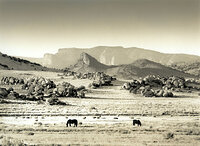
Two Horses

A
Two Horses

  • 7
  • 2
  • 41
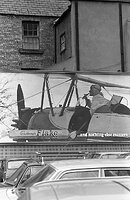
Billboard, Cork city 1977

H
Billboard, Cork city 1977

  • Tel
  • Mar 17, 2026
  • 1
  • 0
  • 33

Recent Classifieds

Forum statistics

Threads
202,802
Messages
2,845,710
Members
101,541
Latest member
ΦÆdon
Recent bookmarks
0
Did you get permission from the manager of the Flatiron Building? Here in Toronto you can not photograph the one here for any reason without getting permission as it is used in so many movies. Not even for private, nonommercial purposes. I was in the grill one day when someone was taking photos and the manager walked out and politely asked the person to delete the files or turn over the film and he;d process it an send the photos taken that were not of the building plus pay for a replacement roll. The person told the manager to buzz off and within a few minutes an officer approached and suggested the person take the offer or accompany him to the local station. The person handed over the roll and his address and received what looked like a $10 bill. I asked the manager about the incident and he told me the building was copyrighted as an image and taking a photo of it without permission was an criminal offence. I then asked it they would give permission and his response was if for noncommerical use, no problem but othewise there was a fee for a shooting permit. Up here many places seem to have similar requirements including public parks. I was once approached while shooting downtown by a security guard of a building exterior I was photographing. He said that he was to make inquiries of a person if a tripod was used or what appeared to be a professional camera. He was not totally convinced I was not a professional as I had the Meastro tripod (yes, it was my field tripod and has been for some 20 years) as well as my Bronica system and the Polaroid Pack camera, think it was the 180. However, he just said okay when I handed him my business card showing I was a senior employee of a big 4 accounting firm but suggested I lose the tripod in the future.

Regarding copyrighted landmark: Reading all the replies and thinking about this further, I wonder what would have happened if the photographer refused to hand over the film. In order to be arrested he would have to have broken the law. After looking at the link to the laws regarding photography in Toronto, I can't see where a law was broken. Here in NYC, there was a recent well known case where a guy was shooting, no tripod, in the subway. A cop told him no photos and he got out a printed copy of the rules about shooting in the subway that showed he was within the law. The cop became upset and arrested him. In the paper, I think it was The Times, it said the guy with the camera, said good, you've just made me a lot of money. There was a law suit for false arrest, and the city settled. The morrow being, arrest without having broken the law is unlawful.
 
I will just add that regardless of what the law says concerning privacy in public places, there are circumstances and situations where people have personal and private reasons why they don't want their photographs taken. I don't know what prompted OP's supposed subject to ask for removal of the photograph. Some of them are truly sad situations and the fear is real.

But if someone asks me to delete mine, I'll try to honor their requests. No, I will not tell them they should stay home. In these cases, in my mind, their needs superceeds my rights. I don't ask for details either. Using film makes it little more difficult but in digital, removal is easy.

I will not explain why I think this way or what I know, so please don't ask.
 
The morrow being, arrest without having broken the law is unlawful.

Technically there is no arrest for something which is not illegal. You can be arrested for something you didn't do but were suspected of doing but not arrested for something which you cannot be arrested for!

When you are arrested you must be told the reason why and if that reason is not valid, it is not an arrest (or it's a wrongful arrest).


Steve.
 
Some of them are truly sad situations and the fear is real.

Yes...
I know I will be flamed but there is nothing wrong with NOT being some kind of bad ass photographer and arguing for the sake of it. Personally I think many of you APUGers are just itching for a fight or arrest.
 
I will not explain why I think this way or what I know, so please don't ask.

I will not explain why I agree with you and your attitude about honoring people's requests for privacy, so please don't ask. :D
 
... I wonder what would have happened if the photographer refused to hand over the film. ...

If I'm not mistaken, which sometimes happens, nothing would have happened. The requestor could not have forced the photographer to turn over film without a court order. Doing so would be theft or "conversion". Theft is a criminal offense and conversion of property is a civil issue.
 
There are people in this world who do not want to be seen; They are hiding. Funny tho since there are millions of cameras everywhere across the U.S., and if they want to find you they will.
 
Technically there is no arrest for something which is not illegal.

Yes... but you can spend a nice evening or weekend in jail, and they can always charge you with disorderly conduct, unless you have just photographed a killing, a police beating, UFO's of Paris Hilton doing something stupid, just smile and move on and enjoy the day.
 
What if Weegee had adhered to this mindset of deleting photos when somebody didn't approve? We would not have his incredible document of New York City in the middle 20th century.
 
Weegee was also a paid photojournalist/freelance ie professional photographer... not just a guy with a camera and attitude itching for a silly fight.
 
What if Weegee had adhered to this mindset of deleting photos when somebody didn't approve? We would not have his incredible document of New York City in the middle 20th century.

How do you know he didn't. :wink:
 
Ultimately, it will have to be a personal decision of a person holding the camera. The bottom line is, the law says people have no expectation of privacy in public areas. But - think of this... there are people with problems we can't even imagine, let alone think in their shoes. Some are just plain strange. It makes no difference if it's real or percieved - pain they feel is the same - just because someone took their photograph.

In some cases, people live in constant fear of real life threat but they can't stay home because they have to make their living and actually live.

Most of us take photographs for our enjoyment. It doesn't kill me to dump a roll or push the delete button. Street photography isn't something I do, so I rarely encounter these situations. If someone is in the frame and prominently enough, I usually ask first.

I read somewhere, even photo journalists sometimes hesitate and not take the photograph because they feel the pain themselves. Whether that makes a good person or a bad journalist, I don't know.

I think there is a real problem discussing topic of this nature. Other than the OP, we don't know how the conversation really took place. Other than the woman, no one knows why the photograph (which she didn't appear...) was percieved so damaging. Of course all the folks responded don't have any of these information and the discussion becomes concentrated on how our rights were violated. In reality, there were a lot more going on when the event actually transpired.

I consider the "law" the last line of defence, not the first. There are a lot we can do without being illegal. There are a lot of damage we can cause while staying legal. In these situations, I prefer to enjoy my hobby while causing no harm to others - real or perceived. How much margin one wants to keep is really a personal decision.

I said everything I can say here so I'm out of this thread. I don't plan to change anyone's mind. Just wanted to present something some may not be aware - when discussing our rights to photograph in public places.
 
Last edited by a moderator:
Copyright is a civil, not criminal, matter so the police should never be involved unless they are alleging a criminal act (such as trespass).

Actually, trespass isn't in the Criminal Code either. It is included in provincial legislation

"Prowling at Night" is in the Criminal Code.

All comments here are, of course, referenced to Canadian law.

EDIT: Monito has already posted an excellent link about Canadian law:

 
I assure everyone here that I: 1) I am not some badass photographer just itchin' for a fight; 2) the woman was NOWHERE NEAR the angle of my lens or in any part of the composition that would lead any reasonable person to believe they would possibly be in the picture; my camera was pointed towards the top of the Flatiron Building, which is at least 25 stories high; and 3) I tried to very politely tell her that she was mistaken about being in the line of fire of my shooting. I only told her that she should stay home when it was VERY clear that she was trying to pick a fight with me and that she had a right to privacy and was sick and tired of photographers trying to take pictures of her.

Upon further reflection after reading some of the responses here, I do believe that she was truly a sad, borderline schizophrenic person who I somehow feel had this conversation numerous times before she had it with me. Especially after she told me she that she was fed up with photographers.

As to people's desire for privacy in public - of course I can respect that. But this, alas, does not equate to a right to privacy. I wasn't trying to take a picture of her. But even if she was in the picture, and not the subject of it, my right to photograph trumps this is NY, especially because I am not using the picture for trade or advertising reasons.

As to the exterior of buildings being protected by copyright in parts of Canada - really? Wow.
 
Also note that some places, such as some provinces in Canada (Manitoba and Quebec for sure, there may be others) have "privacy laws" that make it illegal to use someone's indentifiable image for profit, regardless if that image was taken on public property.

For instance, where I am in Manitoba, the Privacy Act specifically prohibits using someone's likeness "for gain" without consent. To my knowledge this hasn't been tested in court here yet (although the Quebec law was tested in Quebec a few years ago with a woman who was shot as part of a crowd, that shot was hung in a gallery, and the woman didn't appreciate it and won in court). I know a few street photographers here who basically just ignore the law for now.

So, as far as I see it, it is legal to take someone's picture on public property in most places, but it may not be legal to do anything with that picture once you've taken it, depending on the law where you live (and/or where the pic was taken), and if anyone is "identifiable".
 
Did you get permission from the manager of the Flatiron Building? Here in Toronto you can not photograph the one here for any reason without getting permission as it is used in so many movies. Not even for private, nonommercial purposes. I was in the grill one day when someone was taking photos and the manager walked out and politely asked the person to delete the files or turn over the film and he;d process it an send the photos taken that were not of the building plus pay for a replacement roll. The person told the manager to buzz off and within a few minutes an officer approached and suggested the person take the offer or accompany him to the local station. The person handed over the roll and his address and received what looked like a $10 bill. I asked the manager about the incident and he told me the building was copyrighted as an image and taking a photo of it without permission was an criminal offence. I then asked it they would give permission and his response was if for noncommerical use, no problem but othewise there was a fee for a shooting permit. Up here many places seem to have similar requirements including public parks. I was once approached while shooting downtown by a security guard of a building exterior I was photographing. He said that he was to make inquiries of a person if a tripod was used or what appeared to be a professional camera. He was not totally convinced I was not a professional as I had the Meastro tripod (yes, it was my field tripod and has been for some 20 years) as well as my Bronica system and the Polaroid Pack camera, think it was the 180. However, he just said okay when I handed him my business card showing I was a senior employee of a big 4 accounting firm but suggested I lose the tripod in the future.

These are the possible scenarios:

1. The person was shooting from public property. The person has done nothing illegal. The person owns the photos. Any attempt by anyone, including the police, to confiscate them is coercion. If the the photos are taken by anyone, including the police, it is theft.

2. The person was shooting from private property that is considered a public space (e.g. a shopping mall or a private alleyway), and that has no signs prohibiting photography. The person has done nothing illegal, because even though the property is private, it is treated by the law as a public space. The person owns the photos. Any attempt by anyone, including the police, to confiscate them is coercion. If the photos are taken by anyone, including the police, it is theft.

3. The person was shooting from private property that is not considered a public space (e.g. the lobby of a high rise or somebody's back yard), with no signs prohibiting photography. The person was then asked by the building owner not to shoot, and complied. The person has done nothing illegal, because according to the law, it can be assumed that photography is allowed on private property unless signs or people clearly prohibit it. The person owns the photos. Any attempt by anyone, including the police, to confiscate them is coercion. If the photos are taken by anyone, including the police, it is theft.

4. The person was shooting from private property that is not considered a public space (e.g. the lobby of a high rise or somebody's back yard), with no signs prohibiting photography. The person was then asked by the building owner not to shoot, and did not comply. The person may be issued a trespassing ticket by the police for breaking stated rules on private property (a misdemeanor offense, and a non-arrestable one in this circumstance, barring lipping off to the officer). The person owns the photos. Any attempt to confiscate them by the property owner is coercion. If the photos are taken by the property owner, it is theft. The police may confiscate the pictures for use as evidence in court, but the photos remain the property of the shooter, and the police may not destroy them, damage them, or give them to the property owner.

5. The person was shooting from private property, and there were "no photography; private property" signs, or the like. Same as above, beginning with, "The person may be issued..."

In every case, the person owns the photos, even if the way he or she got them involved breaking the law. Under no circumstances may photos (i.e. the shooter's property in all cases) be permanently taken from the shooter, damaged, destroyed, or given away. And there is only one case in which anyone may confiscate the photos even temporarily; the police may take them as evidence of a crime. That's it!

People need to learn their highest government-granted liberties, or have them taken away by both private parties and other government bodies. It's their choice which they want. Let's just hope they remember that their choice affects everybody in the society, not just them. The fellow allowing that to happen was at best a display of ignorance, and at worst a display of selfishness – saving one's own hide out of momentary fear, while sacrificing the greater good. Every time something like that happens, one more piece of sand washes off the mountain that represents the fundamental liberties granted to the members of a society.

While your story is infuriating, and ones like it are all too common, I think a little research before declaring the security guard's and police officer's word as fact would have been prudent. Education on the laws, rather than the spreading of rumors, is the way to combat that sort of thing.

 
Last edited by a moderator:
People need to learn their highest government-granted liberties,

That's backwards. People are free. As a people, a true democracy can decide to grant the government some restrictions on their own freedom.

So its people-granted restrictions that the government is empowered to enforce.
 
That's backwards. People are free. As a people, a true democracy can decide to grant the government some restrictions on their own freedom.

So its people-granted restrictions that the government is empowered to enforce.

We can look at it whichever philosophical way each of us wants. The point is the same, though. The liberties are stated, and they will disappear if we let them.

The way I see it, the idea of fundamental liberties was intellectually devised to protect us from our own human nature. I still maintain that any fundamental liberty we do have is granted by the federal government (which is supposedly of the people, but I don't think we will be there until every last person in the society acts like a responsible citizen), in order to protect the people from future governments, and from their fellow citizens. In the real world, not in a philosophical utopia, we don't have liberty simply because we are human. We have liberty because some guys got together some years ago and wrote a set of rules that sez we have liberty. Maybe I'm pessimistic, but that's what I think. I don't believe that humankind is instinctively "free," and I don't believe in anything supernatural which might grant us something that nature does not. We have liberties because some people decided it would be a good idea for those in a society to have liberties; that's it. They were right in some ways, and wrong in others. But they certainly were against the mainstream at the time. If it was so fundamentally human, how could anything else have ever been practiced? The idea of fundamental liberties shits in the face of instinctive human behavior – vicious, savage, selfish animals that we are by nature – like any other animal. To me, that the idea of fundamental liberty goes against this is what makes it so great. It pushes us to a level beyond animalism. It is man-made evolution of the species, intellectually devised and physically implemented.

So, by this outlook, those people whole stole the guy's photos were just being instinctively human. But the philosophical foundation of our system of government says that people should rise beyond their instinct in very specific ways – ways that do not support the actions of the thieves.

Anyhow, lest we digress too much, we can continue this via PM if you want, or in the Soap Box Forum. I don't want to get into it on top of this thread.
 
Last edited by a moderator:
The liberties are stated, and they will disappear if we let them.

Agree 100%.

That is why (the question another poster asked previously) photographers will be willing to get arrested (falsely) and risk spending a night or day in jail while the police go through their motions, and then spend a lot of time and effort suing them. I don't question anybody who doesn't want to take that risk and bother, but I salute and thank those who do.
 
I agree with 2F/2F in post No. 42. The situation is identical (if not very similar in the UK).


Steve.
 
The problem with the idea of "granted" liberty is that the agency that "gave" them is more than likely going to either take them away, or hold them for ransom. The only way to ensure the greatest freedom for folks is to recognize pre-existing natural rights (commonly referred to as "negative", as they don't require that other folks be stolen from or otherwise oppressed) and require any existing government to operate within strict guidelines in order to avoid treading on them.
Unfortunately, any time you allow a group of people to gather and maintain power, they'll do everything possible to grow it, and you'll also attract the absolute worst power-hungry rascals to those positions... folks clever enough to erode and evade their own legal limits at every opportunity. It takes a special sort of bastard.

Ergh. Politics. Many blood-sucking creatures. I think I'll go back to reading about cameras now and stop jacking threads.
 
These are the possible scenarios:

1. The person was shooting from public property. The person has done nothing illegal. The person owns the photos. Any attempt by anyone, including the police, to confiscate them is coercion. If the the photos are taken by anyone, including the police, it is theft.

2. The person was shooting from private property that is considered a public space (e.g. a shopping mall or a private alleyway), and that has no signs prohibiting photography. The person has done nothing illegal, because even though the property is private, it is treated by the law as a public space. The person owns the photos. Any attempt by anyone, including the police, to confiscate them is coercion. If the photos are taken by anyone, including the police, it is theft.

3. The person was shooting from private property that is not considered a public space (e.g. the lobby of a high rise or somebody's back yard), with no signs prohibiting photography. The person was then asked by the building owner not to shoot, and complied. The person has done nothing illegal, because according to the law, it can be assumed that photography is allowed on private property unless signs or people clearly prohibit it. The person owns the photos. Any attempt by anyone, including the police, to confiscate them is coercion. If the photos are taken by anyone, including the police, it is theft.

4. The person was shooting from private property that is not considered a public space (e.g. the lobby of a high rise or somebody's back yard), with no signs prohibiting photography. The person was then asked by the building owner not to shoot, and did not comply. The person may be issued a trespassing ticket by the police for breaking stated rules on private property (a misdemeanor offense, and a non-arrestable one in this circumstance, barring lipping off to the officer). The person owns the photos. Any attempt to confiscate them by the property owner is coercion. If the photos are taken by the property owner, it is theft. The police may confiscate the pictures for use as evidence in court, but the photos remain the property of the shooter, and the police may not destroy them, damage them, or give them to the property owner.

5. The person was shooting from private property, and there were "no photography; private property" signs, or the like. Same as above, beginning with, "The person may be issued..."

In every case, the person owns the photos, even if the way he or she got them involved breaking the law. Under no circumstances may photos (i.e. the shooter's property in all cases) be permanently taken from the shooter, damaged, destroyed, or given away. And there is only one case in which anyone may confiscate the photos even temporarily; the police may take them as evidence of a crime. That's it!

People need to learn their highest government-granted liberties, or have them taken away by both private parties and other government bodies. It's their choice which they want. Let's just hope they remember that their choice affects everybody in the society, not just them. The fellow allowing that to happen was at best a display of ignorance, and at worst a display of selfishness – saving one's own hide out of momentary fear, while sacrificing the greater good. Every time something like that happens, one more piece of sand washes off the mountain that represents the fundamental liberties granted to the members of a society.

While your story is infuriating, and ones like it are all too common, I think a little research before declaring the security guard's and police officer's word as fact would have been prudent. Education on the laws, rather than the spreading of rumors, is the way to combat that sort of thing.

Like.

Pretty much the same here, and most other places.
 
The condition of the woman is known as hysteria, and is a very well known one, since millennia. And it generally is the result of lack of sex, in this case, lack of sex with a (former mate) photographer. Hence the hate and will to pick a fight with any photographer. You don't need being polite in this case.

Unless Canada is different from any other place on the world, in Canada just like in any other place every building is copyrighted (you cannot copy, in the sense "make a copy", an identical building, without the consent of the architect), and every building is photographable from the public road.
It is important to educate photographers about this. In stock photography fora there's a lot of bullstuff going around saying that the Eiffel tower at night is copyrighted, the Sidney Opera House is copyrighted so cannot be taken pictures of, etc. It's all just plain nonsense.

The case of the Eiffel tower is particularly ridiculous. Those guys actually try to ask money for use of pictures taken at night. They have a web site for this, so that you can pay even, and you can ask questions. I asked twice to produce any norm which allows them to charge, stating that I did take pictures of the Eiffel tower at night, I did sell them, and I will go on selling them. I had no answer both times.

I also referred this in another forum, and told people to do like me, and see if they receive an answer, but it seems that nobody did it. They are the same people who say that the Eiffel tower is not photographable because it is "copyrighted". People seem to need bullstuff to live.
 
These are the possible scenarios:

1. The person was shooting from public property. The person has done nothing illegal. The person owns the photos. Any attempt by anyone, including the police, to confiscate them is coercion. If the the photos are taken by anyone, including the police, it is theft.

2. The person was shooting from private property that is considered a public space (e.g. a shopping mall or a private alleyway), and that has no signs prohibiting photography. The person has done nothing illegal, because even though the property is private, it is treated by the law as a public space. The person owns the photos. Any attempt by anyone, including the police, to confiscate them is coercion. If the photos are taken by anyone, including the police, it is theft.

3. The person was shooting from private property that is not considered a public space (e.g. the lobby of a high rise or somebody's back yard), with no signs prohibiting photography. The person was then asked by the building owner not to shoot, and complied. The person has done nothing illegal, because according to the law, it can be assumed that photography is allowed on private property unless signs or people clearly prohibit it. The person owns the photos. Any attempt by anyone, including the police, to confiscate them is coercion. If the photos are taken by anyone, including the police, it is theft.

4. The person was shooting from private property that is not considered a public space (e.g. the lobby of a high rise or somebody's back yard), with no signs prohibiting photography. The person was then asked by the building owner not to shoot, and did not comply. The person may be issued a trespassing ticket by the police for breaking stated rules on private property (a misdemeanor offense, and a non-arrestable one in this circumstance, barring lipping off to the officer). The person owns the photos. Any attempt to confiscate them by the property owner is coercion. If the photos are taken by the property owner, it is theft. The police may confiscate the pictures for use as evidence in court, but the photos remain the property of the shooter, and the police may not destroy them, damage them, or give them to the property owner.

5. The person was shooting from private property, and there were "no photography; private property" signs, or the like. Same as above, beginning with, "The person may be issued..."

In every case, the person owns the photos, even if the way he or she got them involved breaking the law. Under no circumstances may photos (i.e. the shooter's property in all cases) be permanently taken from the shooter, damaged, destroyed, or given away. And there is only one case in which anyone may confiscate the photos even temporarily; the police may take them as evidence of a crime. That's it!

People need to learn their highest government-granted liberties, or have them taken away by both private parties and other government bodies. It's their choice which they want. Let's just hope they remember that their choice affects everybody in the society, not just them. The fellow allowing that to happen was at best a display of ignorance, and at worst a display of selfishness – saving one's own hide out of momentary fear, while sacrificing the greater good. Every time something like that happens, one more piece of sand washes off the mountain that represents the fundamental liberties granted to the members of a society.

While your story is infuriating, and ones like it are all too common, I think a little research before declaring the security guard's and police officer's word as fact would have been prudent. Education on the laws, rather than the spreading of rumors, is the way to combat that sort of thing.

Sorry but I live in the Toronto area and have some difficulties buying the scenario BrianL sketched. Not much point in generalizing about eroding liberties if nothing really happened, especially in a jurisdiction that's foreign to you.. The City of Toronto seems to believe there are no issues photographing the the Gooderham building.
 
Photrio.com contains affiliate links to products. We may receive a commission for purchases made through these links.
To read our full affiliate disclosure statement please click Here.

PHOTRIO PARTNERS EQUALLY FUNDING OUR COMMUNITY:


Ilford ADOX Freestyle Photographic Stearman Press Weldon Color Lab Blue Moon Camera & Machine
Top Bottom
