• Welcome to Photrio!
    Registration is fast and free. Join today to unlock search, see fewer ads, and access all forum features.
    Click here to sign up

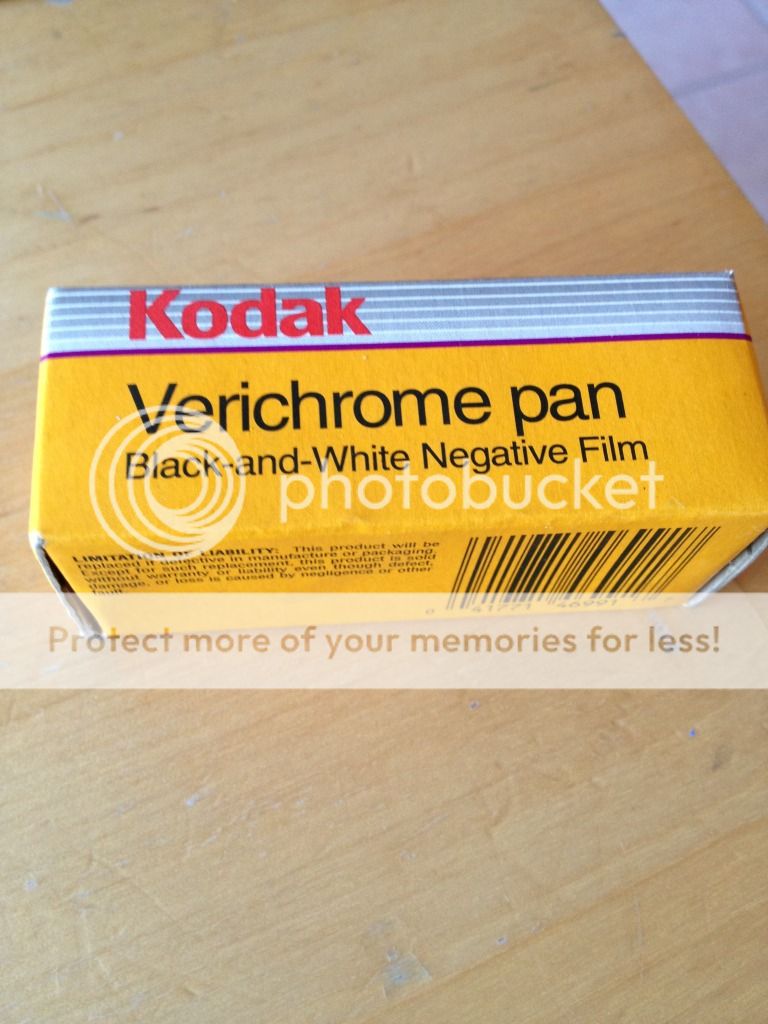
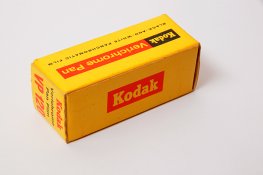
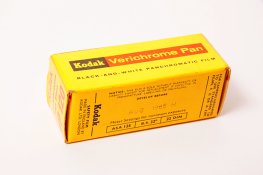
Verichrome Pan, in loving memory

Lowlight freestyle

A
Lowlight freestyle

  • 2
  • 1
  • 79
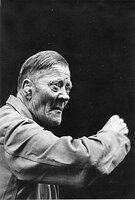
man arguing 1972

A
man arguing 1972

  • 8
  • 4
  • 146

Recent Classifieds

Forum statistics

Threads
203,031
Messages
2,848,818
Members
101,605
Latest member
Bburall33
Recent bookmarks
1

noacronym

Member
Allowing Ads
Joined
Mar 17, 2013
Messages
245
Format
Multi Format
Actually a dumb eye-catch attempt to attract readership for my question. The question that I never knew an answer to: What was the difference between Verichrome Pan and Plus-X in the 1960-s till VP was finally dropped? Both 125. Both development times for D-76 and Microdol were the same. But what was the real difference? Just the printing on the box and paper backing? And last question. Why is it that I'd rather have VP than PX or Tmax?
Why did Kodak make 2 125 sped films for 60 years?
 
Verichrome Pan was really effective in box cameras and when used in situations where accurate metering was difficult. It emphasized latitude and exposure "forgiveness" over concerns like sharpness and fine grain.

Plus X was capable of better results when exposed accurately.

IIRC, the two also exhibited slightly different spectral response.
 
Someone with vast knowledge of these things will give a complete answer, but I think that VP had a kind of double emulsion so it could handle extremes in exposure much more readily than Plus-X. Obviously the VP was aimed at the amateur/beginner market with their Box Brownies etc., so they could get more acceptable results when they stuff up the exposures, unlike us, who never get it wrong :smile:
Thing is, I like the results from VP more than Plus-X, don't know why, just looks better...maybe my exposures are crap! I think that answers why they made two films, one for them and one for us. I'm down to my last three rolls of VP, which is from the last production and dated 2002.
Incidentally, like all thick emulsion films it seems to go very well in PMK.
 
I had a cousin who was a very successful professional. He used VP all the time, as Tony said, he just liked the tonality and overall results.
I miss VP, and use FP4 in Microphen most of the time as I find it similar.
 
I have recently used some VP from the 60s. I took a shot, realized I was four stops off. Retook the shot at the correct exposure. When I developed the film, I couldn't tell which was which! I suspect it was almost impossible to get the wrong exposure with the stuff.
 
I started out on Verichrome Pan because it was the only B&W film available in 126 format (my first camera was a Kodak Instamatic). As I do remember, it was very difficult not to get a usable neg, even with a camera that only had a couple of shutter speeds and aperture settings.
 
Love this film! My last roll, I see it every day when I open the freezer "smiling" back at me. One day the light will be right and off it will go....
photo-87.jpg
 
My anecdotal experience is that VP just has a better look to it. It may have more latitude, but the main work I do is sunny 16 stuff, so I'm rarely off on exposures. And my experience is that it is sharper and has better grain than Plus-X. I still have 30 or so rolls of VP in the freezer. And no, they are not for sale.
 
It still is my favorite B&W film, but I have no stock left. I used to like it in Edwal's FG7, but my favorite soup was Microdol and later Microdol-X. Life was so simple with that combo! I never really could figure out why Kodak dumped VerichromePan? I could see it if Plux-X was a much better film, but I knew many folks back in the "old days" that didn't feel that way. Me included! JohnW
 
The compromise with Verichrome Pan is that the acutance (edge sharpness) is kind of low compared to Plus-X or TMAX 100. If I want sharp, I use TMAX 100. If I want smoooooth, I use Verichrome Pan. If I want exposure latitude, I use Verichrome Pan.
 
It certainly was a great film when I remember how I abused it in a Kodak developer called, I think, Universal MQ that came as a powder in little packets. It was pretty hard to produce an unprintable neg but I don't recall getting too many knock-out winners either - probably due to my technique rather than the materials. I still have a roll each in 127 and 828 that I keep for their historic value. Do I recall correctly that it was never made in 35mm? Ilford also had a film called Selochrome that was similar. OzJohn
 
Has anybody, that still has some, ever souped it in Pyrocat-HD? I bet it would be a pretty good match, but it was good in most of the developers I tried( ID-11, HC-110 dil. B, FG7 and Microdol).
 
Has anybody, that still has some, ever souped it in Pyrocat-HD? I bet it would be a pretty good match, but it was good in most of the developers I tried( ID-11, HC-110 dil. B, FG7 and Microdol).

To me, Verichrome Pan 120 in Microdol X 1:3 is one of the things in this world that never needed to be made any better. Anybody remember Special K before Kelloggs "improved" it back around 1978 or so? Oh, that's right--none of this matters any more since the computer and digital cameras fouled everything up.
 
To me, Verichrome Pan 120 in Microdol X 1:3 is one of the things in this world that never needed to be made any better. Anybody remember Special K before Kelloggs "improved" it back around 1978 or so? Oh, that's right--none of this matters any more since the computer and digital cameras fouled everything up.

You won't get any argument out of me on the VerichromePan 120 and Microdol-x combo. The first time I ever used it was with my first Hasselblad and a old 50mm chrome Distagon. The negatives were to die for and had a slight brownish tinge very similar to a pyro negative, but the negatives were a little more dense. I have never used either Microdol-X or Ilrord Perceptol at a dilution other than 1:3. I'm now experimenting with home-brewed Perceptol and it seems to work, but I'll continue to buy Perceptol while it's still here. I wish I could say the same for VerichromePan 120! JohnW
 
AHA!! I have always said Microdol was a staining developer. Now I have someone else who says the same thing, unsolicited. Your Honor, I submit the Microdol X 1:3 IS INDEED a staining developer. And ask the case be dismissed with prejudice.
 
It is not a staining developer. The brownish colour can apparently occur with some highly solvent developers in which physical development activity is significant. The colour is said to be a property of the silver grains which have been "plated" with dissolved silver (as opposed to the filament-like structure of metalic silver produced by direct chemical development).

I couldn't have said it better myself! Truthfully, I really don't know what happens with Microdol-X and Verichrome Pan, but I do know I liked it. Slight brownish tinge and all! I've used Microdol-X and now Perceptol on other films and the brownish tinge is hard to see. With Verichrome Pan it was very obvious. JohnW
 
Slight brownish tinge and all! ...With Verichrome Pan it was very obvious. JohnW

I rememeber that the Kodak Data sheets for Microdol-x mentioned that it might give a slight brownish twinge.

Kodak sold a packge of microdol-x in little foil pouches, making 4 US Oz each, which of course were used 1:3 to fill a 16 oz tank. This went well with the TRI-Chem Pack.

I also recall getting Microdol-x Liquid in quart brown bottles. The label had a space to mark the number of uses, butI think I just diluted it.

I don't beleive VP was made in 35mm.
 
Last edited by a moderator:
It is not a staining developer. The brownish colour can apparently occur with some highly solvent developers in which physical development activity is significant. The colour is said to be a property of the silver grains which have been "plated" with dissolved silver (as opposed to the filament-like structure of metalic silver produced by direct chemical development).

Michael R 1974, you are also an EK man aren't you? It seems I've come to regard reading when I see that name, to be somebody who knows something. I haven't got any problem standing corrected by you, from what I can tell. At the same time, I'll always hold high praise for Microdol. It's some great stuff. View camera work from a 35, if you want to do it that way. From a 2 1/4 you don't need any big individual negative and the zone system. It's like zone system in a bottle on a roll of film with all kinds of curve planning.
 
Last edited by a moderator:
I have two old rolls of 127 VP in the freezer. I will shoot one this spring and develop it in HC-110-H.

My only other experience was a found roll of 616 that was exposed around 1959. I over developed it using HC-110-B but still got usable negatives.

I'm hoping fresh exposures and dilution H will keep the fog down and yield smooth creamy midtones.
 
...Ilford also had a film called Selochrome that was similar

Wouldn't it be terrific if Ilford would reintroduce it today?

I would buy it. And think what it could do for the Holga/Lomo crowd.
 
Verichrome Pan started off as plain Verichrome, a robust orthochromatic film aimed at the amateur market and possessing a lot of exposure latitude. It came in lots of different roll film sizes but was never made in 35mm (apart from 828 roll-films & in the Pan version 126 cartridge film which were the same width). Later it became panchromatic hence the name change to Verichrome Pan. As the years went by more & more sizes were discontinued until only 120 was left and then that went. As I understand it, the versions of Plus-X described as Professional had at least one side (maybe both) designed for retouching, something which I guess isn't much done these days (though I could be wrong) but Verichrome Pan lacked this. Quite where the non-professional versions of Plus-X fitted into this range I don't know. Ilford's Selochrome was a competitor of Verichrome and eventually it too became panchromatic before being dropped from the range.
 
Oooo, post #25 brought back some memories. My first photographs were made using Verichrome-Pan in 1970, aged 8 or 9, with the family Box-Brownie 620. I still have a lot of the negatives too. I was allowed one roll per month - two shots a week! :smile:
 
Photrio.com contains affiliate links to products. We may receive a commission for purchases made through these links.
To read our full affiliate disclosure statement please click Here.

PHOTRIO PARTNERS EQUALLY FUNDING OUR COMMUNITY:


Ilford ADOX Freestyle Photographic Stearman Press Weldon Color Lab Blue Moon Camera & Machine
Top Bottom