I did a quick google on Tanya Ortega de Chamberlain. on this website:
http://robm.me.uk/2005/08/29/woman-sues-police-over-identification-demand/
This is what I found (it has more to the story than has been reported) The things not mentioned is she was photographing a federal building. The Security guard first came out and told her not to photograph the doors and security cameras. The rest was her right to photograph. Was it ignored and a policeman called in at that point? Since the next thing that happend was the police and an 80 minute interview that ensued before she was arrested. Like I said there is more here than is being reported in this thread:
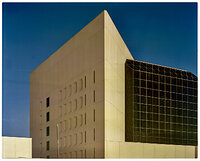
Tanya Ortega de Chamberlin set her large, black box of a camera on a tripod outside of the Wallace F. Bennett Federal Building in Salt Lake City and posed for her picture in City Weekly. She hadnt been there 30 seconds when she was approached by a security guard from the Federal Protective Service arm of the Department of Homeland Security.
Dont take pictures of the buildings security cameras, he said, helpfully pointing out cameras perched on top of a corner light post. Dont take photos of the doors, either, or the guards. The rest, you have the right by law to [photograph], he told her.
That is technically true. Its also true that Ortega de Chamberlin, or anyone else for that matter, has a right to photograph any building, as long` as they snap their shots from public property.
No law, not even the post Sept. 11, 2001, USA Patriot Act, changes the ability of photographers to walk down the street unmolested. At least in theory.
In fact, since Sept. 11, 2001, tourists and professional photographers have been detained or harassed throughout the country while taking snapshots of bridges, bus tunnels and government buildings.
In the past eight months, Ortega de Chamberlin, who shows art photography and works as a commercial real estate photographer, has been arrested by police and called in for lengthy questioning by a phalanx of agents from Homeland Security, FBI and others on a terrorism task force.
She worries about winding up on a government list as well as national security encroaching on artistic freedom. If police officers or anybody in authority dont know what peoples rights are to take photos, to be artists or reporters, the individuals end up suffering, she said.
She filed a civil-rights lawsuit last week challenging her November arrest by the South Salt Lake Police Department on Main Street. During an 80-minute interview, she gave her name, Social Security number, birth date and driver-license information to police alerted by a suspicious neighbor. However, she balked at demands for other personal details. Police handcuffed her, held her in a police car for 20 minutes and cited her for interfering with an officer by giving false information and refusing to answer questions.
Those charges were dropped before trial, but Ortega de Chamberlin wants a court declaration that police were in the wrong. Brian Barnard, her lawyer, said police cant randomly stop people and demand identification unless there is reason to suspect a person is connected to a crime. The police department wont comment on the incident due to the lawsuit.
Ortega de Chamberlin aroused suspicion a second time three weeks ago while taking photographs across the street from an oil refinery. A week later, a Homeland Security agent phoned requesting she bring herself and her companys black van over for an interview.
Six agents, including at least one each from the FBI and Homeland Security, she said, piled into the van, took down her passport information, looked through cupboards, photographed the van and questioned her for nearly two hours with repeated questions sure to flush out evildoers. Are you a terrorist? Are you supplying photos to terrorists?
To add insult to injury, Ortega de Chamberlin was fired Monday from her day job taking building photos for CoStar Group, a Maryland company that supplies information and photographs on commercial buildings. Days before, a CoStar senior director told City Weekly an FBI agent had telephoned the company about the upcoming story. The director said that CoStar bars employees from talking to the press.
CoStar spokesman Mark Klionsky would not say why Ortega de Chamberlin was fired. He said it was unusual for the companys clearly marked vans to arouse suspicion.
Speaking prior to the firing, Brent Robbins, FBI spokesman, said the incident shows the local terrorism task force working. Operators of potential targets have been asked to keep an eye out for suspicious customers, and the van Ortega de Chamberlin drove certainly qualified. Everything that comes to us, no matter how innocent it may seem, will be checked out.
Portland, Ore., lawyer Bert Krages, author of a widely used briefing on photographer rights, thinks fear of photography is overblown. He puts it down to, people watching Mission Impossible in the 60s, where every episode started out with Peter Graves looking at 8 x 10 glossies.
story search
Salt Lake City Weekly and slweekly.com ©1996-2005 Copperfield Publishing, Inc.. All rights reserved.
offices: 248 S. Main Street
Salt Lake City, Utah 84101
801-575-7003
editorial internship program
invitation to freelance writers
media kit
about Salt Lake City Weekly