
• Welcome to Photrio!
    Registration is fast and free. Join today to unlock search, see fewer ads, and access all forum features.
    Click here to sign up

Using digital camera to set up film shots

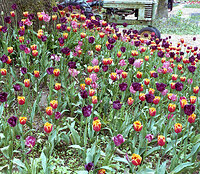
Tractor & Tulips

A
Tractor & Tulips

  • 0
  • 0
  • 10
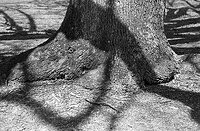
Tree with Big Shadows

Tree with Big Shadows

  • 2
  • 0
  • 69

Forum statistics

Threads
203,456
Messages
2,855,025
Members
101,852
Latest member
keith1420
Recent bookmarks
0
I admit I have done it, but only to verify a flash setup for my Mamiaflex. I figure if its just to simulate a real photograph, a camera simulator can be used.
If I was shooting with my 645N, I would have used the built-in light meter and/or TTL flash. I do have a Gossen DigiFlash II, so I must admit it is just sloppy technique on my part. Oh, wait. That's a digital light meter. And I was using a Pocket Wizard for off camera flash sync. I'm not going to Heaven, am I?
 
I've tried using my DSLR as a light meter, but the meter in my analog camera consistently wants the exposure to be one stop lighter. I think my DSLR is 'right', but I don't know for sure as I'm still on my first roll of film.
Unless it's a bright and sunny day, I'm forced to use settings like f2.8 1/60s (ISO400). I can hardly imagine being able to shoot 100 ISO film, unless you're shooting the sun itself :/

Equipment used:
Minolta X-300 (aka X-370) with Kodak Tri-X 400
Canon 650D (aka T4i)

Any suggestions?
 
There is no I.S.O. standard for the image sensors on digital cameras, they are calibrated to that individual camera models light meter not the International Standards Organisation standards set for film speeds, so using digital equipment to "see" the lighting effects, shadows, contrast between studio lights etc.. a DSLR is O.K, but not to calculate exposure, because they can be a stop or more out.
 
Last edited by a moderator:
There is no I.S.O. standard for the image sensors on digital cameras, they are calibrated to that individual camera models light meter not the International Standards Organisation standards set for film speeds, so using digital equipment to "see" the lighting effects, shadows, contrast between studio lights etc.. a DSLR is O.K, but not to calculate exposure, because they can be a stop or more out.

There is an ISO standard for rating imaging sensor sensitivity namely ISO 12232-2006. Quoted from the abstract

"ISO 12232:2006 specifies the method for assigning and reporting ISO speed ratings, ISO speed latitude ratings, standard output sensitivity values, and recommended exposure index values, for digital still cameras. ISO 12232:2006 is applicable to both monochrome and colour digital still cameras."

Since I don't feel like spending $123.00 to purchase the PDF I really don't know. I heard, that the standard leaves a lot of leeway to the manufacturers as to how to rate their sensor.
 
AFAIK if digi cameras didn't have to conform to the same ISO standard as film, most of our systems measuring exposure would be worse than useless, they would be misleading. Having said that, every sensor probably has its own characteristic response just like every emulsion does. Not wanting to use digi does not equate to digi not having standards - just to be fair.
 
There is no I.S.O. standard for the image sensors on digital cameras, they are calibrated to that individual camera models light meter not the International Standards Organisation standards set for film speeds, so using digital equipment to "see" the lighting effects, shadows, contrast between studio lights etc.. a DSLR is O.K, but not to calculate exposure, because they can be a stop or more out.

That's an interesting comment. It motivated me to do a test. I compared the exposure measured by my Canon XTi digital camera to my Canon Rebel 2000. They measured the same exposure.
 
There is an ISO standard for rating imaging sensor sensitivity namely ISO 12232-2006. Quoted from the abstract

"ISO 12232:2006 specifies the method for assigning and reporting ISO speed ratings, ISO speed latitude ratings, standard output sensitivity values, and recommended exposure index values, for digital still cameras. ISO 12232:2006 is applicable to both monochrome and colour digital still cameras."

Since I don't feel like spending $123.00 to purchase the PDF I really don't know. I heard, that the standard leaves a lot of leeway to the manufacturers as to how to rate their sensor.
In both your quoted cases they refer to digital cameras, not that they bear any relationship to the I.S.O. standards that apply to film.
 
That's an interesting comment. It motivated me to do a test. I compared the exposure measured by my Canon XTi digital camera to my Canon Rebel 2000. They measured the same exposure.
I'm paraphrasing an article I read by John Clements in The British Journal Of Photography dated the 29th of June 2005 titled Incident Room that I have in front of me at the moment that I can't scan and post because of copyright restrictions, but they did extensive test with several modern digital light-meters and digital SLR's and various films and they found that digital cameras could be anything up to just over a stop out and the most practicable solution to the problem is to calibrate your hand held meter or film camera to the digital cameras sensor.
 
I've tried using my DSLR as a light meter, but the meter in my analog camera consistently wants the exposure to be one stop lighter. I think my DSLR is 'right', but I don't know for sure as I'm still on my first roll of film.
Unless it's a bright and sunny day, I'm forced to use settings like f2.8 1/60s (ISO400). I can hardly imagine being able to shoot 100 ISO film, unless you're shooting the sun itself :/

Equipment used:
Minolta X-300 (aka X-370) with Kodak Tri-X 400
Canon 650D (aka T4i)

Any suggestions?

Welcome to APUG.

Digital does not have the same light spectrum that a light meter has. The light meter is properly calibrated it correct.
 
In both your quoted cases they refer to digital cameras, not that they bear any relationship to the I.S.O. standards that apply to film.

You said there is no ISO standard governing the rating of digital sensor but I said there is. I do believe that the standard is very slack and allow manufacturer to rate their sensor very differently but then it was the same for film.
 
You said there is no ISO standard governing the rating of digital sensor but I said there is. I do believe that the standard is very slack and allow manufacturer to rate their sensor very differently but then it was the same for film.

Actually no. Film manufacturers follow an ISO standard and have done so for many decades. Digital camera manufacturers do not follow an ISO standard. Digital Camera Manufacturers are in their own universes that have nothing to do with film other than they call their products cameras. Wishing that it was different will not make it so.
 
Just use your incident light sensing smartphone. :wink:
 
Actually no. Film manufacturers follow an ISO standard and have done so for many decades. Digital camera manufacturers do not follow an ISO standard. Digital Camera Manufacturers are in their own universes that have nothing to do with film other than they call their products cameras. Wishing that it was different will not make it so.

Yes they do as I have posted the number for the ISO document.
 
Thanks everyone! And thanks for the welcome, Sirius Glass!
@gzhuang, thanks but I don't own a smartphone.

I expected that the measurements would be comparable, as if they were an objective measurement of a certain quantity of light.


That said, I don't think the Minolta's meter is accurate. I tried comparing it to the Sunny 16-rule today, and it's off by 2 to 3 stops.
It's now 1 o'clock, overcast but not dark in any way, and the Minolta recommends f5.6, 1/60s. It should be around f5.6,1/500s, isn't it?
 
That is just too awesome! You have a big Ries tripod you put that on right? :smile:
Absolutely concur with the lightmetering application. :tongue:

14454081831_8d71f2bcaf_z.jpg
 
I've tried using my DSLR as a light meter, but the meter in my analog camera consistently wants the exposure to be one stop lighter. I think my DSLR is 'right', but I don't know for sure as I'm still on my first roll of film.
Unless it's a bright and sunny day, I'm forced to use settings like f2.8 1/60s (ISO400). I can hardly imagine being able to shoot 100 ISO film, unless you're shooting the sun itself :/

Equipment used:
Minolta X-300 (aka X-370) with Kodak Tri-X 400
Canon 650D (aka T4i)

Any suggestions?

Welcome to the forum. I hope we see many posts from you if for nothing else than your inventive screen name. I have no idea if it means anything but it's quite lyrical trying to pronounce it.
 
I'm quite sure "kimi wa" is japanese for "you are" and if we go that road "kasa" is an umbrella "o sashi" stays mysterious. Like, insering ? (Google translate)
Anyway, yes ISO ratings are a little loose and it has been proved but don't we have the same problem with films ? Just remembering landscape god Ansel Adams writing a page on film speed test in "the negative".
Just compare your camera to a proper lightmeter and than you'll know how off (or not) it will be.
As for checking your exposure with a digital camera, it can get pretty ridiculous (thanks for the demonstration gzhuang) but i personally think it's not such a bad idea when you're a beginner or unsure (i guess i am not going to haven either !?) :
- pre-visualisation is easy
---> you waste less film
- you don't need to note your exposures all the time anymore
---> saving our precious amazonian forest
But try to get out of this system fast as it can get tedious after a while !
 
Last edited by a moderator:
Kasa-o-sashi actually means using an umbrella.
Sashi is a form of sasu. Sasu could mean to insert, impale, or when used with umbrella, simply "use"

Kimi wa kasa o sashi is actually a fragment, not a sentence - which translates to you are using an umbrella. But in Japanese, something ought to follow that part.

Yup, welcome to APUG!
 
I've used DSLR as a light meter myself. I didn't have the same problem of inconsistency. Perhaps one of them or both of them are off calibration? Since you know which way it errors, you could easily compensate though.
 
I have a digital camera with a very good macro mode. I use it to take pictures of old film cameras and any other complex things before I take them apart, as well as during the process, it's faster than making drawings and better than trying to remember.
I use a handheld lightmeter though. ;
 
I don't have a digital camera I've had been a photographer for nearly half a century before digital was invented and have enough confidence in my abilities with a light meter both outdoors and in the studio not too feel the need for this crutch, and can pretty much visualize what the shot will look like before I press the shutter release.
 
I don't have a digital camera I've had been a photographer for nearly half a century before digital was invented and have enough confidence in my abilities with a light meter both outdoors and in the studio not too feel the need for this crutch, and can pretty much visualize what the shot will look like before I press the shutter release.

+1
 
I don't intend to review this whole thread. To each his own. But it just sounds like trying to do things the hard way. ... like trying to sweep the
porch by learning to play an accordion.
 
I use an old small film camera instead of a digital camera. the results are great and work for me. i then have a camera to shoot 35mm tri-x with alongside my pentax 67 non-metered prism camera i just bought. I can now use it as a spare to use alongside my other metered pentax 67. I can also use the metered 67 to meter the non-metered 67. now i can shoot velvia 50 and tmax 100 at 50 and use the meter reading from one to use on the other. works for me but maybe not for you. to each his own.

whatever works for you and makes you happy is all that matters, as long as you get the results you like
 
Photrio.com contains affiliate links to products. We may receive a commission for purchases made through these links.
To read our full affiliate disclosure statement please click Here.

PHOTRIO PARTNERS EQUALLY FUNDING OUR COMMUNITY:


Ilford ADOX Freestyle Photographic Stearman Press Weldon Color Lab Blue Moon Camera & Machine
Top Bottom
