
• Welcome to Photrio!
    Registration is fast and free. Join today to unlock search, see fewer ads, and access all forum features.
    Click here to sign up

Using digital camera to set up film shots

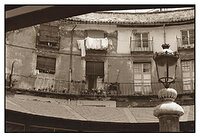
Valencia

A
Valencia

  • 1
  • 1
  • 59
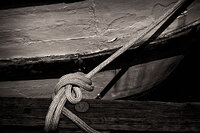
Tied to the dock

D
Tied to the dock

  • 4
  • 0
  • 97

Recent Classifieds

Forum statistics

Threads
203,095
Messages
2,849,751
Members
101,662
Latest member
Kanofski
Recent bookmarks
1

alanrockwood

Member
Allowing Ads
Joined
Oct 11, 2006
Messages
2,193
Format
Multi Format
I was wondering about idea of using a digital camera to help set up film camera shots... evaluating exposure (replacing light meter), evaluating lighting ratios, evaluating color balance, evaluating dynamic range of lighting setup, setting up posing, etc.

I am not experienced with studio photography, but the though occurred to me that a digital camera might be useful for setting up a shot. This may be old hat to some of you, but it would be new to me.

By the way, I just bought and RB67, and I would like to start learning some studio photography.
 
Just keep in mind that the dynamic range of the current digital camera is not 'like transparencies', as it was stated to be in 2004
 
Sounds like too much evaluating and not enough shooting :} I don't shoot color, so color balance is not my field, but for B&W, a good light meter and close examination of the light on your subject should do the trick. The best way to learn this stuff is to do your own developing and printing. Sending stuff out is a big negative, no pun intended. It disrupts the time element (you forget what things were like by the time the film comes back) and you lose control of the process and hand it off to someone else that may or may not know what you're after.
 
I was wondering about idea of using a digital camera to help set up film camera shots... evaluating exposure (replacing light meter), evaluating lighting ratios, evaluating color balance, evaluating dynamic range of lighting setup, setting up posing, etc.

I am not experienced with studio photography, but the though occurred to me that a digital camera might be useful for setting up a shot. This may be old hat to some of you, but it would be new to me.

By the way, I just bought and RB67, and I would like to start learning some studio photography.

Well, its what I do, but don't tell anyone! :whistling:
 
I use my old Nikon D40 as a light meter when shooting 4x5. Works for me.
 
Absolutely concur with the lightmetering application. :tongue:

14454081831_8d71f2bcaf_z.jpg
 
I hope the gods are okay with cross processing. :tongue:
 
You can use anything you want, trusting it is another matter.

Lots of people just used large frame Polariods.

You needed a grey card to show you were trying.
 
I definitely use digital as a lighting check in studio, I mean why not? When I worked in the film industry in the 90's, we used polaroids for the same purpose.
 
I did just that few weeks ago because I didn't want to carry both cameras AND a light meter. D800 and RB-SD. It worked well.
 
I am going a step further. I'm beginning a large series of experimental studio shots, and am going to work only in digital until things start to gel. Only then will film get loaded.
 
Last edited by a moderator:
I did just that few weeks ago because I didn't want to carry both cameras AND a light meter. D800 and RB-SD. It worked well.


I left out a bit of information.... When I did this, I took exposure reading from D800 and increased it by one stop to use it on RB. Film does well on over-exposure but performs poorly on under. Digital is the other way around. I was using Tmax400-2 on RB. (I don't use slide films) I developed it normally. Result was detail rich negative on a tad dense side. I liked it very much this way.
 
Most of the time when shooting with the RB67 I use only my hand held meter. Just quicker that way but the feed back from the digital camera is really handy sometimes.
 
Most of the time when shooting with the RB67 I use only my hand held meter. Just quicker that way but the feed back from the digital camera is really handy sometimes.

This thread sounds like something on you may find on DPUG. But it just shows that digital is an enhancement to photography in general and not an either/or.
 
No reason not to. Most times I go light meter only. Occasionally, when I do carry a PhD, I might click it once after metering and determining just to get a visual of what it might be like. If I see something different, I might revisit my decisions and make a minor tweek here or there. For the most part, it will only confirm what I already know and I just trip the shutter.
 
I hear some are expressing displeasure concerning this discussion being on APUG. I think this discussion is appropriate for APUG because we are strictly talking about using DSLR as a light meter and as an aid to making film photography. At least I am.

I would think, if one sets DSLR to spot meter mode, it will act exactly like a handheld spot meter? I usually have my camera set to Nikon's matrix mode. Then look at the display to see where problem area might be and histogram. Then adjust the exposure reading appropriately/accordingly to set my RB. If I was only carrying RB, I'd take my Sekonic, but when I have both, it's just handy to do it this way. I think of DSLR in this capacity as an ultra delux 2 dimensional light meter. Of course, as always, there is some interpretation of reading necessary.

If it will result in better FILM photography, I see no reason to limit myself to only using traditional method....
 
I've certainly done it, but here are two gotchas possible in the "DSLR as Polaroid" scenario:

If you haven't tested your film for it's true ISO and how it works with your processing choices, you can get in some trouble. When I started shooting HP5+, I backed up my tests with a current digital Nikon. I got way more shadow detail with the digital shots until I settled on 320 or lower for normal speed with the Ilford in Rodinal combo I was using.

And, a higher-end digital camera has a few - or a lot - of parameters that affect how the JPEGs are compressed and displayed, and how raw files are displayed in-camera after shooting... a lower end just does what it thinks looks cool or gives you far less choices. Either way, your JPEG settings and VF brightness can produce images subtly or radically different than what your film will supply. Like everything else in this biz, dialing this in requires testing and tweaking. But with a decent DSLR, you should be able to save profiles that are names for the films you are shooting and are tweaked to match fairly close.

Overall, for B&W shooting, I found accurate shadow detail to be the real issue when doing this, and shooting B&W for shadow exposure is one of the golden rules. I still like it for checking lighting ratios and generally looking for surprises, and like the polaroid days, there's immense value to stepping away from camera and set and seeing your image without a viewfinder (just wait til you try using the HDMI out to a production monitor or big TV...), especially if there's a stylist or team involved. But I don't know that (for me anyway) it'll fully replace metering and exposing for shadows with an idea of how the film will process.
 
What M Carter says.

Think of the digital camera as a really complex meter, with even more extra features.

If you do the same sort of film speed testing that you should do with any hand meter, and remember how to turn off the extra functions, they should do the job as well as a spot meter.

But you do have to do that sort of calibration.

And as for previewing things other than exposure, be careful about how the display response correlates (or doesn't correlate) with film response.

And unless your sensor size matches your film format, depth of field will vary.
 
Some, but few are using it. I find it completely inconvenient. My DSLRs ISO and metering doesn't match Sunny 16 or handheld meter often. The ISO does not exist in digital, it just emulation.

Plus by the time I set it all with digital, light will change. Having second digital set just to check is also annoying to carry on, those crappy batteries...

If you want it digital here is lightmeter app for phones. You could measure different zones and see right away how entire picture will be affected, much more effective and real time instead of taking test picture with digital camera or killing batteries with live view.
Not all phones are supporting it, iPhone does for sure.

Film is much more forgiving comparing to digital. Take your time, practice with film and classic handheld. Use 100 ISO film to remember common exposure setting. At some point it comes naturally how to adjust it for different ISO. Learn how to measure incident light. It also doesn't take long time to start shoot meterless outdoors under regular light, next come indoors. Last week I just guessed the exposure for LF portrait and it was right.
 
Photrio.com contains affiliate links to products. We may receive a commission for purchases made through these links.
To read our full affiliate disclosure statement please click Here.

PHOTRIO PARTNERS EQUALLY FUNDING OUR COMMUNITY:


Ilford ADOX Freestyle Photographic Stearman Press Weldon Color Lab Blue Moon Camera & Machine
Top Bottom
