
• Welcome to Photrio!
    Registration is fast and free. Join today to unlock search, see fewer ads, and access all forum features.
    Click here to sign up

Unknown Artifacts on Rollei 4x5 Sheet Infrared 400 Film

Angular building 6

A
Angular building 6

  • 3
  • 0
  • 27
Angular building 5

A
Angular building 5

  • 0
  • 0
  • 17

Recent Classifieds

Forum statistics

Threads
202,552
Messages
2,842,245
Members
101,379
Latest member
deckeda
Recent bookmarks
0
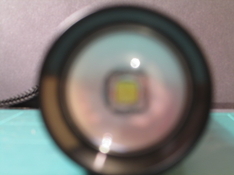
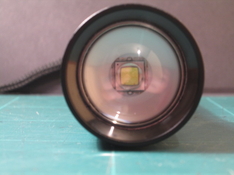
Do you use a torch with one of those powerful square LEDs?

The circle with a square in the middle reminds me of my LED torch.

Pictures below in focus and out of focus.
 

Attachments

  • IMG_4229.JPG
    IMG_4229.JPG
    63.6 KB · Views: 66
  • IMG_4231.JPG
    IMG_4231.JPG
    69.6 KB · Views: 57
Place the film corner lightly between slightly moist lips. When you open your lips the emulsion side sticks to one of the lips. Try it on an undeveloped leader of a roll of 35mm.
I used to do this when Cibachrome printing in complete darkness.

Yes, i've had to resort to using the moist-lip method in the past......i was referring to the fact that to avoid the impact of a manufacturing defect, the retailer expects me to use that method of identifying the emulsion side. when in reality, they should be replacing a faulty product.

Mike
 
Do you use a torch with one of those powerful square LEDs?

The circle with a square in the middle reminds me of my LED torch.

Pictures below in focus and out of focus.

It seems the most logical explanation so far, I was thinking 'maybe a torch' all along but your photo makes it look very likely given the pattern.

But yes, under exposing isn't compensated for by over developing the film, three stops plus reciprocity would be my guess (as others have said) for a Wratten #25. I would do a dark slide exposure test, pull the slide out in maybe three steps adding to the previous exposure step each time, the negative doesn't need to be sharp if the holder moves but ideally you want an expected plus, normal, and minus exposure when developed, if plus or minus turns out to be the better the 'normal' calculation was wrong.
 
Yes, i've had to resort to using the moist-lip method in the past......i was referring to the fact that to avoid the impact of a manufacturing defect, the retailer expects me to use that method of identifying the emulsion side. when in reality, they should be replacing a faulty product.

Mike

Hello Mike.
Thanks for that.
I must admit I sometimes find it difficult to understand the direction of some messages in electronic mail.
It is not like being face to face where you can get the gist of a persons meaning, through their vocal style and facial expressions.
Nice one Mike.
 
Just thought I would give this a bit of a gee up.

Did you ever find the answer to the problem?

Interested if you do use a torch/headlamp with a square LED?

Possibly a red torch used in the processing lab?
 
Just thought I would give this a bit of a gee up.

Did you ever find the answer to the problem?

Interested if you do use a torch/headlamp with a square LED?

Possibly a red torch used in the processing lab?

Some labs even use infrared goggles, for that matter. Most IR illuminators use dies shaped like that and some cheap "zooming" lights focus a fairly sharp image of the die at some distance or another.
 
Some labs even use infrared goggles, for that matter. Most IR illuminators use dies shaped like that and some cheap "zooming" lights focus a fairly sharp image of the die at some distance or another.
Most of the infrared goggles that use IR illuminators use LEDs well above the 750 nm that this film is sensitive to, the ones I have at my house use something like 940-950nm. I have personally used them to cut Aviphot 200 (same film being discussed) with no issues whatsoever (although I really didn’t like it and have since just cut the film in the dark).

And from my understanding, these goggles, or similar versions of them, are pretty much what most places use. They’re like 30 bucks on eBay.
 
Been a while since I posted to my original comments but I have just had a breakthrough which lends a LOT of information as to where this might have happened.

1. As for all the ideas that I used an LED torch, or similar, that would have created a blank unexposed area on the outside edge of the film where it rides beneath the film ridges which hold it flat. The film is exposed all the way to the edge, so that rules out exposures in the film holders.

2. I made the assumption that since all the artifacts are in the same area on the one side of the film that these must have been exposed while stacked inside the film box. They all lined up so it made sense. Of course that would assume that whatever caused the artifacts had to penetrate 3 layers of cardboard, a plastic bag and a foil pouch, not really likely. This entire assumption was wrong (it could have easily been avoided if there had been film notches present).

3. ALL of these exposures were made of the Orion Nebula without moving the camera between exposures. These were clock driven images locked onto the exact same area of the sky. What finally caught my attention were the star images burned into the film. I noticed that when I stacked the negatives on top of each other with the artifacts all on the one side, the star images did NOT line up. I re-arranged the film so that all the star points lined up when placed on the light table. That is when I noticed that the artifacts were actually on BOTH sides of the film and not just the one side. I had an idea to pull the sheets of film apart so that the edge of film with the artifacts would be in the center, and that is when it hit me. The two images lined up to make a SINGLE image. And it looks just like the smaller artifact that was in the center of the film, just bigger and with more exposure. These 4x5 sheets are cut from a larger sheet and they had been sliced right through the center of the artifact, resulting in two sheets of film with an artifact on opposite sides of the sheet. That means that the film had been exposed PRIOR to being cut at the production plant. After contacting Rollei with this new information they reluctantly agreed that this had happened on their watch. They are sending me 2 replacement packages through the mail.

Hopefully I have illustrated my point in the image below.


1768868015387.png
 
Last edited:
I never would have guessed fogged at the factory. Good work figuring that out!
 
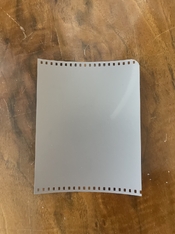
wait, I just read that this film doesn’t have a corner notch?! That’s actually wild. I thought about just telling people that the emulsion is just on the inside of the natural curl of the film, but that seemed like a disaster waiting to happen. So I spent like $75 on a corner punch so I can do a full stack of 25 sheets at once.

Scrap sheet of Aviphot 200 I had laying around:
IMG_3553.jpeg
 
Last edited:
Photrio.com contains affiliate links to products. We may receive a commission for purchases made through these links.
To read our full affiliate disclosure statement please click Here.

PHOTRIO PARTNERS EQUALLY FUNDING OUR COMMUNITY:



Ilford ADOX Freestyle Photographic Stearman Press Weldon Color Lab Blue Moon Camera & Machine
Top Bottom