• Welcome to Photrio!
    Registration is fast and free. Join today to unlock search, see fewer ads, and access all forum features.
    Click here to sign up

Underwhelmed by Red Filter effect

Recent Classifieds

Forum statistics

Threads
203,047
Messages
2,849,105
Members
101,620
Latest member
JasonGO
Recent bookmarks
0

sterioma

Member
Joined
Jan 9, 2004
Messages
520
Location
United Kingdom
Format
Medium Format
A red filter is often described as the one giving the most "dramatic" effects in terms of separation of clouds from the sky. At times you see photos online where the sky looks almost black.

I have just acquired a Heliopan red filter (I believe it is the requivalent of a "25"), which I mounted in front of my 50mm Distagon lens and I can say that I was not blow away from what I have found. The sky these days in England is as blue as it can get, with frequent clearing after wind and storms. Still, while there is some separation between the clouds and the sky, it is nowhere near to be "dramatic".

I have used a polarizer in the past with my 35mm camera (mostly for slides), but I did not particarly like the gradient when using a wide angle lens. Is an infrared film my only option? Or should I just move to the mountains :smile:

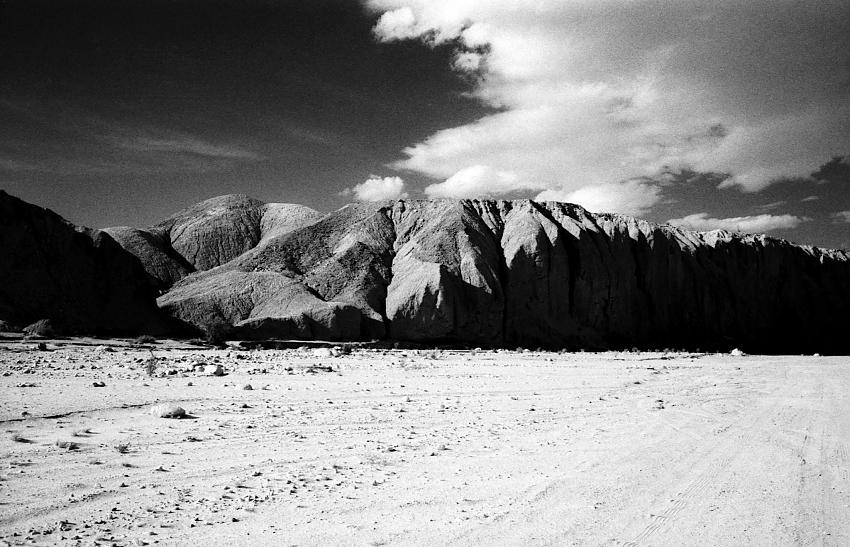
Here's an example: film is HP5+ exposed at 160 with 3 extra stops for the red filter. Scan from negative, with no changes to contrast.
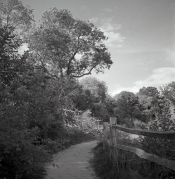
RedFilterTest-1.png
 
Yes, red filter effect can be over-rated in many cases. In some of the dramatic examples it can look quite harsh and fake. Although I have one in every size needed for my gear, it’s my least used filter.
 
Try a yellow (K2) filter for more dramatic sky effect.
 
A red filter is often described as the one giving the most "dramatic" effects in terms of separation of clouds from the sky. At times you see photos online where the sky looks almost black.

I have just acquired a Heliopan red filter (I believe it is the requivalent of a "25"), which I mounted in front of my 50mm Distagon lens and I can say that I was not blow away from what I have found. The sky these days in England is as blue as it can get, with frequent clearing after wind and storms. Still, while there is some separation between the clouds and the sky, it is nowhere near to be "dramatic".

I have used a polarizer in the past with my 35mm camera (mostly for slides), but I did not particarly like the gradient when using a wide angle lens. Is an infrared film my only option? Or should I just move to the mountains :smile:

Here's an example: film is HP5+ exposed at 160 with 3 extra stops for the red filter. Scan from negative, with no changes to contrast.
View attachment 246805

That looks more like a R23 than a R25. Red filters have a stronger effect at higher altitudes like 10,000 feet.
 
A red filter is often described as the one giving the most "dramatic" effects in terms of separation of clouds from the sky.
....
Here's an example: film is HP5+ exposed at 160 with 3 extra stops for the red filter. Scan from negative, with no changes to contrast.

Are you saying that you rated HP5+ at EI160 and then gave an additional 3 stops of exposure? a total of 5-1/3 stops more exposure than box speed...yes?

rating HP5+ at EI 160 is only 1-1/3 stops more exposure than box speed.

either way, I think the exposure is, perhaps, non-optimal for the red filter.
 
Exact same thing happened to this guy with a deep yellow filter, so he had do do some darkroom manipulation....
Screen Shot 2020-05-23 at 1.22.47 PM.png
 
Are you saying that you rated HP5+ at EI160 and then gave an additional 3 stops of exposure? a total of 5-1/3 stops more exposure than box speed...yes?

I normally expose HP5 at 160 (based this EI from a speed test). Here I gave 3 extra stops to account for the filter, and developed as "normal". The negative looks correctly exposed, considering the red will take away some shadow detail.
 
I quite like a red filter. I do use them usually with slower film. These are straight scans from a scanner, so they might look different when printed.


I normally expose HP5 at 160 (based this EI from a speed test). Here I gave 3 extra stops to account for the filter, and developed as "normal". The negative looks correctly exposed, considering the red will take away some shadow detail.

If your EI is 160 for HP5+, then you have some serious calibration problems with your camera and-or light meter OR serious technique problems. Do you take light meter readings including the sky? Never take a light reading including the sky.
 
If your EI is 160 for HP5+, then you have some serious calibration problems

My EI for HP5 72 expsoure roll is about 12, maybe a little less. (the rolls are from 1984, the rebate is nearly black)
 
If your EI is 160 for HP5+, then you have some serious calibration problems with your camera and-or light meter OR serious technique problems.

If shooting HP5 at 160 was ok for Ansel Adams I am sure it can be ok for me too :smile:

I used a spot meter here, metered the shadows and opened up closed 2 stops. As I said, there is plenty of detail in the negative so exposure is fine.
 
Last edited:
I quite like a red filter. I do use them usually with slower film. These are straight scans from a scanner, so they might look different when printed.

Those are great shots, more like to what I was hoping to achieve.
 
I rate HP5+ at 160 all the time and process accordingly. I also pretty much use a red- orange filter over the lens most of the time there is sky in the shot.
Airstream Castle Valley.jpg
 
I am starting to think that the sky is just not blue enough at these latitudes (unless maybe you start to climb up a bit).
 
  • sterioma
  • sterioma
  • Deleted
  • Reason: double post
The tone of the sky in your image looks appropriate. Some images benefit from a more dramatic (black) sky. I have been using HP5 in formats up to 8x10 for about 20 years, and I have found that the filter factor for #25 filter for this film is a bit on the high side. I only increase exposure by one and two thirds of a stop (EI 250). I'm wondering if your red filter is really the equivalent to the #25... I've gotten cheapy filters from China that claimed to be #25 that under performed. I binned them.
 
I've gotten cheapy filters from China that claimed to be #25 that under performed. I binned them
I have noticed this with Yellow filters that I use constantly. Now I only use glass filters from reputable filter sellers and the outcome is noticeable for me anyways.
 
Here's an example: film is HP5+ exposed at 160 with 3 extra stops for the red filter. Scan from negative, with no changes to contrast.

As the front part shadows are so bright, I would assume you have overexposed the sky.

My theory is that the sky that looks "dramatic" without filter is the only sky you can enhance with filter. Try boosting up hazed sky. The sky needs to be really blue to get that effect? And usually strong blue sky looks itself quite dramatic on B&W without filters.
 
Your red filter is a minus blue and green filter. If your picture is all blue sky and green foliage and you open up 3 stops, you can expect a nice normally exposed picture of blue and green things. Red things would be overly exposed, but there are not any of these in your picture.
 
A red filter removes blue and green from the sky. If the sky is really, really saturated blue, a red filter will turn it quite black (clear in the negative). However, a hazy robin-egg blue sky contains a great deal of yellow and red light in the form of white. In this case, a red filter will not have such a great effect. It's that simple. You'd be surprised how much red there is in the sky even though it looks light blue. Viewing through the filter will give you an idea. Experiment a bit with this: take your red filter with you and look through it at lots of objects to see which ones turn quite dark and which ones end up being lighter than expected. It's quite and education.

Best,

Doremus
 
I am amazed you can give the sky that much exposure (judging from the good exposure in the shadows), develop 'normally', and not have blasted out the sunlit branches in the center of the image.
 
I'm wondering if your red filter is really the equivalent to the #25... I've gotten cheapy filters from China that claimed to be #25 that under performed. I binned them.

I am not sure it is, but somewhere I remember that R25 is also called 8x, which is what this filter has on the ring.
This is a Heliopan filter, which I assume should be decent enough.
 
Photrio.com contains affiliate links to products. We may receive a commission for purchases made through these links.
To read our full affiliate disclosure statement please click Here.

PHOTRIO PARTNERS EQUALLY FUNDING OUR COMMUNITY:


Ilford ADOX Freestyle Photographic Stearman Press Weldon Color Lab Blue Moon Camera & Machine
Top Bottom