

• Welcome to Photrio!
    Registration is fast and free. Join today to unlock search, see fewer ads, and access all forum features.
    Click here to sign up

underfixing causing thin negs?

Greens

A
Greens

  • 5
  • 1
  • 37
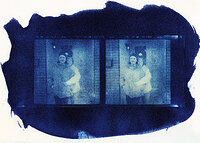
Cyanotype stereo card

A
Cyanotype stereo card

  • 2
  • 0
  • 43

Forum statistics

Threads
203,134
Messages
2,850,345
Members
101,690
Latest member
nisherii
Recent bookmarks
0

Poohblah

Member
Allowing Ads
Joined
Aug 30, 2008
Messages
436
Format
Multi Format
i just got back from a shoot and developed my film only to pull VERY thin negs out of the fix - as in, no lettering or bar codes on the sides, etc. i think the developer was dead, but my classmate thinks that i underfixed my negs. his film, which he developed the same day with the same chemicals, turned out better, but still slightly thin. now, i've had underfixed negs in the past but they've never looked thin. is my classmate right?

and finally, is there any possible way of saving the negs? this really pissed me off, as they were great photos...

by the way, i was using Pan F 50, he was using Tri-X 400, both of us developed from the same gallon of D76, me for 6.5 minutes and him for 7.5 minutes. both of us fixed with the same Ilford rapid fix, me for 4.5 minutes and him for 7.5 minutes. both chemicals were at the stock dilution.
 
that's what i thought... i didn't see his reasoning for underfixing causing thin negs...

Did you pour the fix in before the developer?

nope. besides, there is still some density where the leader was and in the shadows... but nothing more.
 
What PE said is irrefutable. The fixer wasn't the problem. Exhausted fixer usually leaves a stain that is quite obvious and can be remedied be refixing in fresh solution, but time and temperature in unexhausted developer is responsible for thin or dense negatives assuming they were correctly exposed.

Six and a half minutes seems way too brief a time to me. At least two or two and a half minutes longer would have been a better choice.

If there is detail in the negs, you could try dipping them in selenium to intensify what's there. There are threads on apug you can search for recommended procedures (I've not ever done it.).
 
What PE said is irrefutable. The fixer wasn't the problem. Exhausted fixer usually leaves a stain that is quite obvious and can be remedied be refixing in fresh solution, but time and temperature in unexhausted developer is responsible for thin or dense negatives assuming they were correctly exposed.

Six and a half minutes seems way too brief a time to me. At least two or two and a half minutes longer would have been a better choice.

If there is detail in the negs, you could try dipping them in selenium to intensify what's there. There are threads on apug you can search for recommended procedures (I've not ever done it.).

in the past, i've had absolutely wonderful negatives come from Pan F in D76 for 6.5 minutes, and that's what the box recommends for the developer and temperature i'm using. i think the developer was exhausted, but that still doesn't explain why my classmate got better negs than I did.
 
Yes, 6 - 9 minutes should be enough, but the edge markngs are not strong. That is the clue here. Development was lacking.

PE
 
Did you use developer that had already been used? Did you dilute developer that had already been diluted?

Did you and your friend both process at about the same time, or could something have happened to the developer in the interim?

[edit: Suzanne and I are stabbing simultaneously]
 
Or contaminated! Perhaps the developing tank/reels/whatever, wasn't cleaned properly, with some remaining fixer in there?

It's a strong contender if the developer was fine before.

- Thomas

[edit: lots of stabbing going on :D]
 
Your experience sounds like my first couple years of learning with Kodak Microdol-X. Lack of development for some reason is the cause.

I've gotten some results with problems like this soaking the negs. in a 1:3 solution of Kodak selenium for 3-5 minutes. Should pickup at least one contrast grade. Should be able to see density gain over a light box. If already cut into strips do 1 strip at a time so you can compare the difference. Wash well after soaking.
 
Or contaminated! Perhaps the developing tank/reels/whatever, wasn't cleaned properly, with some remaining fixer in there?

It's a strong contender if the developer was fine before.

- Thomas

[edit: lots of stabbing going on :D]

good call! knowing the students in the photo classes at school, that is extremely likely. my classmate and i processed at exactly the same time, perhaps it is possible that the contaminated developer rose to the top being less dense than the uncontaminated developer?

i'm going to develop at home using my own chemicals from now on. in 4 weeks of school, teach has already said that 1 gallon each of bad developer, bad stop bath, and bad fixer were good. the stop bath was indicator stop bath to boot, and it was neon purple!
 
Gang darkrooms are often sad places to work, although they could be much better if people put a little effort into them. The one here at work is not as bad as some, but the kids still run into all sorts of problems that one would never have when working in your own personal darkroom. I used to suggest to the kids that they process film at home and then make prints at school. Many of them thanked me later because they ran into a lot less frustration and ruined film due to contaminated/exhausted chemicals, melted film in the drying cabinet, dust, scratches, poor washing, etc...

- Randy
 
good call! knowing the students in the photo classes at school, that is extremely likely. my classmate and i processed at exactly the same time, perhaps it is possible that the contaminated developer rose to the top being less dense than the uncontaminated developer?

No, this is not likely, but it is possible that your classmate was processing in a clean tank, and your tank had some fixer in it from a previous session, which would do unfortunate things to the developer.
 
Was it at the right temperature? I processed two rolls one day in early winter, forgot to check the temperature, and found out that 10 degrees too cold makes a lot of difference...similar results to your description.
Havent had any problems with the group darkrooms here so far, but we have 2 full time techs to monitor things.
 
It's not the fix, unless you got some in the developer using a dirty tank, and your classmate didn't. He could have had a higher temperature, or he could have given his negs more exposure to begin with.
 
And the moral of this tale is ' always mix your own chemicals ' so you know where they've been.
 
Hi, Pooblah.
Glad you have decided to develop your precious negs at home from now on. The other way to go would be to keep your own bottle of concentrated liquid developer such as Ilfotec HC, or Kodak HC-110 and work with fresh developer each time, used one shot and discarded after use. This is the way to consistent results and these developers are very economical indeed, with excellent keeping properties.

John.
 
Did you agitate the developing tank enough? That might make the negatives thin.
 
Hi, Pooblah.
Glad you have decided to develop your precious negs at home from now on. The other way to go would be to keep your own bottle of concentrated liquid developer such as Ilfotec HC, or Kodak HC-110 and work with fresh developer each time, used one shot and discarded after use. This is the way to consistent results and these developers are very economical indeed, with excellent keeping properties.

John.

how much constitutes a single shot? does 20 ounces for 2 rolls of 35mm film sound about right? or will 20 ounces develop more than that before becoming exhausted?

i'm getting ready to order this stuff on the internet, my local camera shop closed down this past saturday :sad: there are others around town, but i'd rather not drive 20 minutes each way and still not get everything i need. i know they have the chemicals, but not changing bags, etc.

 
I dilute HC-110 1:63 with water. I measure 8ml with a syringe and add water to make a total volume of 500ml. This does one film. Use once and discard... I prefer this high dilution for various reasons but the standard dilution is 1:31 or 16ml to make a total volume of 500ml. That will do 2 films in about half the time. At this ratio, a 1litre bottle will develop around 124 films. Hope this helps.
 
The method John refers to calls for mixing a working solution for each batch of film, It can only be used once. But it's only one part of developer concentrate to 31 parts of water, in the case of Kodak HC-110 Dilution "B". In the case of your 20 ounce tank, that would be roughly .6 ounces of concentrate to 19.4 ounces of water (these measurements are much easier of you use mililiters instead).

There are several different dilution ratios documented by Kodak, and a few others in common use, especially Jason's 1:49 dilution which is documented here in APUG and his website. (see http://www.jasonbrunner.com/hc110.html) and http://www.kodak.com/global/en/professional/products/chemistry/bwFilmProcessing/hc110.jhtml)
 
haha i read too fast now my last post makes me sound like an idiot.
i'd rather mix a fresh batch every time than have some old stuff sit around for months and possibly get contaminated or precipitate.
yes i agree millitres are much better but i'm using ounces for comparison's sake since that's what teach has us use for a 2-reel tank. i'll definitely mix everything in ml's.

2 more questions:
1. can i mix the chemicals with tap water (which, where i live, is very clean) or do i need distilled water?
2. can i substitute a dilute distilled vinegar mix for stop bath?
 
Photrio.com contains affiliate links to products. We may receive a commission for purchases made through these links.
To read our full affiliate disclosure statement please click Here.

PHOTRIO PARTNERS EQUALLY FUNDING OUR COMMUNITY:


Ilford ADOX Freestyle Photographic Stearman Press Weldon Color Lab Blue Moon Camera & Machine
Top Bottom