
Matt - I am metering through the filter (Leica MP).
-
Welcome to Photrio!Registration is fast and free. Join today to unlock search, see fewer ads, and access all forum features.Click here to sign up
You are using an out of date browser. It may not display this or other websites correctly.
You should upgrade or use an alternative browser.
You should upgrade or use an alternative browser.
Trying out Ilford's SFX this weekend!
-
A
- Thread starter luvmydogs
- Start date
Recent Classifieds
-
For Sale 4 vintage 35mm metal film canisters: Ilford, Kodak, Ansco, Adox
- Started by Jon Shiu
-
Sold SOLD! RW Vacuum Fidelity Elite 4x5 (5 units) & 8x10 (4 units) Film Holders
- Started by B.S.Kumar
-
Sold Cable Release Adapters for Leica, Nikon, Yashica, Rollei
- Started by Jon Shiu
-
Sold Stoesser Pin Registration Punch
- Started by Roger Thoms
Forum statistics

Matt - I am metering through the filter (Leica MP).
Macy:
Now I understand why you had so much grain.
When you meter through the filter, your meter takes into account the neutral density of the filter (about 4 stops). If you also adjust the ISO of the meter to 12, you are again adjusting (by about 4 stops) to take into account that neutral density. Together, the adjustments total to about 8 stops - you ended up overerexposing your film by about 4 stops.
In short, if you are going to meter through the filter, it is appropriate to use an ISO at or close to the "box" speed of 200.
I use the word "about" through these observations, because of the issues of spectral sensitivity - your eyes see the spectrum of light one way, the meter sees the spectrum of light another way, and the film sees the spectrum of light a third way.
Hope this helps.
Matt

Macy:
Now I understand why you had so much grain.
When you meter through the filter, your meter takes into account the neutral density of the filter (about 4 stops). If you also adjust the ISO of the meter to 12, you are again adjusting (by about 4 stops) to take into account that neutral density. Together, the adjustments total to about 8 stops - you ended up overerexposing your film by about 4 stops.
In short, if you are going to meter through the filter, it is appropriate to use an ISO at or close to the "box" speed of 200.
I use the word "about" through these observations, because of the issues of spectral sensitivity - your eyes see the spectrum of light one way, the meter sees the spectrum of light another way, and the film sees the spectrum of light a third way.
Hope this helps.
Matt
Ummm- yeah, didn't think to mention that.... Thanks Matt. You don't want to apply FF twice

Tim

Macy:
Now I understand why you had so much grain.
When you meter through the filter, your meter takes into account the neutral density of the filter (about 4 stops). If you also adjust the ISO of the meter to 12, you are again adjusting (by about 4 stops) to take into account that neutral density. Together, the adjustments total to about 8 stops - you ended up overerexposing your film by about 4 stops.
In short, if you are going to meter through the filter, it is appropriate to use an ISO at or close to the "box" speed of 200.
I use the word "about" through these observations, because of the issues of spectral sensitivity - your eyes see the spectrum of light one way, the meter sees the spectrum of light another way, and the film sees the spectrum of light a third way.
Hope this helps.
Matt
Ahh... this explains why Macy's exposures were so different from mine.
"Having to dial in an ISO of 12 with that 92 filter gave me a hard time this weekend - even though it was extremely bright and sunny I still was only able to shoot at a shutter speed of only 8 or 15 at an aperture of 2 - 2.8."
Between my hand-held meter for my Rolleiflex and the TTL meter on my Nikon (without filter) my full-daylight readings usually came out to something like 1/4@f16. (Which is an EV of 10) By doubly applying the filter factor, Macy was actually exposing at an EV of somewhere between -2 and 0. By my math, (which isn't good at the best of times :rolleyes
 she should have been at an easily hand-holdable 1/30@f5.6.
 A simple error which creates a huge difference in exposure.
Infrared & gel filters.
I took a tip from a local pro shooter and cut my Ilford gel filter to fit between the film rails of a Nikon FE2.Held the altered filter in place with a wee bit of tape.
No problem metering as the lens is unblocked.This was taken with Kodak HIE,ISO 12,Ilford Infrared gel filter.
I took a tip from a local pro shooter and cut my Ilford gel filter to fit between the film rails of a Nikon FE2.Held the altered filter in place with a wee bit of tape.
No problem metering as the lens is unblocked.This was taken with Kodak HIE,ISO 12,Ilford Infrared gel filter.
Attachments
Now why didn't I think of that???
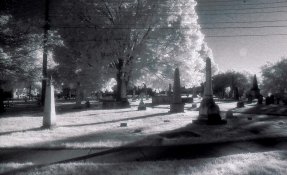
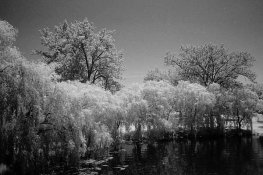
SFX is a good film for emphasizing clouds and darkening blue sky. I think I only used a light yellow filter for this one. It is quite grainy though.
View attachment 11343
View attachment 11343
Last edited by a moderator:


Thomas Bertilsson
Member
I don't shoot infrared film much, but I can say that Ilford SFX is a great film for regular panchromatic shooting if you don't like the IR results you get.
Just an added bonus...
- Thomas
Just an added bonus...
- Thomas

Someone on apug had posted a link to a website that shows the frequency response of various IR filters. I have found this site invaluable so i am re-posting it here again. Hopefully it will be of some use to others here also.
http://www.eazypix.de/ir/filter/filter.html
regards,
Thanasis.
http://www.eazypix.de/ir/filter/filter.html
regards,
Thanasis.
P C Headland
Subscriber
Shot my first (partial) roll of SFX today as well. The clouds weren't co-operating too well, but I'm hoping the shots I took will allow me to at least see how this film behaves.
Now have to wait for the next fine weekend. Ah, the joys of winter.!
Now have to wait for the next fine weekend. Ah, the joys of winter.!
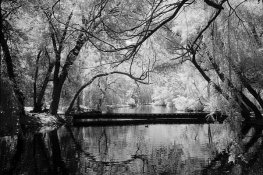
PC, I like to use SFX in the summer when the leaves are out. Depending on the species of vegeatation, leaves turn a bright white with SFX, and IR filter and bright sunshine. Some of the shots posted are good examples.
Never shot SFX in the winter. Hmmm, could be fun!
Never shot SFX in the winter. Hmmm, could be fun!


Thomas Bertilsson
Member
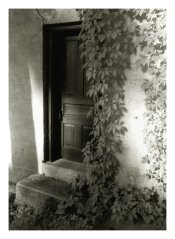
35mm SFX and Red #25 filter.
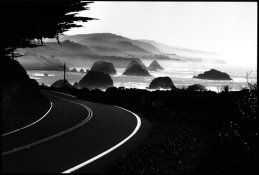
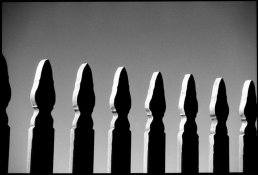
Jon, those are really nice prints. They remind me of some of Gilpin's work along the California coast, especially the last of the three. I've had really good luck with a red filter too. Attached file is 35mm SFX with a red 25 filter, developed in Rodinal, printed on Ilford MGWT using A-130 developer.
- Thomas
Jon, those are really nice prints. They remind me of some of Gilpin's work along the California coast, especially the last of the three. I've had really good luck with a red filter too. Attached file is 35mm SFX with a red 25 filter, developed in Rodinal, printed on Ilford MGWT using A-130 developer.
- Thomas
Attachments
Thomas - that is gorgeous!!! I will try the film with a 25 filter as well. I am definitely warming up to this film. I just placed an order for more!
Wow- some gorgeous shots here... Macy- that first one of yours is magic!
Tim
Tim
P C Headland
Subscriber
PC, I like to use SFX in the summer when the leaves are out. Depending on the species of vegeatation, leaves turn a bright white with SFX, and IR filter and bright sunshine. Some of the shots posted are good examples.
Never shot SFX in the winter. Hmmm, could be fun!
We don't get a real winter like you northern hemisphere folks - there is only one native tree that loses its leaves (kowhai), and even then it is only in the southern 2/3rds of the country.
Well, it's SFX all year then! And while we're celebrating Bastille Day, Viva la France!
Last edited by a moderator:
Dear all,
When SFX 200 was withdrawn during the administration of the former company in August 2004 we got loads of calls from architectural photographers who used this film to photograph buildings...obviously the extended red
gives the image a unique look juxtaposing the sky and buildings, so if you are giving it a try don't just do the usual sky and scenery try a bit of architectural .
Simon ILFORD Photo / HARMAN technology Limited :
When SFX 200 was withdrawn during the administration of the former company in August 2004 we got loads of calls from architectural photographers who used this film to photograph buildings...obviously the extended red
gives the image a unique look juxtaposing the sky and buildings, so if you are giving it a try don't just do the usual sky and scenery try a bit of architectural .
Simon ILFORD Photo / HARMAN technology Limited :
Dear all,
When SFX 200 was withdrawn during the administration of the former company in August 2004 we got loads of calls from architectural photographers who used this film to photograph buildings...obviously the extended red
gives the image a unique look juxtaposing the sky and buildings, so if you are giving it a try don't just do the usual sky and scenery try a bit of architectural .
Simon ILFORD Photo / HARMAN technology Limited :
I agree, though my "architecture" tends to be mostly decrepit barns.

I think I've said before that I really like the mid-tones of this film. There is very nice definition in the mid to dark greys, just above the point where the black gets murky.
By the way, Simon, I always appreciate your input into all things Ilford here on APUG.
Cheers,

When SFX 200 was withdrawn during the administration of the former company in August 2004 we got loads of calls from architectural photographers who used this film to photograph buildings...obviously the extended red gives the image a unique look juxtaposing the sky and buildings, so if you are giving it a try don't just do the usual sky and scenery try a bit of architectural.
Are they using it as an IR film with the filter or as a straight black and white film without the filter?
Steve.
With the filter
Simon ILFORD Photo / HARMAN technology Limited :
Simon ILFORD Photo / HARMAN technology Limited :
Whilst on the subject of Infrared film, has anyone ever considered resurrecting a version of Ektachrome Professional Infrared/EIR, the E6 false colour one. Something I'd have loved to have a go with, but appears to be unobtainable these days no matter where you look
P C Headland
Subscriber
With the filter
Simon ILFORD Photo / HARMAN technology Limited :
Rats, the filter seems really hard to find down here in NZ. I'll have to see how things go with the red filter, or it's off to ebay....

I'm already using too many different films, but it does sound like fun, if I could find an appropriate filter in Series VI. Has anyone tried SFX for portraits and nudes? I liked the look of some nudes that I have seen that were taken on HIE, so I'm wondering whether SFX would have a similar "glow." Or maybe the glow is imaginary?
| Photrio.com contains affiliate links to products. We may receive a commission for purchases made through these links. To read our full affiliate disclosure statement please click Here. |
PHOTRIO PARTNERS EQUALLY FUNDING OUR COMMUNITY:  |