• Welcome to Photrio!
    Registration is fast and free. Join today to unlock search, see fewer ads, and access all forum features.
    Click here to sign up

Tray processing vs Semi-Stand processing...an example

Do Not Come Here

A
Do Not Come Here

  • 5
  • 3
  • 49
Heavy

H
Heavy

  • 11
  • 5
  • 107

Recent Classifieds

Forum statistics

Threads
201,921
Messages
2,832,085
Members
101,018
Latest member
andycapp
Recent bookmarks
0

Steve Sherman

Subscriber
Allowing Ads
Joined
Sep 14, 2003
Messages
548
Location
Connecticut
Format
ULarge Format
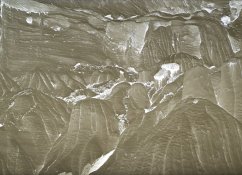
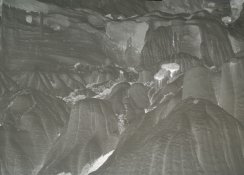
Attached are two scans of identically exposed pieces of film in identical overcast lighting conditions.

The one processed with conventional tray processing actually has a higher Contrast Index.

Hoodoo 1 stand, developed Pyrocat HD 5M presoak, 1.5M agitation, 35M stand, 30s agitation, 35M stand...result 1.36 highlight density above film base plus fog
This was the first ever film I processed in the Semi-Stand method, in those days the dilution was 1-1-175.

Hoodoo 1 conventional, developed in ABC Pyro 1-1-1-7 for 22 minutes continuos agitation...result 1.53 highlight density above film base plus fog.

The resulting prints from each are as dramatically different as the negatives appear here.

See this link for a more thorough discussion (there was a url link here which no longer exists)
 

Attachments

  • WEB sample Hoodoo 1 stand.jpg
    WEB sample Hoodoo 1 stand.jpg
    141.3 KB · Views: 294
  • WEB sample Hoodoo 1 conv.jpg
    WEB sample Hoodoo 1 conv.jpg
    86 KB · Views: 286

Jim Noel

Member
Allowing Ads
Joined
Mar 6, 2005
Messages
2,261
Format
Large Format
The test would be more interesting and reveal more if the same developer is used for both methods.
 

John Wiegerink

Subscriber
Allowing Ads
Joined
May 29, 2009
Messages
4,052
Location
Lake Station, MI
Format
Multi Format
The test would be more interesting and reveal more if the same developer is used for both methods.

Yes, that's what I thought also. I do know that negatives that I develop in Pyrocat-MC and WD2D+ pyro have very close to the same contrast range. Not exactly the same, but close. Still, it's nice to compare apples to apples when it comes to developing film.
 
OP
OP
Steve Sherman

Steve Sherman

Subscriber
Allowing Ads
Joined
Sep 14, 2003
Messages
548
Location
Connecticut
Format
ULarge Format
Yes, that's what I thought also. I do know that negatives that I develop in Pyrocat-MC and WD2D+ pyro have very close to the same contrast range. Not exactly the same, but close. Still, it's nice to compare apples to apples when it comes to developing film.

I would agree, you make a valid point. At the same time we have all developed enough film to recognize when something special has occurred.

At the very least, the process has enabled higher mid tone micro contrast than any other panchromatic film / developer combination to date. At its best, the process has enabled greater creativity in lighting conditions heretofore possible to control !

Cheers !
 

John Wiegerink

Subscriber
Allowing Ads
Joined
May 29, 2009
Messages
4,052
Location
Lake Station, MI
Format
Multi Format
Steve,
My results were with normal agitation for Pyrocat-MC and WD2D+, but I do remember reading, with interest, the discussion about semi-stand with Ken Lee and others over on the large format forum sometime back. I just never got to testing it, but Ken's shot of the chair and light coming through the window sure looked very promising. We are very lucky to have the film and developers of the day to work with. JW
 

c6h6o3

Member
Allowing Ads
Joined
Oct 16, 2002
Messages
3,215
Format
Large Format
Hoodoo 1 conventional, developed in ABC Pyro 1-1-1-7 for 22 minutes continuos agitation...result 1.53 highlight density above film base plus fog.

22 minutes? ABC 1-1-1-7? Wow. I would expect that to produce welder's goggles. BTW,you didn't specify what film was used.
 
OP
OP
Steve Sherman

Steve Sherman

Subscriber
Allowing Ads
Joined
Sep 14, 2003
Messages
548
Location
Connecticut
Format
ULarge Format
22 minutes? ABC 1-1-1-7? Wow. I would expect that to produce welder's goggles. BTW,you didn't specify what film was used.

Hi Jim, The film was J&C 200, a very nice film BTW. The scene was very low in contrast and it was overcast so the CI had to be expanded considerably. I chose the ABC formula as it's reputation of expanding low contrast scenes was well publized by MAS. When the first neg came out with a high global contrast and disappointing local contrast I choose to give the a Semi-Stand process and try. The rest is history as they say!

Cheers
 
OP
OP
Steve Sherman

Steve Sherman

Subscriber
Allowing Ads
Joined
Sep 14, 2003
Messages
548
Location
Connecticut
Format
ULarge Format
Steve, is uneven development ever an issue with this process?

Yes Michael, in the beginning I struggled with streaking and other unknowns. I changed from a circular agitation motion to one of a plunging action, much like a washing machine by thrusting a Jobo cleaning sponge up and down in an open tank as an agitation method. Many photographers contacted me in the early days for this exact problem, I explained the plunging action as opposed to circular and to a man it cured those problems.

I have since changed to a two agitation regime with three standing times with anywhere from 15 - 35 second inversion type agitation cycles. Sandy King coined the method I am now using as Extreme Minimal Agitation. I rarely if ever have problems. In fact I was recently in the Pacific Northwest using a 7x17 inch camera with FP 4 film and huge expanses of sky which are absolutely clean and free of density irregularities.

Cheers,
 

c6h6o3

Member
Allowing Ads
Joined
Oct 16, 2002
Messages
3,215
Format
Large Format
Yeah, I miss J&C. Some of my best pix were made on it. So, this was the negative which caused your semi-stand epiphany?
 
OP
OP
Steve Sherman

Steve Sherman

Subscriber
Allowing Ads
Joined
Sep 14, 2003
Messages
548
Location
Connecticut
Format
ULarge Format
Are you able to post scans of the prints?

Hello James,

Yes to the question Jim S. of which negative provided me the first insight into Semi-Stand film development. The reason I was able to scanned parts of these two 7x17" negatives is because the SS neg had some development streaking, most likely bromide drag. My process has been refined from those first attempts at standardizing the process.

The other Jim can attest to the veracity of just how dramatic the results can be when process is mastered and become repeatable.

I can say when Michael A. Smith and wife Paula Chamelee saw the two negs side by side, one tray processed in ABC Pyro (MAS developer of choice) and the other PyroCat HD done in a Semi-Stand method they were stunned and the room went quite for sometime.

I am not able to scan 7x17 prints or negs. I do have some comparison prints in an 8x10 format which illustrate the possibilities the process is capable of.

See this link for a fairly in depth discussion on the process by various knowledgeable photogs.

(there was a url link here which no longer exists)

Cheers
 
OP
OP
Steve Sherman

Steve Sherman

Subscriber
Allowing Ads
Joined
Sep 14, 2003
Messages
548
Location
Connecticut
Format
ULarge Format
Interesting Steve, what dilution did you standardize on if I might ask?

Hi Erik,

There is a lot trail and error that has gone into the following.

I first set the extremes of contrast I wanted to control. Those turned out to be 6 stops beyond normal in both directions. I knew that 175 -1-1 was my initial success formula. I went up to 225-1-1 which did not work at all. As you might imagine, with that amount of contrast to control there are a number of dilution / agitation / time combination scenarios. I would also imagine they are many who may dispute that film can record that much contrast.

To answer your question in general terms, my dilution ranges in the area of 150 / 175 - 1.5 - 1. Reducing the B component helps to control chemical fog which only increases printing times without the benefit of increasing contrast, in fact it diminishes contrast slightly.

Of the four components which could impact contrast and density I never change from a temperature of 70 degrees. In my opinion, in order of greatest impact on negative density, dilution is first followed by agitation and time.

Lastly, Reduced Agitation types of film development differ in conventionally held wisdom and therefore maybe deemed eronous by those who do not have first hand experience. In my experience I believe film speed is maximized, near box speed in most cases, mid tone contrast (the most difficult part of the film profile to affect) all while suppressing highlight density by the nature of the process.

Hope this make sense and does not cause a firestorm of nay sayers !
 

Erik L

Member
Allowing Ads
Joined
May 9, 2007
Messages
838
Location
Grand Junction CO
Format
8x10 Format
Thanks Steve, that is more concentrated than I anticipated it would be. I have a photograph in mind that is gonna require serious suppression of the highlights in order to print easily. I will be using 8x10 fp4 with a lens that is fairly low contrast (159 wolly velostigmat) and will require the smallest f stop of 45 to handle the dof required for the scene. To top it off I envision this to be printed 30"x40" optically so I would like a nice negative with good apparent sharpness to achieve my goals and I will make a few exposures and try your routine with the first negative and see what I get. I appreciate the information!
Regards,
Erik
 

ChuckP

Subscriber
Allowing Ads
Joined
Jan 8, 2003
Messages
722
Location
NW Chicagola
Format
Multi Format
Steve,
What are your typical stand times when you agitate twice? I assume you go stand/agitate/stand/agitate/stand.
Thanks
 
OP
OP
Steve Sherman

Steve Sherman

Subscriber
Allowing Ads
Joined
Sep 14, 2003
Messages
548
Location
Connecticut
Format
ULarge Format
Thanks Steve, that is more concentrated than I anticipated it would be. I have a photograph in mind that is gonna require serious suppression of the highlights in order to print easily. I will be using 8x10 fp4 with a lens that is fairly low contrast (159 wolly velostigmat) and will require the smallest f stop of 45 to handle the dof required for the scene. To top it off I envision this to be printed 30"x40" optically so I would like a nice negative with good apparent sharpness to achieve my goals and I will make a few exposures and try your routine with the first negative and see what I get. I appreciate the information!
Regards,
Erik

The good news Erik is with the compression of highlights you are expecting, the lower density negative will be sharper than if you were to plan on expanding the contrast.
 
OP
OP
Steve Sherman

Steve Sherman

Subscriber
Allowing Ads
Joined
Sep 14, 2003
Messages
548
Location
Connecticut
Format
ULarge Format
Steve,
What are your typical stand times when you agitate twice? I assume you go stand/agitate/stand/agitate/stand.
Thanks

Hello Chuck,

My Normal Development time is as follows for FP 4 rated @ 125 ISO, Pyro is mixed @ 5ml (A) - 3ml (B) - 800ml water 3M presoak, 2M initial agitation by inversion, stand 8M agitate 20sec. stand 8M agitate 20sec. stand 8M and then onto a water rinse and out to stop bath and onto non hardening fixer. Developing takes place in an upright (vertical orientation tube) Stop and Fix are done in a conventional tray. The Pyro itself hardens the emulsion within the first several minutes. One reason Pyro negs are much sharper than Sulfite based developers.

I use a code as follows for the above sequence. 2/8x3@20 The 2 M initial agitation is added to the 24 M of standing time bringing total time in chemistry to 26 M.
Negs are targeted for a density above film base plus for of .95 - 1.05 highlight density.

Hope this makes sense.

SS
 

Jim Noel

Member
Allowing Ads
Joined
Mar 6, 2005
Messages
2,261
Format
Large Format
Hi Erik,

There is a lot trail and error that has gone into the following.

I first set the extremes of contrast I wanted to control. Those turned out to be 6 stops beyond normal in both directions. I knew that 175 -1-1 was my initial success formula. I went up to 225-1-1 which did not work at all. As you might imagine, with that amount of contrast to control there are a number of dilution / agitation / time combination scenarios. I would also imagine they are many who may dispute that film can record that much contrast.

To answer your question in general terms, my dilution ranges in the area of 150 / 175 - 1.5 - 1. Reducing the B component helps to control chemical fog which only increases printing times without the benefit of increasing contrast, in fact it diminishes contrast slightly.

Of the four components which could impact contrast and density I never change from a temperature of 70 degrees. In my opinion, in order of greatest impact on negative density, dilution is first followed by agitation and time.

Lastly, Reduced Agitation types of film development differ in conventionally held wisdom and therefore maybe deemed eronous by those who do not have first hand experience. In my experience I believe film speed is maximized, near box speed in most cases, mid tone contrast (the most difficult part of the film profile to affect) all while suppressing highlight density by the nature of the process.

Hope this make sense and does not cause a firestorm of nay sayers !

Film can definitely handle this much contrast if you know what you are doing. There is no need to go to exotic developers or stand development. Just a good developer at the right dilution in a tray.

The tonal range in the Royal Tire Factory when Ray McSavaney made his beautiful photographs was 15-18 stops. He was able to control this in a very simple way. One ounce of HC 110 syrup in a gallon of water. The film was developed in this solution by shuffling through the film in one corner of a 16x20 tray. Of course not many people are as patient as he was. His development times with this method ran up to 35 minutes.
By the way if you have never seen this work, look it up.
 
OP
OP
Steve Sherman

Steve Sherman

Subscriber
Allowing Ads
Joined
Sep 14, 2003
Messages
548
Location
Connecticut
Format
ULarge Format
Film can definitely handle this much contrast if you know what you are doing. There is no need to go to exotic developers or stand development. Just a good developer at the right dilution in a tray.

The tonal range in the Royal Tire Factory when Ray McSavaney made his beautiful photographs was 15-18 stops. He was able to control this in a very simple way. One ounce of HC 110 syrup in a gallon of water. The film was developed in this solution by shuffling through the film in one corner of a 16x20 tray. Of course not many people are as patient as he was. His development times with this method ran up to 35 minutes.
By the way if you have never seen this work, look it up.

Your comments are actually quite true and may Ray rest in peace. He was a huge talent in the contemporary world of traditional process black and white photography.

I was fortunate to learn of Ray's HC 110 technique through a mutual friend back in the early 80's as I recall. It was actually a mistake which lead Ray to his discovery. He made an exposure in the Uniroyal factory with the lens wide open and determined that it was 6 stops overexposed, rather than discard the film he decided to process the film in a very dilute solution with intermittent agitation for a half hour. His results lead to the very technique you speak off.

I used this very technique for 20 years and countless scenes of ultra high contrast, the process works, however not without serious concessions.

With the HC 110 technique, film speed is dramatically reduced, likely 3-4 stops when compressing 6 stops of excess contrast, in other words I would regularly expose highlights 3-4 stops higher than I ultimately wanted them to print because the extremely dilute developer would suppress all tonalities equally in the neg leaving no shadow information. Essentially, one had to expose shadows on Zone 7 in the hopes they would reproduce on the print to a Zone 3 density. Secondly, with a non Pyro developer such as HC 110 the emulsion is not hardened in the very early stages of development and thus the emulsion continues to swell promoting Silver Migration which leads a significant loss of film sharpness and micro contrast. The only solution back in those days was to over compress the highlights beyond where you wanted them so that one could use the hardest contrast printing paper possible to restore the appearance of a sharp image.

I greatly enjoy this type photography and was fortunate myself back in 2004 to stumble upon a dilution and scheme which worked with what is now known as Extreme Minimal Agitation film processing. The major difference in the two methods is there is no lose of film speed, mid tone micro contrast is actually enhanced and by the nature of the process the highlights are suppressed to whatever degree you choose.

As I'm sure you are aware, with the HC 110 process the negs look extremely weak, in fact unprintable, yet they do indeed produce wonderful prints of extreme contrast scenes. With EMA negatives their appearance is uniform no matter what contrast they are controlling, expanding a low contrast scene of only 3 - 4 stops or scenes of contrast in the neighborhood of 15 stops. All while enhancing THE most difficult part of a negative to control, mid tone micro contrast. As an FYI, my developing times range from only 12 minutes up to 90 minutes to control 6 stops of contrast on either side of normal.

So thanks for the opportunity to recall Ray's wonderful imagery and to offer another way to skin the cat.

Cheers !

 

c6h6o3

Member
Allowing Ads
Joined
Oct 16, 2002
Messages
3,215
Format
Large Format
Film can definitely handle this much contrast if you know what you are doing. There is no need to go to exotic developers or stand development. Just a good developer at the right dilution in a tray.

I have no way of knowing whether or not you've ever seen Steve's work in the flesh, but the above statement leads me to suspect that you haven't.

I hasten to point out that although it can yield unbelievable control of extreme highlights, the real benefit to semi-stand development with Pyrocat that is unequaled by any other method is the control it gives of microcontrast in the midtones. That's not always an issue for me, but when it's appropriate to the image there's just nothing like it.
 
OP
OP
Steve Sherman

Steve Sherman

Subscriber
Allowing Ads
Joined
Sep 14, 2003
Messages
548
Location
Connecticut
Format
ULarge Format
One thing I have to take issue with though - the "migration" myth. It doesn't happen. This is one of the myths of tanning/staining development.

Michael

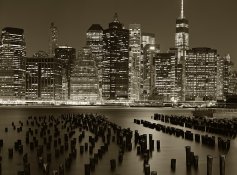
If you regularly photograph at night in low light and high contrast you definitely should try Reduced Agitation forms of film processing. A major portion of the LF photography I do is high contrast and compression of those tonalities to reproduce on Silver Gelatin paper.

I've attached a pix which greatly benefited from increased exposure and extreme compression of highlight density. 20 minute exposure @ f 16 10 pm @ night.

As far as Silver Migration goes, while not immediately privy to a quality scanner I do have indenticaly exposed negatives developed to almost the exact same highlight density. One done in HC 110, another done with Pyrocat HD in a tray continously agitated and the third done in a Reduced Agitation method using Pyrocat HD. Essentially the only variable is the developer, the film, exposure and density are virtually identical. The two Pyrocat HD negatives are significantly superior in acutance and overall crispness to the HC 110 negative.

So you may discount the tanning effects or silver migration as myths but side by side comparisons are indisputable.

Cheers!
 

Attachments

  • ManhattanSky_PilingsRGBweb.jpg
    ManhattanSky_PilingsRGBweb.jpg
    280.1 KB · Views: 162
Last edited by a moderator:
Photrio.com contains affiliate links to products. We may receive a commission for purchases made through these links.
To read our full affiliate disclosure statement please click Here.

PHOTRIO PARTNERS EQUALLY FUNDING OUR COMMUNITY:


Ilford ADOX Freestyle Photographic Stearman Press Weldon Color Lab Blue Moon Camera & Machine
Top Bottom