• Welcome to Photrio!
    Registration is fast and free. Join today to unlock search, see fewer ads, and access all forum features.
    Click here to sign up

To help preserve her works, Cindy Sherman is offering to destroy and reprint old photographs

Cool as Ice

A
Cool as Ice

  • 0
  • 1
  • 63

Recent Classifieds

Forum statistics

Threads
202,708
Messages
2,844,532
Members
101,482
Latest member
Jeremizzle
Recent bookmarks
2
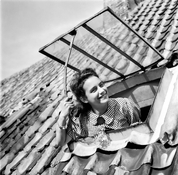
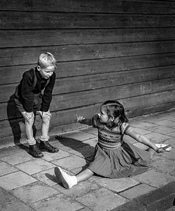
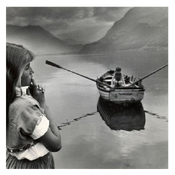
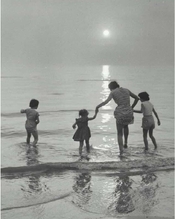
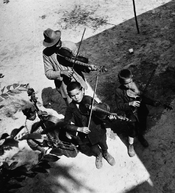
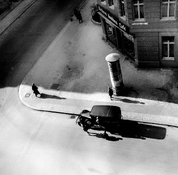
Thanks for the suggestions. I find at this point I'm not drawn to that style of photography (e.g. Scherer). Historically relevant and sort of interesting, but photographically not what I'd presently go out of my way to view. I saw a Kandó show a few years ago; it didn't leave much of an impression with me. It's just not the sort of thing that grabs my attention, although I can enjoy specific works from anyone if they somehow appeal to me. Frankly I'm also generally not very interested in names or name-dropping and admit that usually I forget the names even if I remember the images. Whenever I'm pressed for names I find myself having to dig up when/where I saw something and then try to figure out who it was.

I understand, I think you are way more experimental or into different forms of photography than me. What I like in this style of photography is that it is simple, yet it is very tender, direct, and humanly, it shows me life and makes me dream about life. I mean I might sound sometimes a bit harsh about some photographers and their art but in reality I like very simple stuff, and photographers that are not afraid to show emotions, they don't do tricks or effects, and they just show us images that makes us dream.
And since we talked before about classics it might be that HCB is one of the most famous of the "classics", but still I find these photographers as good as him. See the last photo for example and think couldn't that be one of Kertesz or HCB?
My fond of that style of photography might also explain the comments I made before and the opinions I expressed on a work that is very different such as Cindy Sherman.
But as you said very nicely before different preferences and different reactions, but as long as it moves us any kind can be interesting for us and makes us passionate. I am attaching some images just for another viewer that doesn't know the names to see:
 

Attachments

  • Eva-Besnyo-(1910-2003)-1.jpg
    Eva-Besnyo-(1910-2003)-1.jpg
    534.7 KB · Views: 99
  • Kees-Scherer-(1920-1993)-2.jpg
    Kees-Scherer-(1920-1993)-2.jpg
    189.7 KB · Views: 80
  • AtaKando.jpg
    AtaKando.jpg
    58.9 KB · Views: 71
  • scherer.jpg
    scherer.jpg
    45 KB · Views: 75
  • besnyo.jpg
    besnyo.jpg
    119 KB · Views: 85
  • kando.jpg
    kando.jpg
    56.8 KB · Views: 72
  • Eva-Besnyo-(1910-2003)-2.jpg
    Eva-Besnyo-(1910-2003)-2.jpg
    109.1 KB · Views: 85
Last edited:
Yeah, that's OK, it's a matter of taste, and also where you are in your own journey of exploration.

See the last photo for example and think couldn't that be one of Kertesz or HCB?
I see what you mean, definitely. Good work for sure. But for instance the two Scherers you attached...technically great pictures, pleasing aesthetically, romantic...but not something that interests me. I wouldn't stop to look if I saw it hanging on a wall.

I thought about this a bit last night. I came to the conclusion that for me, photography like Scherer's tends to answer a lot of questions. But I find photography (and art in general) much more interesting it asks questions and then leaves them unanswered. It's a bit like a novel or a movie with a closed vs. an open end. So within the small selection of Besnyo-Kando-Scherer that you offered, I find myself leaning towards the former much more so than towards the latter. It probably also has something to do with the society Scherer worked in; it's a lineage that involves people like Oorthuis and that tries to make things explicit and transparent, and is often strongly normative (Scherer's work has been explicitly called socialist, so firmly normative). In the Netherlands in the 1950s, this was what society appreciated. I think it's a good thing we wrestled ourselves from that firmly judgemental grip. So this also has something to do with how I view that kind of photography - it's highly representative for a society that has fundamentally changed (which is also why it's so romantic and appealing to some), and in many ways for the better, too.
 
Yeah, that's OK, it's a matter of taste, and also where you are in your own journey of exploration.


I see what you mean, definitely. Good work for sure. But for instance the two Scherers you attached...technically great pictures, pleasing aesthetically, romantic...but not something that interests me. I wouldn't stop to look if I saw it hanging on a wall.

I thought about this a bit last night. I came to the conclusion that for me, photography like Scherer's tends to answer a lot of questions. But I find photography (and art in general) much more interesting it asks questions and then leaves them unanswered. It's a bit like a novel or a movie with a closed vs. an open end. So within the small selection of Besnyo-Kando-Scherer that you offered, I find myself leaning towards the former much more so than towards the latter. It probably also has something to do with the society Scherer worked in; it's a lineage that involves people like Oorthuis and that tries to make things explicit and transparent, and is often strongly normative (Scherer's work has been explicitly called socialist, so firmly normative). In the Netherlands in the 1950s, this was what society appreciated. I think it's a good thing we wrestled ourselves from that firmly judgemental grip. So this also has something to do with how I view that kind of photography - it's highly representative for a society that has fundamentally changed (which is also why it's so romantic and appealing to some), and in many ways for the better, too.

Yes I get your points. You are on a path to a different journey. Interesting points made about the society links to these photographs. I totally agree to what you said here: "But I find photography (and art in general) much more interesting it asks questions and then leaves them unanswered.". This is my own personal stance about it too. But do you think that this photography shows too much? I think on the contrary it is arbitrary and leaves a lot of room behind to build stories and imagine different things. For example the photo with the two kids on the train, I don't know why I like it so much, I cannot really tell. Perhaps because it doesn't give any answers and let me build my own story behind it.
 
If you have a photo that's valued at $50,000+ and it's fading away maybe a bonefide resurrection of that print, even at a price is a really good thing???

Don't know. I don't have the resources to own original Cindy Sherman photos. That would be pretty cool!

Do purchasers of her original prints have recourse to sue her for depreciating the value of the print they bought, especially if they were sold as let's say one of 50? After all, when you produce additional quantities, you decrease the value as they're less scarce.
 
Do purchasers of her original prints have recourse to sue her for depreciating the value of the print they bought, especially if they were sold as let's say one of 50? After all, when you produce additional quantities, you decrease the value as they're less scarce.

She will destroy the original old prints so the number of total prints in circulation will stay the same
 
This is my own personal stance about it too. But do you think that this photography shows too much?

It's a matter of taste of course, and nothing is black and white (haha). But relatively speaking, yes, I find a lot of the well-known and well-regarded 'classic' photography from the 1950s along the lines of what I've seen of Scherer to be relatively straightforward. Mind you, still sometimes aesthetically pleasing, and often historically interesting.
 
It's a matter of taste of course, and nothing is black and white (haha). But relatively speaking, yes, I find a lot of the well-known and well-regarded 'classic' photography from the 1950s along the lines of what I've seen of Scherer to be relatively straightforward. Mind you, still sometimes aesthetically pleasing, and often historically interesting.

Isn't aesthetically pleasing the main goal of photography? If it doesn't intrigue the eye then I'd say you've missed the mark.
 
Isn't aesthetically pleasing the main goal of photography?

Depends on who you ask. For me, it's part of it, although not necessarily a requirement.

If it doesn't intrigue the eye then I'd say you've missed the mark.
Okay, so that's what you'd say. I would not necessarily agree. Btw, there's a big difference between 'aesthetically pleasing' and 'intriguing to the eye'. I'd not conflate them the way you seem to be doing.
 
Depends on who you ask. For me, it's part of it, although not necessarily a requirement.

I think i have to agree here. It is part of it but not a requirement. I dont think anyone could describe Francis Bacon paintings as aesthetically pleasing. Sometimes aesthetically pleasing can even be detrimental because it doesn't allow a piece of art to work on different layers. I know you like Ansel Adams and I will take him as an example. He is aesthetically pleasing for sure and a master of his craft. But does his art work on different deeper layers? Imo not, but we can argue a lot about that.
Okay, so that's what you'd say. I would not necessarily agree. Btw, there's a big difference between 'aesthetically pleasing' and 'intriguing to the eye'. I'd not conflate them the way you seem to be doing.
In images that are intriguing to the eye there is often some dialogue within the elements of the image that creates tension
 
I think i have to agree here. It is part of it but not a requirement. I dont think anyone could describe Francis Bacon paintings as aesthetically pleasing. Sometimes aesthetically pleasing can even be detrimental because it doesn't allow a piece of art to work on different layers. I know you like Ansel Adams and I will take him as an example. He is aesthetically pleasing for sure and a master of his craft. But does his art work on different deeper layers? Imo not, but we can argue a lot about that.

In images that are intriguing to the eye there is often some dialogue within the elements of the image that creates tension

I don't understand the point here. Aesthetically pleasing can be a matter of opinion. Same goes for whether or not something "works" on any other layers than the surface (and whether or not it needs to). In the case of photography I'd also add mastery of craft.
 
I don't understand the point here. Aesthetically pleasing can be a matter of opinion. Same goes for whether or not something "works" on any other layers than the surface (and whether or not it needs to). In the case of photography I'd also add mastery of craft.

I think the point was made before by @koraks that in art aesthetically pleasing is not a requirement. More importantbis to ask questions (think also Joconda of Da Vinci which i also doubt if it is aesthetically pleasing)
 
I understand where everyone is coming from but at its core photography is a visual medium. Same can be said for sound, does anyone sit down to listen to Revolution 9 on its own? Like, turn down the lights, crank the stereo and get hyped up to Revolution 9? Yes, I understand its artistic merit and within the context of the songs preceding and following it works but on it's own it's not enjoyable. At least to my ears.

Photos I think should be able to stand on their own without any context given. If context is necessary to appreciate the photo we've moved beyond photography and into something else at that point. There's nothing wrong with that but I'd argue that the artist at that point is more artist than photographer.
 
I understand where everyone is coming from but at its core photography is a visual medium. Same can be said for sound, does anyone sit down to listen to Revolution 9 on its own? Like, turn down the lights, crank the stereo and get hyped up to Revolution 9? Yes, I understand its artistic merit and within the context of the songs preceding and following it works but on it's own it's not enjoyable. At least to my ears.

Photos I think should be able to stand on their own without any context given. If context is necessary to appreciate the photo we've moved beyond photography and into something else at that point. There's nothing wrong with that but I'd argue that the artist at that point is more artist than photographer.

I'm sure there are people who listen to Revolution 9 that way - there are so many experiences out there that don't appeal to me, but have rabid followings!
And as for "moving beyond photography", the subject of the thread isn't photography, but the Art world.
That world intersects with photography, and has photographic participants and makes use of photography in some instances, but doesn't coincide exactly with photography.
Whether or not an original print is replaced has little to do with how interesting or creative or pleasing or disturbing or revealing a particular photograph might be. All of those issues are well handled by all the reproductions and representations of the image that are out there - although there are subtleties in the original print that we who make or view or collect originals often value. All that results from the replacement option that the thread references is an affect on the Art market value.
I wonder if Ms. Sherman will resist the option to "improve" on the to be destroyed original when the replacement is made?
 
Photos I think should be able to stand on their own without any context given. If context is necessary to appreciate the photo we've moved beyond photography and into something else at that point.

It’s still photography. 🙃
 
She will destroy the original old prints so the number of total prints in circulation will stay the same

But issuing a replacement with abetter print could reduce the value of other old prints that someone else bought before who doesn't replace theirs. So they're forced to upgrade and pay for a better print. Sort of like having to buy WIndows 11 to replace Windows 10.
 
Do purchasers of her original prints have recourse to sue her for depreciating the value of the print they bought, especially if they were sold as let's say one of 50? After all, when you produce additional quantities, you decrease the value as they're less scarce.

????

Short answer, people sue people for all sorts of crazy reasons. A faded Cibachrome probably will be a tricky case to win. But who am I to judge?
 
Do purchasers of her original prints have recourse to sue her for depreciating the value of the print they bought, especially if they were sold as let's say one of 50? After all, when you produce additional quantities, you decrease the value as they're less scarce.

What sort of damages would those other purchasers be incurring? Probably none.
There is no increase in the number of prints over-all. If the original number of prints was limited, than that number remains limited.
And if there is any differentiation in value between the originals and the replacement, it would likely be to the favour of the holders of the originals, rather than the replacements.
And probably most importantly, there is nothing stopping Cindy Sherman from making entirely new work. The increase in the available pool of Cindy Sherman originals is the factor most likely to have an affect on the value of old work.
 
I understand where everyone is coming from but
The argument that follows remains in its core based on what your own, particular visual preference is. That's OK, but I don't think we can ever reach common ground on that basis, other than some not very interesting observations, like that many photographers strive to make pretty pictures.
 
But issuing a replacement with abetter print could reduce the value of other old prints that someone else bought before who doesn't replace theirs. So they're forced to upgrade and pay for a better print. Sort of like having to buy WIndows 11 to replace Windows 10.

I told you she is smart
 
But issuing a replacement with abetter print could reduce the value of other old prints that someone else bought before who doesn't replace theirs.

If Topps reissues perfect reproductions of currently valuable baseball cards (like Hank Aaron, Roger Maris, Babe Ruth), what impact does that have on the value of the vintage cards?

Collectors value those cards based on edition and condition (generally, first edition, first printing, and most-original condition is highest value). Would they opt to allow their grade 8 condition late-50's printed Roger Maris card be replaced by one printed today that was in perfect condition?

There's a real lack of understanding of collectors in the whole idea of this print-replacement scheme. It's fine to replace prints from someone who really doesn't matter, where the photos are socially and historically insignificant. You know, that's just refreshing the decor. Collectors, however, want artifacts. This idea disregards the idea that the print can itself be an artifact of value in favour of the idea that the photo (that which is printed) is what is of value.

Someone should inkjet print this photo (after a bit of photoshop to fix it a bit, of course):

1750500549743.png

and burn the original, which I hear is easily damaged by exposure to light. Clearly, a newly printed copy would be better.
 
There's a real lack of understanding of collectors in the whole idea of this print-replacement scheme.
Which brings the question whether institutional collectors like museums are making use of this offer. The previous example I mentioned all the way at the start of the thread seems to suggest they do, or at least some of them. I found that surprising when I first heard of it and I still don't quite understand it.
 
Which brings the question whether institutional collectors like museums are making use of this offer. The previous example I mentioned all the way at the start of the thread seems to suggest they do, or at least some of them. I found that surprising when I first heard of it and I still don't quite understand it.

I can understand why they would want to replace something that is essentially fading away into nothing. Conservation/preservation only works so far before you have to opt for reproduction - especially with things like film and photos that are chemically-produced. This option not only allows for the piece to be reproduced in a "fresh" state but also authenticated - the quality will be right, the colours will be right, the artist has approved the print. And a museum has a different goal than a collector. Museums have the goal of showing the work - of preserving it and keeping it safe but for the end result to be the availability of that work to the public. Collectors are more about the artifacts themselves - not what they mean or the viewing of them.
 
I can understand the arguments to an extent, but not entirely. You mention museums have the goal of exhibiting work. As far as I know, that's only part of the triple task of most museums, which is to disclose, preserve and foster research. Furthermore, what makes this challenging IMO is that the artist in this case seems to have an interest that conflicts with the interest of the owner of the work, and yet, some of the owners seem to opt to serve the interest of the maker instead of their own. I would find it more plausible if museums would accept a new version of the work for exhibition purposes while retaining the original copy in safe storage.
 
Photrio.com contains affiliate links to products. We may receive a commission for purchases made through these links.
To read our full affiliate disclosure statement please click Here.

PHOTRIO PARTNERS EQUALLY FUNDING OUR COMMUNITY:



Ilford ADOX Freestyle Photographic Stearman Press Weldon Color Lab Blue Moon Camera & Machine
Top Bottom