
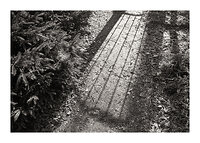

Not to stir up an argue between death and life of the zone system, but here comes the power of long standing habit into ruining things. I am trying to try something different to the zone system. At exposure all is setup according to the new way of things and almost instinctively at development time everything gets ruined by still thinking as developing for a zone system based procedure. The result... Let's talk about something else!
-
Welcome to Photrio!Registration is fast and free. Join today to unlock search, see fewer ads, and access all forum features.Click here to sign up
You are using an out of date browser. It may not display this or other websites correctly.
You should upgrade or use an alternative browser.
You should upgrade or use an alternative browser.
The Zone System is Dead
-
A
- Thread starter ypkennedy
- Start date
Recent Classifieds
-
For Sale Medium format camera systems for sale
- Started by craigclu
-
Want to Buy Linhof cable release
- Started by eli griggs
-
For Sale THREE LINHOF TECH 3 Bodies for parts
- Started by Simon Benton
-
For Sale FS: Extension Back for Toyo 4x5 Field Cameras
- Started by B.S.Kumar
-
Want to Buy Kodak No3 film sheaths 3 1/4" x 4 1/4"
- Started by film4Me
Forum statistics

- Joined
- Feb 9, 2010
- Messages
- 9,526
- Format
- 4x5 Format
I have no problem meshing different ways of exposure to appropriate Zone System development. If you exposed film to a long subject luminance range, N-1 development might be useful. If it was a flat scene N+1. What could have gone wrong for you?The result... Let's talk about something else!
It is just silly me that has a mind trapped in some old thinking. I got used to starting the developing process by habit, omitting the new way of things. It will take a while, it is just spring time giving me a hard time to focus!I have no problem meshing different ways of exposure to appropriate Zone System development. If you exposed film to a long subject luminance range, N-1 development might be useful. If it was a flat scene N+1. What could have gone wrong for you?


Are you perhaps referring to digital HDR, which requires multiple exposures, and some sort of software amalgamation of those multiple exposures?High Range Definition
All in a digital workflow of course. And if you spend some time on the internet, you can find millions of really garish and ugly examples (along with a few subtle and beautiful ones).
The techniques originated in film, and in certain circumstances can be done well in film and in the darkroom.
But you certainly will get a different result - whether you are using the film or digital approach to HDR - then you will get using a single exposure system adjusted to the subject brightness range and contrast.
You should choose the approach and result that you prefer and that serves you best.
- Joined
- Jul 14, 2011
- Messages
- 15,014
- Format
- 8x10 Format
HDR is already passe and beaten to death; one more sickening fad, although somebody might know how to use it with a bit of overdue reserve. But the whole problem with most digital work is that you sacrifice the seamless look of direct film to print. If you can't make sense out of how to use a basic light meter on film,
a bunch or airplane-cockpit-looking software options aren't going to do it either. Digital looks digital. If you like it, fine. I don't.
a bunch or airplane-cockpit-looking software options aren't going to do it either. Digital looks digital. If you like it, fine. I don't.
You said It! This is why I don't give a hoot for super hero CGI movie crap. I love animation, good movies Toy Story, Iron Giant, BambiDigital looks digital. If you like it, fine. I don't.
 . Digital to capture flying birds, things that are amazing real things. Two Thumbs Up!
 Impossible pictures of things blown up to 3x5 foot, neat, but not something I want to look at on my wall. My wife would hide it in the closet

- Joined
- Oct 11, 2006
- Messages
- 2,193
- Format
- Multi Format
In case no one has said this somewhere in the thread "The zone system is dead. Long live the zone system."
Seriously though, what about practicing the zone system with 35mm? How could one do that? Easy. Just carry three bodies loaded with the same film type and dedicated to N-1, N, and N+1 respectively... slightly cumbersome perhaps, but I have been known to carry several bodies on more than one occasion, though in those cases the bodies were loaded with different film types.
This works best if the camera bodies are not very big. Canon Rebel bodies is what I used. Other vendors also made models with small bodies.
(Oops, I just noticed that mard0 beat me to the punch with "long live the zone system.")
Seriously though, what about practicing the zone system with 35mm? How could one do that? Easy. Just carry three bodies loaded with the same film type and dedicated to N-1, N, and N+1 respectively... slightly cumbersome perhaps, but I have been known to carry several bodies on more than one occasion, though in those cases the bodies were loaded with different film types.
This works best if the camera bodies are not very big. Canon Rebel bodies is what I used. Other vendors also made models with small bodies.
(Oops, I just noticed that mard0 beat me to the punch with "long live the zone system.")
- Joined
- Feb 9, 2010
- Messages
- 9,526
- Format
- 4x5 Format
I wonder what you think the Zone System does in the first place.How can the zone system ever compete with....
I think of it like the knobs on a black and white TV for contrast and brightness.
You can’t see the result of twisting those knobs on a film camera until after you get the negative fixed... And the Zone System simply helps you to set those knobs.
Seems like that might be a good idea for testing, on the same composition, to determine what development/developer is "best" for a certain person.?In case no one has said this somewhere in the thread "The zone system is dead. Long live the zone system."
Seriously though, what about practicing the zone system with 35mm? How could one do that? Easy. Just carry three bodies loaded with the same film type and dedicated to N-1, N, and N+1 respectively... slightly cumbersome perhaps, but I have been known to carry several bodies on more than one occasion, though in those cases the bodies were loaded with different film types.
This works best if the camera bodies are not very big. Canon Rebel bodies is what I used. Other vendors also made models with small bodies.
(Oops, I just noticed that mard0 beat me to the punch with "long live the zone system.")
Personally, i cannot imagine doing that as normal practice.
I use 35mm film 95% of the time. While i Do Not utilize the N- N N+ aspect of The Zone System, i do think about what i am metering and if it is Zone 5 or some other Zone.
Seems like "all" photographers would at least do that.?
Then again, i have never used a modern camera, i have no idea how Matrix Metering works, what Focus Points do, and if they fall prey to The Zone System or not.
Maybe, for a Digital SLR, The Zone System is not an important tool.?

Sirius Glass
Subscriber
HDR is so old news. It is a crutch for digital cameras that cannot hack it.
Fakin' It
Simon & Garfunkel
When she goes, she's gone.
If she stays, she stays here.
The girl does what she wants to do.
She knows what she wants to do.
And I know I'm fakin' it,
I'm not really makin' it.
I'm such a dubious soul,
And a walk in the garden
Wears me down.
Tangled in the fallen vines,
Pickin' up the punch lines,
I've just been fakin' it,
Not really makin' it.
Is there any danger?
No, not not really.
Just lean on me.
Takin' time to treat
Your friendly neighbors honestly.
I've just been fakin' it,
I'm not really makin' it.
This feeling of fakin' it
I still…
Prior to this lifetime
I surely was a tailor
I own the tailor's face and hands.
I am the tailor's face and hands and
I know I'm fakin' it,
I'm not really makin' it.
This feeling of fakin' it
I still haven't shaken it.
Songwriters: Paul Simon
Fakin' It lyrics © Universal Music Publishing Group
Fakin' It
Simon & Garfunkel
When she goes, she's gone.
If she stays, she stays here.
The girl does what she wants to do.
She knows what she wants to do.
And I know I'm fakin' it,
I'm not really makin' it.
I'm such a dubious soul,
And a walk in the garden
Wears me down.
Tangled in the fallen vines,
Pickin' up the punch lines,
I've just been fakin' it,
Not really makin' it.
Is there any danger?
No, not not really.
Just lean on me.
Takin' time to treat
Your friendly neighbors honestly.
I've just been fakin' it,
I'm not really makin' it.
This feeling of fakin' it
I still…
Prior to this lifetime
I surely was a tailor
I own the tailor's face and hands.
I am the tailor's face and hands and
I know I'm fakin' it,
I'm not really makin' it.
This feeling of fakin' it
I still haven't shaken it.
Songwriters: Paul Simon
Fakin' It lyrics © Universal Music Publishing Group
- Joined
- Jun 21, 2003
- Messages
- 29,810
- Format
- Hybrid
HDR is so old news. It is a crutch for digital cameras that cannot hack it.
maybe ...is flashing film a crutch for film photographers who can't handle slide film's narrow range ?
years ago ( 80s? 90s? ) i used to hear about pro photographers who made multiple slide exposures
for wide "value" scenes. from what i remember ( i might be wrong ) they'd make like 5 or 6 exposures
have them processed normaly at the lab and stack them on top of eachother on the light table and rephotograph them.
kind of like HDR olde skool, were they faking it too ?
- Joined
- Jul 14, 2011
- Messages
- 15,014
- Format
- 8x10 Format
I never flashed either, and rephotographed stuff always betrays a degree of qualitative loss, esp with respect to stepless tonality. Some of this is obviously the fault of the practitioner. Every fad and gimmick wears thin rather quickly. Digital just provides a much larger suite of things to get sick of. Kinda like a Junior High marching band with too many tubas in it. One is usually bad enough.

I aree it was a fad and is gone now.manual HDR, as in luminance masking is still a valuable technique.HDR is already passe and beaten to death; one more sickening fad, although somebody might know how to use it with a bit of overdue reserve. But the whole problem with most digital work is that you sacrifice the seamless look of direct film to print. If you can't make sense out of how to use a basic light meter on film,
a bunch or airplane-cockpit-looking software options aren't going to do it either. Digital looks digital. If you like it, fine. I don't.
- Joined
- Jul 14, 2011
- Messages
- 15,014
- Format
- 8x10 Format
Reminds me of back when "light painting" was a fad in studios. They all had to go buy an expensive Hosemaster system, and long before most of them even
broke even, everyone was already sick of seeing the effect in ads and catalogs, simply because now they all had to immediately justify their purchase and use
it overboard. And there's a new toy mentality to all kinds of things, which digital technology certainly didn't create, but has greatly exploited. Kinda like one pickup
owner bragging to another, "I've got more horsepower in my truck than you have" because he ran it into a bigger tree.
broke even, everyone was already sick of seeing the effect in ads and catalogs, simply because now they all had to immediately justify their purchase and use
it overboard. And there's a new toy mentality to all kinds of things, which digital technology certainly didn't create, but has greatly exploited. Kinda like one pickup
owner bragging to another, "I've got more horsepower in my truck than you have" because he ran it into a bigger tree.
| Photrio.com contains affiliate links to products. We may receive a commission for purchases made through these links. To read our full affiliate disclosure statement please click Here. |
PHOTRIO PARTNERS EQUALLY FUNDING OUR COMMUNITY:  |