




Andreas Thaler
Subscriber
When it comes to repairing film SLRs, opinions are divided:
Some argue that only adherence to manufacturer specifications ensures flawless results.
After all, only the manufacturer has the expertise to properly restore its own products.
Others counter that creative solutions can also achieve the desired outcome.
Moreover, the manufacturer could not have foreseen or accounted for problems that arise decades after production and service have ceased. These include signs of aging such as material fatigue and wear and tear.
If our goal is to repair and service historic SLRs and thus restore them to working order
which of these positions should we follow? And what reasonable compromise should we arrive at?
After all, both positions have their limitations:
Manufacturer specifications can only be followed if they can be implemented in the actual repair situation.
Creative solutions—that is, modifications to the manufacturer’s specifications—can only be successful if they are compatible with the manufacturer’s specifications.
An example to illustrate this:
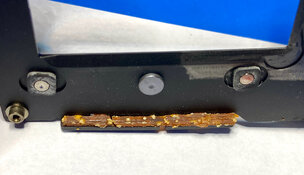
The shutter of the Minolta (Maxxum, Alpha) 9000 AF has a plastic damper that has chemically degraded over the decades and become sticky. This renders the shutter unreliable or inoperable. A repair according to the manufacturer’s specifications requires replacing the entire shutter unit.
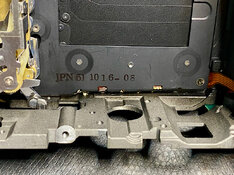
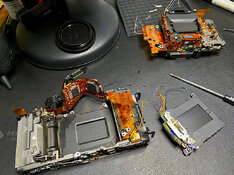
However, new replacement shutters have long been unavailable, and even these are subject to the aging process described above too. Consequently, the 9000 AF could no longer be repaired according to the manufacturer’s specifications.
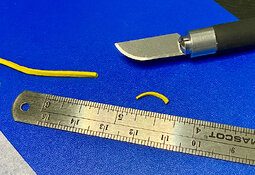
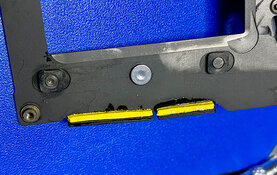

A creative solution is to disassemble the shutter, remove the old damper, and install a replacement. All of this is done without technical documentation, as these shutters were rarely documented and must therefore be regarded as black boxes. They were replacement units.
Consequently, the original condition can no longer be restored. This is relevant for high-performance shutters, as they must operate with microsecond precision and are subjected to high mechanical stresses. This is all the more true when they are operated in motorized high-speed mode.
If, as discussed in this post, we wish to share repair and service knowledge (because these SLRs are no longer, or only to a limited extent, professionally serviced), how should we proceed?
Strict adherence to manufacturer specifications would mean that the 9000 AF cannot be restored.
A creative DIY solution (in this case, a cut-to-size rubber band as a shock absorber replacement) puts the 9000 AF into an undocumented state.
In other words, it may function permanently according to manufacturer specifications again, but only for a short time, or it may develop new problems as a result.
Why am I asking these questions?
When we curate obsolete SLRs and provide service/repair instructions for them, we need to be clear about what makes sense—whether it’s an electromechanical SLR or a purely mechanical one.
This also entails a responsibility toward users. Because shortcuts that are often taken turn out to be botched jobs that do more harm than good.
That’s why I’d like to discuss this in principle.
See also

 www.photrio.com
Some argue that only adherence to manufacturer specifications ensures flawless results.
After all, only the manufacturer has the expertise to properly restore its own products.
Others counter that creative solutions can also achieve the desired outcome.
Moreover, the manufacturer could not have foreseen or accounted for problems that arise decades after production and service have ceased. These include signs of aging such as material fatigue and wear and tear.
If our goal is to repair and service historic SLRs and thus restore them to working order
which of these positions should we follow? And what reasonable compromise should we arrive at?
After all, both positions have their limitations:
Manufacturer specifications can only be followed if they can be implemented in the actual repair situation.
Creative solutions—that is, modifications to the manufacturer’s specifications—can only be successful if they are compatible with the manufacturer’s specifications.
An example to illustrate this:
The shutter of the Minolta (Maxxum, Alpha) 9000 AF has a plastic damper that has chemically degraded over the decades and become sticky. This renders the shutter unreliable or inoperable. A repair according to the manufacturer’s specifications requires replacing the entire shutter unit.
However, new replacement shutters have long been unavailable, and even these are subject to the aging process described above too. Consequently, the 9000 AF could no longer be repaired according to the manufacturer’s specifications.
A creative solution is to disassemble the shutter, remove the old damper, and install a replacement. All of this is done without technical documentation, as these shutters were rarely documented and must therefore be regarded as black boxes. They were replacement units.
Consequently, the original condition can no longer be restored. This is relevant for high-performance shutters, as they must operate with microsecond precision and are subjected to high mechanical stresses. This is all the more true when they are operated in motorized high-speed mode.
If, as discussed in this post, we wish to share repair and service knowledge (because these SLRs are no longer, or only to a limited extent, professionally serviced), how should we proceed?
Strict adherence to manufacturer specifications would mean that the 9000 AF cannot be restored.
A creative DIY solution (in this case, a cut-to-size rubber band as a shock absorber replacement) puts the 9000 AF into an undocumented state.
In other words, it may function permanently according to manufacturer specifications again, but only for a short time, or it may develop new problems as a result.
Why am I asking these questions?
When we curate obsolete SLRs and provide service/repair instructions for them, we need to be clear about what makes sense—whether it’s an electromechanical SLR or a purely mechanical one.
This also entails a responsibility toward users. Because shortcuts that are often taken turn out to be botched jobs that do more harm than good.
That’s why I’d like to discuss this in principle.
See also
Minolta (Maxxum/Alpha) 9000 AF: Removal of the mirrorbox/assembly, investigating the aperture issue, replacing the sticky damper in the shutter unit
The other thought is how i want to try stepwise document a 9000 repair. Could be fun to try do it on film with a digital backup. Good idea! I will also work on the 9000 soon: removing the mirror box, removing the sticky damper from the shutter and cleaning the aperture magnet. I will report...
www.photrio.com
Last edited:
