• Welcome to Photrio!
    Registration is fast and free. Join today to unlock search, see fewer ads, and access all forum features.
    Click here to sign up

The comeback?

Refuge

H
Refuge

  • 1
  • 0
  • 26
Solitude

H
Solitude

  • 1
  • 0
  • 23

Recent Classifieds

Forum statistics

Threads
203,610
Messages
2,857,054
Members
101,927
Latest member
paulbesley
Recent bookmarks
0
No, they are needed to make the evaluations the capabilities of digital compared to film vis-à-vis resolution. Stop being cute by twisting words.
Me: "You're saying that without an understanding of mathematics people cannot judge whether a photograph is any good or not."
Add physics, engineering and a high school level of science are necessary.
No cute things were harmed in the making of this faceplant.
 
This is actually one of the advantages with digital and I think you have a little bit outdated information.

Usually there is just one of the channels that clip completely, when you reduce the whites in Lightroom, the computer reconstructs the missing data from the other channels, or even just one of them and maybe other techniques, within limits off-course, which means that you can get back amazing amounts of details from clipped highlights.

Good point. The reference was to "blown out", not something in the margin you describe.
 
This is actually one of the advantages with digital and I think you have a little bit outdated information.

Usually there is just one of the channels that clip completely, when you reduce the whites in Lightroom, the computer reconstructs the missing data from the other channels, or even just one of them and maybe other techniques, within limits off-course, which means that you can get back amazing amounts of details from clipped highlights.

The other thing that is nice with digital is the amazing ability to lift the shadows, provided that you shoot raw.

These things together, creates such a wide a latitude that is much larger than any film.

Getting the exposure right is true here too, but you are rarely lost should you clip either side of the exposure-spectrum.


If you need a dynamic range more than film gives, then you must not be much of a photographer. The advantage of high dynamic range is mostly latitude to compensate for exposure errors or intended changes. No scene is going to require such a huge dynamic range. If your exposures are so far off that they require such a huge latitude provided by a huge dynamic range, you should learn to expose better.

The so-called larger-than-film dynamic range often touted for digital (before any compression, and you can bet those figures are inflated) is just more pro-digital hype to make digital appear preferable to film.

And the use of RAW required, along with lightroom, PS, etc., to fix exposure errors before conversion to a compressed file (which reduces your precious dynamic range) is just another manipulation required of digital not required with film. Digital more convenient than film? I wonder...
 
Last edited:
Good point. The reference was to "blown out", not something in the margin you describe.

Clipped is often referred to as "blown"....I am not sure what the correct semantics are.
However, in this context, I was referring to areas that appear as pure white or pure black and thus will be indicated, both with histogram and by visual indication as "lost".

D has traditionally( :smile: ) been good for recovering shadow-detail and was often shot similar to slide-film to avoid "blown" highlights. However, with highlight recovery-technology in recent years, D works more like a combination of C-41 and slides, meaning that you can just take the photo and recover whatever you like. High-noon sunlight no longer pose any real issue.

I still shoot landscape with ND gradient filters though, saves time and gives you true detail from the get-go, since you compress the dynamic range of the scene

 
Clipped is often referred to as "blown"....I am not sure what the correct semantics are.
Me neither. I use blown whenever an averagely exposed shot fails to show detail in a particular area, usually skies. There's often something lurking two or three stops of burning in or up the sliders, but not always. As ever, it's a case of balancing the image as a whole without letting contrast or lack of t dominate.
 
If you need a dynamic range more than film gives, then you must not be much of a photographer. The advantage of high dynamic range is mostly latitude to compensate for exposure errors or intended changes. No scene is going to require such a huge dynamic range. If your exposures are so far off that they require such a huge latitude provided by a huge dynamic range, you should learn to expose better.

The so-called larger-than-film dynamic range often touted for digital (before any compression, and you can bet those figures are inflated) is just more pro-digital hype to make digital appear preferable to film.

And the use of RAW required, along with lightroom, PS, etc., to fix exposure errors before conversion to a compressed file (which reduces your precious dynamic range) is just another manipulation required of digital not required with film. Digital more convenient than film? I wonder...

My experience is that hard sunlight is above and beyond both film and digital in terms of dynamic range.
With black and white film, I need to expose for the shadows and then develop to keep the highlights under control, even more trickery needs to be done when printing this onto paper, this is basically just manual HDR processing, because you compress the range to fit the medium and has nothing to do with skill or lack thereof.

Slide-film, as far as I know, has about 5 useful stops latitude.....that's not much to go on and anyone shooting slide is familiar with that.

C-41 has more latitude, mostly for overexposure, It still needs to be exposed for the shadows and it is not easy to save the highlights without filters in full daylight.
I've shoot enough film to realize that it has it's limitations and how to work with the medium to achieve what I want.

Raw-data is just information, not a photo, what you see on the screen is a representation of that data, exposure-issues as sensor-technology continue to improve, has been less and less of a problem.
Sure, it does save clueless butts out there, as well as the odd foul up from even experienced photographers, but that is no argument for or against digital or film, it is what it is.
 
Just for fun on an overcast evening, photograph the sun low on horizon including interesting foreground with film and with digital. Adjust as much as you want, however you want. Won't likely make a fine photo but digital capability with highlights will be amazing.
 
Just for fun on an overcast evening, photograph the sun low on horizon including interesting foreground with film and with digital. Adjust as much as you want, however you want. Won't likely make a fine photo but digital capability with highlights will be amazing.

In other words, photograph the dimmed sun itself, with foreground. Process single frame digital with NIK single exposure HDR. If you don't have NIK, get it...still free from StGoogle.
 
If you need a dynamic range more than film gives, then you must not be much of a photographer. The advantage of high dynamic range is mostly latitude to compensate for exposure errors or intended changes. No scene is going to require such a huge dynamic range. If your exposures are so far off that they require such a huge latitude provided by a huge dynamic range, you should learn to expose better.

The so-called larger-than-film dynamic range often touted for digital (before any compression, and you can bet those figures are inflated) is just more pro-digital hype to make digital appear preferable to film.

And the use of RAW required, along with lightroom, PS, etc., to fix exposure errors before conversion to a compressed file (which reduces your precious dynamic range) is just another manipulation required of digital not required with film. Digital more convenient than film? I wonder...

Maybe you don't get around much. Desert Southwest entails acetylene-lit scenes.
HDR is entirely different from simple tone compression, tho if desired it can do that too. FYI.
 
It this kind of comment that has earned Photrio a reputation as a crank museum.

That was a generic comment and not meant to be directed at any individual. It was simply to demonstrate that a dynamic range larger than film has, has little importance.
 
Shoot negative film 3 stops over normal exposure and print it and the scene will remain intact. Shoot digital 3 stops over and it's head for the computer to fix it. That's if you shot RAW. If you shot jpeg, it's hopeless. That's enough for me to say bye-bye to digital. For anyone who has even half an idea on how to expose properly, negatives are much easier to work with than digital files.
 
Last edited:
For anyone who has even half an idea on how to expose properly, negatives are much easier to work with than digital files.
That simply isn't true. It isn't a film vs digital point, it's simply incorrect. It used to be the case, but hasn't been for over a decade. It's important to challenge these shibboleths without it being seen as a betrayal of the film community. Neither is dynamic range only relevant to incorrect exposure, in film or digital photography.
 
Shoot negative film 3 stops over normal exposure and print it and the scene will remain intact. Shoot digital 3 stops over and it's head for the computer to fix it. That's if you shot RAW. If you shot jpeg, it's hopeless. That's enough for me to say bye-bye to digital.
Or don't shoot three stops over.
For anyone who has even half an idea on how to expose properly, negatives are much easier to work with than digital files.
You don't work much with digital do you? These simpleton statements don't advance the discussion. Photography can be a big tent.
 
That simply isn't true. It isn't a film vs digital point, it's simply incorrect. It used to be the case, but hasn't been for over a decade. It's important to challenge these shibboleths without it being seen as a betrayal of the film community. Neither is dynamic range only relevant to incorrect exposure, in film or digital photography.

You talk, but you don't explain.

I don't call having to work with computers to manipulate this and that on my images as oppose to not working with them easier.
 
I don't call having to work with computers to manipulate this and that on my images as oppose to not working with them easier.
The are things you can do easier in the darkroom and things you can do easier on a computer. Pick the workflow that fits best with your vision and aptitudes. There is room for both.
 
Or don't shoot three stops over.

You don't work much with digital do you? These simpleton statements don't advance the discussion. Photography can be a big tent.

The three stops over thing was to demonstrate an important difference between them.

I don't shoot digital. I don't want to have to manipulate my images on a computer and end up with lesser quality. But I have worked with digital images. I worked for years as color corrector at a large lab. I color corrected thousands of both digital and film images. Compared to film, the problems with digital were enormous. It was doing that job that made me decide I would never go digital.
 
I don't shoot digital. I don't want to have to manipulate my images on a computer and end up with lesser quality. But I have worked with digital images. I worked for years as color corrector at a large lab. I color corrected thousands of both digital and film images. Compared to film, the problems with digital were enormous. It was doing that job that made me decide I would never go digital.
Fair enough. We are each a product of our experiences.
 
Clipped is often referred to as "blown"....I am not sure what the correct semantics are.
However, in this context, I was referring to areas that appear as pure white or pure black and thus will be indicated, both with histogram and by visual indication as "lost".

D has traditionally( :smile: ) been good for recovering shadow-detail and was often shot similar to slide-film to avoid "blown" highlights. However, with highlight recovery-technology in recent years, D works more like a combination of C-41 and slides, meaning that you can just take the photo and recover whatever you like. High-noon sunlight no longer pose any real issue.

I still shoot landscape with ND gradient filters though, saves time and gives you true detail from the get-go, since you compress the dynamic range of the scene

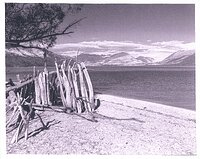
Me neither. I use blown whenever an averagely exposed shot fails to show detail in a particular area, usually skies. There's often something lurking two or three stops of burning in or up the sliders, but not always. As ever, it's a case of balancing the image as a whole without letting contrast or lack of t dominate.

Clipped is the electrical term for the stored signal voltage reaching the maximum for the circuit device or circuit and any additional signal voltage gets bled off to ground thus the term "clipped".
 
My experience is that hard sunlight is above and beyond both film and digital in terms of dynamic range.
With black and white film, I need to expose for the shadows and then develop to keep the highlights under control, even more trickery needs to be done when printing this onto paper, this is basically just manual HDR processing, because you compress the range to fit the medium and has nothing to do with skill or lack thereof.

Slide-film, as far as I know, has about 5 useful stops latitude.....that's not much to go on and anyone shooting slide is familiar with that.

C-41 has more latitude, mostly for overexposure, It still needs to be exposed for the shadows and it is not easy to save the highlights without filters in full daylight.
I've shoot enough film to realize that it has it's limitations and how to work with the medium to achieve what I want.

Raw-data is just information, not a photo, what you see on the screen is a representation of that data, exposure-issues as sensor-technology continue to improve, has been less and less of a problem.
Sure, it does save clueless butts out there, as well as the odd foul up from even experienced photographers, but that is no argument for or against digital or film, it is what it is.

Most of the time I can easily get the dynamic range from the high subject brightness range [SBR] on film using the box speed. I cannot remember ever having to change the development time to compress the range the way Ansel Adams outlines in the Zone method with modern films.

However, slide film has a much narrower dynamic range that is similar to the digital response.
 
Last edited:
Clipped is often referred to as "blown"....I am not sure what the correct semantics are.
However, in this context, I was referring to areas that appear as pure white or pure black and thus will be indicated, both with histogram and by visual indication as "lost".

D has traditionally( :smile: ) been good for recovering shadow-detail and was often shot similar to slide-film to avoid "blown" highlights. However, with highlight recovery-technology in recent years, D works more like a combination of C-41 and slides, meaning that you can just take the photo and recover whatever you like. High-noon sunlight no longer pose any real issue.

I still shoot landscape with ND gradient filters though, saves time and gives you true detail from the get-go, since you compress the dynamic range of the scene
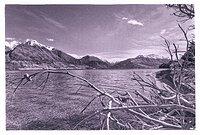
I'm afraid I don't even know where to start with this comment. We do not "recover" shadow detail, we develop it ....With all due respect to a fellow photographer I suggest that you may not appreciate the fundamentals of digital capture: sensors, amplification, proper exposure/capture, file development. This requires a fair amount of enrichment, beyond the scope of this forum.

I do not understand ND gradient filters so will accept your belief in that method.
 
Photrio.com contains affiliate links to products. We may receive a commission for purchases made through these links.
To read our full affiliate disclosure statement please click Here.

PHOTRIO PARTNERS EQUALLY FUNDING OUR COMMUNITY:


Ilford ADOX Freestyle Photographic Stearman Press Weldon Color Lab Blue Moon Camera & Machine
Top Bottom
