
• Welcome to Photrio!
    Registration is fast and free. Join today to unlock search, see fewer ads, and access all forum features.
    Click here to sign up

The analog to digital trap, no... you can't run before you walk..

Recent Classifieds

Forum statistics

Threads
201,671
Messages
2,828,292
Members
100,881
Latest member
Pat Condon
Recent bookmarks
0

xkaes

Subscriber
Allowing Ads
Joined
Mar 25, 2006
Messages
5,118
Location
Colorado
Format
Multi Format
Hypothetical question:
If dodging and/or burning is required to make a satisfactory darkroom print, did the photographer fail to get it right in the camera?

I've made plenty of shots that required no dodging or burning under the enlarger, but just about every shot that I've made could be improved with some dodging or burning -- some a little, some a lot. That's what AA's "pre-visualization" is about. You try to get the negative as close as possible, but much (some, like me, would say most) of the work happens in the darkroom. "Moonrise" is a perfect example.
 

Cholentpot

Member
Joined
Oct 26, 2015
Messages
7,010
Format
35mm
There is lots of room in the photography pool. It's like meeting someone who says they're a painter. Are they a house painter? Sign painter? Train car tagger? Surrealist? Realist? Abstract artist? Run & gun street photography is well suited to in camera adjustments, where images end up relating to each other across many scenarios.

My photos invariably stray from what was there, so don't use in camera tweaks at all beyond shutter speed, aperture, and ISO. RAW photos in my world are rough sketches, where what I felt is best brought out after the fact and some semblance of balance can be found.

No one way is better than any other. The most important bit is about 6 inches behind the camera.


View attachment 414180View attachment 414182

Whatever gets you to your vision. There are the folks who go full 30fps auto and move the camera around in a torus shape relying of the sheer number of exposures and autofocus. They then use AI to sort the hits from misses and cull down again with AI. They end up with one amazing shot that they then put through a variety of prebaked filters and more AI. The end result looks amazing. Do I do that? Nope. That kind of thing goes against my photographic principles but if it works for them it works.
 

MurrayMinchin

Membership Council
Subscriber
Allowing Ads
Joined
Jan 9, 2005
Messages
5,598
Location
North Coast BC Canada
Format
Hybrid
Whatever gets you to your vision. There are the folks who go full 30fps auto and move the camera around in a torus shape relying of the sheer number of exposures and autofocus. They then use AI to sort the hits from misses and cull down again with AI. They end up with one amazing shot that they then put through a variety of prebaked filters and more AI. The end result looks amazing. Do I do that? Nope. That kind of thing goes against my photographic principles but if it works for them it works.
Weird. I hiked 10K yesterday through a snowy forest and took 3 photos.
 
Last edited:

Alan Edward Klein

Member
Allowing Ads
Joined
Aug 29, 2017
Messages
10,141
Location
New Jersey formerly NYC
Format
Multi Format
Whatever gets you to your vision. There are the folks who go full 30fps auto and move the camera around in a torus shape relying of the sheer number of exposures and autofocus. They then use AI to sort the hits from misses and cull down again with AI. They end up with one amazing shot that they then put through a variety of prebaked filters and more AI. The end result looks amazing. Do I do that? Nope. That kind of thing goes against my photographic principles but if it works for them it works.

Why bother with 30fps. Just let AI create the picture in the computer while you sit in your pajamas sipping your morning coffee?
 

tfcass

Member
Allowing Ads
Joined
Dec 13, 2025
Messages
3
Location
Oak Ridge, New Jersey
Format
35mm
Greetings... I just joined this forum recently and was just perusing it. I came upon this thread about film to DSLR. Without going to nuts about it, I have the same issue of going from film years ago to digital. My complaint to any of the manufacturers is why can't they concentrate on photography as the process and not the programming of a "handheld" computer? No where in my user manuals are there any pointers in how an image is made. Not the endless setting up of a DSLR, but some fundamentals of what, as a photographer, one should be looking for. Textures, forms, color, B&W, f-stops...all of it. I have just taken out my old OM1-n, got new batteries and can't wait to use it. One shot at a time. Not like an M-16 that is a "spray and pray" techinque that you see nowadays. Make every shot count. 24 or 36. Think each one through... Good night!
 

Attachments

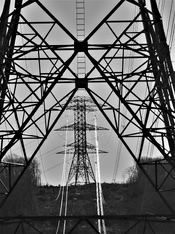
  • Power lines, Berkdhire Valley Rd, Jefferson NJ (1).JPG
    Power lines, Berkdhire Valley Rd, Jefferson NJ (1).JPG
    984.1 KB · Views: 26

Cholentpot

Member
Joined
Oct 26, 2015
Messages
7,010
Format
35mm
Greetings... I just joined this forum recently and was just perusing it. I came upon this thread about film to DSLR. Without going to nuts about it, I have the same issue of going from film years ago to digital. My complaint to any of the manufacturers is why can't they concentrate on photography as the process and not the programming of a "handheld" computer? No where in my user manuals are there any pointers in how an image is made. Not the endless setting up of a DSLR, but some fundamentals of what, as a photographer, one should be looking for. Textures, forms, color, B&W, f-stops...all of it. I have just taken out my old OM1-n, got new batteries and can't wait to use it. One shot at a time. Not like an M-16 that is a "spray and pray" techinque that you see nowadays. Make every shot count. 24 or 36. Think each one through... Good night!

I can answer this kinda.

So the lower to mid level DSLRs were/are really built for the user to put in full auto and snap away. Fancy point and shoots. They're very heavy on the modes. Especially the lower tier ones. They expect the general user to stick with the kit 18-55 and shoot in either full automation or bounce around the sports, night, macro etc. The mid level gives full manual but doesn't really expect the general user to use it. Once you get to the more prosumer or pro cameras the companies expect the user to already know what their doing. There menus on my Canon 6D for example are for more straightforward than my Canon 550D, the 5DIV on the other hand is built for a professional and everything gets out of the way. I got it, spent an evening customizing and tweaking the settings and it's been like that for years aside from a tweak or two. I can really only speak for Canon, I have used some Nikon cameras and they do have built in explanations and animations for some models.

Camera companies for the past decade and a half assumed that the user either doesn't care or already knows how to take a photo. I personally learned by trial and error. Same as in film.
 

Cholentpot

Member
Joined
Oct 26, 2015
Messages
7,010
Format
35mm
One advantage of shooting with film over many years before going to digital is you will have more discernment with what you shoot so you won't bloat your hard drive with drivel.

Half-frame on poly base gets me 100+ shots on a bulk roll. Scanning all that takes up room.
 

abruzzi

Member
Allowing Ads
Joined
Mar 10, 2018
Messages
3,232
Location
New Mexico, USA
Format
Large Format
In my mind, there is little difference between an analog photographer trying to "expose for the shadows and print for the highlights" and a digital photographer trying to "expose to the right" (ETTR). Both are strategies aimed at practicing the craft of photography in a way that minimizes the limitations of the media they are working with.

This.

The main "digital camera" I shoot is not auto exposure, and has an LCD screen pretty much useless for reviewing the image after shooting, so I do something similar to ETTR. I start with a handheld meter to get a quick estimate of the proper exposure, then take the first shot. I have it bring up the histogram after the shot, and based on what I see, I adjust exposure up or down as needed. For the most part I try to push the exposure to the right, but I don't push hard to the right because the histogram isn't too high resolution, and it would be easy to clip off small amounts of bright pixels. It may usually take two or three shots until I get where I want it (on a tripod of course.)

On the computer I start more or less doing Alan what doing earlier in the thread--setting the black point a little below the darkest pixels and the white point a little higher than the brightest pixels. I then adjust the curve to have as much toe and shoulder as I like for the shot. Then I straighten the image if I was a little off, and crop if it needs it. (I have 60mp to work with so it can suffer a fair amount of cropping if necessary.) Honestly the only differences between that process and the darkroom process is A) i can reshoot until I get the exposure right because the digital back lets me see the result of each shot before the darkroom, and B) I get to define the curve after the fact. If I'm shooting film, I get the curve of the film I've loaded--like it or not.

The other thing that gets done is lens cast correction, but thats quick and an entirely different discussion.

In total the tweeking time for most photos is under 15 minutes, and I only do it to the photos that seem worth it. I usually spend that much time setting up the camera preparing and taking the shot.
 

gbroadbridge

Subscriber
Joined
Nov 18, 2004
Messages
867
Location
Sydney, Australia
Format
Medium Format
but I don't push hard to the right because the histogram isn't too high resolution, and it would be easy to clip off small amounts of bright pixels.

I think people worry far too much about clipping - at both ends of the histogram.

I can't think of many images where the important part of the image is close to that area of the histogram, and anything there is more often than not a distraction.

If I can't crop it out, I often deliberately push them over the edge into white or black just to get rid of them and draw attention back to the subject.

At the end of the day the subject matter needs to fit into the limited dynamic range of the output medium, which for me at least happens to be a print, which has far less 'dynamic range' than a camera sensor or piece of film.
 

jl_nims

Member
Joined
Oct 29, 2025
Messages
4
Location
Richland, WA
Format
Multi Format
Hypothetical question:
If dodging and/or burning is required to make a satisfactory darkroom print, did the photographer fail to get it right in the camera?
Yes! Ansel Adams got it right in the camera - yet used dodging and burning in needed areas to produce his final prints. However, he always preached about getting it right in the camera first. If I find that I have to spend more than five minutes in post, I missed the shot. Merry Christmas brother!
 

jl_nims

Member
Joined
Oct 29, 2025
Messages
4
Location
Richland, WA
Format
Multi Format
Greetings... I just joined this forum recently and was just perusing it. I came upon this thread about film to DSLR. Without going to nuts about it, I have the same issue of going from film years ago to digital. My complaint to any of the manufacturers is why can't they concentrate on photography as the process and not the programming of a "handheld" computer? No where in my user manuals are there any pointers in how an image is made. Not the endless setting up of a DSLR, but some fundamentals of what, as a photographer, one should be looking for. Textures, forms, color, B&W, f-stops...all of it. I have just taken out my old OM1-n, got new batteries and can't wait to use it. One shot at a time. Not like an M-16 that is a "spray and pray" techinque that you see nowadays. Make every shot count. 24 or 36. Think each one through... Good night!
Great shot man!
 

koraks

Moderator
Moderator
Joined
Nov 29, 2018
Messages
26,664
Location
Europe
Format
Multi Format
some fundamentals of what, as a photographer, one should be looking for. Textures, forms, color, B&W, f-stops...all of it.
Welcome aboard!
I understand the sentiment you express here and can relate to it to an extent, but thinking of the analogy of a car - it comes with an owner's manual and nowhere does it say anything about the destinations you should drive the car to. At best, it'll show you how to set up the sat nav system. It's the same with a camera manual.
 
OP
OP
Sean

Sean

Admin
Admin
Allowing Ads
Joined
Aug 29, 2002
Messages
13,581
Location
New Zealand
Format
Multi Format
Blown highlights and blocked up shadow warnings (can be toggled on & off)


I stumbled onto this a few days before your post and find it extremely helpful, even more so turning this on in camera and any highlights that might blow out turn black. It has solved me not knowing if I can trust what I see in the EVF.
 

koraks

Moderator
Moderator
Joined
Nov 29, 2018
Messages
26,664
Location
Europe
Format
Multi Format
even more so turning this on in camera and any highlights that might blow out turn black

Definitely. I'm not an EVF/EVIL user, but use the 'blinkies' on my DSLR all the time. What isn't captured in the first place, you can't work with later on.

For me, a digital file is really much like a negative and the final look of the image is decided later on. It's a bit like using slide film vs. negative film. I'm firmly in the latter camp, but I know the magic of the former. However, in the digital realm, I don't think there's much magic to the "virtual slide" approach. It's fast and convenient, for sure, but overall just less flexible. My digital images involve varying degrees of post processing; for the most part (esp. the color ones) they look like they might have been straight photos of the original scene, but much of the time, they really aren't. They're doctored to bring out what appealed to me in the original scene - not what it looked like in a literal sense.

1766481966363.png

Left: RAW preview as shown by Windows Photo viewer. Right: as printed and shared here on Photrio.
 
Last edited:
OP
OP
Sean

Sean

Admin
Admin
Allowing Ads
Joined
Aug 29, 2002
Messages
13,581
Location
New Zealand
Format
Multi Format
Definitely. I'm not an EVF/EVIL user, but use the 'blinkies' on my DSLR all the time. What isn't captured in the first place, you can't work with later on.

For me, a digital file is really much like a negative and the final look of the image is decided later on. It's a bit like using slide film vs. negative film. I'm firmly in the latter camp, but I know the magic of the former. However, in the digital realm, I don't think there's much magic to the "virtual slide" approach. It's fast and convenient, for sure, but overall just less flexible. My digital images involve varying degrees of post processing; for the most part (esp. the color ones) they look like they might have been straight photos of the original scene, but much of the time, they really aren't. They're doctored to bring out what appealed to me in the original scene - not what it looked like in a literal sense.

View attachment 414229
Left: RAW preview as shown by Windows Photo viewer. Right: as printed and shared here on Photrio.

Nice!

Yes, I very much operate in a similar way most of the time. Part of my overall journey is finding MY way to an end result I LIKE and caring less and less if it does not agree with or work for others. I can get into some bad second guessing loops and as soon as I stop worrying what others might think the decision paralysis fades.
 
Last edited:

koraks

Moderator
Moderator
Joined
Nov 29, 2018
Messages
26,664
Location
Europe
Format
Multi Format
stop worrying what others might think
I think that's the best principle to begin with, as hard as it can be, though. I can relate. There's always those voices representing what we *think* that others expect/like/demand, and they sometimes drown out the signal that really matters - your own recollection of your feelings at the moment preceding the button-press, your hopes for how that image might turn out; in short, the magic of the moment.

By extension, this is another reason why I don't like to work with in-camera JPEGs. They are rendered in a particular way and even if I make a bunch of presets that give looks I generally like, the net effect is still that the image immediately after pressing the button looks in a certain way, and the odds of that look aligning perfectly with my hopes, expectations or feelings at the moment are near zero. Yet, the moment I see the image pop up on the screen, that interpretation starts to compete with my vision. Since the latter is by definition a weaker and more complex signal than the concrete visual impact of the image as shown, the vision loses. I'd much rather have a p*ss-poor RAW preview that looks like utter sh**; as long as it shows the frame boundaries and where tonal information is present, it's fine. It's much easier to work towards the desired end result starting with something that's not already interpreted into a distinct direction, as a preset-fashioned camera JPEG typically is.
 
OP
OP
Sean

Sean

Admin
Admin
Allowing Ads
Joined
Aug 29, 2002
Messages
13,581
Location
New Zealand
Format
Multi Format
I think that's the best principle to begin with, as hard as it can be, though. I can relate. There's always those voices representing what we *think* that others expect/like/demand, and they sometimes drown out the signal that really matters - your own recollection of your feelings at the moment preceding the button-press, your hopes for how that image might turn out; in short, the magic of the moment.

By extension, this is another reason why I don't like to work with in-camera JPEGs. They are rendered in a particular way and even if I make a bunch of presets that give looks I generally like, the net effect is still that the image immediately after pressing the button looks in a certain way, and the odds of that look aligning perfectly with my hopes, expectations or feelings at the moment are near zero. Yet, the moment I see the image pop up on the screen, that interpretation starts to compete with my vision. Since the latter is by definition a weaker and more complex signal than the concrete visual impact of the image as shown, the vision loses. I'd much rather have a p*ss-poor RAW preview that looks like utter sh**; as long as it shows the frame boundaries and where tonal information is present, it's fine. It's much easier to work towards the desired end result starting with something that's not already interpreted into a distinct direction, as a preset-fashioned camera JPEG typically is.

Makes sense for sure. I've been shooting RAW + FINE (jpg) so I always have the options. I might have high levels of:

"Animism/Anthropomorphism: This is the tendency to attribute human-like qualities, emotions, or consciousness to non-human things."

My favorite subjects are when I see life/soul and personality in inanimate objects or the combinations of them together and mood (post processing) to bring that out even more. So as long as my end result shows these unique beings off and their relationships in their environment, I am pretty happy. So, when coming across 'them' and flipping through sims/recipes and it brings them out 'ah yeah, there they are' then that is most of the way there for me.
 
OP
OP
Sean

Sean

Admin
Admin
Allowing Ads
Joined
Aug 29, 2002
Messages
13,581
Location
New Zealand
Format
Multi Format
Another can of worms to consider, and also not a universal thing, it can depend on your camera sensor technology:


"At ISO 500, the X100VI's sensor performs a physical "hardware switch" into its second state.

In technical terms, this is called Dual Conversion Gain. Think of your sensor as having two different "gears" or "engines."

1. The Two Engines (Dual Gain)
Most digital sensors get noisier and noisier as you turn up the ISO. But the X100VI sensor (X-Trans 5) has a "shortcut" at ISO 500:

Gear 1 (ISO 125–400): This is the "Low Gain" circuit. It is optimized for maximum dynamic range and pure image quality when you have plenty of light.
Gear 2 (ISO 500+): When you click the dial to 500, the sensor physically switches to a High Conversion Gain (HCG) circuit. This circuit is specifically designed to handle low-light signals more efficiently by reducing "read noise" (the static-like noise the camera itself generates).

2. The "Clean" Jump
Because of this hardware switch, ISO 500 is actually cleaner than ISO 400. If you look at technical noise charts, the grain level rises steadily from 125 to 400, then suddenly "drops" at 500 when the new circuit kicks in. This is why ISO 500 is the most popular "starting point" for street photographers."


abruzzi

Member
Allowing Ads
Joined
Mar 10, 2018
Messages
3,232
Location
New Mexico, USA
Format
Large Format
I think people worry far too much about clipping - at both ends of the histogram.

I can't think of many images where the important part of the image is close to that area of the histogram, and anything there is more often than not a distraction.

Perhaps, but that decision is is easier to make at home on a 28 inch monitor than it is on a 2 inch square screen in bright sunlight. And with about 13 stops of dynamic range I have space to capture most scenes without losing anything on either end.
 
OP
OP
Sean

Sean

Admin
Admin
Allowing Ads
Joined
Aug 29, 2002
Messages
13,581
Location
New Zealand
Format
Multi Format
I've also noticed a lot of these "recipes" have over the top grain settings (to me it looks more like noise) that does not play well with a 40mp sensor so am turning the grain off but using them for the other color properties they have.
 
OP
OP
Sean

Sean

Admin
Admin
Allowing Ads
Joined
Aug 29, 2002
Messages
13,581
Location
New Zealand
Format
Multi Format
Another knowledge bump today... dynamic range, histograms, wysiwyg jpg recipe shooting vs. RAW and various technical differences there + shooting workflows best suited to each and why, honing several camera config settings so I have real time monitoring of my exposure control and more. I'm starting to really 'get it' now and a familiarity is setting in with all the mass of camera settings and their relationships to the image. Now, looking forward to shooting with far more purpose and control rather than winging it.
 
Photrio.com contains affiliate links to products. We may receive a commission for purchases made through these links.
To read our full affiliate disclosure statement please click Here.

PHOTRIO PARTNERS EQUALLY FUNDING OUR COMMUNITY:


Ilford ADOX Freestyle Photographic Stearman Press Weldon Color Lab Blue Moon Camera & Machine
Top Bottom