

mshchem
Subscriber
To hell with Photoshop, I want to hear more about the Cats!

Film and digital have one thing in common. You can make it as simple or as complicated as you want. Most film users set the camera on "AUTO" or whatever, and send the film someplace for processing and prints. For most digital camera users it's exactly the same, although the film is now a media card with files, instead of images in gelatin.
If you want to get more involved -- like processing your own film or files -- you can do it, of course -- and that can be as simple or as complicated as you want it to be. Then send off the film or files for printing. Still, pretty much no difference.
And if you want to do the printing yourself, that's another step -- just somewhat different if you have film or files -- but basically the same, except with one you can keep the lights ON.


Couldn't agree more. Get it right in the camera.I also disagree with the shoot under/over exposure crowd. Get it right in camera, don't shoot for the RAW. If the shot needs some tweaks fine. If I have to go full photoshop wizard on my photo I've missed the shot.

Instruction manual? I don't need no stinkin' manual

Hypothetical question:
If dodging and/or burning is required to make a satisfactory darkroom print, did the photographer fail to get it right in the camera?

To hell with Photoshop, I want to hear more about the Cats!
Shooting a Fuji X100VI my advice would be to dump RAW amd Capture One, and learn to use the image science Fuji built into the camera.
Yes, that means a big dive into the manual to learn how to use the camera properly, so that you get the image right in camera with no need to fart around later.
Capture One has partnered with Fuji (apparently the best RAW support for Fuji files but I have never fully investigated that), the other aspect of the partnership is that Capture One includes Fuji's camera profiles, so you can apply these to your RAW files if needed:
I understand that - I've been shooting Fuji for years.
Just because you can doesn't mean that you should.
Some people like fiddling around in front of computers and Fuji understand that and licensed their LUT's to Adobe, C1 and DxO.
However those LUT's do not do the same job as the internal processing - they cannot.
Easily proven by comparing a JPEG direct from the camera with the output of LR or C1 using their simulations - they are markedly different.
The Fujifilm intent is that the camera is a tool that stands alone
I understand that - I've been shooting Fuji for years.
Just because you can doesn't mean that you should.
Some people like fiddling around in front of computers and Fuji understand that and licensed their LUT's to Adobe, C1 and DxO.
However those LUT's do not do the same job as the internal processing - they cannot.
Easily proven by comparing a JPEG direct from the camera with the output of LR or C1 using their simulations - they are markedly different.
The Fujifilm intent is that the camera is a tool that stands alone
I treat the built in Film Simulations the same way I treat a film backs on my MF camera. I have one 1 colour and 1 B&W (Acros) that I like and swap between them. I've tweaked them slightly from standard.I've heard this, that it can only get close. So, I am curious how you shoot. Do you shoot RAW + JPG? Do you shoot multiple Fuji profiles or have you settled on your own "recipe"? Thanks
That's an advantage...?Forces you to commit to a look/feel when you take the shot, as well.
Yes, I like the photograph to reflect what I saw and felt at the time, not how I imagine it looked when I attempt to remember days later.That's an advantage...?

I am all for trying to "get it right in the camera" but one thing that is very hard to do in-camera is local adjustments. That is, how to control selected areas of the scene that are relatively too dark or too bright? You can use a graduated neutral density filter to tame down a bright sky or a snowy foreground -- but other than that, you would have to mess with lighting and reflectors to bring up the shadows. Easy enough in a studio, but outside of a studio, can turn into a real chore.
Film shooters are able to help even out bright and dark areas in the darkroom by dodging and burning the print -- and digital shooters can do the same with most (but not all) post-processing software.
As demonstrated by the Croatian cat, trying to bring up darker areas using global adjustments like exposure and levels can blow out highlights. The ability to select certain areas of the frame for making local adjustments is a must-have tool that gets used on almost every digital photo I make.

Hypothetical question:
If dodging and/or burning is required to make a satisfactory darkroom print, did the photographer fail to get it right in the camera?
In my mind, there is little difference between an analog photographer trying to "expose for the shadows and print for the highlights" and a digital photographer trying to "expose to the right" (ETTR). Both are strategies aimed at practicing the craft of photography in a way that minimizes the limitations of the media they are working with.There's a difference between tweaking the white balance, bringing up the shadows and taming the highlights vs going ISO free or ETTR. The former is basic digital photography work the latter is moving into photoshop creations.
In my mind, there is little difference between an analog photographer trying to "expose for the shadows and print for the highlights" and a digital photographer trying to "expose to the right" (ETTR). Both are strategies aimed at practicing the craft of photography in a way that minimizes the limitations of the media they are working with.
Not sure how your reply relates to what I said in my post. You say, "the latter is moving into Photoshop creations" as if that is a bad thing. There are some extreme cases, where I might agree with the idea that "Photoshop creations" should be avoided. But my post was about local adjustments (dodging and burning), not about extreme cases of Photoshop manipulation.
---
It's kinda funny how skilled darkroom printers are respected, even revered by the photographic community -- but those who are skilled in digital postprocessing are more likely to be reviled, as if they are suspected of being up to something devious or unsavory.
It is pretty much there for me

There is lots of room in the photography pool. It's like meeting someone who says they're a painter. Are they a house painter? Sign painter? Train car tagger? Surrealist? Realist? Abstract artist? Run & gun street photography is well suited to in camera adjustments, where images end up relating to each other across many scenarios.It's a personal opinion, if you want to go ham on a photo and work on it for days that's fine. For me, I shoot, tweak and done. I don't have the mental fortitude to spend my time tweaking every bit out of a photo be it film or digital. The subject matters more than the sliders. I understand for many its not like that. More power to them.
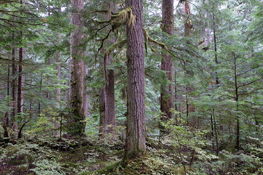
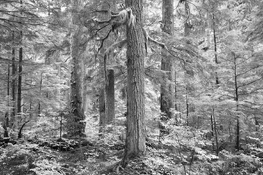
Hypothetical question:
If dodging and/or burning is required to make a satisfactory darkroom print, did the photographer fail to get it right in the camera?
| Photrio.com contains affiliate links to products. We may receive a commission for purchases made through these links. To read our full affiliate disclosure statement please click Here. |
PHOTRIO PARTNERS EQUALLY FUNDING OUR COMMUNITY:  |

