• Welcome to Photrio!
    Registration is fast and free. Join today to unlock search, see fewer ads, and access all forum features.
    Click here to sign up

Tetenal Parvofin - recipe?

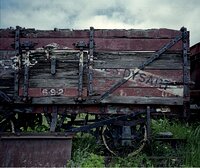
A coal wagon

A
A coal wagon

  • 4
  • 2
  • 42
Morning Birdie

D
Morning Birdie

  • 1
  • 2
  • 41

Forum statistics

Threads
203,143
Messages
2,850,484
Members
101,693
Latest member
Liftahorse
Recent bookmarks
0

psmithp

Member
Allowing Ads
Joined
Jan 26, 2022
Messages
59
Location
Allerød, Denmark
Format
Multi Format
Does anybody have a recipe for this developer?
It is not being produced since tetenal closed. They said it was based on a classic developer from the 1950s so presumably some of the cat (less later improvements) is out the bag.
 
Going by the MSDS, it looks like a fairly normal MQ developer, with some modifications probably to allow it to be pressed into tablets. As I understand, the 'magic' was in the long shelf life of the tablets. Perhaps I'm missing something though.
 
There are some interesting points in the MSDS - it appears to contain a mix of antioxidants and sequestrants, even though it's a single-use developer. By the way, it's still being sold in some places.
 
Does anybody have a recipe - even for a fairly normal developer? My feeling/impression/call it what you want was that it gave finer grain than DD-X.
 
For fine grain, use XTOL or any of its clones.
This MQ developer will not give particularly fine grain; at least not more so than, say, D76.
 
Does anybody have a recipe - even for a fairly normal developer? My feeling/impression/call it what you want was that it gave finer grain than DD-X.

Depending on your chemical supplies and desire to get into making developers, give D23 a try - 2 chems only, easy to make and with fine grain

pentaxuser
 
Found it mentionned on a french message board : https://forum.35mm-compact.com/viewtopic.php?t=34682&start=460

Scroll to a message dated 2023-02-19 11:58.

The OP translated from german to french. According to later posts, 'dreibasisch phosphorsaure natron' would be Na3PO4

Full post quoted, emphasis mine :

"Je cherche un bon traducteur d'Allemand technique, afin de compléter cette recette, issu du livre "Contax Kurz-Schule" de Hans Hempel, (environ 1934) la recette du révélateur Parvofin (pyro)

Solution A :

1000g eau
20g pyrocatéchine
50g sulfite de sodium

Solution B :

1000g eau
200g "dreibasisch phosphorsaure natron" je n'arrive pas à traduire carbonate de sodium ? Acide phosphorique ?

Les solutions sont mieux conservées séparément puis conservées indéfiniment. Selon la nature du film ou le caractère négatif recherché, on dilue pour l'usage :

(Rapports de la solution 1 à la solution 2 à l'eau)

Gradation normale : 1:1:2
Gradation douce : 1:1:3
Gradation dure 1:1:1

Selon la dilution, le temps de développement est compris entre 8 et 10 minutes à une température de 18 à 20° C. Pour un travail lent, je préconise une dilution 1:1:8.Le temps de développement est de 25min.

Ce révélateur a également la propriété recherchée de développer sans voile et de renforcer progressivement les négatifs initialement délicats sans augmenter le grain.

Un autre avantage est son insensibilité aux légères traces de soude fixante "Fixiernatronspuren ?" et son fonctionnement homogène malgré les variations de température."

 
So that would be a pyrocatechol-only developer, non-staining or very weakly staining (due to the sulfite concentration). I've never worked with trisodium fosfate, but the concentration seems ridiculously high at a whopping 200g/l for solution B. I doubt this formula is accurate.
 
Found it mentionned on a french message board : https://forum.35mm-compact.com/viewtopic.php?t=34682&start=460

Scroll to a message dated 2023-02-19 11:58.

The OP translated from german to french. According to later posts, 'dreibasisch phosphorsaure natron' would be Na3PO4

Full post quoted, emphasis mine :

"Je cherche un bon traducteur d'Allemand technique, afin de compléter cette recette, issu du livre "Contax Kurz-Schule" de Hans Hempel, (environ 1934) la recette du révélateur Parvofin (pyro)

Solution A :

1000g eau
20g pyrocatéchine
50g sulfite de sodium

Solution B :

1000g eau
200g "dreibasisch phosphorsaure natron" je n'arrive pas à traduire carbonate de sodium ? Acide phosphorique ?

Les solutions sont mieux conservées séparément puis conservées indéfiniment. Selon la nature du film ou le caractère négatif recherché, on dilue pour l'usage :

(Rapports de la solution 1 à la solution 2 à l'eau)

Gradation normale : 1:1:2
Gradation douce : 1:1:3
Gradation dure 1:1:1

Selon la dilution, le temps de développement est compris entre 8 et 10 minutes à une température de 18 à 20° C. Pour un travail lent, je préconise une dilution 1:1:8.Le temps de développement est de 25min.

Ce révélateur a également la propriété recherchée de développer sans voile et de renforcer progressivement les négatifs initialement délicats sans augmenter le grain.

Un autre avantage est son insensibilité aux légères traces de soude fixante "Fixiernatronspuren ?" et son fonctionnement homogène malgré les variations de température."

Cela est très intéressant ! Truth in advertising is obviously (évidemment, as the French would say) a flexible notion, and "inspired by" also. Since the new version of Parvofin was sold as a relatively safe product, pyrocatéchine would not be the developing agent of choice.
Anyway, it is history now. I liked it, I think it gave me finer grain than DD-X.
 
Photrio.com contains affiliate links to products. We may receive a commission for purchases made through these links.
To read our full affiliate disclosure statement please click Here.

PHOTRIO PARTNERS EQUALLY FUNDING OUR COMMUNITY:


Ilford ADOX Freestyle Photographic Stearman Press Weldon Color Lab Blue Moon Camera & Machine
Top Bottom