

• Welcome to Photrio!
    Registration is fast and free. Join today to unlock search, see fewer ads, and access all forum features.
    Click here to sign up

strange fog with acros

Untitled

A
Untitled

  • 1
  • 0
  • 7
Untitled

A
Untitled

  • 2
  • 0
  • 6

Recent Classifieds

Forum statistics

Threads
201,933
Messages
2,832,285
Members
101,023
Latest member
scodth
Recent bookmarks
0

BetterSense

Member
Allowing Ads
Joined
Aug 16, 2008
Messages
3,151
Location
North Caroli
Format
35mm
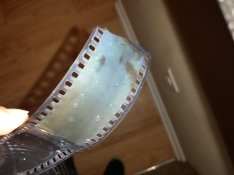
When hanging up some 35mm acros I noticed what looked like unfixed silver. I had fixed it along with some Tmax so I thought it was odd, since acros has never seemed like a hard-to-fix film to me. After I re - fixed in the same bath, there was no change. I mixed up a hot batch of fix (sprint record speed fix) at 1:3 and tested it with some 35mm film from the floor. It cleared in 30 seconds. After another 5 minutes in the fresh fix, the residue was still there. What could this be? The film expired 2011.
 

Attachments

  • 20140625_164004.jpg
    20140625_164004.jpg
    274.6 KB · Views: 557

tony lockerbie

Member
Allowing Ads
Joined
Feb 16, 2006
Messages
2,349
Location
Merimbula NSW Australia
Format
Multi Format
Very strange, because it looks un-fixed to me, but as TMax usually takes a good minute or more to fix, the Across should have been fine. My experience is that across fixes quickly, like FP4 or Tri-X, so this has me scratching my head.
 

MattKing

Moderator
Moderator
Joined
Apr 24, 2005
Messages
55,267
Location
Delta, BC Canada
Format
Medium Format
Is that dichroic fog?
 
OP
OP
BetterSense

BetterSense

Member
Allowing Ads
Joined
Aug 16, 2008
Messages
3,151
Location
North Caroli
Format
35mm
I have heard of dichroic fog but never seen it. The picture emphasizes the fog...it seems like the negatives might print ok. Is it possible for fixer to be old or spoiled such that it would fix tmax but not acros?
 

MattKing

Moderator
Moderator
Joined
Apr 24, 2005
Messages
55,267
Location
Delta, BC Canada
Format
Medium Format
Dichroic fog is rarely seen on modern materials. It might be worthwhile to pm Photo Engineer about this.
 
OP
OP
BetterSense

BetterSense

Member
Allowing Ads
Joined
Aug 16, 2008
Messages
3,151
Location
North Caroli
Format
35mm
Could this happen if the film was exposed to light between the stop and fix? I have always considered it safe to expose film to room light as long as it was stopped and had been dunked in the fix.
 

Dr Croubie

Member
Allowing Ads
Joined
Mar 21, 2013
Messages
1,986
Location
rAdelaide
Format
Multi Format
Generally, I keep everything in the dark until the first rinse, although it is usually considered fairly safe to bring it into the lights after a few seconds in fixer (at least with paper, I remember my old tech teacher turning the lights on 5 seconds after the last bits of paper were in the fixer at the end of the lesson).
If, however your first fixer was bad and useless, it would be just like putting the lights on after the stop bath. Whether or not that would cause this problem (at all, plus being on one and not the other) I have no idea though.
 

MattKing

Moderator
Moderator
Joined
Apr 24, 2005
Messages
55,267
Location
Delta, BC Canada
Format
Medium Format
Generally, I keep everything in the dark until the first rinse, although it is usually considered fairly safe to bring it into the lights after a few seconds in fixer (at least with paper, I remember my old tech teacher turning the lights on 5 seconds after the last bits of paper were in the fixer at the end of the lesson).
If, however your first fixer was bad and useless, it would be just like putting the lights on after the stop bath. Whether or not that would cause this problem (at all, plus being on one and not the other) I have no idea though.

Think about it - even if silver halides in the emulsion are exposed to light in the stop bath stage, when are they going to be exposed to a reducing agent (developer) before they are fixed away?

As long as the developer in the emulsion has been fully neutralized when the lights go on, it shouldn't be a problem. Essentially, it is a question about how effective your stop bath is.

With printing, and FB papers, it is much harder to get all of that developer in the emulsion out of the paper, so it is more important to wait.
 

Rudeofus

Member
Joined
Aug 13, 2009
Messages
5,119
Location
EU
Format
Medium Format
Dichroic fog is a form of physical development, and it occurs - even with fresh and modern film stock - if there is too much solvent in a developer. It's called "dichroic" because it has this yellow-bluish sheen. What you see here is tiny Silver particles that a regular fixer will not remove in a few minutes, and whatever you do to remove it will also attack image Silver to some extent. Since the pics are almost impossible to enlarge this way (see the finger print patterns), you'll have to carefully use some BLIX (C-41 or E6 BLIX, Farmer's reducer, ...) to get rid of it. Make sure you rinse it immediately as soon as the dichroic fog is removed, and rather repeat the removal cycle a few times than remove too much Silver from weakly developed regions.

As to the reasons why you got this fog: you didn't tell us which developer you used. If it was some normal developer, maybe some fixer got accidentially mixed into it. If you did some experiments with your own brew, go easy on the Silver solvent.
 
OP
OP
BetterSense

BetterSense

Member
Allowing Ads
Joined
Aug 16, 2008
Messages
3,151
Location
North Caroli
Format
35mm
Developer was R09 One Shot at 50:1. I was down to the very last few mm in the bottle, so developer composition may have been different than a fresh bottle. Development was done at 25C for 10 minutes (I was trying for a push).
 

Rick A

Subscriber
Allowing Ads
Joined
Mar 31, 2009
Messages
10,033
Location
Laurel Highlands
Format
8x10 Format
Film (and paper) can fog between stop and fix if exposed to light. It is safe to expose the film to light after at least 50% of fixing has occurred. It has happened to me more than once developing paper, never film, I never expose unfixed film to light.
I just perused Kodak Practical Processing in Black and White Photography, (pub#229 -pg 6 under Dev controls-temp of developer-effect on fog) regarding fog . Higher fog is sometimes a result of too high development temperature, and if occurs, reduce temp.
 
Last edited by a moderator:
OP
OP
BetterSense

BetterSense

Member
Allowing Ads
Joined
Aug 16, 2008
Messages
3,151
Location
North Caroli
Format
35mm
So,

-it's probably dichroic fog
-it could be due to the high development temp
-it could be caused by accidentally getting some fixer in the developer
-it could have been exhausted fixer

I doubt it is exhausted fixer. When I did 2 bath fixing, I used to run my first bath to utter exhaustion. I think it's most likely due to the high temperature or possibly the bottom-of-the-bottle Rodinal.
 

Gerald C Koch

Member
Allowing Ads
Joined
Jul 12, 2010
Messages
8,131
Location
Southern USA
Format
Multi Format
Does it meet the criterion of dichroic fog? Greenish by reflected light and red by transmitted light. Simple test.
 

Simon R Galley

Member
Allowing Ads
Joined
Nov 2, 2005
Messages
2,034
Location
Cheshire UK
Format
Medium Format
Whilst you can never be sure without it in front of you, I have had a look at the enlarged image, it does not look like dichroic fog to me ( at all ) plain and simple unfixed. Re-fix and we will know for sure.

When was the last time you saw dichroic fog on any modern film emulsion ?

And finally basic darkroom, lights do not go on until the fix time is up and NEVER ever
before the film or paper is in the fix.

Simon ILFORD Photo / HARMAN technology Limited :
 
OP
OP
BetterSense

BetterSense

Member
Allowing Ads
Joined
Aug 16, 2008
Messages
3,151
Location
North Caroli
Format
35mm
Whilst you can never be sure without it in front of you, I have had a look at the enlarged image, it does not look like dichroic fog to me ( at all ) plain and simple unfixed. Re-fix and we will know for sure.

Simon ILFORD Photo / HARMAN technology Limited :

I already re fixed twice in fresh fixer which I tested to clear film in 30s, in addition to the original fix which was sufficient to fix a roll of tmax which looks fine.
 

Rudeofus

Member
Joined
Aug 13, 2009
Messages
5,119
Location
EU
Format
Medium Format
Whilst you can never be sure without it in front of you, I have had a look at the enlarged image, it does not look like dichroic fog to me ( at all ) plain and simple unfixed. Re-fix and we will know for sure.

When was the last time you saw dichroic fog on any modern film emulsion ?

I saw dichroic fog very recently, with fresh Tri-X, processed in complete darkness and normal temperature, but an experimental developer that was high in solvent. I've also seen underfixed film before, but the images BetterSense posted remind me of my dichroic fog samples. The biggest difference, and what gave it away top me, are the fingerprint patterns on the film, for some reason you get these with dichroic fog but never with underfixed film.

BetterSense, did you just mention two bath fixing with a very exhausted fix 1? That would explain it. Fix 1 became alkaline from carry over, to the point where development could occur. Loaded with Silver, there was plenty available for physical development. I think we have your culprit right there.

If you do this again, use a stop bath and rinse a few times before you fix, this way pH of fixer 1 stays below 6 and no development will occur.
 
OP
OP
BetterSense

BetterSense

Member
Allowing Ads
Joined
Aug 16, 2008
Messages
3,151
Location
North Caroli
Format
35mm
BetterSense, did you just mention two bath fixing with a very exhausted fix 1?.

No.

The fix I was using was well used but still had enough to fix tmax in a reasonable time I was only using 1 bath. I used to use 2 baths back in the good old days when I had a darkroom, and I would use bath 1 until it didn't work at all, with no problems.

The rodinal I was using was old and had crystals precipitated out. It was still working fine for many rolls that way, but this time I was developing at 25C since I was out of ice.

The fog does look reddish on the light table. Happily I was able to print the images I wanted despite the fog.

In the future I will throw out my Rodinal if it precipitates out slushy crystals, develop at less than 25C, and rinse my film extra well be before the fixer.
 

Xmas

Member
Allowing Ads
Joined
Sep 4, 2006
Messages
6,398
Location
UK
Format
35mm RF
Acros is a sigma grain a similar film to Tmax or Delta and needs long fix times and may not fix with exhausted fixer.

Rodinal crud is normal I normally rinse out bottle and pour into dev tank. It is supersaturated normally and can crystallize out no effect on performance ignore.

Id say you have under fixed or exhausted fix or contaminated.

I both

keep a record of number films fixed and mix date
fix by inspection for twice clear time

The delta's are pigs to fix.
 

zehner21

Member
Allowing Ads
Joined
May 28, 2014
Messages
143
Location
Sardinia, IT
Format
Multi Format
How to remove the dichroic fog:
A 5 minutes bath of KMnO4 1:1000 then an enlightening (I don't know the exact term) in hypo 1:10.

Found in a book, never tested.


Have a nice day.
 
Photrio.com contains affiliate links to products. We may receive a commission for purchases made through these links.
To read our full affiliate disclosure statement please click Here.

PHOTRIO PARTNERS EQUALLY FUNDING OUR COMMUNITY:


Ilford ADOX Freestyle Photographic Stearman Press Weldon Color Lab Blue Moon Camera & Machine
Top Bottom
