• Welcome to Photrio!
    Registration is fast and free. Join today to unlock search, see fewer ads, and access all forum features.
    Click here to sign up

Storage life of ammonium thiosulfate 60% solution?

Conversations.

A
Conversations.

  • 3
  • 0
  • 18
The Charm.

A
The Charm.

  • 0
  • 0
  • 16

Recent Classifieds

Forum statistics

Threads
202,039
Messages
2,834,276
Members
101,086
Latest member
lyrical.outdoors
Recent bookmarks
0

bsdunek

Member
Allowing Ads
Joined
Jul 27, 2006
Messages
1,611
Location
Michigan
Format
Multi Format
I keep the part I'm not using in a completely full (no air space) bottle. Mine are plastic juice bottles (PET). I test with Hypocheck every time I use it and with a piece of film occasionally. I've found it will last a year with no problems. It is in a cool dark place when stored.
 

David Lyga

Member
Allowing Ads
Joined
Nov 25, 2007
Messages
3,445
Location
Philadelphia
Format
35mm
Why am I always an iconoclast, disagreeing with everything that is 'supposed' to be so? You are not 'supposed' to use old liquid fixer. I disagree.

I have always used old, old liquid fixer and have never worried about the detritus that floats around (sulphur?). I strain it and have NEVER experienced lower energy, bad negatives, or other deleterious aspects. Use it, but strain it first. Perhaps storing it in either glass or PET plastic FILLED TO THE RIM will prevent further problems.

In the spring of this year I did something that might get me (finally) committed: On three separate occasions I made a train trip from Philadelphia to NYC to B&H (conveniently one long block from Penn Station) to buy (on each occasion) a 25 gallon size container of Flexicolor Fixer and Replenisher (the very best fixer on the market, folks: needs less dilution than other liquid fixers and does not smell).

Each one of these parcels weighs 58 pounds and it was truly heroic getting it all onto the train, then the subway in Philadelphia to, finally, my self-storage facility. But, at USD 40 per trip, that was mighty cheap to own a lifetime of fixer. I consider the (total) $120 to be well spent. And, no, I am NOT worried about it going bad. But I was sorely disappointed with the fact that each 25 gallon size was packaged in only one container. It made balancing that weight very, very difficult. It's done and I am happy. NOW: commit me! - David Lyga

B&H: KOFFR25G
KODAK: 1597392
 
Last edited by a moderator:

Photo Engineer

Subscriber
Allowing Ads
Joined
Apr 19, 2005
Messages
29,018
Location
Rochester, NY
Format
Multi Format
I have 60% Ammonium Thiosulfate, in the original plastic shipping container, and it is over 5 years old (partly filled). It is still clear. As made, we found that the solution was very very stable. As it goes bad, it forms a cloudy solution with the odor of rotten eggs. The fine particles, if trapped in your film, can cause blemishes in the images.

PE
 

David Lyga

Member
Allowing Ads
Joined
Nov 25, 2007
Messages
3,445
Location
Philadelphia
Format
35mm
Well, perhaps that might be true, PE, but I have never had that particle problem because I filter very carefully. But your warning is good to have out there as a caveat. Although, at least theoretically, 'cloudy' particles might not be ABLE to be filtered, I have always managed to obtain spotless negatives after washing well. I do not know if either of us is really 'right', but your warning might be good to heed. - David Lyga
 

brucemuir

Member
Allowing Ads
Joined
Dec 25, 2007
Messages
2,228
Location
Metro DC are
Format
Multi Format
David, I've been eyeing one of the 25 gallon cubes and will need one soon. I was lucky to get one of the last gallon jugs of concentrate.
I'm in DC and Adorama will ship it and I don't think it was that expensive when I checked last.

BTW I've had 5-6 year old Kodafix concentrate that was starting to go bad but was still usable. I did have to toss some.
 

Photo Engineer

Subscriber
Allowing Ads
Joined
Apr 19, 2005
Messages
29,018
Location
Rochester, NY
Format
Multi Format
Well, perhaps that might be true, PE, but I have never had that particle problem because I filter very carefully. But your warning is good to have out there as a caveat. Although, at least theoretically, 'cloudy' particles might not be ABLE to be filtered, I have always managed to obtain spotless negatives after washing well. I do not know if either of us is really 'right', but your warning might be good to heed. - David Lyga

To answer several things here at one time...

Ammonium Thiosulfate solution as shipped is slightly alkaline, but Kodak and other acidic fixes are shipped on the acid side. The acidity, even with sulfite, will allow - or lead to - decomposition of Thiosulfate. This decomposition produces colloidal sulfur, the particles of which aggregate and form larger particles. The larger particles can be filtered out with a fine mesh paper filter, but the individual particles are colloidal and are so fine that they can get into the gelatin and create white dots on images. The spots are mainly seen with 35mm when enlarged, but can be seen in other formats. They are exceedingly tiny.

This is based on nearly 60 years doing this stuff. So, if you have not seen the problem, just keep going as you are, with bad hypo, and you will see it someday.

PE
 

dnjl

Member
Allowing Ads
Joined
Sep 19, 2010
Messages
373
Location
Switzerland
Format
35mm
To answer several things here at one time...

Ammonium Thiosulfate solution as shipped is slightly alkaline, but Kodak and other acidic fixes are shipped on the acid side. The acidity, even with sulfite, will allow - or lead to - decomposition of Thiosulfate. This decomposition produces colloidal sulfur, the particles of which aggregate and form larger particles. The larger particles can be filtered out with a fine mesh paper filter, but the individual particles are colloidal and are so fine that they can get into the gelatin and create white dots on images. The spots are mainly seen with 35mm when enlarged, but can be seen in other formats. They are exceedingly tiny.

This is based on nearly 60 years doing this stuff. So, if you have not seen the problem, just keep going as you are, with bad hypo, and you will see it someday.

PE

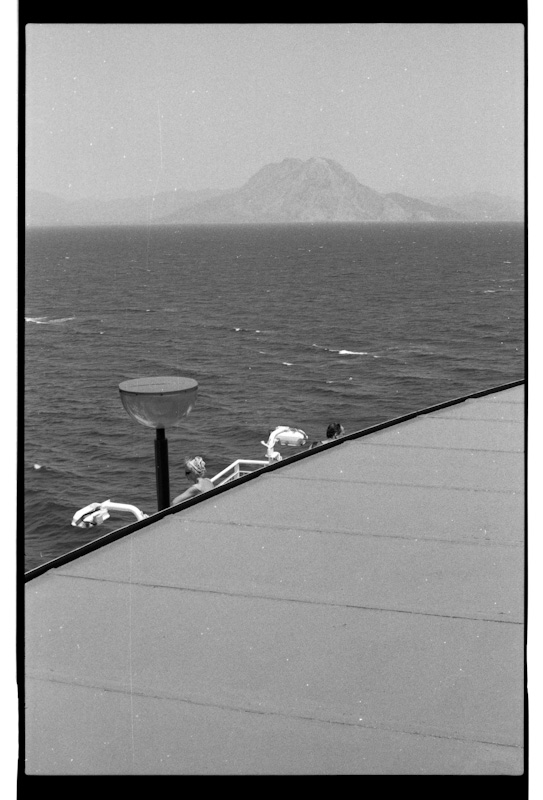
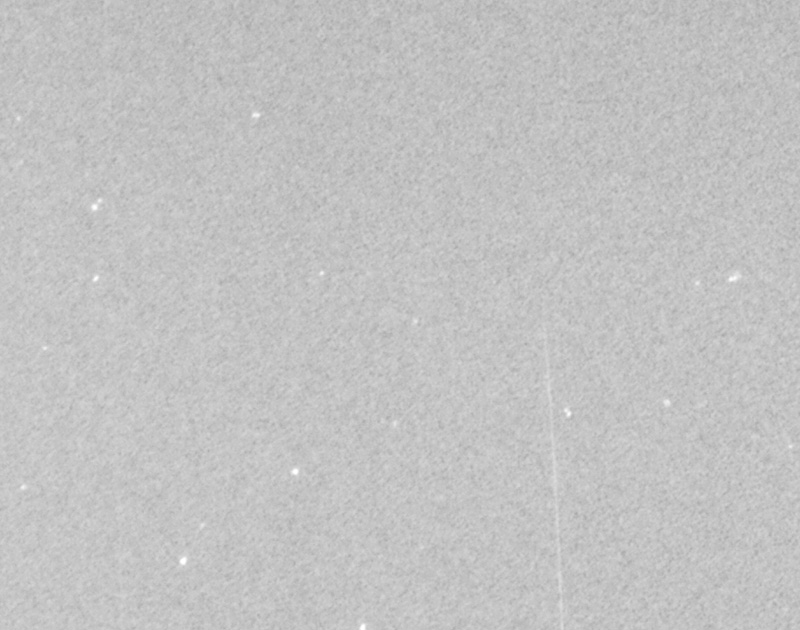
To illustrate your point, here is a scan of a negative I developed two days ago. It was fixed in ammoniumthiosulfate fixer (brand: Amaloco) mixed from a 1,5 year old concentrate stored in a near-empty bottle. The white spots are not dust but tiny black particles in the negative. I learned my lesson.

y8cQa.jpg

APX100 in Rodinal 1:50, 13min @ 20°C, 10sec agitation/minute, water stop bath. Fixed in Amaloco 1:4 for 2min30sec.

crop:
ElMfF.jpg
 

Rich Ullsmith

Member
Allowing Ads
Joined
Jan 26, 2007
Messages
1,159
Format
Medium Format
So, use it for paper fixing. I've been working from a couple 5 gallon bags of Kodak Royalprint fixer, crap floating around and stinking, but works like a charm on paper.
 

David Lyga

Member
Allowing Ads
Joined
Nov 25, 2007
Messages
3,445
Location
Philadelphia
Format
35mm
Thanks PE. While your determination is not absolutely definitive, it is surely welcome and a helpful caveat to all, especially since your vast experience almost demands a genuine allegiance. - David Lyga
 
Photrio.com contains affiliate links to products. We may receive a commission for purchases made through these links.
To read our full affiliate disclosure statement please click Here.

PHOTRIO PARTNERS EQUALLY FUNDING OUR COMMUNITY:



Ilford ADOX Freestyle Photographic Stearman Press Weldon Color Lab Blue Moon Camera & Machine
Top Bottom