• Welcome to Photrio!
    Registration is fast and free. Join today to unlock search, see fewer ads, and access all forum features.
    Click here to sign up

Stand developing multiple rolls at once

Landed Here

H
Landed Here

  • 2
  • 2
  • 11
Fujino Trail

H
Fujino Trail

  • 1
  • 1
  • 51

Recent Classifieds

Forum statistics

Threads
201,829
Messages
2,830,795
Members
100,976
Latest member
MarkWalberg
Recent bookmarks
0

removed account4

Subscriber
Allowing Ads
Joined
Jun 21, 2003
Messages
29,832
Format
Hybrid
Test all things; hold fast what is good. 1 Thessalonians 5:21

exactly ... how will the op know it is good or bad for him, if he doesn't test it?
it sounds like it would be bad for you, Gerald, but fo the OP, only he will know.
 

Gombrich

Member
Allowing Ads
Joined
Mar 14, 2014
Messages
9
Format
Sub 35mm
Then too there are those who think they are being frugal. What gets lost is the fact that developer is cheap but film is expensive. There are places to cut corners but stinting on developer is not one of them. Then there is another group who think that their scans look good but really never make prints. Making a wet print is the real test.

You guys are crazy! I mean, it works, tons of people do it and if there were as many issues as you seem to believe, then people would report that!

I do wet printing from stand developed negatives, and they are fine! It's not like some unquantifiable element of the quality is lost, which is what it seems you are saying. The blacks are black and the whites are white, and the only issues are the edge effects which can get a bit crazy for pure stand developing, but are neutered if you shake once in a while. And the different appearance of grain, but that is something some people are looking for.

 

Ricardo Miranda

Member
Allowing Ads
Joined
Mar 31, 2012
Messages
2,408
Location
London, UK
Format
35mm
Given that the OP question has been answered, there is no point in continuing this discussion even because Gerald and APUGuser19 or whatever is his name don't believe in or have never done stand development.
Gerald is right about D76 being unsuitable for SD. It is also the case of "borax drag" that happens with D76. It also the same reason as why I don't recommend HC110.
As I said before, I like the results I get from Fomapan 400 and Kentmere 400 with Rodinal @1:100.
 

Xmas

Member
Allowing Ads
Joined
Sep 4, 2006
Messages
6,398
Location
UK
Format
35mm RF
So I've worked with stand development a lot and am rather comfortable with it. Thing is, I went through two rolls within a short period of time (Kentmere and Tri-X, exposed at 1600, which I plan on stand developing) and was thinking of doing both at in the same tank. I use a Paterson that can take two rolls, but I've never actually processed multiple rolls at once (at least with a stand, I've done that with D-76, and it worked fine). Can that create any problems?
Ignore nay sayers stand works ok in Patterson 8x tanks.
Only fill tank to bottom of cone invert a few times set alarm for hour listen to CD.
I only use Rodinal 1:100 20C 60 minutes, you get contrasty negs with good toe speed.
Make sure you fix for the slowest film, delta or Tmax take longer.
Fixing is critical development is trivial.
 

removed account4

Subscriber
Allowing Ads
Joined
Jun 21, 2003
Messages
29,832
Format
Hybrid
Ignore nay sayers

YOU CAN SAY THAT AGAIN!

==

wollensak, the rochester NY lens maker, used to sell their lenses in a felt lined leather box
embosed with a fleur-de-lis and the motto: Let The User Judge. it also is a phrase that
was embossed on the lens caps of their high line and low line lenses.

their motto that is every bit relevant today, in this thread, as it was in 1918.
 

rpavich

Member
Allowing Ads
Joined
Aug 24, 2015
Messages
1,520
Location
West virginia, USA
Format
35mm
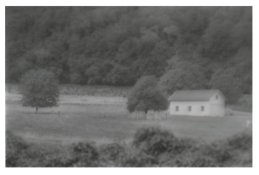
Sorry, I don't have a macro lens nor a light table. Too poor for that.
This is the best I could do with the crappy 2MP Stupid-o-phone:


Sorry for the quality.
Even at naked eye the negative looks properly exposed and developed to me.
It is no different than the 30+ years worth of lab developed negatives I used before.
Stand development in Rodinal allows me to concentrate in what matters most to me: buying film so I can take photographs.
A bottle of Fomadon R09 is £6.40 and can be used for 83 rolls of 35mm at 1:100.
Believe it or not, I shoot 80 rolls in 6 months or less.

I am a photographer not a lab rat or a pseudo engineer.
And I don't believe in web gossip.

John is right.
Until one tries for himself, how one would know if she/he likes something or not?
In the end, the question is: do you like the pictures you take?
I like mines the way they are.
If I didn't, then I would look for another way.
Well....that was worthless to carefully examine the negs for details but thanks for trying. I've found (and this could be just me) that looking at negs with the naked eye isn't even close to what value you get in examining them with a loupe or high def picture. The reason is that all those little details like "how do the highlights look?" and "how is the shadow detail?" get mushed together unless you are able to look very closely.

I'm not dissing stand development, I only said that what process will yield a scannable negative doesn't necessarily yield a great negative and so folks go off to do things and never take a close look at their negs. Then they tell noobs how wonderful a certain process is and the noob (like me) never realizes how bad their negatives really are. (like me)

I had to go back to the manufacturer's recommendations for time, temp, and agitation to get to a good starting point for creating a good negative. I started the process of developing backwards, I was doing all of the OTHER things first thinking that I was doing fine, and after getting a light table and loupe, and printing my contact sheets until D-Max I realized the truth, that's all.

No worries if anyone wants to stand develop or anything else, I don't care, I only mentioned my experience as one point of view.
 

removed account4

Subscriber
Allowing Ads
Joined
Jun 21, 2003
Messages
29,832
Format
Hybrid
these are both enlargements / prints
1/2 frame negative (1st )
(2nd ) is a 35mm negative.
stand developed about 30 mins in coffee and a splash of ansco130
not sure how or why stand developed film is inferior, maybe i am not doing it
for long enough and i know when to stop ?

Untitled-3sm.jpgpaper012sm.jpg

i don't evaluate with a loupe and a light desk. i just look at the film
with my naked eye and it seems to work out for me.
 

Gerald C Koch

Member
Allowing Ads
Joined
Jul 12, 2010
Messages
8,131
Location
Southern USA
Format
Multi Format
Can anyone name a few prominent photographers that use stand development exclusively? Those that are easily name recognizable.
 

removed account4

Subscriber
Allowing Ads
Joined
Jun 21, 2003
Messages
29,832
Format
Hybrid
why does it matter if anyone prominent uses this method of processing film..
why can't someone just do what they want?
 

MattKing

Moderator
Moderator
Allowing Ads
Joined
Apr 24, 2005
Messages
55,188
Location
Delta, BC Canada
Format
Medium Format
You guys are crazy! I mean, it works, tons of people do it and if there were as many issues as you seem to believe, then people would report that!

I do wet printing from stand developed negatives, and they are fine! It's not like some unquantifiable element of the quality is lost, which is what it seems you are saying. The blacks are black and the whites are white, and the only issues are the edge effects which can get a bit crazy for pure stand developing, but are neutered if you shake once in a while. And the different appearance of grain, but that is something some people are looking for.


Stand developing does work, but it works in a way that is at least slightly different from the type of developing that the films and developers are designed for.

In my relatively limited experience, it also is a bit more inconsistent than "standard" developing.

Personally, I don't like the effect it sometimes has on mid-tones, and I think that mid-tones are what make or break a negative.

There is another thread here on APUG where we are discussing Kodak's recommendation for an EI for TMY-2 in HC-110. The recommendation uses the word "optimum". And the analysis of "optimum" includes things like how shadows, mid-tones and highlights are rendered in a negative. Stand and semi-stand developing tend to skew that rendering.

I am much more likely to use it as a special purpose technique, such as when I need a compensating effect, or when I'm in a mood for edge effects.

If someone likes the skewed results it gives, they should feel free to use it. What concerns me, and I think concerns Gerald and others, it that we see recommendations for it as a general purpose technique that seem to be directed toward people with very little film developing experience. And we don't think that it is a good place for inexperienced people to start.
 

Gerald C Koch

Member
Allowing Ads
Joined
Jul 12, 2010
Messages
8,131
Location
Southern USA
Format
Multi Format
What concerns me, and I think concerns Gerald and others, it that we see recommendations for it as a general purpose technique that seem to be directed toward people with very little film developing experience. And we don't think that it is a good place for inexperienced people to start.

Thanks Matt couldn't have expressed the position better. Stand development is useful as a specialized technique but that is all it is. There is also the problem that those new to film developing lack the skills to properly evaluate a negative. They are being told that SD is the greatest thing since sliced bread and are not able to refute the argument for themselves.

I have several shelves dedicated to photography books both theory and practice. Not a single one advocates SD for general use if they mention it at all. If it were as good as some describe then the technique should be mentioned in many of them. Ansel Adams in The Negative does not mention it all.
 
Last edited:

removed account4

Subscriber
Allowing Ads
Joined
Jun 21, 2003
Messages
29,832
Format
Hybrid
well, i guess i'll just agree to disagree. 8D

i have never seen it as a specialized technique and that is all it is.
i've seen it as an easy way for me to process 10 rolls of film at once in a batch
i've seen it as a way to process color ( E6/C41 ) and black and what film together in the same tank
and i have seen it as a way to get well developed easy to print and easy to scan negatives ... nothing more, nothing less.

and i've never believed that if someone wants to start learning something
in a place different from me, it is wrong and they shouldn't do it.
the only way to gain experience is to do something oneself, not take advice
from random unknown people with different ideas, different methodologies, different perceptions of what
a great or terrible photograph or negative might be, but by trying it, seeing what it does
how it prints and deciding for oneself if you like it or it is time to do something else,
whether that "something else" is conventional or something else that is off the path of accepted "norms" ...


GOOD LUCK OP !
 

Ian Grant

Subscriber
Allowing Ads
Joined
Aug 2, 2004
Messages
23,409
Location
West Midland
Format
Multi Format
why does it matter if anyone prominent uses this method of processing film..
why can't someone just do what they want?

People can do what they want, it's a case of looking at Stand development rationally, it's something that has been mythologised as a panacea to cure exposure and development problems.

You guys are crazy! I mean, it works, tons of people do it and if there were as many issues as you seem to believe, then people would report that!

The reality is very very few people use stand development, it's an incredibly small percentage, and you do see numerous posts about people having issue. Sure some people find it a useful technique but usually these are highly experienced darkroom workers, Steve Sherman come to mind.

There are other ways by judicious choice of film, exposure and particularly the choice of developer (and dilution & time) of obtaining a more reliable consistent workflow. This is why Gerald is asking "Can anyone name a few prominent photographers that use stand development exclusively?".

At the end of the day it's what works best for your own photography, it's a technique I've tried a few times but wasn't impressed with and I don't know anyone using it outside these Forums.

Ian
 

blockend

Member
Allowing Ads
Joined
Aug 16, 2010
Messages
5,049
Location
northern eng
Format
35mm
As a regular, though not exclusive user of stand development, my two penn'orth is this:
Slow films look much better than fast ones. 125 ASA and below in Rodinal types at high dilution provide high acutance and good tonal range. Fast films show clumpy grain and muddy mid-tones and are better suited to the contrast offered by other developers and increased agitation.
Semi-stand (occasional gentle agitation) counters the more obvious edge effects and contrast "glow", and avoids bromide drag across the image.
Stand techniques are better suited to dreamy, glowing, "period" looking prints than punchy documentary style images.
Don't over fix negatives. Given sufficient time, fixative acts as a bleach.
 

Xmas

Member
Allowing Ads
Joined
Sep 4, 2006
Messages
6,398
Location
UK
Format
35mm RF
As a regular, though not exclusive user of stand development, my two penn'orth is this:
Slow films look much better than fast ones. 125 ASA and below in Rodinal types at high dilution provide high acutance and good tonal range. Fast films show clumpy grain and muddy mid-tones and are better suited to the contrast offered by other developers and increased agitation.
Semi-stand (occasional gentle agitation) counters the more obvious edge effects and contrast "glow", and avoids bromide drag across the image.
Stand techniques are better suited to dreamy, glowing, "period" looking prints than punchy documentary style images.
Don't over fix negatives. Given sufficient time, fixative acts as a bleach.
I use Rodinal stand cause I use multi tanks and a variety of films.
Any signature I tolerate.
I like grain.
Sometimes I use ID68 stock when I have a multi tank with the same film loaded in every reel.
You would be hard pressed to tell the difference.
Always fix proper fix time is dependent on fix type, dilution, temperature, exhaustion, film type etc. if you under fix you will get bromide drag symptoms! Refix immediately...
Fixing is way more important!
Don't worry about over fixing...
 

Xmas

Member
Allowing Ads
Joined
Sep 4, 2006
Messages
6,398
Location
UK
Format
35mm RF
The quote of a famous photographer when asked how she got that grain.
'I drop it off at the pharmacy'
 

removed account4

Subscriber
Allowing Ads
Joined
Jun 21, 2003
Messages
29,832
Format
Hybrid
People can do what they want, it's a case of looking at Stand development rationally, it's something that has been mythologised as a panacea to cure exposure and development problems.

i've never used it for that, i've just used it because i had other things to do during the 30 mins my film was developing
with regards to exposure and development problems, nothing will cure them except for exposing ones film and processing it better.

i don't think i have ever suggested that stand development ( at least the way i do it ) would do anything but ... develop film.
 

Gerald C Koch

Member
Allowing Ads
Joined
Jul 12, 2010
Messages
8,131
Location
Southern USA
Format
Multi Format
I hope that those who use stand development caught this thread. Evidently there is at least one film that does not respond well to stand development in Rodinal. This developer concentrate has a pH of 14 and even at a 1:100 dilution will still be very caustic, pH = 12. This can cause emulsion softening with films that are not well hardened. While film manufacturers usually test their product with the usual commercial developers they probably don't test with unusual methods or home brew developers. The further one gets beyond photographic gelatin's isoelectric point pH 5.75 the more likely there can be damage caused by the developer. The long immersion time of 1 hour only makes matters worse. So some caution should be observed.

(there was a url link here which no longer exists)
 
Last edited:

Xmas

Member
Allowing Ads
Joined
Sep 4, 2006
Messages
6,398
Location
UK
Format
35mm RF
I hope that those who use stand development caught this thread. Evidently there is at least one film that does not respond well to stand development in Rodinal. This developer concentrate has a pH of 14 and even at a 1:100 dilution will still be very caustic, pH = 12. This can cause emulsion softening with films that are not well hardened. While film manufacturers usually test their product with the usual commercial developers they probably don't test with unusual methods or home brew developers. The further one gets beyond photographic gelatin's isoelectric point pH 5.75 the more likely there can be damage caused by the developer. The long immersion time of 1 hour only makes matters worse. So some caution should be observed.

(there was a url link here which no longer exists)

No sale I normally use Foma and have used lots of Efke in past in Rodinal 1:100 for an hour never had any emulsion damage. Neither well prehardened emulsions.

And I've used 1000 foot of Fuji... Ditto.

If you don't use a water bath and temper accurately and don't use acid stop you won't damage emulsion.

Don't see why people have to knock stand.

Stand is merely one way of developing...

You get good toe speed and low fog density... Contrast is dependent upon time. Most of my shots are under battle ship grey cloud...

I'll accept that pH change is hard on emulsion but I never use acid stop with film.

It is like skating on thin ice.

Acid stop is only needed for wet printing with some developers to stop print staining. I always use it printing!
 
Photrio.com contains affiliate links to products. We may receive a commission for purchases made through these links.
To read our full affiliate disclosure statement please click Here.

PHOTRIO PARTNERS EQUALLY FUNDING OUR COMMUNITY:


Ilford ADOX Freestyle Photographic Stearman Press Weldon Color Lab Blue Moon Camera & Machine
Top Bottom