• Welcome to Photrio!
    Registration is fast and free. Join today to unlock search, see fewer ads, and access all forum features.
    Click here to sign up

Stand develop different emulsions in one tank?

Untitled

A
Untitled

  • 5
  • 0
  • 41
Untitled

A
Untitled

  • 6
  • 0
  • 31

Recent Classifieds

Forum statistics

Threads
201,938
Messages
2,832,331
Members
101,023
Latest member
scodth
Recent bookmarks
0

markaudacity

Subscriber
Allowing Ads
Joined
Jun 20, 2013
Messages
184
Location
Houston TX USA
Format
Med. Format RF
I've been stand developing everything in HC-110 1:100 for the past five rolls or so, because I shoot meterless most of the time and push almost everything, and I was getting wayyy too much contrast and inconsistent development with Dil B. I get great results with Tri-X shot at 1600 with a 1 hour stand at 20C or a 45 minute stand at 26C (I live in Houston, we don't have cold water).

I have a roll of TMY2 shot at 1600, and I don't like developing just one roll in a tank if I don't have to. I know with lower dilutions the developing times for Tmax and Tri-X are significantly different, but will it make as much difference with stand developing?

IE, can I toss TMY@1600 and TX@1600 in the same tank and expect both to be developed properly with a 1h stand @20C in HC-110 1:100?
 

Newt_on_Swings

Member
Allowing Ads
Joined
Mar 30, 2011
Messages
2,147
Location
NYC
Format
Multi Format
Yes you can develop different films in the same container. But with stand you have to have a tank big enough to fit enough minimum chemistry per roll of film.
 
OP
OP
markaudacity

markaudacity

Subscriber
Allowing Ads
Joined
Jun 20, 2013
Messages
184
Location
Houston TX USA
Format
Med. Format RF
Specifically I'm wondering about dev times. I've done different emulsions with similar dev times in one tank with HC-110B and D-76, but I don't know how/if stand changes that.

I've been using a Paterson 2-reel tank filled with 600mL of dev mixed one-shot from the concentrate. That's 3mL of developer per film, which is less than the recommended minimum 6mL per, but it's been giving me great negs with no bromide drag. Maybe all the refinery effluent in my tap water is acting as an accelerant. :tongue:
 

Rick A

Subscriber
Allowing Ads
Joined
Mar 31, 2009
Messages
10,033
Location
Laurel Highlands
Format
8x10 Format
If they need the same time then it's good to go.
 

Gerald C Koch

Member
Allowing Ads
Joined
Jul 12, 2010
Messages
8,131
Location
Southern USA
Format
Multi Format
I've been stand developing everything in HC-110 1:100 for the past five rolls or so, because I shoot meterless most of the time and push almost everything, and I was getting wayyy too much contrast and inconsistent development with Dil B.

Instead of trying to compensate for inconsistent exposure during development why not attack the problem at its source. That is by correctly exposing the film to start with. Underexposure will result in loss of shadow detail and this information cannot be restored by any developer or developing technique. If your camera lacks a meter then hand held ones are readiiy available on the net. There is also the "sunny 16 rule" which will quickly become second nature with practice. This is what was done before meters were incorporated in cameras. In addition it is better to overexpose film than underexpose it.
 
OP
OP
markaudacity

markaudacity

Subscriber
Allowing Ads
Joined
Jun 20, 2013
Messages
184
Location
Houston TX USA
Format
Med. Format RF
Because I don't own a meter that can read the light levels in a dive bar. :tongue: All my daylight shots are fine, extended Sunny 16 is my bible. It's the ones where I'm at the limit that are inevitably going to suffer, I'm just trying to minimize the damage.

For the sake of this question, it's safe to think of exposure as a given.
 

Gerald C Koch

Member
Allowing Ads
Joined
Jul 12, 2010
Messages
8,131
Location
Southern USA
Format
Multi Format
Because I don't own a meter that can read the light levels in a dive bar. :tongue: All my daylight shots are fine, extended Sunny 16 is my bible. It's the ones where I'm at the limit that are inevitably going to suffer, I'm just trying to minimize the damage.

I have seen some impressive pictures of jazz musicians taken under unusual lighting in bars. Among others there are the iconic (and beautiful) ones of the famous saxophone player Dexter Gordon. One measures for the highlights.

http://www.allstarpics.net/pic-gallery/dexter-gordon-pics.htm

Film is expensive and a used meter probably a good investment. Most are very sensitive and suitable to low light conditions. Sensitivity ranges are usually available on the net. If possible become familiar with light levels before a shoot. Under such conditions light levels are unlikely to change during a shooting session. A book on low light photography would be useful. They usually have lots of tricks and technique hints. Sounds like an interesting project.
 
Last edited by a moderator:
OP
OP
markaudacity

markaudacity

Subscriber
Allowing Ads
Joined
Jun 20, 2013
Messages
184
Location
Houston TX USA
Format
Med. Format RF
I love those. Not exactly the look I'm going for, but reading about the technique of those photogs inspires me.
 

Xmas

Member
Allowing Ads
Joined
Sep 4, 2006
Messages
6,398
Location
UK
Format
35mm RF
I use Patterson tanks 8x and 5x with mixes of film Rodinal 1+100 20c 60 min stand, some times with a post borax bath. Since Id do the same in a 1x tank...

A lunasix works in dive bars...
 

Gerald C Koch

Member
Allowing Ads
Joined
Jul 12, 2010
Messages
8,131
Location
Southern USA
Format
Multi Format
I love those. Not exactly the look I'm going for, but reading about the technique of those photogs inspires me.

So do I, my favorite one is with the wreath of smoke around him. There is an article on the net about the taking of the Gordon photos but I don't remember the particular site. Perhaps some searching could find it.
 
Last edited by a moderator:
OP
OP
markaudacity

markaudacity

Subscriber
Allowing Ads
Joined
Jun 20, 2013
Messages
184
Location
Houston TX USA
Format
Med. Format RF
Thanks Xmas.

I've got the TMY in question (which was actually shot metered in bright indoor light with an F100) and a TX (which was shot meterless in who knows what light with an M3) in the tank right now. I'll let y'all how it turns out in about an hour!
 
OP
OP
markaudacity

markaudacity

Subscriber
Allowing Ads
Joined
Jun 20, 2013
Messages
184
Location
Houston TX USA
Format
Med. Format RF
Tmax turned out thinner than the Tri-X, but Tmax is always kind of thin for a given level of contrast.
 

Xmas

Member
Allowing Ads
Joined
Sep 4, 2006
Messages
6,398
Location
UK
Format
35mm RF
Borax makes the toe a little different.
Stand will still burn highlights but alters the shoulder
pig to wet print mask split grade burn dodge box of paper in bin
YMMV

I use M3, M2, Canon VI, CanonP, F2, FM2 lotta bad exposure
 

keyofnight

Member
Allowing Ads
Joined
Sep 10, 2012
Messages
97
Location
Seattle, WA
Format
35mm
Instead of trying to compensate for inconsistent exposure during development why not attack the problem at its source. That is by correctly exposing the film to start with. Underexposure will result in loss of shadow detail and this information cannot be restored by any developer or developing technique. If your camera lacks a meter then hand held ones are readiiy available on the net. There is also the "sunny 16 rule" which will quickly become second nature with practice. This is what was done before meters were incorporated in cameras. In addition it is better to overexpose film than underexpose it.

This kind of response always crops up when people ask about stand development, and I'm not sure why. Some people want to push, some want to pull, and some want to shoot at box speed. Why does that bother you? I, for one, love the look of pushed film. I also like shooting in the dark with changing lighting conditions. I also like the hassle-free style of development (dunk it for an hour…and you're good). I've also liked a lot of the pictures I've gotten when pushing and stand developing in Rodinal. Yes. I've lost detail. I've done it on purpose. It's fine! :smile: Hell—the fact that you think it's improper can only become one of the reasons why we do it! In art, artists (would-be or otherwise) develop and continue traditions, standards, expectations, and dogmas only to reject and rebel against them later on. That's part of what makes art fun, isn't it?
 

StoneNYC

Member
Allowing Ads
Joined
Aug 5, 2012
Messages
8,345
Location
Antarctica
Format
8x10 Format
I fail to understand your entire process, you don't meter, you don't really develop per any kind of normal development regimen, you just sort of shoot and pray stand will fix it, so why bother asking the question if you're entire process is sort of just tossing things in the air and hoping?

My suggestion is that (as others have said) get a meter, you can get something like a sekonic studio deluxe (a 30+year old meter) for $25 and learn to meter, I used that exact meter for years before buying something expensive, and sometimes I still use it as it's small and handy.

My second suggestion is that if you're planning to shoot in low light and push film, shoot HP5+ as it's way more flexible than TMY, or shoot Delta3200, either of those ilford films will be excellent for low light indoor work, and then get some DD-X developer and follow the times listed by ilford for normal development.

As far as multiple films in a tank, it's easier than you think to pair films together for different light situations that all have the same development times. Sit down and figure out which films have the best matching times. It's not that hard, and better than guessing and having no control or consistency.
 

Xmas

Member
Allowing Ads
Joined
Sep 4, 2006
Messages
6,398
Location
UK
Format
35mm RF
I fail to understand your entire process, you don't meter, you don't really develop per any kind of normal development regimen, you just sort of shoot and pray stand will fix it, so why bother asking the question if you're entire process is sort of just tossing things in the air and hoping?

My suggestion is that (as others have said) get a meter, you can get something like a sekonic studio deluxe (a 30+year old meter) for $25 and learn to meter, I used that exact meter for years before buying something expensive, and sometimes I still use it as it's small and handy.

My second suggestion is that if you're planning to shoot in low light and push film, shoot HP5+ as it's way more flexible than TMY, or shoot Delta3200, either of those ilford films will be excellent for low light indoor work, and then get some DD-X developer and follow the times listed by ilford for normal development.

As far as multiple films in a tank, it's easier than you think to pair films together for different light situations that all have the same development times. Sit down and figure out which films have the best matching times. It's not that hard, and better than guessing and having no control or consistency.

A dive bar normally hasn't paid the electricity company and is using candles the needle on a selenium meter will be at zero...

stand is consistent I recall you used to do it, it also gives a nice grain signature, and optimal capture, not fun to wet print I'll give you.

Think you should read thread again?
 

miha

Member
Allowing Ads
Joined
Feb 15, 2007
Messages
3,044
Location
Slovenia
Format
Multi Format
I often shoot meterless in dimly lit interiors. Juts use the widest aperture and the longest hand holdable shutter speed - f/2.8 and 1/15 for my TLR. Use a flexible film and give it twice the recommended time in a PQ developer

fomapan-200.jpg


Fomapan 200, Tmax developer 12', Adox Variotone print.
 

StoneNYC

Member
Allowing Ads
Joined
Aug 5, 2012
Messages
8,345
Location
Antarctica
Format
8x10 Format
A dive bar normally hasn't paid the electricity company and is using candles the needle on a selenium meter will be at zero...

stand is consistent I recall you used to do it, it also gives a nice grain signature, and optimal capture, not fun to wet print I'll give you.

Think you should read thread again?

Well I've never seen a dive bar with candles, this isn't the 1940's lol

Even still, if you know how to use a meter properly you should have no problem metering close to the candle and extrapolating light intensity at farther distances.

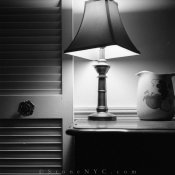
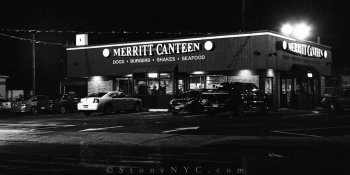
I used my sekonic studio Deluxe (original model not the newer mark III version) on this shot, HP5+ at EI 3200 in DD-X

ImageUploadedByTapatalk1402759034.613393.jpg
ImageUploadedByTapatalk1402759040.913421.jpg
ImageUploadedByTapatalk1402759048.273871.jpg

Don't need to re-read anything. I just think asking "my process is willy nilly, but I want this one roll to come out but don't want to change my normal willy nilly process is sort of asinine.
 

StoneNYC

Member
Allowing Ads
Joined
Aug 5, 2012
Messages
8,345
Location
Antarctica
Format
8x10 Format
And yes I used stand before to learn how to use it, and when, but I don't think it's to be implemented in a circumstance like this.

Also, OP I'm not trying to pick on you, I'm just saying it sounds like you're being a little lazy and not wanting to put the time and focus into your work but still want good results and that just doesn't work. Try and find a way to enjoy the additional tasks involved in honing your workflow and I think in the end you will feel the additional work was worth it.
 

Gerald C Koch

Member
Allowing Ads
Joined
Jul 12, 2010
Messages
8,131
Location
Southern USA
Format
Multi Format
This kind of response always crops up when people ask about stand development, and I'm not sure why.

I was not speaking about stand development per se. The following quote expressed my concern.

Instead of trying to compensate for inconsistent exposure during development why not attack the problem at its source. That is by correctly exposing the film to start with.
 

pdeeh

Member
Allowing Ads
Joined
Jun 8, 2012
Messages
4,770
Location
UK
Format
Multi Format
This kind of response always crops up when people ask about stand development , and I'm not sure why .... In art, artists (would-be or otherwise) develop and continue traditions, standards, expectations, and dogmas only to reject and rebel against them later on. That's part of what makes art fun, isn't it?

If you didn't have people expressing the orthodox position, how on Earth would you know what to reject and rebel against?
 

MattKing

Moderator
Moderator
Joined
Apr 24, 2005
Messages
55,270
Location
Delta, BC Canada
Format
Medium Format
This kind of response always crops up when people ask about stand development, and I'm not sure why. Some people want to push, some want to pull, and some want to shoot at box speed. Why does that bother you? I, for one, love the look of pushed film. I also like shooting in the dark with changing lighting conditions. I also like the hassle-free style of development (dunk it for an hour…and you're good). I've also liked a lot of the pictures I've gotten when pushing and stand developing in Rodinal. Yes. I've lost detail. I've done it on purpose. It's fine! :smile: Hell—the fact that you think it's improper can only become one of the reasons why we do it! In art, artists (would-be or otherwise) develop and continue traditions, standards, expectations, and dogmas only to reject and rebel against them later on. That's part of what makes art fun, isn't it?
I don't see any evidence that you have pushed your film. "Push" means to increase development in order to increase contrast and, potentially, make an under-exposed negative appear better.

I would describe your approach as (likely severe and inconsistent) under-exposure plus heavy use of developer compensating effects. There is nothing improper about this, but it might be more frustrating than it need be.

You can systematize this, with proper metering and consistent under-exposure, and maybe have even more fun.
 

cliveh

Subscriber
Allowing Ads
Joined
Oct 9, 2010
Messages
7,805
Format
35mm RF
Instead of trying to compensate for inconsistent exposure during development why not attack the problem at its source. That is by correctly exposing the film to start with. Underexposure will result in loss of shadow detail and this information cannot be restored by any developer or developing technique.

This is good advice. If you don't know the exposure and lighting conditions are too dim to use a meter, then guess. You may not get it right the first time, or second or third, but practice will provide the solution.
 
OP
OP
markaudacity

markaudacity

Subscriber
Allowing Ads
Joined
Jun 20, 2013
Messages
184
Location
Houston TX USA
Format
Med. Format RF
I fail to understand your entire process...
My shooting style isn't yours, so it's wrong and I should change everything about it? Like, you're welcome to your opinion and all, but uh, STFU.

I don't get this attitude. It crops up a lot here. "you should meter every shot and use the slowest film you can and oh really you should shoot medium format"
That advice will never, not in a thousand years of shooting, get the images I want. It isn't physically possible.

Why should I shoot like you? You already shoot like you. We don't need another one.
 
OP
OP
markaudacity

markaudacity

Subscriber
Allowing Ads
Joined
Jun 20, 2013
Messages
184
Location
Houston TX USA
Format
Med. Format RF
And the contention that because I choose to shoot free that I don't know how to use a meter, or especially that my images aren't worth developing, is fucking offensive.
 
Photrio.com contains affiliate links to products. We may receive a commission for purchases made through these links.
To read our full affiliate disclosure statement please click Here.

PHOTRIO PARTNERS EQUALLY FUNDING OUR COMMUNITY:


Ilford ADOX Freestyle Photographic Stearman Press Weldon Color Lab Blue Moon Camera & Machine
Top Bottom