
• Welcome to Photrio!
    Registration is fast and free. Join today to unlock search, see fewer ads, and access all forum features.
    Click here to sign up

Spots on negatives, chemical burn?

Sprung

H
Sprung

  • 2
  • 2
  • 30
Hensol woods

A
Hensol woods

  • 3
  • 0
  • 35

Recent Classifieds

Forum statistics

Threads
202,962
Messages
2,848,161
Members
101,556
Latest member
SunnyPluto
Recent bookmarks
0

JammyB

Member
Allowing Ads
Joined
Jul 7, 2014
Messages
77
Format
Medium Format
I took a load of test shots around the house with my recently accuired SQ-Ai.

Fomapan 200
Tetenal Ultrafin 1+20 at 21'c for 7min, adgitate 30 seconds then 5 sec every min as per Massive Dev chart
Ilfostop
Ilford rapid fixer
10 min wash with tap water and final dip in Photoflo

Ten of the frames were fine but one has some odd spots on it that look a bit like chemical burns. I'm still new to this could anyone shed any light on what the marks are?
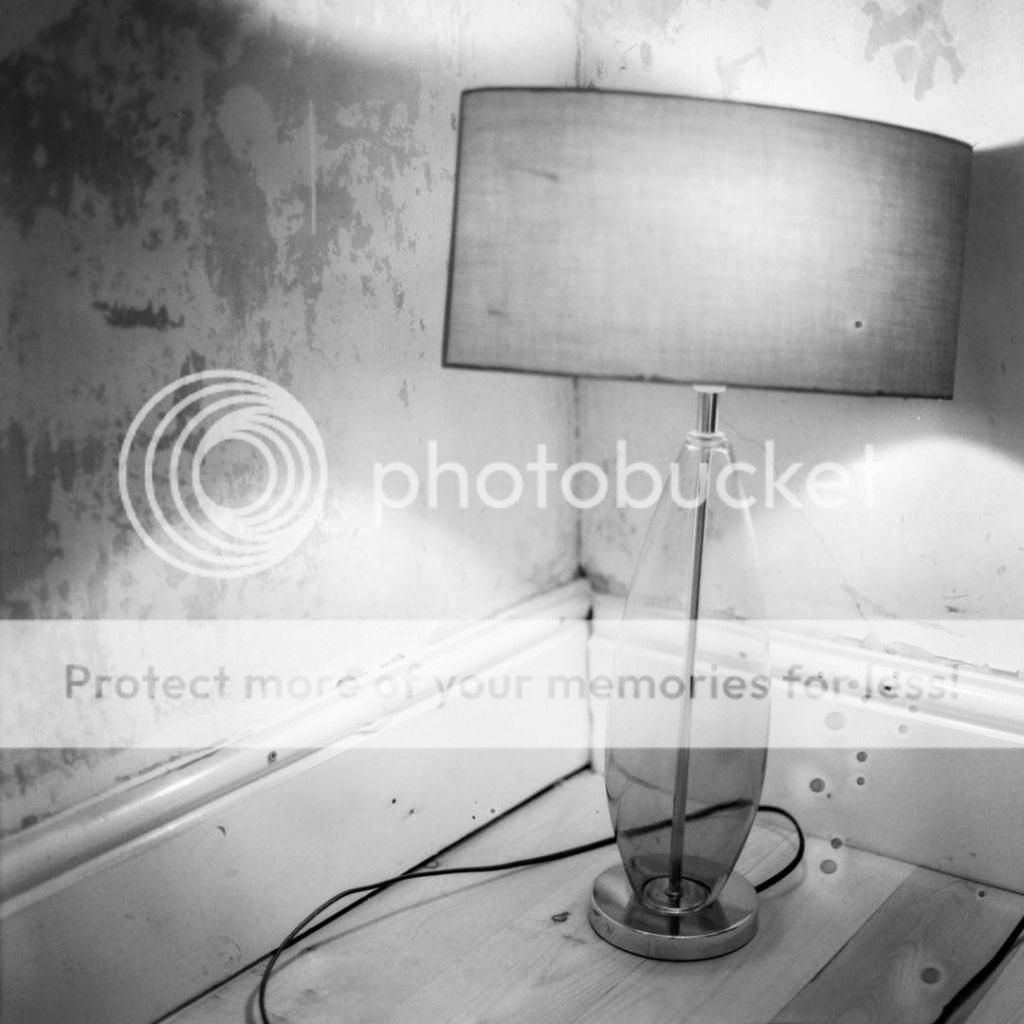

 
Use a loupe on the negative, is the surface of the gelatin damaged?
 
I don't have a loupe unfortunately. I've had a look with a magnifying glass (6x i think) and I cant see any blemishes on either side of the film. The marks seem to be in the image. As i turn the neg in the light they only appear as the rest of the image appears.

Sent from my GT-I9505 using Tapatalk
 
They might be air bubbles. After each agitation I always hit the tank against my palm several times to dislodge any air bubbles.
 
After each agitation I put the tank down and knock three times on the side to disslodge bubbles.
One thing I forgot to mention is that this is the 11th exposure and there is a couple of hese marks on the 12th. These two frames would have been on the outside of the Patterson spool. I wonder if thats significant.

Sent from my GT-I9505 using Tapatalk
 
If you are going to invert with a Patterson only use the minium liquid to submerge the reel.

- for fix and dev
- 10% less for stop, rinse, clear, 3x rinse and use continuous agitation

agitation needs air space to allow a flow of developer over film.

I never agitate dev, way too lazy.

Unless you have bowed the film so that it was close, bubbles would not be grouped like that and you have doughnuts around the 'bubbles' which Id not expect.

But I've never had any emulsion problems with Foma film either, hundreds of feet of bulk 35, hundreds of 135, 50x 120.

120 is very difficult to load, be more gentle, try again.
 
What I see as faults in some circles closed (positive) which are
surrounded by other larger circles - lighter.
If it were only darker spots (positive) I would assume that comes from
condensation on the negative.
In this area accumulate the produced of film that have a lower pH
and will change the pH of the developer in the area.
Finally, negative density will be lower (in this area).
That the positive will be closed.
The problem with open areas around closed areas I have not an explanation.

Hypothesis is the agitation of the film in developer is low intensity.

George
 
They look like air bells to me, if they were pin holes caused by acid stop they would be black spots.
 
I'm by no means an expert, but I was under the impression that you are not to use an acidic stop with Foma films? I think they recommend water only.

Could this possibly be the cause?

Foma's data sheet (PDF on their web site) says water or 2.0 % acetic acid stop. But could be large temperature swing and too concentrated stop but I not expect the symptoms to be either localised or look like the doughnut patterns.

I temper accurately and use two plain water baths for stop with Foma, so your suggestion is reasonable.
 
Havent had issues like this with foma before. And i generally use an acidic stop bath. It does look a bit like something i encountered before though. One time I developed a film which gave me some issues with opening the cartridge. I accidentily damaged the cartridge scraping of some metal flakes. As far as i could tell some of these flakes ended up on the negative causing the developer to exhaust more quickly on the location of those flakes. These spots looked very similar to the once on your examples.

So i'd check the cartridge for damage if you havent thrown it out yet.
 
To show examples of damaged negatives, please don't scan them. Make a photo of the neg, held up against a bright white surface (eg. a piece of paper taped to a window). Trying to diagnose a scan and a negative problem combined is unhelpful.

Also, describe the surface of the negatives, on both sides, in the region of the problem - ideally using a magnifier to see what is present in, on or under the surfaces near the damage.
 
Rookie mistake!
I've had these when I started processing my own films... Now I preosak and I gently knock my tank after each agitation.
 
Thanks for all the replies.
of everything described two things stuck out.
Condensation. The film was only out of the fridge for a few minutes before it was loaded.
I do know better than to do that but I had already wrecked the roll I had intended to use for this test. I tried to warm it up in my pocket before breaking the seal. but time was against me.
Also the dark cupboard I loaded the film in is not spotless.
Though I have looked at both sides of the film with a powerful magnifying glass and I can't see any damage or foreign body on either side of the film.
Either way some lessons learned.


Sent from my GT-I9505 using Tapatalk
 
What expiry date is on that Foma 200 you have ? If 2013 that spots are factory made, Foma had bad run wuth that batch. I had same marks with 20 rolls.
 
No foma film likes stopbath, I use the film, both 400 and 200 as my main films and I love it, but I would sometimes get marks and dots on some frames, so I cut out the stopbath and use just a plain water stopbath, with 120 3 changes of water with 20 inversions betweenj each change and no more problems,
 
So it's different batch. Maybe indeed stop bath is the culprit.
 
Photrio.com contains affiliate links to products. We may receive a commission for purchases made through these links.
To read our full affiliate disclosure statement please click Here.

PHOTRIO PARTNERS EQUALLY FUNDING OUR COMMUNITY:


Ilford ADOX Freestyle Photographic Stearman Press Weldon Color Lab Blue Moon Camera & Machine
Top Bottom
