
• Welcome to Photrio!
    Registration is fast and free. Join today to unlock search, see fewer ads, and access all forum features.
    Click here to sign up

Slow Speed film

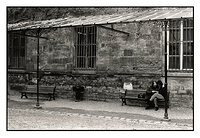
Amour - Paris

A
Amour - Paris

  • 0
  • 0
  • 24
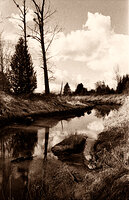
Bend in the river

H
Bend in the river

  • 1
  • 0
  • 42

Recent Classifieds

Forum statistics

Threads
203,229
Messages
2,851,784
Members
101,737
Latest member
Altamira
Recent bookmarks
0

TareqPhoto

Member
Allowing Ads
Joined
Nov 19, 2009
Messages
1,171
Location
Ajman - UAE
Format
Multi Format
Hey again,

I would like to say that i am still experimenting with film and it is really addictive as you said and i like it, even i don't shoot a lot yet but the short time i spent [since March i think] shooting with film i had really fun with it.

Now my confusion is that: i saw results from different film and i really liked most of the results so far and i can't really depend on one or choose one to be my favorite forever or for long long time, but i really want to narrow my favorite to one for a specific condition as possible as i can if it is really possible, hahaha

Now i am shooting outdoor most of the time at day time, and with digital i always tend to keep my ISO at 100 or say below 400 or even below 200, so i will do the same with film most of the time and i shoot still subjects most of the time so i can use tripod, now i have many films that i can use in slow speed or even medium, but i again narrow my choice to 3 brands: Kodak, Ilford, Fujifilm, then i narrowed my choices even to 2 brands: Kodak and Ilford.
With above, i had chosen 4 films to be in my vote, those films are:

-Delta 100
-FP4+
-HP5+
-Tri-X

From what you can see, i prefer Ilford films over Kodak, only Tri-X is getting strong enough against them, i also prefer Delta 100 over TMAX 100 from what i see, even Delta 400 won my vote over TMAX 400, now if i want to keep my ISO between 50-200 the first 2 films i really like over 400ASA films, but i read that those 400ASA can be pushed/pulled very well between 50 or 100 up to 800/1600 even more, i tested PanF+ at iso50 and really i loved the results very much but i will not use this film as my main or favorite for 100-200/250 conditions so that i dumped it from the list, tell me, if you want to stay in 50-200 iso condition shooting, which of the 5 films above will be your favorite?

Ofcourse if i will shoot in low light or bad lighting conditions or without tripod and need fast speed then those 400ASA or above films will be my choice.
 
My recommendations are not on your list (TMax-400 or Delta 400). With medium-format, grain is not an issue with these films and they have a fantastic gradation. Why do you want to stay below ISO 400? There is no need in your case.

And why not stay below ISO 400? give me a reason to stay above ISO 400 or even at ISO 400.
 
Last edited by a moderator:
tareq, if your the same guy from POTN welcome to the best film forum online, lol. why not try plus-x 125, i seem to like it more than ilfords offerings, and Pan F is nice but extremely slow.

im not the biggest fan of FP4 or delta anything, i prefer HP5 over those two, just as i prefer tri-x 400 shot @ 200 over all 3 of those. with the hassy your not limited to slow films but if your in enough light you minus will use 400 or less iso film, no need for a delta 3200 or fuji 800.
 
tareq, if your the same guy from POTN welcome to the best film forum online, lol. why not try plus-x 125, i seem to like it more than ilfords offerings, and Pan F is nice but extremely slow.

im not the biggest fan of FP4 or delta anything, i prefer HP5 over those two, just as i prefer tri-x 400 shot @ 200 over all 3 of those. with the hassy your not limited to slow films but if your in enough light you minus will use 400 or less iso film, no need for a delta 3200 or fuji 800.

Yes, i am the same guy there :wink: unless there is another Tareq there you see :D

OK, for outdoors and landscapes i tend to use tripod and i can use any camera fro Mamiya to Hasseblad, even Holga, but i always like to keep my ISO at 100 or 50, even with digital new cameras where i can shoot at ISO400-640 and it is still like grainless shots, also i sometimes need to go with slower shutter speed for some reasons, so i try to keep my ISO lower as i can, but i said that if i will be in bad light conditions then definitely i will use those medium and fast films, but i am talking about the conditions where i want to use slow films, and in fact i can see grains with 400 films, i like this grain in some shots but not all, so for some shots where i really want free grain or no grain i can see by my eyes then i tend to be below ISO 400 as i can, and as long there is slow film why not using it.

I forgot about Plus-X, yes, it is a great one and honestly i used it once only, i have few rolls [maybe 2 or 3] so i will keep it for some shots, ok, let's say i will add it to the list, but i feel i will not choose it as my main favorite or if i will use only one slow film.
 
Another vote for ISO400 and TMax 400 to be more specific. IMHO, it puts some ISO 100 - 125 films to shame. It's excellent even in 135, should be even better in 120.
 
slower speed film

Of your list... fp4+. You might try Fuji Acros. What size prints are you planning? What are you seeking with a slower speed film?
 
Another vote for ISO400 and TMax 400 to be more specific. IMHO, it puts some ISO 100 - 125 films to shame. It's excellent even in 135, should be even better in 120.


Oh really?!!! i was shooting with TMAX 400 most of the time and i like it, but i didn't prefer it over iso 100 films, even PanF+ make me to hate TMAX films, but maybe you do something that i do different or you see different than me, but i am not in rush to see which of the films above i should choose as my favorite, i have enough rolls of TMAX 400 and i will compare it more with another film and see if you are right.
 
Of your list... fp4+. You might try Fuji Acros. What size prints are you planning? What are you seeking with a slower speed film?

Honestly speaking, i really love Acros 100, the 2 rolls i did at 100 were amazing, loved it and i was looking to make it my favorite, but this film has some debates on some websites about reciprocity, and i don't know what is that, so i make it out until i understand more about it then i will think about it again.
The size of print will be minimum 8x10 or A4 to larger sizes in A2 or 16x20, i have a printer at home which print up to 17x22, and i can use the lab for larger, and in the future when i will print in darkroom then i will keep minimum to 8x10 and some special shots will be large no doubt.
With a slower speed film i am seeking for the grain-free or no grain or fine grain or whatever you call it, i see grain on iso 400 films and i like it, but i don't want it in many shots i want to do, i accept that grain on some shots as i said before.
 
considering you are scanning, the grain is more than likely getting exaggerated.

an 8x10 from modern 120 iso400 speed film shouldn't really have obtrusive grain when printed optically.

I'm not saying shoot 400 all the time especially if you have the luxury of setting up on a tripod but 400 is a bit more flexible.
I would pick a 400 & a 50-125 speed you like and get to know both and use accordingly.

As far as what reciprocity is..
some films need additional exposure when using either a longish exposure (over 1 second) and some also when shooting very short exposures (1/1,000 althought this is seldom an issue unless shooting a newer electronic body that supports those speeds)

edit: I should add that the reciprocity characteristics are usually found on the manufacturers data sheets for the emulsion in question.

you generally just add exposure compensation like you would when using a filter or for bellows extension with a bellows focussing camera.
 
Last edited by a moderator:
considering you are scanning, the grain is more than likely getting exaggerated.

an 8x10 from modern 120 iso400 speed film shouldn't really have obtrusive grain when printed optically.

I'm not saying shoot 400 all the time especially if you have the luxury of setting up on a tripod but 400 is a bit more flexible.
I would pick a 400 & a 50-125 speed you like and get to know both and use accordingly.

And now i am asking about 50-125 in fact, maybe i did a mistake to include those 400 films in my list, but i was thinking how they are comparing when you pulled them down to 50-125ASA, how is the grain from HP5+ at 125 comparing to FP4+ or from Tri-X at 100 comparing with TMAX100?
For medium speed i am done, just i am looking for slow film for slow speed conditions, and in my area many times i have to go slower speed even slower than 50 but i keep on 50-100 range, so it is not my good idea to use 400 film when it is 50 or 100 overkill, we have very strong sun in day time where i can use iso 400 film with shutter speed around 1000-4000, and i said i want to use slow shutter speed in some another applications like waterscapes, even with filters i still need slower speed if i use ISO400, but it seems you all never use ISO 50-125 in day time to recommend to stay with medium film in slow speed applications, also i really don't know how to push or pull the film than its box speed and then how to develop it, even for nightshots cityscapes i go with ISO100 99% with digital, why i have to use iso400-1600 with film then.
 
And why not stay below ISO 400? give me a reason to stay above ISO 400 or even at ISO 400.

More flexibility to set reasonable apertures without getting into too lengthy exposures and without sacrificing shadow exposures.
 
More flexibility to set reasonable apertures without getting into too lengthy exposures and without sacrificing shadow exposures.

As the OP lives in UAE, I would say a slower speed film will allow the use of wider apertures and shallow DOF without having to use fast shutter speeds.
 
As the OP lives in UAE, I would say a slower speed film will allow the use of wider apertures and shallow DOF without having to use fast shutter speeds.

Keith

I didn't realize that exposure relationships changed with geographic location.
:smile:
By the way, the sunny-16 rule works around the world. The sun is not any brighter in UAE, but I admit, the skies are more often clearer there than in they are in the UK.
 
The few times I shot PanF i only got around ISO 25
The roll I rated @ 50 in studio with flash were underexposed and I'm pretty sure it wasn't my sekonic :wink:

I've never shot TriX at anything slower than 200 so I cant speak to rating it @ 100-125 but
Plus X is nice at 80. Traditional grain what there is of it.

TMX is really around 64-80 if you like shadow detail.

You really are going to have to try them and see what you like.
I can recommend PMK as the upper mids/highlight look is amazing and it doesn't usually produce box speed with most films.

Your lucky as most of the work I do now I am craving MORE speed not less :wink:
 
And you are lucky to live where the sun is covered by clouds or the sky is not so hot bright as what we have here, i was in USA and UK and NZ and Switzerland last 4 years ago, the sun was never brighter than us, never hotter in any bright sunny day there, also i like to keep my ISO as low as i can even there are thousand 400ASA films, and because i am coming from digital side, i even like to keep my ISO at 50-200 in day time and when shooting landscapes.
 
Keith

I didn't realize that exposure relationships changed with geographic location.
:smile:
By the way, the sunny-16 rule works around the world. The sun is not any brighter in UAE, but I admit, the skies are more often clearer there than in they are in the UK.

Thanks Ralph, I have a hard time on clear summer days here in the UK, I guess our usually overcast skys have taught me to love wide apertures and shallow DOF.:laugh:
The closest I get to clear skys and highly reflective surfaces must be my annual skiing trips to the French / Austrian Alps and I know that Neopan 1600 is never in my hand luggage.
 
My favorite 35mm film comes in boxes marked ASA 32. An advantage of this slow film, gamma rays won't affect it that much over time. When I switched to 4x5 the biggest surprise to me was that I decided to switch to ISO 400 film. For 35mm I still prefer a slower film so that I can have nice enlargements. I make an exception for snapshots where 400 is good enough. But for 4x5, I get the look I want with faster film. So my motivation to use slower film was directly canceled out by the greater surface area and lower enlargement needed for large format.
 
Keith

I didn't realize that exposure relationships changed with geographic location.
:smile:
By the way, the sunny-16 rule works around the world. The sun is not any brighter in UAE, but I admit, the skies are more often clearer there than in they are in the UK.

Is that why it is also known as the Sunny 11 rule?
And why it is cold at the poles, warm at the equator?
:wink:
 
And you are lucky to live where the sun is covered by clouds or the sky is not so hot bright as what we have here, i was in USA and UK and NZ and Switzerland last 4 years ago, the sun was never brighter than us, never hotter in any bright sunny day there, also i like to keep my ISO as low as i can even there are thousand 400ASA films, and because i am coming from digital side, i even like to keep my ISO at 50-200 in day time and when shooting landscapes.

No problem, you have the right to create your own limitations.
 
Thanks Ralph, I have a hard time on clear summer days here in the UK, I guess our usually overcast skys have taught me to love wide apertures and shallow DOF.:laugh:
The closest I get to clear skys and highly reflective surfaces must be my annual skiing trips to the French / Austrian Alps and I know that Neopan 1600 is never in my hand luggage.

I remember many sunny-16 days in Essex (British Riviera).
 
Is that why it is also known as the Sunny 11 rule?
And why it is cold at the poles, warm at the equator?
:wink:

Q.G.

There is a sunny-16, a cloudy-11 and a foggy-8 rule. :wink:
Sunny-16 works amazingly well from mid-morning to mid-afternoon. It may not work at the poles, or may be limited to a few hours in the middle of winter, but in all other cases it's a reliable assumption with clear skies. It's reliable enough to check a lightmeter! If your lightmeter is more than 1/2 stop off sunny-16, I would have it calibrated.
 
Photrio.com contains affiliate links to products. We may receive a commission for purchases made through these links.
To read our full affiliate disclosure statement please click Here.

PHOTRIO PARTNERS EQUALLY FUNDING OUR COMMUNITY:


Ilford ADOX Freestyle Photographic Stearman Press Weldon Color Lab Blue Moon Camera & Machine
Top Bottom
