
• Welcome to Photrio!
    Registration is fast and free. Join today to unlock search, see fewer ads, and access all forum features.
    Click here to sign up

Slow Speed film

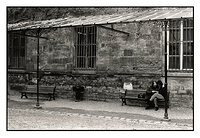
Amour - Paris

A
Amour - Paris

  • 0
  • 0
  • 24
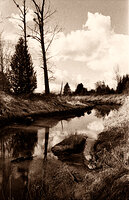
Bend in the river

H
Bend in the river

  • 1
  • 0
  • 42

Recent Classifieds

Forum statistics

Threads
203,229
Messages
2,851,784
Members
101,737
Latest member
Altamira
Recent bookmarks
0
Honestly speaking, i really love Acros 100, the 2 rolls i did at 100 were amazing, loved it and i was looking to make it my favorite, but this film has some debates on some websites about reciprocity, and i don't know what is that, so i make it out until i understand more about it then i will think about it again.

Reciprocity failure, or more accurately reciprocity departure, in it simplest explanation simply means that the film's real speed is lower when the exposing light is very dim and long exposures are required. With some films, the effect is rather dramatic. Exposures that meter for 10 seconds will actually need 20 seconds to get the right exposure with some films. Read through the tech sheets for Kodak's and Ilford's films. They outline just how much exposure you need to add for very long exposures. Some films require an extra stop of exposure when the exposure called for is as short as 1 second.

My recommendation? Fuji Acros or TMX, and these days I'm leaning more towards Acros. I just love that stuff. I use in medium format for very low light and night time photography where it's actually faster than some 400 speed films because of its outstanding reciprocity characteristics. Not only that, but the grain is, for all intents and purposes, non-existent, and the tonality is just right. I'm very impressed with this film, and the fact that it sells for less than the Kodak and Ilford equivalents makes it all the more attractive. Fuji's got a real winner with this one in my book.

Reciprocity departure issues with Fuji Acros? Not really. Straight from Fuji's tech sheet "No exposure compensation is required at shutter speed of less tan 120 seconds." That's pretty darned impressive if you ask me, and I don't think there's another film that can beat it. Delta 100 and TMax 100 don't even come close. Delta 400 and TMY-2, while not too bad, require even more compensation. Plus-X, Tri-X, FP4+, and HP5+ all have extremely poor reciprocity departure characteristics in comparison, and IMO should not even be considered for extremely low light work unless one is forced into the situation.
 
Reciprocity failure, or more accurately reciprocity departure, in it simplest explanation simply means that the film's real speed is lower when the exposing light is very dim and long exposures are required. With some films, the effect is rather dramatic. Exposures that meter for 10 seconds will actually need 20 seconds to get the right exposure with some films. Read through the tech sheets for Kodak's and Ilford's films. They outline just how much exposure you need to add for very long exposures. Some films require an extra stop of exposure when the exposure called for is as short as 1 second.

My recommendation? Fuji Acros or TMX, and these days I'm leaning more towards Acros. I just love that stuff. I use in medium format for very low light and night time photography where it's actually faster than some 400 speed films because of its outstanding reciprocity characteristics. Not only that, but the grain is, for all intents and purposes, non-existent, and the tonality is just right. I'm very impressed with this film, and the fact that it sells for less than the Kodak and Ilford equivalents makes it all the more attractive. Fuji's got a real winner with this one in my book.

Reciprocity departure issues with Fuji Acros? Not really. Straight from Fuji's tech sheet "No exposure compensation is required at shutter speed of less tan 120 seconds." That's pretty darned impressive if you ask me, and I don't think there's another film that can beat it. Delta 100 and TMax 100 don't even come close. Delta 400 and TMY-2, while not too bad, require even more compensation. Plus-X, Tri-X, FP4+, and HP5+ all have extremely poor reciprocity departure characteristics in comparison, and IMO should not even be considered for extremely low light work unless one is forced into the situation.

Interested, nice to know about that.
In all cases, i will keep using different films until i see one film or 2 will suit me more on most conditions or most of the time.
Thanks!
 
I would say that if you narrow it down to Tri-X and soup it in a couple of different developers depending on the final look you want to achieve, you'd be just fine. Rodinal at 1:25 to 1:100 dilution and XTOL would cover all the bases. If you look at my flickr page, the latest rolls of Tri-X were all shot at what would roughly be 100ISO (f11, 1/250 or 1/125, f8, 1/500, etc) sunny, middle of day, strong shadows and bright but never blown whites, souped in Rodinal 1:25 for a grittier look. I would assume you are shooting 35mm, correct?
If you really crave slow speed, you can always shoot Delta 100 and TMAX100 @ 50ISO and develop in Rollei RLS. Incredible sharpness, and non-existent grain. Also, Efke 25 and Rollei Pan 25 are fine choices if that's what you need/wish.
 
My suggestion is Delta 100, this will give you far more flexibility than a 400 ISO film where you'll be limited to f16 or f22 @ 1/250th most of the time :D

It would also be possible to get away with Pan F even for hand held work.

In the UK I prefer 100 ISO films all the time regardless of the format when working with a tripod, I've found that 400 ISO films just too fast for my images I like slow shutters speed and stopping down well and found HP5 too fast last Easter.

Fast films are great when you have to work hand held, so I have started using them as I'm often shooting where tripods are not permitted and that 250th @f22 is perfect with a hand held LF camera, or 6x17 :smile:

It's a very personal choice, we all work differently

Ian
 
OK, in fact i prefer Ilford films over Kodak, always or most of the time Kodak films is more dense than Ilford films, so i will take 4 films from each brand [TMAX 100&400, Delta 100&400] and shoot sam subject at same exposure and see the difference, from what i did before out of those films Ilford won my votes.
 
Another way to look at this is to print small. An acquaintance of mine who's a great photographer and Leica user never goes bigger than 6 x 4". Although he generally rates Tri-X at 200asa a superficial glance looks like a sheet film shot, virtually grain free.
My favourite slow film was Agfapan APX 25 but I'm down to the last four rolls. Currently experimenting with Lucky rated 50asa. The film lacks or has an inefficient anti-halation layer, which gives splendid light bleed on back lit subjects and while not ultra fine grain, works for small prints.
 
Interested, nice to know about that.
In all cases, i will keep using different films until i see one film or 2 will suit me more on most conditions or most of the time.
Thanks!

Tareq

Reciprocity failure is really no big deal. If you know your film, you just compensate for it. In any case, it is no reason to select or not use a film. One advice I can offer is not to try too many films, developers, paper... anything. You are far better of to select a name brand product or a product recommended by someone who's word you trust. Learn that one product inside and out before you try another, or you will enter the endless loop of trial and error.
 
I have to check my all films, because i think i still didn't use that film yet and i would like to badly.

When you get some FP4 get a few rolls of Pan F as well.

A friend of mine, Bill Spears, uses it in Perceptol with his RB67 and the results are stunning, he's just been named B&W printer (analog) of the year by B&W Magazine (UK), he also won another category, and the previous year as well.

I have a few rolls I'm using with my little Large format camera, an 1880/90's Quarter plate camera, I've made a 6x7 conversion for it.

Agfa's AP25 and then APX25 were probably the finest slow films made, the quality and resolution was outstanding, PanF is close but needs careful exposure & processing.

Ian
 
Another way to look at this is to print small. An acquaintance of mine who's a great photographer and Leica user never goes bigger than 6 x 4". Although he generally rates Tri-X at 200asa a superficial glance looks like a sheet film shot, virtually grain free.
My favourite slow film was Agfapan APX 25 but I'm down to the last four rolls. Currently experimenting with Lucky rated 50asa. The film lacks or has an inefficient anti-halation layer, which gives splendid light bleed on back lit subjects and while not ultra fine grain, works for small prints.

Good information you posted here, i don't think i will use those 2 films, but who knows, i will stuck with Kodak/Ilford/Fuji most of the time.
 
When you get some FP4 get a few rolls of Pan F as well.

A friend of mine, Bill Spears, uses it in Perceptol with his RB67 and the results are stunning, he's just been named B&W printer (analog) of the year by B&W Magazine (UK), he won another category to, and the previous year as well.

I have a few rolls I'm using with my little Large format camera, an 1880/90's Quarter plate camera, I've made a 6x7 conversion for it.

Agfa's AP25 and then APX25 were probably the finest slow films made, the quality and resolution was outstanding, PanF is close but needs careful exposure & processing.

Ian

I have been tested 2 rolls of Pan F+, the results were amazing, my mind was blown away with what i see, could be a great film i want to use but i can't give it all the whistles yet.

Here are few results from it

http://img844.imageshack.us/img844/9054/img076n.jpg

http://img251.imageshack.us/img251/4559/img081nu.jpg

http://img843.imageshack.us/img843/1189/img074.jpg

http://img20.imageshack.us/img20/9281/img080v.jpg
 
Tareq

Reciprocity failure is really no big deal. If you know your film, you just compensate for it. In any case, it is no reason to select or not use a film. One advice I can offer is not to try too many films, developers, paper... anything. You are far better of to select a name brand product or a product recommended by someone who's word you trust. Learn that one product inside and out before you try another, or you will enter the endless loop of trial and error.

I wish i can do that, but seems i can't, because i can't afford one film and one developer always all the time, locally only D-76 or TMAX is available, but not both at the same time and by request, so one time i can find TMAX another time D-76, Ilford only i can find Ilfosol 3 here, online is not gonna happen many times as well, films, here only Delta 100/400, TMAX 400 [maybe 100] can be available.
 
I have been tested 2 rolls of Pan F+, the results were amazing, my mind was blown away with what i see, could be a great film i want to use but i can't give it all the whistles yet.

Here are few results from it

http://img844.imageshack.us/img844/9054/img076n.jpg

http://img251.imageshack.us/img251/4559/img081nu.jpg

http://img843.imageshack.us/img843/1189/img074.jpg

http://img20.imageshack.us/img20/9281/img080v.jpg


Nice images Tareg. Not sure I'd use Pan F there, I think Delta 100 or FP4 would just have an edge because you could use a higher shutter speed.

What's more important is your finding your own way of working, and that's important, only you can decide how you work.

Ian
 
Nice images Tareg. Not sure I'd use Pan F there, I think Delta 100 or FP4 would just have an edge because you could use a higher shutter speed.

What's more important is your finding your own way of working, and that's important, only you can decide how you work.

Ian

Exactly that is why i was ignoring that Pan F+, as with 100-125ASA i can have a bit higher shutter speed, i tested Pan F+, maybe i will try FP4+ here and see how it will perform, at least i don't want to go much slower than 50 and not more higher than 200.

It will take time to see my work improving, will not say i don't see mistakes, and not saying i don't like most of what i did, still in a level of fine tuning my work slightly, sure next years i will be better if i keep doing and noticing.

Tareq
 
You're on the right track there Tareq. Find the film you like then stick with it. Keep Pan F as a an option for tripod work or landscapes :D

Ian

Sure, when i shoot landscapes i always shoot with tripod @50-100 iso, so Pan F+ will be there sometimes :wink:
 
Photrio.com contains affiliate links to products. We may receive a commission for purchases made through these links.
To read our full affiliate disclosure statement please click Here.

PHOTRIO PARTNERS EQUALLY FUNDING OUR COMMUNITY:


Ilford ADOX Freestyle Photographic Stearman Press Weldon Color Lab Blue Moon Camera & Machine
Top Bottom
