• Welcome to Photrio!
    Registration is fast and free. Join today to unlock search, see fewer ads, and access all forum features.
    Click here to sign up

Shooting Fall Colors with Portrait Films

Forum statistics

Threads
203,117
Messages
2,849,998
Members
101,676
Latest member
stasney
Recent bookmarks
0

mtjade2007

Member
Allowing Ads
Joined
Jan 14, 2007
Messages
689
Format
Medium Format
I have quite some 400NC and Konica Minolta portrait films cold stored that I know are in good shape. So what if I use them to shoot Fall colors? Portrait films have the advantage of greater dynamic range but with muted colors. How about using Photoshop to increase color saturation to bring out the colors? It can be easily done except it may also introduce problems such as color shift. I know people will have a lot of different opinions about this. I simply don't shoot portrait much and have to use the films on other applications. Has anyone done this? Even Kodak UC images came out of my film scanner were lack of saturation sometimes and I found boosting it by Photoshop was desired. Any comments welcome. Thank you.
 
When I shoot color negative films, I typically use the first or last frame to take a photo of the X-Rite Color Checker in the same light condition as the rest of the roll. Later I can either use it to calibrate my scanner, or color correct scanned photos in Lightroom/Photoshop. Color Checker has both neutral gray as well as standard color palettes.

Or if you still have some reasonably fresh Velvia 50, you can always rely on it to produce exuberant fall colors. :smile:
 
I have quite some 400NC and Konica Minolta portrait films cold stored that I know are in good shape. So what if I use them to shoot Fall colors? Portrait films have the advantage of greater dynamic range but with muted colors. How about using Photoshop to increase color saturation to bring out the colors? It can be easily done except it may also introduce problems such as color shift. I know people will have a lot of different opinions about this. I simply don't shoot portrait much and have to use the films on other applications. Has anyone done this? Even Kodak UC images came out of my film scanner were lack of saturation sometimes and I found boosting it by Photoshop was desired. Any comments welcome. Thank you.

I've used 400 NC for autumn foliage and spring flowers, nothing better. Ektachrome is brilliant too, no need to tweak.
 
I've used 400 NC for autumn foliage and spring flowers, nothing better. Ektachrome is brilliant too, no need to tweak.

For autumn foliage and spring flowers, Ektar may be a better choice. Since I have a large stock of UC 135 and 120 film in the freezer I use it as well as the VC 4"x5" film.
 
Try it and see, I'll bet the shots look great. Over saturated/over sharpened/overly high contrast color is pretty boring, and we see too much of it.
 
20 years ago I photographed some tulips, 400 NC, Mamiya RZ67 II with 110mm lens. I have prints that I made on Ektacolor paper. Reds were epic, perfect colors. I love Ektar, it's not really extreme. My message would be to get out there and use what you have first.
Then you have good reason to buy more! ☺️
 
Ektachrome E100 GX - sadly no more:
Autumnal-14b-2012-11-09-res 1280.jpg
 
Thanks for the great comments. All points taken. Choosing the right films certainly is the right course to go. I do have some Kodak UC, VC, chrome films that I won't go wrong with them. However, I simply have a lot more NC that I would like to use in different type of applications in addition to portraits. Since it's time for Fall colors I thought it's an opportunity to try it out.

I know I can post process the images with Photoshop to adjust the contrast and saturation to a large extent. But I wonder if this is an appropriate practice in film photography. Over boosting of contrast and saturation plus sharpening could make a film image look like digital. That's certainly not my intention. What came to mind was really if NC has an extra wide dynamic range (and fine grain) it could be used to shoot anything. Just Photoshop the images to tweak density, contrast, saturation to the desired level of that of UC, VC or even chromes. It won't be a duplicate of those films but will it be close? I know this may be a very bad idea. I really would like to hear what you experts say about it.

Kodak now only makes Portra professional film. I guess there is no more need of UC and NC because you can produce the look of UC and NC by using Photoshop.
 
I wonder if this is an appropriate practice in film photography

You're in full control of what end result you want and how you'll get it. What is generally "appropriate" is completely irrelevant in decidic what you find useful or interesting to pursue. So go out there, shoot some film and to whatever you need to do to get the images you like off of it.
 
In days of yore, one could make adjustments to saturation and contrast and colour rendition by choosing to use different colour papers when optical printing.
That is still possible, although there aren't as many choices.
So it isn't as if adjusting those criteria digitally is somehow "cheating".
 
Photography is art. Creativity is a critical element of art. I think a nice looking image heavily manipulated digitally lacks true creativity because the work is done by a computer software. it can be considered creativity still but it is a cheap one because it is done by a speedy machine not really by the photographer. Well, I don't mind to be a cheap artist sometimes so I will do it. I totally understand what cheap creativity means.

I agree that digital or analog darkroom work is no doubt a legitimate process of photography. But there should be a boundary what are appropriate and what are not. Thank you Koraks and Matt and everyone else. My conclusion is I will shoot Fall colors with Kodak NC. I will boost the color saturation, contrast and density when I feel the need by using Photoshop.
 
I think a nice looking image heavily manipulated digitally lacks true creativity because the work is done by a computer software.

I disagree, and it has to do with the notion that I think you're confusing the concepts of art and skill. While they are related, they are conceptually distinct. Art, as far as I'm concerned, is about making something that moves people, that instills a message, emotion or notion on the onlooker. It tends to involve things like conceptual thinking, a good dose of intuition and often a lot of experimentation on behalf of the artist. What it does not, however, require is suffering. I think this is a misunderstood aspect of art and probably stems from the archetypical view that we have of the 'starving artist' that has to deal with hardship and massive challenges. In that sense, there is nothing wrong with using efficient digital tools to create a work of art. Indeed, much of the visual arts these days revolves around such tools. I wouldn't want to go as far as to disqualify because all of them are supposedly 'cheap creativity' or that relatively rapid tools were used to get to a certain end result! I really think that's a bit of a misconception on your behalf.

In this sense, you can also argue that skill is only to some extent necessary to create art. You only need to have the skill necessary to get the message across effectively. Skill in itself doesn't make art, and it's just a vehicle or tool to accomplish something. As a result, staring yourself blind on skill, and employing the most skillful approach to get something done, doesn't create art. In other words: making the same end result digitally as with film wouldn't make either one more or less artistic, while it potentially does say something (or a lot) about the skillset of the artist(s) involved.

Finally, I think your argument doesn't hold much water for another reason. You started this thread by asking if you can get saturated colors with a film not designed to do this. A quick way to get what you want would obviously be to crack open a brick of Ektar and get shooting. But if I apply your own reasoning, this would still constitute cheap art: you'd be using a speedy tool to get the job done. That the tool is a film-based one as opposed to a digital one doesn't make much of a difference conceptually.

The reason I'm picking on this is not to criticize you, personally. It's because I think you quite neatly captured in words a fundamental misconception among mostly amateur photographers (whom I'm one of, mind you!) about the relationship between art and skill or technical competence. This misconception is so deeply rooted and strongly advocated, that it seems to me that if an artist comes for advice to a place frequented mostly by amateur photographers, the advice they'll get is a lot of the time counterproductive instead of helpful. There will be lots of talk about technicalities, and rarely, if ever, does someone even pick up on the actual content of the artwork itself and the question what would be necessary to accomplish that goal. I guess I'm just warning you against falling into that trap as well. Ask yourself how bad it is if you do it the quick & dirty way. If you do it like that, you preserve much of your time and energies to work on the part of art that really matters - its message, innate emotion, or whatever it is that moves the viewer.

Don't get me wrong - I like the technicalities and to a large extent, that's what a photo forum is for. It's for talking shop, and that's fun and interesting in itself. But if you talk about art and creativity, be very wary of getting lost in the woods of technique.

 
Last edited:
What koraks said.
Save and except, it is entirely appropriate to prefer materials and techniques that resonate with you and which you enjoy using. Don't avoid digital post-processing because that is something you think you "should" do. But feel free to avoid digital post-processing because you dislike doing it.
And of course, if you decide you want to discuss the how and why of digital post-processing, make sure the discussion is in the right part of Photrio :smile:
 
20 years ago I photographed some tulips, 400 NC, Mamiya RZ67 II with 110mm lens. I have prints that I made on Ektacolor paper. Reds were epic, perfect colors. I love Ektar, it's not really extreme. My message would be to get out there and use what you have first.
Then you have good reason to buy more! ☺️

Not if all the leaves shows up as all dull brown. 🙄
 
One could digitally convert an ordinary image into a pretty watercolor paint in seconds by Photoshop. That's the kind of cheap creativity that I was talking about. It takes a (very simple) Photoshop skill to do it. But I don't consider that art work. Digital tools make darkroom work a lot easier and faster but when much of the work is done by the tools the work becomes less worthy in the art's perspective. Ansel Adam lived in the mountains for years. Imagine how much effort he spent in producing his works. I am not saying one should avoid digital tools. The basic Photoshop level, curve, and color manipulation functions are invaluable to me. Without them I will have go back to stone age to produce any good looking photos. My intention to shoot Fall colors (or anything with brilliant colors) with Kodak NC involves the need of boosting the saturation level by Photoshop quite a bit. I am concerned if it essentially makes my images cheap or junky.
 
Well, that's a tough spot you find yourself in. There's a lot of things I could say, but I think I've already said the more essential ones. So I can only sympathize and hope you find a way out of the hole you dug for yourself.

If you hope that someone's going to come along and say "no mate, what you're doing is meaningful because you're still shooting expired film and that's still a commendable craft, so the images will be worth it" - sorry, it's not going to be me...
 
I can volunteer for a bad example. 🤣 I had this roll of expired Fujicolor 100 negative film (Ultrafine sold them recently), shot a roll with the X-Rite color checker. Then in Lightroom I tried to get the white balance and saturation right, by looking at the color checker image against the real color checker. And you can say I boosted saturation and vibrance "a lot"! They are a bit weird looking now. Just for laughs, not a single iota of art whatsoever. 🤣

 
Art, as far as I'm concerned, is about making something that moves people, that instills a message, emotion or notion on the onlooker. It tends to involve things like conceptual thinking, a good dose of intuition and often a lot of experimentation on behalf of the artist.
Koraks, I think I am more inclined to the following definition of what art is:

1. the expression or application of human creative skill and imagination, typically in a visual form such as painting or sculpture, producing works to be appreciated primarily for their beauty or emotional power.
2. the various branches of creative activity, such as painting, music, literature, and dance.

These are from the internet. Both emphasizes creative work. Art is not just passing something in the work to onlookers. I don't disagree all you said. But I disagree this sentence you said in your post. I don't consider a photo copy of an Ansel Adams photo to be a work of art. I bought a couple of booklets of them from national park visitor centers. They were very cheap. The originals are, however, I can not affor any of them. Thank you for your replies.
 
I can volunteer for a bad example. 🤣 I had this roll of expired Fujicolor 100 negative film (Ultrafine sold them recently), shot a roll with the X-Rite color checker. Then in Lightroom I tried to get the white balance and saturation right, by looking at the color checker image against the real color checker. And you can say I boosted saturation and vibrance "a lot"! They are a bit weird looking now. Just for laughs, not a single iota of art whatsoever. 🤣


What if the images turned out great after boosting saturation plus any additional color correction? Personally the images would be keepers for me. What I am concerned about is people would say they are fake photos when they realized how I photoshoped them. Again, I am not saying using Photoshop is bad practice. I am just concerned about some specific type of manipulation that should be avoided.
 
Last edited:
These are from the internet

So not everything from the internet is valuable. If those very broad definitions held any water, the average museum would be a pretty bleak and uninteresting place.

In any case, you emphasized creativity, and I see no reason why using whatever tools you have at your disposal would make the endeavor less creative. Yes, it merely shifts the discussion from art (which is an ill defined construct) to creativity (likewise).

Again, it's a hole you dug for yourself. You insist on using a tool that isn't really suitable for what you want to do with it (at least how you envision it), neither do you seem to be willing to break out a box of Ektar or Velvia, and you also don't want to Photoshop your way into saturation. So basically you're in a process of eliminating every possible solution - for what reason? I don't know. I guess it's up to you to figure that one out. Oh, and people

PS: you could try push processing your Portra film. Then print on RA4 paper using an enlarger and perhaps bleach and redevelop for even more contrast and saturation. It'll be a bit more work than Photoshop. The result may be somewhat unpredictable and not necessarily what you're looking for. It will get your hands somewhat dirty and be more work than scan & PS. Perhaps the additional suffering will make the end result more valuable to you. It can be fun to do it this way.

PPs: people might say you photoshopped the hell out of those prints, but you'd know better, so all would be well.
 
Using expired and discontinued film is very artistic.
 
So not everything from the internet is valuable. If those very broad definitions held any water, the average museum would be a pretty bleak and uninteresting place.
Creativity is an essential element of art, if not then why not just copy other's work and take a quick Photoshop tweak and present it to the public looking for praises? Talking about the use of internet one must be careful especially referencing talks in public forums. I have been taught all my life about the relationship about art and creativity but I am told I have fallen into a big hole because of that. Could I come out of it by a creative way?

Merriam Webster, definition of art: the various branches of creative activity, such as painting, music, literature, and dance.

Tell me it does not hold water too.
 
What is wrong with taking photographs with film of fall colors because you enjoy it? Forget the art fart unless you happen to see it and photograph it.
 
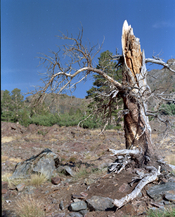
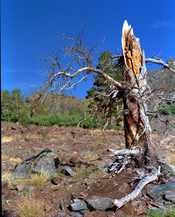
Example of Photoshop tweak. It is fun to tweak.
 

Attachments

  • YS-tree02s.jpg
    YS-tree02s.jpg
    627.8 KB · Views: 103
  • YS-tree-02.jpg
    YS-tree-02.jpg
    946.6 KB · Views: 107
Photrio.com contains affiliate links to products. We may receive a commission for purchases made through these links.
To read our full affiliate disclosure statement please click Here.

PHOTRIO PARTNERS EQUALLY FUNDING OUR COMMUNITY:


Ilford ADOX Freestyle Photographic Stearman Press Weldon Color Lab Blue Moon Camera & Machine
Top Bottom