
• Welcome to Photrio!
    Registration is fast and free. Join today to unlock search, see fewer ads, and access all forum features.
    Click here to sign up

Shift lens technique for low light and low ISO

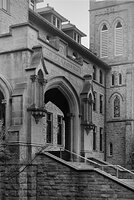
Stella Niagara Steps

H
Stella Niagara Steps

  • 0
  • 0
  • 22
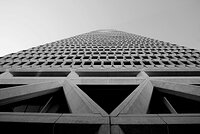
Up_the_TransAm.jpg

D
Up_the_TransAm.jpg

  • 1
  • 2
  • 43

Recent Classifieds

Forum statistics

Threads
202,875
Messages
2,846,889
Members
101,538
Latest member
Ionolumina
Recent bookmarks
0

quixotic

Member
Allowing Ads
Joined
Jan 28, 2008
Messages
175
Location
Red Deer, Alberta, Canada
Format
Medium Format
Just wondering what others have done under similar situations.

Given that one is supposed to meter and then shift, how can one do this when using low ISO film (25 in my case) and low light conditions (eg, a cathedral interior), and a camera which only has marked shutter speeds down to one second?

I guess I could use an external light meter, and then the bulb setting on the camera. Another option might be to use auto exposure, and then turn the exposure compensation dial a notch or two to give a bit of extra light.

Any thoughts? (thanks in advance).
 
But why is one "supposed to meter and then shift" ?
 
Shift then meter.
 
But why is one "supposed to meter and then shift" ?

Essentially, lightmeters too have an acceptance angle in which they see the cone of light coming from the lens.

Shifting radically moves it away, and as a precaution SLR manufacturers state you shouldn't trust meter measurements.

I haven't done the geometry magic on how much effect it has, but i do expect you might be off by as much as a stop at 12mm of shift.

Personally, inside of a cathedral in low light while shooting shift? I would use a external meter and incident meter for your foreground.
 
Meter the scene, lock the reading in (e.g. with AEL), then apply shift and/or tilt. This is the standard technical procedure when using Canon's TS-E lenses or Nikon's equivalent tilt/shift lenses. There is no mention of what lens you are using.
This is because the light is distorted coming through the lens when tilt and/or shift is applied, and will not strike the meter as it would with a non shift/tilt lens. Similarly, autofocus is also useless, hence manual focus and adjustment of the focus 'peg' using tilt (in such lenses with dual function).
A separate hand held meter effectively gets around all of this if the camera is set to Bulb or other means are used to hold the shutter open for a longer exposure than the camera meters.
You will still need to account for reciprocity correction beyond 1 second if the film requires it.
 
Last edited:
I haven't done the geometry magic on how much effect it has, but i do expect you might be off by as much as a stop at 12mm of shift.

Thanks. That sounds like a good rule of thumb. But on auto-exposure, I should twist the exposure compensation dial to give it a stop of extra light, right? (just wanna make sure I'm going the right way).

I'd use a light meter, but on vacation, I need something a bit faster (my wife already does enough exasperated sighing and looking at her watch when I stop for just one more photo).
 
Currently a 24mm Zuiko shift, but I'd expect that they'd all behave in a somewhat similar manner.

Yes they do. Any time you apply shift, the meter's reading, unless locked in, is considered in error.
 
Bracket the exposure. Or has film grown so expensive folks no longer bracket?
Anyhow, that's what I'd do.
 
Bracket the exposure. Or has film grown so expensive folks no longer bracket?
Anyhow, that's what I'd do.
I'm guessing that in constant dollars, film is still about the same price as it was decades ago...maybe even cheaper.

But I have done a test with auto-exposure on, and shift off, versus auto-exposure, full shift (10 mm's), and an exposure compensation of +1. I'll post the results when I get through the roll and it comes back from the lab.
 
As you are using a Zuiko shift lens, there is a decent chance that you are using an OM body.
And if that OM body is a 2n, 2s, 4 or 4T, (plus a couple others I think) than auto-exposure is accomplished by taking readings off the film during exposure.
So if I was using one of those bodies, I would just let the camera compensate automatically for any exposure variance contributed by the shift.
 
As you are using a Zuiko shift lens, there is a decent chance that you are using an OM body.
And if that OM body is a 2n, 2s, 4 or 4T, (plus a couple others I think) than auto-exposure is accomplished by taking readings off the film during exposure.
So if I was using one of those bodies, I would just let the camera compensate automatically for any exposure variance contributed by the shift.
Nevertheless, Olympus instructions for the 24mm f/3.5 PC lens is to METER then SHIFT.

Yes, my avatar is an OM-4 with 24mm f/3.5 PC
 
Essentially, lightmeters too have an acceptance angle in which they see the cone of light coming from the lens. Shifting radically moves it away, and as a precaution SLR manufacturers state you shouldn't trust meter measurements.

That angle of view of a light meter vs. the angle of view of a lens issue is a matter of a seperate meter, not of the meter inside the optical path of the camera.
The latter meter measures a fixed area on the focal plane, nonewithstanding the shift. Any light fall-off at the rim of the shifted image will affect both meter and film.
(One could argue on the angle under which light falls onto the metering sensor and how that may affect the sensor differently than the film, but that is a very specific issue dependant on the design of the camera, for instance whether the metering sensor is placed behind the groundglass or in front of it. As SLRs use retrofocus lenses the rear opening angle is moderate anyway.)
 
Last edited:
Usually the instructions say to meter first, then shift. If one is concerned, bracketing above and below the exposure might be a good way to be sure one captures the photograph, especially if one is using negative film.
 
Nevertheless, Olympus instructions for the 24mm f/3.5 PC lens is to METER then SHIFT.

Yes, my avatar is an OM-4 with 24mm f/3.5 PC
I just read those instructions (from the link on the Olympus Sales Information File) and I think that what you are referring to applies only to use with the camera (OM-2) set for manual exposure.
I think that the instructions for the OM-2 set to AUTO do not include such a recommendation.
But those instructions could be worded more clearly.
http://omesif.moosemystic.net/om-sif/lensgroup/manuals/35mm_f28_shift.pdf
 
As you are using a Zuiko shift lens, there is a decent chance that you are using an OM body.
And if that OM body is a 2n, 2s, 4 or 4T, (plus a couple others I think) than auto-exposure is accomplished by taking readings off the film during exposure.
So if I was using one of those bodies, I would just let the camera compensate automatically for any exposure variance contributed by the shift.
Thanks Matt. That's good to know. I guess I'll find out tomorrow, when my film gets developed.
(I have an OM-4ti).
 
quixotic, the best way to tell is to do an actual test as you have done and pick the best exposure. But it does seem quite obvious to me that if the exposure is measured off the film at the time of exposure in auto mode that is likely going to hit the exposure target.
 
I assume, based on my on others' comments above, the advise to meter before shifting is not a camera-specific remark. But rather is referring to the center of (metering) interest being not (yet) in the center of the image.
Think of the old advise to meter before panning and thus moving the centered subject out of center.
 
I just read those instructions (from the link on the Olympus Sales Information File) and I think that what you are referring to applies only to use with the camera (OM-2) set for manual exposure.
I think that the instructions for the OM-2 set to AUTO do not include such a recommendation.
But those instructions could be worded more clearly.
http://omesif.moosemystic.net/om-sif/lensgroup/manuals/35mm_f28_shift.pdf

Certainly if one is using and OM with OTF metering during exposure, what you said is true. Unfortunately, one is forced to use 'averaging' via the pattern which printed on the curtain, rather than taking advantage of any spot metering with the multispot capability of the OM-4. And if one is using an OM-1, OTF is not a capability, nor with the OM-nn bodies..

Olympus does not put in any information in the OM-4 user manual, pertinent to a shift lens, and the instructions for the shift lens predate the OM-4. The advisory about not exceeding 1/1000 in the displayed speed during Auto does not apply to the 1/2000 capable OM-4, but nonetheless nothing is said in OM-4 documentation.
 
And if one is using an OM-1, OTF is not a capability, nor with the OM-nn bodies..
Actually, my OM-G/OM-20 does feature OTF automatic exposure meter reading.
As I rarely use that body in the special situations where OTF metering provides a particular advantage, and as that feature doesn't work with flash on that body, I forget about that feature.
Also, as the OM-G/OM-20's automatic exposure metering is limited to a maximum exposure time of 2 seconds, it probably isn't the ideal body to use in those special situations.
 
Well, here is the results of my makeshift test. Not a huge change with the shift. I'm just surprised at how little the exposure compensation changed things.
24mm shift test.JPG
 
I have the loan of an OM-4Ti set which includes the Zuiko 35mm f2.8 'Shift' lens and i used 'Auto Exposure' with 'Spot' metering and photos came out perfectly -- here is one against the light with 'Spot'metering and Orange filter --
Test 06.jpg
 
I have the loan of an OM-4Ti set which includes the Zuiko 35mm f2.8 'Shift' lens and i used 'Auto Exposure' with 'Spot' metering and photos came out perfectly -- here is one against the light with 'Spot'metering and Orange filter --

Yeah, I've come to the conclusion that even if there was a difference in light admittance with shift, it's not enough to worry about. Even when I used slide film on a Sylvestri (no internal meter), I don't ever remember altering shutter speed or aperture, and the results seemed fine.
 
Photrio.com contains affiliate links to products. We may receive a commission for purchases made through these links.
To read our full affiliate disclosure statement please click Here.

PHOTRIO PARTNERS EQUALLY FUNDING OUR COMMUNITY:


Ilford ADOX Freestyle Photographic Stearman Press Weldon Color Lab Blue Moon Camera & Machine
Top Bottom
