• Welcome to Photrio!
    Registration is fast and free. Join today to unlock search, see fewer ads, and access all forum features.
    Click here to sign up

Shanghai GP3 Zone System Test

Recent Classifieds

Forum statistics

Threads
202,815
Messages
2,845,839
Members
101,544
Latest member
johnsaigon0
Recent bookmarks
1

nickandre

Member
Allowing Ads
Joined
Oct 22, 2007
Messages
1,918
Location
Seattle WA
Format
Medium Format
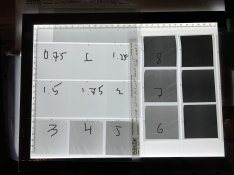
Hey all! In light of Shanghai film being available in 220 I thought it would be pretty cool to test out. I've decided to do a little zone system learning and used GP3 for this test. It was photographed with a Hasselblad 205FCC and I used the front of my softbox to target. The latest batch of film I ordered from Shanghai directly actually has real 220 backing paper but cut the first frame a little close on my E24 back.

Details:
  1. Daylight LED illumination with good CRI (with a few tests with tungsten)
  2. Shanghai GP3 100 rated at 100 ISO
  3. Rodinal 1:25 in Jobo 2500 tank at 68 degrees for 7min
  4. Handy dandy X-Rite 331 transmission densitometer that apparently used to be owned by the FDA lol
So I'm not sure who else has tried this film in particular but I found in Rodinal that I didn't get density of ~0.1 above b+f until about zone 3, which would seem to indicate this film should be rated around 25 ISO. Have people repeated this test in different developers or have general experience with Rodinal versus D76 (the recommended developer)?

Screen Shot 2022-02-20 at 10.23.40 AM.png


My interpretation here is that zone 12 is getting into the shoulder of the film but it does have a nice region of linearity if I expose at EI 25. I'll double check this and cross check a few different meters, but figured I'd share the initial results.
 
OK the inside of the box specifies 6.5 minutes for Rodinal 1:25 but ISO 100. So their time seems pretty close but their ISO optimistic
F8A1912B-885F-4D25-B403-1EADDC453D40.jpeg
 
My empirical tests also indicates that this film is ISO 50 in a very good day, and probably around ISO 25 in reality
 
I’ll repeat the test assuming ISO 25. Otherwise looks like a cool film, with decent exposure range.
 
I develop it in D-23 and my densitometer reads proper Zone I at EI 80.
 
I also picked up a sensitometer so I'll run some test strips through different developers. In general do people notice speed differences when comparing rodinal with TMax etc.?
 
I shot my last roll last weekend at box speed and developed it in pyro-m. the real dark shodow areas could have used a bump, but I think the iso 100 is pretty close. if I get more, I'll try a run down on 1 shot, 100, 80, 64 and see what I get. not having an sensitometer I do this visually. i messed up loading the roll, so the first 2 shots have issues from loose roll paper, but thats a 220 and me thing, not a gp3 thing. its been a while since I loaded 220 film ya know. I need to scan them in today and then maybe post 1 or 2 shots.

this is a nice film, I think i could make it work for me nicely and most likely will buy more. Its nice to have a 220 option available.

john
 
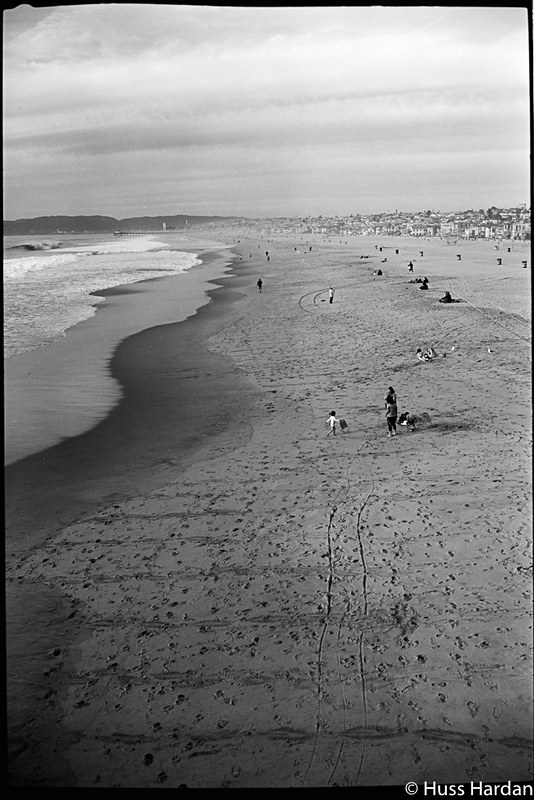
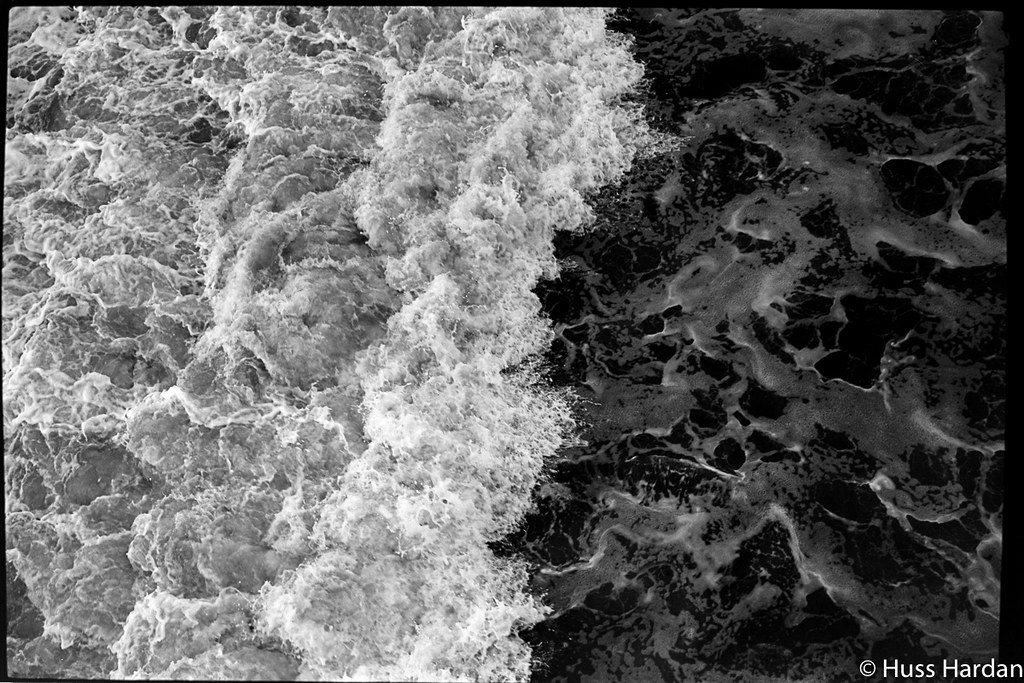
Huss I've examined both of your pics very carefully so where are all the problems that go with this film? :smile:

pentaxuser
 
Huss I've examined both of your pics very carefully so where are all the problems that go with this film? :smile:

pentaxuser

No problems. it's a lovely film - just do not use a monobath developer!

Frankly this thread mystifies me. Some claiming it is an ISO 25 film??? Have they actually used it? It is perfect at ISO 100 - ya know when you actually use it to take photos.
 
No problems. it's a lovely film - just do not use a monobath developer!

Frankly this thread mystifies me. Some claiming it is an ISO 25 film??? Have they actually used it? It is perfect at ISO 100 - ya know when you actually use it to take photos.

I am now impressed favorably with Shanghai GP3. I would be interested in a ISO 400 version. Of course to get me into 220 films I still need a bigger selection of films.
 
No problems. it's a lovely film - just do not use a monobath developer!

Frankly this thread mystifies me. Some claiming it is an ISO 25 film??? Have they actually used it? It is perfect at ISO 100 - ya know when you actually use it to take photos.
I scratched my head on the ISO 25 part also. I haven’t used this latest GP3 film, but just before their last shutdown I was using it and I believe it was as good as this new stuff. I rated it at ISO 64 in Rodinal 1+100 semi-stand and it worked fine rated at that speed. In Xtol-R it would easily make a fine ISO 100 film. JohnW
 
No problems. it's a lovely film - just do not use a monobath developer!

Frankly this thread mystifies me. Some claiming it is an ISO 25 film??? Have they actually used it? It is perfect at ISO 100 - ya know when you actually use it to take photos.
I mean you can use a film at a different speed than it technically attains via testing. But it will give weird results, particularly loss of shadow detail. You’ll get response at middle tones and place your shadows well into the toe region.

My zone system knowledge is incomplete but I believe some films attain different speeds in different developers. I am going to pick up some other developers and try a few different ones.
 
I shot my last roll last weekend at box speed and developed it in pyro-m. the real dark shodow areas could have used a bump, but I think the iso 100 is pretty close. if I get more, I'll try a run down on 1 shot, 100, 80, 64 and see what I get. not having an sensitometer I do this visually. i messed up loading the roll, so the first 2 shots have issues from loose roll paper, but thats a 220 and me thing, not a gp3 thing. its been a while since I loaded 220 film ya know. I need to scan them in today and then maybe post 1 or 2 shots.

this is a nice film, I think i could make it work for me nicely and most likely will buy more. Its nice to have a 220 option available.

john
You don’t technically need any equipment other than a density reference strip. The idea here is that you want some measurable density increase (Ansel Adams used 0.1 density units of whatever they are) above the film base before you get any detail or tone variation. You run off exposures of a flat out of focus background at -4 EV plus or minus a few stops and find the one that shows some density difference on development. If your zone 1 (-4 EV relative to metered) doesn’t show any density you won’t be able to reproduce tones at that region because they will all be squashed to nothing. When I metered at ISO 100 I got almost nothing until -2 EV or zone 3, which means this film doesn’t really attain ISO 100 in Rodinal 1:25 Jobo 2500. Moreover, the positive zones were still accruing density and hadn’t reached DMax even at +7 EV.
1197A216-C4FB-4293-9721-A51D3B8EEBAD.jpeg
 
You don’t technically need any equipment other than a density reference strip. The idea here is that you want some measurable density increase (Ansel Adams used 0.1 density units of whatever they are) above the film base before you get any detail or tone variation. You run off exposures of a flat out of focus background at -4 EV plus or minus a few stops and find the one that shows some density difference on development. If your zone 1 (-4 EV relative to metered) doesn’t show any density you won’t be able to reproduce tones at that region because they will all be squashed to nothing. When I metered at ISO 100 I got almost nothing until -2 EV or zone 3, which means this film doesn’t really attain ISO 100 in Rodinal 1:25 Jobo 2500. Moreover, the positive zones were still accruing density and hadn’t reached DMax even at +7 EV.
View attachment 298908

Or you can take all the time and effort and just go out and take some photographs. I never saw much use of endless, continuous, redundant, useless testing when the manufacturers had done so much useful and scientific testing that we can never come close to matching. But if ones time has no value ...
 
Here's another perspective: in my experience Zone V exposure gives an actual density of 0.7 on the film. In the OP's curve, four stops less exposure than his 0.8 density point gives 0.09 density, close to the original definition of the ASA speed point (0.10). By this definition the actual ASA is close to 100. But the shoulder starts at Zone XII, so he has two stops of latitude and could easily use ASA 25. ASA is not an absolute number; it's a reference point.
 
Or you can take all the time and effort and just go out and take some photographs. I never saw much use of endless, continuous, redundant, useless testing when the manufacturers had done so much useful and scientific testing that we can never come close to matching. But if ones time has no value ...
I've spent a lot of time "just shooting" but I figured it was worth the exercise to understand how the film is behaving in response to exposure. And it's not "endless" it's a 30 minute exercise excluding the time to develop along with your other film.

Basically when I "just shoot" and "just develop" I sometimes get into the darkroom and say "oooooh boy the contrast on this frame is wack" and then spend millenia futzing around with filters to obtain the desired result. Worse still, if you've totally lost shadows no filter can recover them. Understanding up front how to meter, shoot, and develop such that I know how the resulting photograph will print in a few days is the goal of the zone system.

Here's another perspective: in my experience Zone V exposure gives an actual density of 0.7 on the film. In the OP's curve, four stops less exposure than his 0.8 density point gives 0.09 density, close to the original definition of the ASA speed point (0.10). By this definition the actual ASA is close to 100. But the shoulder starts at Zone XII, so he has two stops of latitude and could easily use ASA 25. ASA is not an absolute number; it's a reference point.

I'm a little confused -- the ASA speed point of 0.1 falls at Zone III at EI 100 doesn't that mean it attains EI 25?
 
My zone system knowledge is incomplete but I believe some films attain different speeds in different developers. I am going to pick up some other developers and try a few different ones.

In all my years of testing film, I, personally, have never measured any significant increase in film speed with any developer; even those claiming to increase speed. I've seen, maybe, a third to close to a half stop more (if you develop a little longer), but nothing close to the claims I've read over the years. But that's just my experience. You should definitely try a few experiments to see if you find something to settle on.
 
Or you can take all the time and effort and just go out and take some photographs. I never saw much use of endless, continuous, redundant, useless testing when the manufacturers had done so much useful and scientific testing that we can never come close to matching. But if ones time has no value ...
Do you shoot all your film at box speed and develop it for time time indicated on the sheet that comes with the developer? Arriving at an E.I. for a film/developer combination doesn't involve "endless, continuous, useless testing".
 
Do you shoot all your film at box speed and develop it for time time indicated on the sheet that comes with the developer? Arriving at an E.I. for a film/developer combination doesn't involve "endless, continuous, useless testing".

More precisely. I shoot at box speed with light readings that do not include the sky. That already boosts the shadows. Then. at times I use a spot meter and place the spot in Zone 2 or 3 or 4, set that expose's Zone 5 and adjust for any filters. ,
 
Or you can take all the time and effort and just go out and take some photographs. I never saw much use of endless, continuous, redundant, useless testing when the manufacturers had done so much useful and scientific testing that we can never come close to matching. But if ones time has no value ...

I have never encountered as many omphaloskeptics as I have on this site.
 
I have never encountered as many omphaloskeptics as I have on this site.
Then you haven't spent enough time at University!
 
With my equipment, Shanghai was three stops slower than HP5. I know the ignorant are blissfull, but I would not want to take photographs with an expensive film without knowing it's relative speed.
 
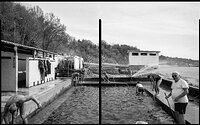
OK I have my first roll hanging and to me at the moment looks like an A1+ success. Mamiya C22 with 220 Back did a great job metering the 220 and those old Mamy lenses are sharp. Studio stuff looks good as do some on camera flash work. No scratches at all I can see so far. But to be super careful after photoflo-ing, I hung it up without wiping it with my fingers. When you get in the dark with this sufff it unrolls like under spring pressure. No harm done but WOW. Negs look really good to me :smile: Have like twelve more 220 rolls to go next. A24 Hasselblad roll nearly gone through. Working on it. Film loaded onto 220 JOBO Reels and into a Multitank 5. Spun on a Unicolor Uniroller, D23 1:1 12 minutes. I know that's a little long but I like beefy negatives.

I suspect this is an old school emulsion formulation and I am great with that.
 
Photrio.com contains affiliate links to products. We may receive a commission for purchases made through these links.
To read our full affiliate disclosure statement please click Here.

PHOTRIO PARTNERS EQUALLY FUNDING OUR COMMUNITY:


Ilford ADOX Freestyle Photographic Stearman Press Weldon Color Lab Blue Moon Camera & Machine
Top Bottom