• Welcome to Photrio!
    Registration is fast and free. Join today to unlock search, see fewer ads, and access all forum features.
    Click here to sign up

Sanity Check Please . . . regarding Developer Ratios

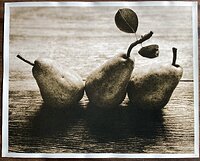
Three Pears

A
Three Pears

  • sly
  • Mar 17, 2026
  • 0
  • 0
  • 0
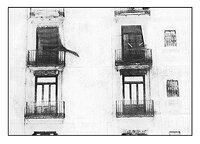
Windows - Valencia

A
Windows - Valencia

  • 0
  • 0
  • 6

Recent Classifieds

Forum statistics

Threads
202,810
Messages
2,845,774
Members
101,542
Latest member
sshhane
Recent bookmarks
0
...everyone but you understands what is meant. 1:1 is read one to one is is a proportion not a ratio...
I'm not going to count how many posters in this thread are arguing against conventional photographic developer dilution terminology (X:Y means X to Y, i.e. a ratio) and how many have grasped it. However, 'everyone but me' is clearly wrong. A small number of 'scientific purists' insistently buck reality, while most others pragmatically deal with what exists. Newcomers ought not be confused by stubborn 'ratio deniers.' :smile:
 
No, you're wrong. Big time!
https://en.wikipedia.org/wiki/Dilution_ratio
or
http://www.ausetute.com.au/dfactor.html
or
https://www.hemocytometer.org/dilution-factor/

Too difficult to grasp?

P.S.: by the way my negatives turn out fine everytime. The key is consistency.
The quality of this forums has gone down the drain recently...

That Wiki link seems to support just what i have been saying......... "For example, in a 1:5 dilution, with a 1:5 dilution ratio, entails combining 1 unit volume of solute (the material to be diluted) with 5 unit volumes of the solvent to give 6 total units of total volume".........
1:5 is 1 of water and 5 of developer.
Some others have been saying that it would mean 1 part water and 4 parts developer. For a total of 5 which seems wrong to me.....and Wiki seems to agree with me.

But they ALSO say......."This is often confused with "dilution factor" which is an expression which describes the ratio of the aliquot volume to the final volume. Dilution factor is a notation often used in commercial assays. For example, in a 1:5 dilution, with a 1:5 dilution factor, (verbalize as "1 to 5" dilution) entails combining 1 unit volume of solute (the material to be diluted) with (approximately) 4 unit volumes of the solvent to give 5 units of total volume. Note that some solutions and mixtures take up slightly less volume than their components."

So i think The Real Question is.....what is the intent of the manufacture when they write the instructions.? :wondering:
 
Too difficult to grasp?

P.S.: by the way my negatives turn out fine everytime. The key is consistency.
The quality of this forums has gone down the drain recently...

naaah
whatever works for you is good, that is the part that is important, not arguing about
stuff. but the 2nd part about quality going down the drain, im not sure about that
the drain is attached to a tube and the good stuff is filtered out ahead of time
using an ion transfer filtration system, and re-smelted and added into the knowledge base
at a 4:20 ratio that is what is most important.
 
That 4:20 ratio is the key...

 
Stop fighting in the back seat, boys!

Have you ever heard of the term, "ambiguous"? Well, good. Now let's apply that to the current argument:

A ratio or dilution expressed with a colon in the middle is ambiguous, because it means different things in different contexts. (How's that??)

We need to be aware of ambiguities so as to not make mistakes when mixing our chemicals. Knowing that 1:3 can mean two different things allows us to dig a little deeper to find out what is really intended here.

No use trying to change how Kodak or anyone else expresses things; it's already too well-established in the field.

Beginners should be aware of this, so it's good to discuss and explain. It's childish (and not very helpful) to nit-pick about it though... :mad:

Best,

Doremus
 
  • Deleted member 2924
  • Deleted
  • Deleted member 2924
  • Deleted
...A ratio or dilution expressed with a colon in the middle is ambiguous, because it means different things in different contexts. (How's that??)...
That's pertinent. The context of this thread is photographic developer dilutions. Which means there's no ambiguity. In this context, it's a ratio. Period.
...Beginners should be aware of this...
Yes, they should. That's why I've made a best effort to clear up the confusion imposed by those who would ignore context.
Unfortunately I understand very well every bulls+++ you write...
It never fails. When someone can't refute a clearly delivered message (see link and associated reply text in post #54), they attack the messenger.

OK, that's enough. Anyone new to photography who's interested in understanding what "1:X" developer dilution means has been presented the correct answer in this thread, multiple times by multiple people. If they can't figure out which posts make sense / are based on a century of photographic convention and which ones represent argumentative, irrelevant tangents, they'll just have to live with their mistake. Good luck. :smile:
 
Stop fighting in the back seat, boys!

Have you ever heard of the term, "ambiguous"? Well, good. Now let's apply that to the current argument:

A ratio or dilution expressed with a colon in the middle is ambiguous, because it means different things in different contexts. (How's that??)

We need to be aware of ambiguities so as to not make mistakes when mixing our chemicals. Knowing that 1:3 can mean two different things allows us to dig a little deeper to find out what is really intended here.

No use trying to change how Kodak or anyone else expresses things; it's already too well-established in the field.

Beginners should be aware of this, so it's good to discuss and explain. It's childish (and not very helpful) to nit-pick about it though... :mad:

Best,

Doremus
Perhaps i missed them.?
But.......
It's "funny" that none of the Sponsors/Manufactures have weighed in on this conversation, and cleared up this mess.
 
That 4:20 ratio is the key...

You guys are funny that's for sure... topic of today's Dr. Demento show http://dmdb.org/cgi-bin/plinfo.pl?drd18.0324.html

I had to look it up, shows how out of touch I've been. Apparently 4:20 is a time reference (Hour:Minutes). All this time I thought it was a chemical compound reference...

I mix D-76 1:1 (One part stock to one part water. A pint of stock makes enough working strength developer to fill a quart tank). When I want to develop to a higher contrast index, such as 0.7, I will consider using D-76 stock.

For the beginners, don't let our bickering discourage you from finding the right amount of water to add... It's usually obvious in context.

We just love arguing absurdly from time to time.
 
I wish to use 1:3 ratio for the Microdol X. My question is this . . . is 1:3 = one part stock solution PLUS 3 parts water, i.e. a 25% solution . . . OR is it a 33% solution, i.e. 33% stock solution plus 66% water?
1:3 is not the same as 1/3. Part to part ratios are written with a colon; part to whole ratios are written as fractions. Read 1:3 as one part to three parts.
 
Last edited:
I have had to stop reading this thread otherwise I might vote for DT and I am not even eligible :D. I thought life was simple and that in all photographic makers' literature on mixing chemicals both 1: 4 and 1+4 meant the same although clearly 1+4 as in 1 part liquid plus 4 parts water says what it means more clearly in my opinion.

I could ask the warring parties to "lighten-up" but I won't as there is the same risk here for me as for the marriage guidance counsellor who brings the husband and wife together by risking assault from both. :D

pentaxuser
 
I thought life was simple and that in all photographic makers' literature on mixing chemicals both 1: 4 and 1+4 meant the same although clearly 1+4 as in 1 part liquid plus 4 parts water says what it means more clearly in my opinion.

This is my working approach. But I will check each new unfamiliar chemical instructions sheet to be sure.

And I believe classically-trained chemists use real ratios so 1:1 means straight stock 100% to them.
 
For those coming to photography from a formal chemistry background, the ratio expressed with the colon in the middle can be confusing. It's good to know that when Kodak writes 1:3 or 1:200 they mean 1+3 and 1+200 (which is unambiguous). Although it should be clear from context, clarifying it here can't hurt!

Best,

Doremus
 
  • Deleted member 2924
  • Deleted
Hey Alessandro, here is another example to reinforce your opinion. Technical drawings of objects are scaled to keep them small. However, when the size of the drawing is the same as the size of the object it is defined as being scale 1:1 (which is equivalent to stock solution).
:whistling:
 
Hey Alessandro, here is another example to reinforce your opinion. Technical drawings of objects are scaled to keep them small. However, when the size of the drawing is the same as the size of the object it is defined as being scale 1:1 (which is equivalent to stock solution).
:whistling:


Different context so that comparison is meaningless.
 
i've emailed one and will report back

Some of us are posting in this thread already :D

It's very simple a ratio is never an addition in laboratory use. We typically dilute Ilford print developers 1:10 to make a 10% working solution from the concentrated stock that's actually written as 1+9 in Ilford data-sheets and on the bottles to avoid confusion.

Ian
 
  • Deleted member 2924
  • Deleted
Don't take for granted that Others will not understand just because YOU failed to understand...
Ad hominem attacks demean only the attacker.

See the OP for an example of why it's easy for a photographic newcomer to misunderstand when some insist on applying what's conventional in other contexts to this one. See post #54 for an example of how you fail to understand conventional photographic usage of developer dilution ratios. You're still ignoring that post, by the way. :smile:
 
so, i talked to a classically trained chemist
he told me 1:1 is one part something mixed into 1 part something
 
  • Deleted member 2924
  • Deleted
so, i talked to a classically trained chemist
he told me 1:1 is one part something mixed into 1 part something
That is what 98% of people think it means.
Some of the "arguments" on this post are akin to the few... "Scholars" that insist, at the change of every New Year, that this is really 2017 not 2018, because there was never a year Zero. True enough, but who gives an F...nobody keeps track that way.
Give anybody an ounce of Water and an ounce of Coca-Cola, and tell them to mix the Water with Coca-Cola at 1:1.
Nobody is going to end up with a glass of straight water, they will all have a glass that is 50% Water and 50% Coca-Cola.....
Why would you list a ration of water to developer as 1:1 instead of just saying.....pour it straight out of the bottle, Do Not Dilute.?
Why instruct somebody to do "something" when what you want then to do is nothing.?
 
Last edited:
  • Deleted member 2924
  • Deleted
  • Deleted member 2924
  • Deleted
The other 2% have studied chemistry and work in labs...
One of the things I learned reasonably early on during my legal career is that one needs to relax about these sorts of things.
There are many examples of things where the popular use and understanding of those things is at least technically incorrect, if not totally wrong.
I refer you to the phrase "stakeholder" as an example.
But if you insist on technical accuracy, you won't be understood, and you won't understand others.
There are millions of people out there that understand Kodak's use of the 1:1 nomenclature in photography - a ratio between constituent parts, not a ratio between a part and the whole.
That nomenclature may be wrong in a chemical lab, but if you use the correct "chemical lab" nomenclature in a photography lab, mostly you won't be understood.
 
Photrio.com contains affiliate links to products. We may receive a commission for purchases made through these links.
To read our full affiliate disclosure statement please click Here.

PHOTRIO PARTNERS EQUALLY FUNDING OUR COMMUNITY:


Ilford ADOX Freestyle Photographic Stearman Press Weldon Color Lab Blue Moon Camera & Machine
Top Bottom