• Welcome to Photrio!
    Registration is fast and free. Join today to unlock search, see fewer ads, and access all forum features.
    Click here to sign up

Rollei IR 400 in Rodinal ?

Procession

A
Procession

  • 0
  • 0
  • 12
Millers Lane

A
Millers Lane

  • 1
  • 2
  • 42

Recent Classifieds

Forum statistics

Threads
202,893
Messages
2,847,156
Members
101,531
Latest member
F2_User
Recent bookmarks
0

Inphenity

Member
Allowing Ads
Joined
Jan 27, 2010
Messages
6
Format
Medium Format
Greetings fellow apugers!

I just got back from a hiking trip with my RB67 (up a mountain) and I shot a roll of Rollei IR 400 with an R72 filter. After reading all of the differing opinions on the net I settled on metering at ISO 12 and bracketing. I will be souping this roll in Rodinal and I was wondering if any of you had any recommendations for dilution and developing times. The massive developing chart gives me 1:25 for 7.5 min at 20 degrees C. The iso on the chart is 400 (10-25) and the parentheses are for filtered shooting. I will probably go with that dilution/time unless any of you can recommend anything better.
 
Sounds good to me. Show us your pix when you are done.
 
Will do! I should have these souped and scanned tomorrow night.
 
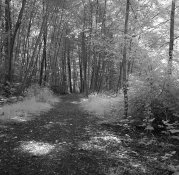
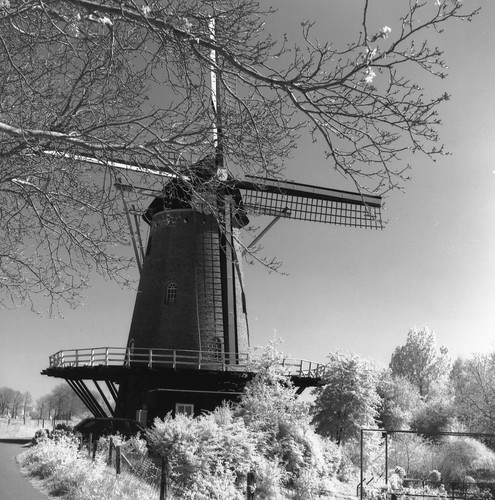
This was shot on Rollei IR 400 with an R72, metered to EI 12, and developed in HC110 dil B:
 

Attachments

  • forest01d.jpg
    forest01d.jpg
    420.9 KB · Views: 1,280
Rollei IR 400 is not grainy in my book. Not at all! I would purposefully use Rodinal on it just to get sharper grain. Efke IR 820C, on the other hand, is quite grainy.
 
The film is drying now, and the negatives look good. I only managed to get 2 shots due to bracketing (first time using this film), but looking at the negatives they look good. I was not really worried about grain considering this is 120 film, and from eyeballing the negative the grain looks pretty small. I will post the results as soon as this film dries and I can get it scanned.
 
Who ever took the included photo is to be congratulated! That is an excellent IR photo. As an IR worker. getting one like that is quite an accomplishment indeed. I have tried it for years and never had one that good. Good work!
Logan
 
Who ever took the included photo is to be congratulated! That is an excellent IR photo. As an IR worker. getting one like that is quite an accomplishment indeed. I have tried it for years and never had one that good. Good work!
Logan

I'm assuming you are referring to my photo above. If so, thank you.

You probably don't want to hear that that was from my very first experiment with IR sensitive film:wink:

I can only attribute this to three things:

1) Blind beginner's luck!;
2) All sorts of great information and references found by me through the assistance of many here on APUG; and
3) The inherent suitability of Mamiya TLRs for this sort of work.

Here is a more recent experiment - this time using the Ilford SFX near infrared film:
 

Attachments

  • 2010-03-03-19h-campbell.jpg
    2010-03-03-19h-campbell.jpg
    371.3 KB · Views: 838
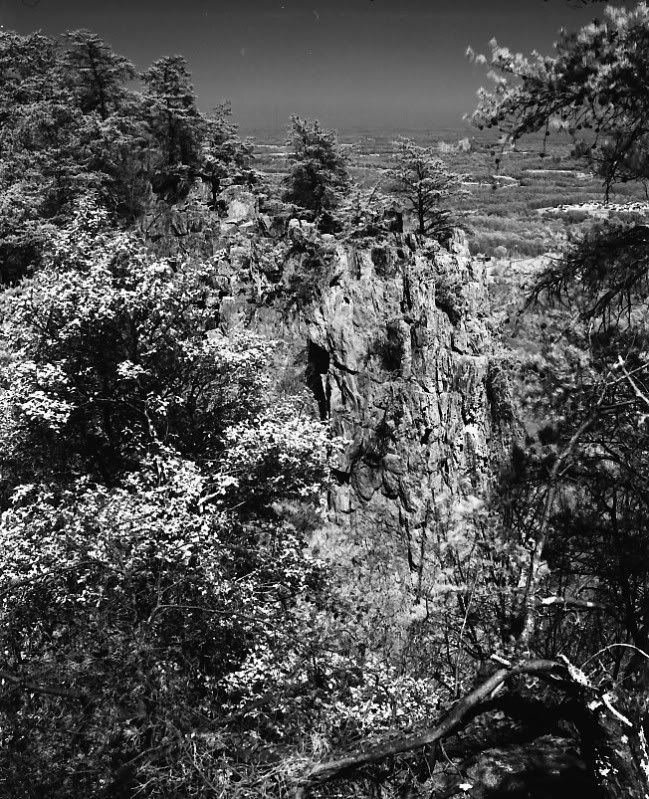
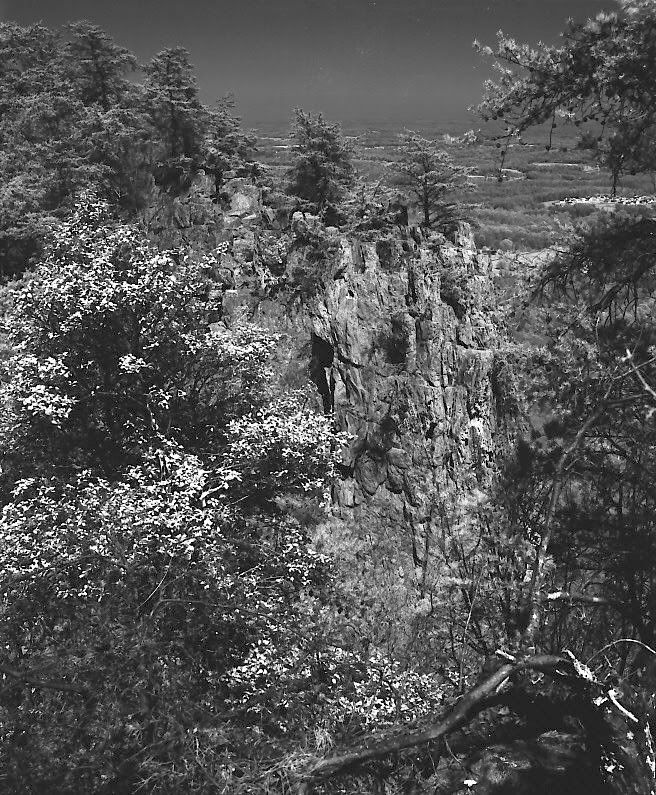
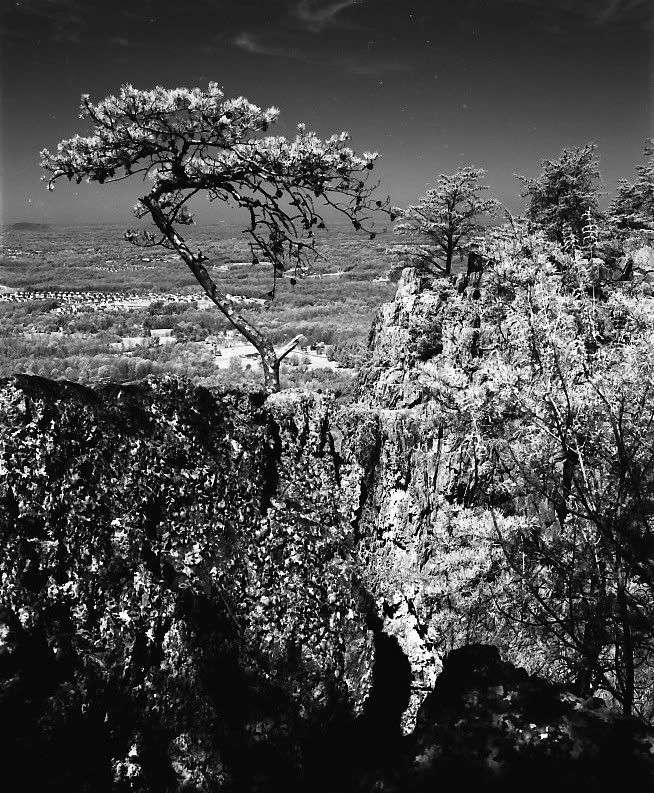
Ok here are the scans, straight from the scanner aside from rotating them.

IMG_0005.jpg


IMG_0004.jpg


IMG_0003.jpg


I would have liked more separation between the rocks and the trees, but overall I am pleased.
 
Rollei IR 400 is not grainy in my book. Not at all! I would purposefully use Rodinal on it just to get sharper grain. Efke IR 820C, on the other hand, is quite grainy.

This would be my experience also.
 
Great pics and at a welcome EI of 12( I had heard of as little as EI 3 being required) that which might just make handholding possible with a wide angle and on sunny days

pentaxuser
 
Great photo. How long did you process the negs in HC110, Dil B? Temp?
Which bracketed exposure gave the best negative? On, over or under?
Thanks.
 
Rollei IR 400 is not grainy in my book. Not at all! I would purposefully use Rodinal on it just to get sharper grain. Efke IR 820C, on the other hand, is quite grainy.

Acknowledge.

Rollei IR 820/400 is OK on E.I. 12 with Heliopan RG715 or Hoya R72 IR filter.

However the amount of 'wood' effect depends a lot of the amount of IR light in the atmosphere. So running on a little experience is the best way to shoot with results.

which might just make handholding possible with a wide angle and on sunny days

Yashica Mat 124-G TLR with Bay I Heliopan RG715nm filter. E.I. 12 handheld F=4,0 1/30S. Developer AM74/RHS.

3473622200_6f8029934e.jpg
 
Not to open another can of worms here, but my negs came out super contrasty and I'm wondering if it was just from being on top of a mountain where there is less smog/haze or if it was reduced agitation and developing in Rodinal? I normally use reduced agitation to smooth out the grain and pull a slight filter on my optical prints to tone it down a bit. Any suggestions on printing these bad boys?
 
Dead Link Removed

For some developing times.

Your negatives are over developed but the mentioned developing time you used for Rodinal is OK.

So the point will maybe the agitation: first minute continuous then every minute 1x.

Your gamma of the film is too high, indeed too contrastly. You can try farmer reducer on your negatives.

Maybe one thing you forgot: Always take a picture without filter (iso 400) where you can see afterwards if at least the film development was OK.

best regards,

Robert
 
I think the contrast may be due to my thermometer not being calibrated quite right, the chemistry may have been too hot, and the agitation probably had something to do with it as well. I will be shooting a lot more of this film in about a month so i will have plenty of opportunities to work everything out.
 
the chemistry may have been too hot
All times are given by 20,0 degrees C.

For Rodinal you should be in 18-20 degrees C to prevent excessive grain. Further you have to carefully compensate for each temperature deviation other then 20,0 degrees C according the temperature correction table. (Available on the ilford pages).
Agitation with Rodinal should be minimized also to keep grain under control and to have maximize advantage of the acutance for this developer.
More agitation mean in general more dense negatives. But higher temperature means quickly high dense negatives and over development.
 
I am doing a book project using Techpan and Rollie IR 400 in 120 with my Blad. I use Rodinal for the IR and dr5 for the Techpan, the attached shot is of a canyon on the Rollie, the light is hitting the middle, it is 2,500 feet deep, great film that IR400.
 
Hello everyone. I'm about to buy Rollei IR 400 soon. I'd like to try out IR shots. First of all, do I have to push two stops of overexposure/underexposure ISO for best 'wood' effect? Please guide. And usually what causes the 'too contrasty black/white' or 'less contrasty greyish/white'? Is it the developing time or agitation?

Thanks everyone!
 
Last edited by a moderator:
No push or pull needed for Wood. What you need is fresh spring foliage (or for you in Borneo, probably just about any kind of foliage) and the right filter (I use at least a deep red or rm72 but prefer a #87).

As for highlight differentiation, it all depends where you place your highlights. If you overexpose then they will clump up and tend to featureless white. If you underexpose the highlights and shadows will also not carry much detail.

Normally, with non IR film, this would be a trivial matter of determining the scene contrast and then exposing and developing your film accordingly (Zone system). But with IR film, there's a bit of guesswork involved (i.e. bracketing) to get the best possible exposure.
 
No push or pull needed for Wood. What you need is fresh spring foliage (or for you in Borneo, probably just about any kind of foliage) and the right filter (I use at least a deep red or rm72 but prefer a #87).

As for highlight differentiation, it all depends where you place your highlights. If you overexpose then they will clump up and tend to featureless white. If you underexpose the highlights and shadows will also not carry much detail.

Normally, with non IR film, this would be a trivial matter of determining the scene contrast and then exposing and developing your film accordingly (Zone system). But with IR film, there's a bit of guesswork involved (i.e. bracketing) to get the best possible exposure.

Thanks for the detailed info/explanation. I will try as soon as I get my IR films.

I'm new to this apug.org and a beginner in film as well. Looking forward to hearing good advises from all apug members.

Will get back to this thread once I get mine developed. :D
 
Photrio.com contains affiliate links to products. We may receive a commission for purchases made through these links.
To read our full affiliate disclosure statement please click Here.

PHOTRIO PARTNERS EQUALLY FUNDING OUR COMMUNITY:


Ilford ADOX Freestyle Photographic Stearman Press Weldon Color Lab Blue Moon Camera & Machine
Top Bottom