• Welcome to Photrio!
    Registration is fast and free. Join today to unlock search, see fewer ads, and access all forum features.
    Click here to sign up

Reticulation with Neopan 400

Amour - Paris

A
Amour - Paris

  • 0
  • 0
  • 24
Bend in the river

H
Bend in the river

  • 1
  • 0
  • 42

Recent Classifieds

Forum statistics

Threads
203,229
Messages
2,851,784
Members
101,737
Latest member
Altamira
Recent bookmarks
0

BetterSense

Member
Allowing Ads
Joined
Aug 16, 2008
Messages
3,151
Location
North Caroli
Format
35mm
I just developed all the film from my vacation, and sadly, all 4 rolls of 35m LegacyPro 400 that I shot suffer from some degree of what I'm going to call reticulation. It's a pattern of wrinkles or cracks in the emulsion. Other image characteristics like tonality and contrast are otherwise normal. I'm posting this so that others can help me figure out what caused it and avoid the problem themselves.

I have shot lots of Neopan 400 in medium format. When focusing through my high powered grain focuser, I noticed this kind of pattern in a few, but not most, rolls. Affected medium format rolls were developed in D76 1+1, and later, D23. But it didn't show up in the print at those enlargement sizes; it was just something I saw in the grain scope. I just filed it away as a curiosity, or a characteristic of Neopan 400 since I never saw such a thing with any other film I've developed including HP5, Fomapan, Arista Premium, TMY, TMX, D3200, Acros, and APX100. These 35mm films with the worst reticulation, though, show the pattern in a 5x7 print. The milder cases are not visible in a 5x7 print, but probably would be at 8x10. It completely destroys any smoothness of the tonality.


Here is a sample that I shot with my digicam through my grain scope.

reticulum.jpg


Here is a scan of a 5x7 print from the worst roll, first the full 35mm frame, then a close crop, scanned at 800dpi and given mild/typical USM

reticulationprint.jpg

reticuprint.jpg


The negatives were processed using the same basic process I have used for all roll film since I started several hundred rolls ago. In this case I did them 2 rolls at a time in a 500mL stainless tank using Rodinal 50:1, at 20C, for 8 minutes, with 3 inversions per minute. I use 3 tap water fills for stop. 2-bath Ilford Hypam 4+1 for fix. Slowly running tap water for 20 minutes rinse, then photoflo and air dry.

Although I control the developer temperature to +/- .2C with a 20C water bath throughout development, I stop and rinse with tap water at some other unmeasured, but nevertheless reasonable temperature. The fix is left at room temperature which is around 25C. My current theory is that the few degree temperature difference between my developer temperature and the slightly different stop, fix, and/or rinse temperature has caused this. I have never had it happen with any other film, so Neopan must be very sensitive to this. Temperature-wise, I was being pretty good this time. In the past, I have processed Tri-X at 20C, stopped using cold tap water, fixed using room temperature fix when 'room temperature' is up over 30C, and never had any problem. This film was processed with fairly reasonable temperature control in comparison.

The only other conclusion is that I have a bad batch of LegacyPro. In addition to the 4 rolls of LegacyPro 400 that I shot, I shot 1 roll of Tri-X and a roll of TMY and developed them together in a tank using the exact same method, only with HC110 instead of rodinal, and those negatives are perfect. Luckily, my favorite shot of the vacation was on the TMY. All the pictures of my sister's graduation, which were shot on the LegacyPro, are essentially ruined.
 
Last edited by a moderator:
I have been told that until the film is in the fixer it is sensitive to reticulation.

I do not allow any variation at all in temperature from the time it gets wet until it is fixed and have not had this problem with Neopan 400. What is your emulsion number on your Legacy Pro 400? If I have the same I can test it. I store jugs of water and my developer and other chemicals in a tub in the same spot in my house, so it is exactly the same temperature.

~Steve
 
So you think this is a temperature issue?

How do you find out the emulsion number? The film says 400-272 on the rebate. It was the bulk LegacyPro.
 
Considering all you write, I am beginning to wonder if this film has been mistreated before you got it. E.g. stored in the back of a hot car or something. According to all I read here on APUG, those few degrees difference in processing you mention, shouldn't be an issue at all.
 
I ordered the film directly from Freestyle about a month ago. It's been stored in my apartment since then. It did spend some time in camera bag in the trunk of my car as I drove for a couple days but it wasn't terribly hot weather IMO. And of course the Tmax, TriX, color negative and color transparency film I shot all turned out fine.

One thing's for sure, I'm really burned over trying to save money on film. I shot up my stash of expired TMY and purchased this LegacyPro thinking I had found a good, fine-grained and much cheaper replacement. I know that if I had bit the bullet and just bought more TMAX 400 I would have had no trouble at all. It would have cost me 8 dollars more for these 4 rolls, but my vacation pictures wouldn't be ruined. 8 dollars.
 
It's sensitive to reticulation until it's finished it's wash & dried, although a hardening fixer helps very significantly, but because modern films are pre-hardened they've largely gone out of use.

Reticulation is rarely that bad with most modern films, but small changes in temperature cause micro reticulation which is essentially grain clumping.

Ever step needs careful temperature control, even the washing.

Ian

I have been told that until the film is in the fixer it is sensitive to reticulation.
~Steve
 
This might be a bit off topic, but I've had a few problems with the Fuji Neopan 400/LegacyPro in Rodinal at 1:100 stand development. I've done quite a bit with other films, but this one seems to always come out with the development a bit uneven from one side to another. My technique is consistent and works well for other films. Maybe the Fuji stuff just doesn't like Rodinal? I, personally, have gone to just using HC-110 with my Fuji films, and Rodinal for the rest. Also, if you want cheap film, try out the Arista films, either .EDU Ultra (Foma) or Premium (Kodak), they are both good. The Foma stuff took a bit to get used to, but now I really like it.

As for the reticulation, I've never had a film do that with Rodinal, or any other developer for that matter. I'm relatively careless with my temps when doing stand development. When doing normal developing, I still only measure the temp of the developer, and never worry about the water stop bath or fixer.
 
I'm quite sloppy with temperature differences between baths. The only film that ever gave reticulation as a result of that was Neopan 400 (in 135).

I am under the impression that this film, together with some older-type emulsions and Legacy Pro 400 of course, is less mechanically robust than Kodak, Ilford and the other Fuji stuff (well, Acros).

I can't say for you of course, but I would guess temperature-shock did it. I don't go with the 'bad-batch hypothesis'.

BTW, *my* reticulation of Neopan 400 was fine in print, i.e. invisible at normal viewing distances.
 
I'm quite sloppy with temperature differences between baths. The only film that ever gave reticulation as a result of that was Neopan 400 (in 135).
Thanks for posting that because it matches my experience. I will shoot a roll tomorrow and process it with careful temperature control. Even if the reticulation goes away with careful processing, I'm not sure I can ever have confidence that it won't happen in the future with Neopan when other films NEVER do it.

BTW, *my* reticulation of Neopan 400 was fine in print, i.e. invisible at normal viewing distances.

How did you know you had it? Grain scope? Did it look like mine?

Also, if you want cheap film, try out the Arista films, either .EDU Ultra (Foma) or Premium (Kodak), they are both good.
I know, but in 35mm I'm a grainophobe and I find that Neopan can have finer grain than anything this side of t-grain films...which lets me get away with Rodinal. Tri-X is too grainy in Rodinal for me, at least in 35mm.
 
I have been told that Neopan 400 is prone to reticulation with temperature variation during the various processing stages. I've seen some extreme examples where people have done it deliberately. It seems odd considering that most modern films don't do it.
 
I have experimented a lot with different films trying to get this effect and found Neopan 400 was the easiest to reticulate and with controlled temperature variations in the wash (after fix) you can get the same nice reticulation patterns each time.
there are people who say the film can only be reticulated pre fixing. THIS IS NOT TRUE.
below is a link to one image i have purposefully reticulated

http://www.flickr.com/photos/29279649@N02/3598396442/sizes/l/
 
I just had that same reticulation on my neopan 400 recently. I put the film in a running wash after the process and left the room. When I got back the wash temp was about 50F. I turned the hot water up high to warm the tank quickly and the phone rang. I got back and it was 110F in the tank. All the neopan 400 was reticulated. On the bright side it looks kind of interesting and isn't real noticeable till 7x7 inches in print.
In years past I have tried purposely to reticulate some films and have never been able to get it. the Fuji 400 is the first for me.
Dennis
 
How did you know you had it? Grain scope? Did it look like mine?

I made a 12x16"/30x40cm^2 print. The print is wonderful, and at first I didn't notice the reticulation, as neither did my girlfriend, who I (proudly :smile:) showed it.

But then when I looked closer and more carefully I saw a strange worm-like structure, sort of like grain, but then bigger and of a different shape. Oddly, I never noticed the reticulation while focusing the enlarger.

And yes, my reticulation looks exactly like yours. Below is a scan of a part of the print (still don't have an A3-sized scanner :mad:). The reticulation is obvious in the eye, and elsewhere.
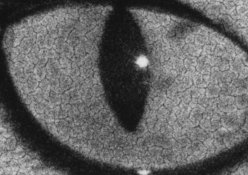

I'm pretty sure this film was temperature-shocked by clumsy me.
 

Attachments

  • eye_crop.jpg
    eye_crop.jpg
    106.2 KB · Views: 243
  • guus_crop.jpg
    guus_crop.jpg
    85 KB · Views: 201
I've shot about 500' of Legacy Pro with NO reticulation issues. If you are moving from 68F fixer/hypoclear to 40F tap, you're going to shock the emulsion. I have an inline water thermometer and I double check the temp at the washer. Here in MN the tap can be quite cold. And like George Costanza found out on Seinfeld... COLD water causes shrinkage.:rolleyes:
 
Last edited by a moderator:
I have a fridge full of Legacy Pro, I havent run into that problem before, but I will make sure that I dont stray too far in processing!
 
Never had this with all the Neo I've shot unintentionally, but did manage to 'shock' it doing stand development in ice water with Rodinal. My water temps are pretty warm most of the time, if I get a wash water of 75 I'm happy. Don't give up on this film, its very good and as you found out has a few tricks up it sleeve. As well, 271 is a fairly old emulsion number.
 
I'm still not sure if it's worth the extra effort and stress when there are less finicky films out there. I'm not sure I can be comfortable using a film that explodes if the temperatures change by a couple degrees. Even fomapan, with scratches and pinholes seems 'safer'. I mean I used to process tri-x on the road using hotel tap water that I measured the temperature of with my hand and it never let me down.

I guess I will shoot a couple more rolls and control temperature very carefully and if it straightens out keep using it, at least until it's gone. It is a very good-looking film, when it's not reticulated.
 
I have experimented a lot with different films trying to get this effect and found Neopan 400 was the easiest to reticulate and with controlled temperature variations in the wash (after fix) you can get the same nice reticulation patterns each time.
there are people who say the film can only be reticulated pre fixing. THIS IS NOT TRUE.
below is a link to one image i have purposefully reticulated

http://www.flickr.com/photos/29279649@N02/3598396442/sizes/l/

Please, if you would, describe to me, via pm if you prefer, what processes you use in order to cause the reticulation. Rest assured I won't be doing it on purpose. Your experience could be important to me as I use up the rest of this 100' roll and decide to keep using the film or not.
 
Please don't give up on this film, it's too nice! At least I love it.

Of the say 100 Neopan 400 films I've shot, only one turned out reticulated.

Avoid temperature changes over 5 degrees Celsius (10 Fahrenheit) and you'll be fine.
 
So you think this is a temperature issue?

How do you find out the emulsion number? The film says 400-272 on the rebate. It was the bulk LegacyPro.
***********
Hi Better,
I suspect a temperature issue. My suspect would be the wash. Back in college, if we were in the darkroom early, we were getting reticulated film.
Finally tracked it down. The darkroom was in the basement of a women's dorm. When the gals upstairs were using the showers, the temp of the wash water in the basement fluctuated rather rapidly--not a wide range, but rapidly.
 
Please, if you would, describe to me, via pm if you prefer, what processes you use in order to cause the reticulation. Rest assured I won't be doing it on purpose. Your experience could be important to me as I use up the rest of this 100' roll and decide to keep using the film or not.

No problem I Developed, Stopped and fixed all at the normal temperatures. Then in the wash I let the water temp climb to 80-90 degrees Celsius. Let it wash in this water for 1 minute at 80-90 degrees C then had the film instantly placed into water which was 3 degrees Celsius for one minute. I then repeated this process 3 times and presto the reticulation you see in the sample image i attached. the same result happens every time. I should also note that with different times between fluctuation of temperature and also different temperature ranges you get different degrees of reticulation.though the temps and times above gave me what I like the most. you can with 35mm enlarged to 24x36inches get an almost mosaic tile effect.Bravo Fuji for making such an awesome product!!! Remember folks if this film is processed normal and the wash is controlled the film is smooth flawless and BRILLIANT!!!
 
Honestly, I don't think it is temperature. The best way I found to induce reticulation is to use a very alkali developer, like Rodinal, and then plunge it into a strong stop. I believe the high pH solution swells the emulsion. You could try using 1:100 which should reduce the pH significantly or, better yet, use a different developer. The 120 is coated onto a different substrate and, perhaps, the emulsion is different also.

BTW - Stephen, I really like the effect you managed with the temperature shock. I've never tried that, but I may have to!
 
I have probably developed 200 Neopan rolls in the last few years, both 120 and 35mm and never had such an issue. You you have to be real careful with tap water in the winter as it can be darned cold and easily 10 degs C colder than room temp. Thats not a small change.

You don't have to be ultra careful with Neopan, just ensure that all fluids that go in the tank are within a few degrees as per normal precautionary practice.
 
Photrio.com contains affiliate links to products. We may receive a commission for purchases made through these links.
To read our full affiliate disclosure statement please click Here.

PHOTRIO PARTNERS EQUALLY FUNDING OUR COMMUNITY:


Ilford ADOX Freestyle Photographic Stearman Press Weldon Color Lab Blue Moon Camera & Machine
Top Bottom