
I just developed all the film from my vacation, and sadly, all 4 rolls of 35m LegacyPro 400 that I shot suffer from some degree of what I'm going to call reticulation. It's a pattern of wrinkles or cracks in the emulsion. Other image characteristics like tonality and contrast are otherwise normal. I'm posting this so that others can help me figure out what caused it and avoid the problem themselves.
I have shot lots of Neopan 400 in medium format. When focusing through my high powered grain focuser, I noticed this kind of pattern in a few, but not most, rolls. Affected medium format rolls were developed in D76 1+1, and later, D23. But it didn't show up in the print at those enlargement sizes; it was just something I saw in the grain scope. I just filed it away as a curiosity, or a characteristic of Neopan 400 since I never saw such a thing with any other film I've developed including HP5, Fomapan, Arista Premium, TMY, TMX, D3200, Acros, and APX100. These 35mm films with the worst reticulation, though, show the pattern in a 5x7 print. The milder cases are not visible in a 5x7 print, but probably would be at 8x10. It completely destroys any smoothness of the tonality.
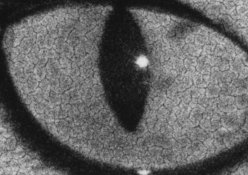
Here is a sample that I shot with my digicam through my grain scope.

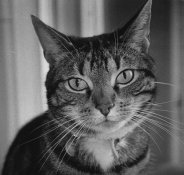
Here is a scan of a 5x7 print from the worst roll, first the full 35mm frame, then a close crop, scanned at 800dpi and given mild/typical USM


The negatives were processed using the same basic process I have used for all roll film since I started several hundred rolls ago. In this case I did them 2 rolls at a time in a 500mL stainless tank using Rodinal 50:1, at 20C, for 8 minutes, with 3 inversions per minute. I use 3 tap water fills for stop. 2-bath Ilford Hypam 4+1 for fix. Slowly running tap water for 20 minutes rinse, then photoflo and air dry.
Although I control the developer temperature to +/- .2C with a 20C water bath throughout development, I stop and rinse with tap water at some other unmeasured, but nevertheless reasonable temperature. The fix is left at room temperature which is around 25C. My current theory is that the few degree temperature difference between my developer temperature and the slightly different stop, fix, and/or rinse temperature has caused this. I have never had it happen with any other film, so Neopan must be very sensitive to this. Temperature-wise, I was being pretty good this time. In the past, I have processed Tri-X at 20C, stopped using cold tap water, fixed using room temperature fix when 'room temperature' is up over 30C, and never had any problem. This film was processed with fairly reasonable temperature control in comparison.
The only other conclusion is that I have a bad batch of LegacyPro. In addition to the 4 rolls of LegacyPro 400 that I shot, I shot 1 roll of Tri-X and a roll of TMY and developed them together in a tank using the exact same method, only with HC110 instead of rodinal, and those negatives are perfect. Luckily, my favorite shot of the vacation was on the TMY. All the pictures of my sister's graduation, which were shot on the LegacyPro, are essentially ruined.
I have shot lots of Neopan 400 in medium format. When focusing through my high powered grain focuser, I noticed this kind of pattern in a few, but not most, rolls. Affected medium format rolls were developed in D76 1+1, and later, D23. But it didn't show up in the print at those enlargement sizes; it was just something I saw in the grain scope. I just filed it away as a curiosity, or a characteristic of Neopan 400 since I never saw such a thing with any other film I've developed including HP5, Fomapan, Arista Premium, TMY, TMX, D3200, Acros, and APX100. These 35mm films with the worst reticulation, though, show the pattern in a 5x7 print. The milder cases are not visible in a 5x7 print, but probably would be at 8x10. It completely destroys any smoothness of the tonality.
Here is a sample that I shot with my digicam through my grain scope.
Here is a scan of a 5x7 print from the worst roll, first the full 35mm frame, then a close crop, scanned at 800dpi and given mild/typical USM
The negatives were processed using the same basic process I have used for all roll film since I started several hundred rolls ago. In this case I did them 2 rolls at a time in a 500mL stainless tank using Rodinal 50:1, at 20C, for 8 minutes, with 3 inversions per minute. I use 3 tap water fills for stop. 2-bath Ilford Hypam 4+1 for fix. Slowly running tap water for 20 minutes rinse, then photoflo and air dry.
Although I control the developer temperature to +/- .2C with a 20C water bath throughout development, I stop and rinse with tap water at some other unmeasured, but nevertheless reasonable temperature. The fix is left at room temperature which is around 25C. My current theory is that the few degree temperature difference between my developer temperature and the slightly different stop, fix, and/or rinse temperature has caused this. I have never had it happen with any other film, so Neopan must be very sensitive to this. Temperature-wise, I was being pretty good this time. In the past, I have processed Tri-X at 20C, stopped using cold tap water, fixed using room temperature fix when 'room temperature' is up over 30C, and never had any problem. This film was processed with fairly reasonable temperature control in comparison.
The only other conclusion is that I have a bad batch of LegacyPro. In addition to the 4 rolls of LegacyPro 400 that I shot, I shot 1 roll of Tri-X and a roll of TMY and developed them together in a tank using the exact same method, only with HC110 instead of rodinal, and those negatives are perfect. Luckily, my favorite shot of the vacation was on the TMY. All the pictures of my sister's graduation, which were shot on the LegacyPro, are essentially ruined.
Last edited by a moderator:


 ) showed it.
 ). The reticulation is obvious in the eye, and elsewhere.