• Welcome to Photrio!
    Registration is fast and free. Join today to unlock search, see fewer ads, and access all forum features.
    Click here to sign up

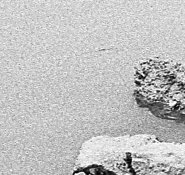
Reticulation with Neopan 400

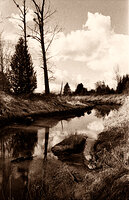
Bend in the river

H
Bend in the river

  • 1
  • 0
  • 28
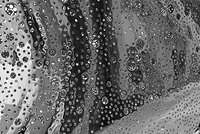
Wheels within Wheels

D
Wheels within Wheels

  • 1
  • 0
  • 32

Recent Classifieds

Forum statistics

Threads
203,227
Messages
2,851,755
Members
101,736
Latest member
MathieuR
Recent bookmarks
0
Honestly, I don't think it is temperature. The best way I found to induce reticulation is to use a very alkali developer, like Rodinal, and then plunge it into a strong stop. I believe the high pH solution swells the emulsion. You could try using 1:100 which should reduce the pH significantly or, better yet, use a different developer. The 120 is coated onto a different substrate and, perhaps, the emulsion is different also.

It is temperature related, but a higher alkalinity developer will soften & swell the emulsion more so acerbate the potential for problems. The stop bath and the fixer won't re-harden the emulsion but as long as they are at the same temperature as the developer won't cause reticulation regardless of their acidity.

I've used far softer emulsions like EFKE KB & PL25 in Rodinal at 3+100 with no reticulation using a standard Acetic acid stop bath and Hypam, and the Neopan 400 is better pre-hardened.

Ian
 
I have probably developed 200 Neopan rolls in the last few years, both 120 and 35mm and never had such an issue. You you have to be real careful with tap water in the winter as it can be darned cold and easily 10 degs C colder than room temp. Thats not a small change.

Picking up your point about tap water.

Often tap water can vary in temperature, so what you check & think is fine can be the water already inside the pipework in a building and when the cold water from outside come through the temperature can drop very quickly as Tom says by 10°C isn't uncommon and it could be more.

Ian
 
At my lab I have specially designed machines which control the water temperature via the flow rate of hot and cold. These water mixes ensure such fluctuations never happen. These devices are dime a dozen on ebay or only cost a few hundred new. Also in the event something horrific is happening with the water supply and it can not keep the temperature stable you can set it to either sound an alarm to get your attention or set it to stop supplying water (or both). You can make their tolerances to your desire. They really do prevent any temperature accidents occurring so if you do have a problem with water supply temp then perhaps this is a good idea?
 
Nice to have controllable options! Interesting reading. I might get some of the 400 just to try this. Thanks for the info, Stephen!

you can with 35mm enlarged to 24x36inches get an almost mosaic tile effect.Bravo Fuji for making such an awesome product!!! Remember folks if this film is processed normal and the wash is controlled the film is smooth flawless and BRILLIANT!!!
 
They really do prevent any temperature accidents occurring so if you do have a problem with water supply temp then perhaps this is a good idea?

Indeed, I was thinking of purchasing or making such a temperature controller some weeks ago, but I never got around to it. I think I will bring the project back to the front burner. Last I checked the ones on eBay were several hundred dollars.
 
I've had trouble with heavy reticulation once whilst making some copy negatives using old ORWO ortho film. I found the culprit to be the nonhardening alkaline fixer I was using, and the cold wash water that compounded the problem.
Never had trouble with 35mm film though, as long as I keep the temperatures of the solutions constant.
Nikola
 
(there was a url link here which no longer exists). This is Fuji Neopan Presto 400 135.

I developed in Super-Prodol at 24c
Stopped with tap water
Fixed for 7 minutes (not sure of the fix temp)
Washed in warm water for 1 minute
QuickWash (agitated) for 1 minute (cold)
Then washed/soaked in warm water for 5 minutes

My film came out exactly like the original poster's did. Attached is a 100% crop of a 3200dpi scan. The pattern is almost identical to the OP's samples.
 

Attachments

  • water.jpg
    water.jpg
    270.7 KB · Views: 130
As mentioned in the other thread on this matter, all films within the Presto and Neopan lines are fairly hardy emulsions. I don't buy it one bit that they're overly sensitive to reticulation. However I could buy that a few specific individuals are doing something procedurally wrong or over-thinking themselves into finding problems with the film.
 
As mentioned in the other thread on this matter, all films within the Presto and Neopan lines are fairly hardy emulsions. I don't buy it one bit that they're overly sensitive to reticulation. However I could buy that a few specific individuals are doing something procedurally wrong or over-thinking themselves into finding problems with the film.

Well I for one know if you take the emulsion way way way out of its tolerances it does nice things with repeatable results, the other emulsions I tested also did interesting things but not with the same repeatability and control. I must say i dont see how shifts of a few degrees can be doing anything radical like the sames shown here but YAY the world works in mysterious ways. the very sudden temperature fluctuations I put the film through are always in excess of 50 degrees celcius.
 
I just developed two rolls of this film this morning. Cold (or coolish) solution temperatures the whole way through, and the problem disappeared.
 
I just had exactly the same thing and I was using Rodinal 1:25 at 68 deg for my Legacy (Neopan 400)....

crop.jpg
 
Did you control your dev, fix, and wash temperatures at exactly 68F? For a couple rolls now I've controlled the temperature to +-1 degree C (which is really hard for me) and haven't had any reticulation, but if you report that you got reticulation even controlling the temperature, I'm going to throw the rest of mine away...or switch developers.
 
My guess, FWIW, from many, many years of film processing times, this is a processing temperature issue. I have tried in some cases where I particularly wanted this effect and couldn't and didn't get it. I don't know what temp differential causes this effect, but am convinced the development God(s) select some sessions for reticulation and these it is.
Logan
 
I shoot NEOPAN for most of my shooting. I develop film every Saturday and Neopan has never failed me to produce a good image... If I did my job with composition, exposing and processing the film correctly. :whistling:
 
I have a fridge full of Legacy Pro, I havent run into that problem before, but I will make sure that I dont stray too far in processing!

Well, I moved to a new state, and a new dark room- and so far about 40 rolls of the legacy pro that I had in my fridge at that time fell victim to reticulation. Going from 68deg F to 98deg F because the cold water tap actually was connected to the heater that was set for 98deg F and not 68.....proceed with the self kicking ASAP
 
Well, I moved to a new state, and a new dark room- and so far about 40 rolls of the legacy pro that I had in my fridge at that time fell victim to reticulation. Going from 68deg F to 98deg F because the cold water tap actually was connected to the heater that was set for 98deg F and not 68.....proceed with the self kicking ASAP

Tell Ron, PE, he insisted it couldn't happen, Tmax 400 does the same although not as badly.

Ian
 
I've had Neopan 400 reticulate, too. It seems to be quite prone to it, you have to be very careful with temperatures in every process step, including drying. For me, a 6x6 frame souped in XTOL and enlarged to 24x24 cm looked more like a 35 mm frame souped in Rodinal and cropped to square because of increased graininess. I've never had any reticulation problems with any other film before.

So, it's a great film (which film isn't, actually?), but be extra careful. I'm surprised how Fuji hasn't made it better. There are no problems reported with Fuji's other films.
 
Tell Ron, PE, he insisted it couldn't happen, Tmax 400 does the same although not as badly.

Ian

Ian;

I have never commented on Neopan at all. I have not commented on it in this thread or anywhere regarding the impossibility of reticulation. As has been noted on APUG previously, it is much more difficult to get Kodak films to reticulate. You seem to indicate this yourself. Some people have to use ice cubes and very hot water to get reticulation to take place at all. Moderate changes in temperature should not affect modern films. The evidence for this is the processing instructions for color films which allow a large temperature range in the tail end, along with high temperatures.

However, just because a company can make a hard film does not mean that they do make one particular film hard enough.

Kodak published a book called Creative Darkroom Techniques in 1973 which describes methods for virtually all films, color and B&W, but is just before the introduction of the new hardener. After the introduction, reticulation became very much more difficult, but not impossible.

I have never stated it was impossible. Under most conditions, it is quite unlikely though. At least, with the Kodak films I know and work with.

PE
 
I find Neopan 400 to be one of the best for obtaining reticulation, with Efke/Adox 25, 50, and 100 up there along with it. Most of the others must be battered all to hell to get them to reticulate. So, I do not find it odd that this happened with Neopan 400 when using the same practices employed to develop other emulsions without noticeable reticulation.

I have not found a decent way to control the temperature of my wash water yet, but I do always use a time/temperature chart and chemicals at ambient temperature, rather than cooling them below it and expecting them to stay there. (Heating is a different story. You can always heat tap water, but it is difficult to cool it.) I usually do my processing from 21 to 25 C here in L.A., which is within the listed range on the Ilford time/temperature chart that I use.
 
Photrio.com contains affiliate links to products. We may receive a commission for purchases made through these links.
To read our full affiliate disclosure statement please click Here.

PHOTRIO PARTNERS EQUALLY FUNDING OUR COMMUNITY:


Ilford ADOX Freestyle Photographic Stearman Press Weldon Color Lab Blue Moon Camera & Machine
Top Bottom