

• Welcome to Photrio!
    Registration is fast and free. Join today to unlock search, see fewer ads, and access all forum features.
    Click here to sign up

Re-coating half silver mirrors for viewfinders?

Beach walkers

A
Beach walkers

  • 1
  • 0
  • 51
Romy

A
Romy

  • 3
  • 1
  • 57

Forum statistics

Threads
204,412
Messages
2,868,168
Members
102,255
Latest member
brianalog
Recent bookmarks
0

RogerHyam

Subscriber
Joined
Oct 7, 2020
Messages
142
Location
Edinburgh, Scotland
Format
4x5 Format
I bought a Zeiss Super Ikonta 531/2 from a bric-a-brac stall at the weekend. I was looking at it for 20 minutes till it came on to rain and the family wanted to get a coffee and pushed me over the line to spend £50 on it. (That's 67.02 of your US dollars).

It's not in "bad" condition but not "good" either.
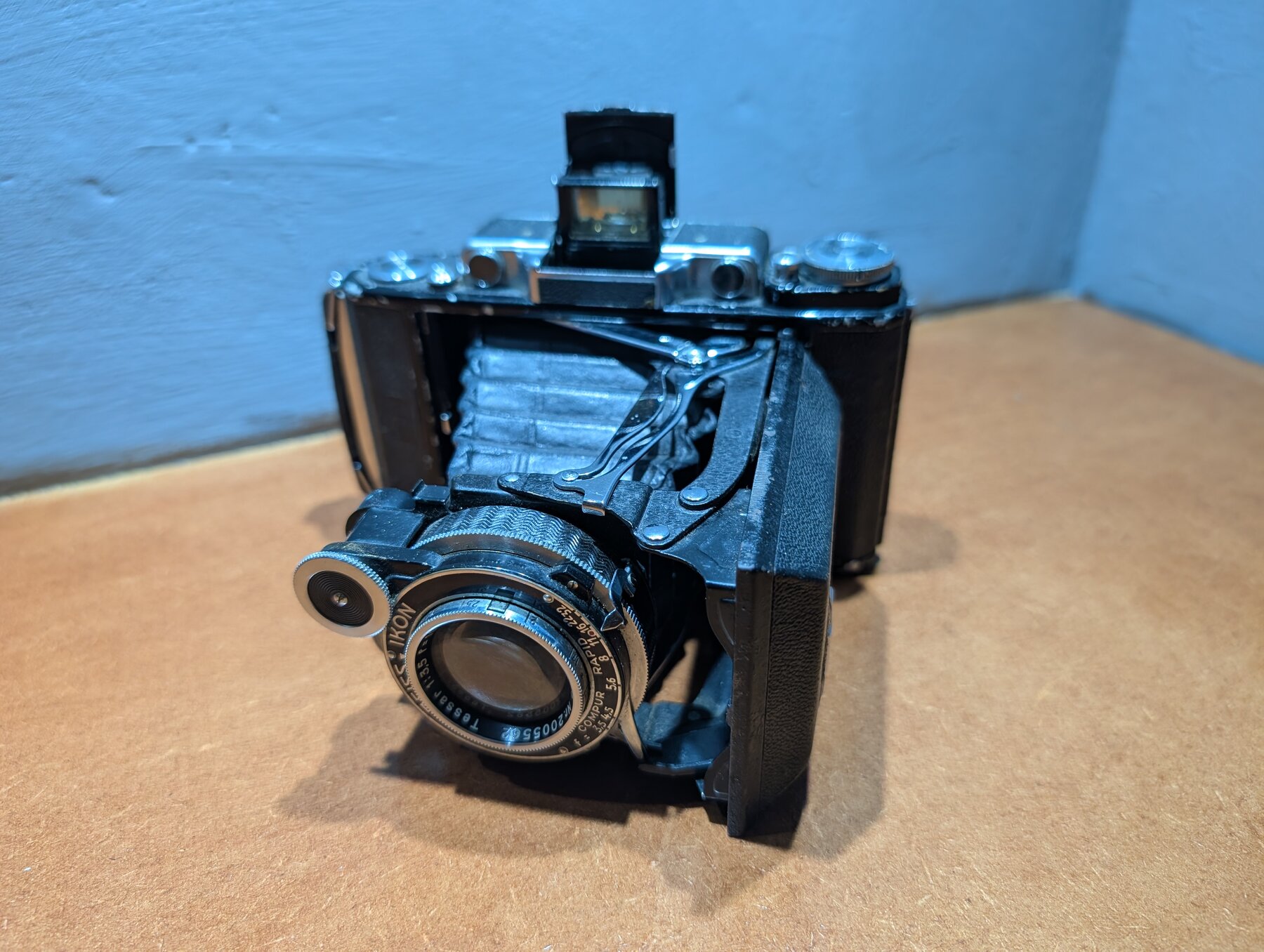
PXL_20260607_193209998.jpg


The lens had a little fungus and haze but I've cleaned that up with some hydrogen peroxide gel. (I feel safe doing this on non-coated lenses). Shutter is fine but sticks on B even after flushing with lighter fluid. I can live with that.
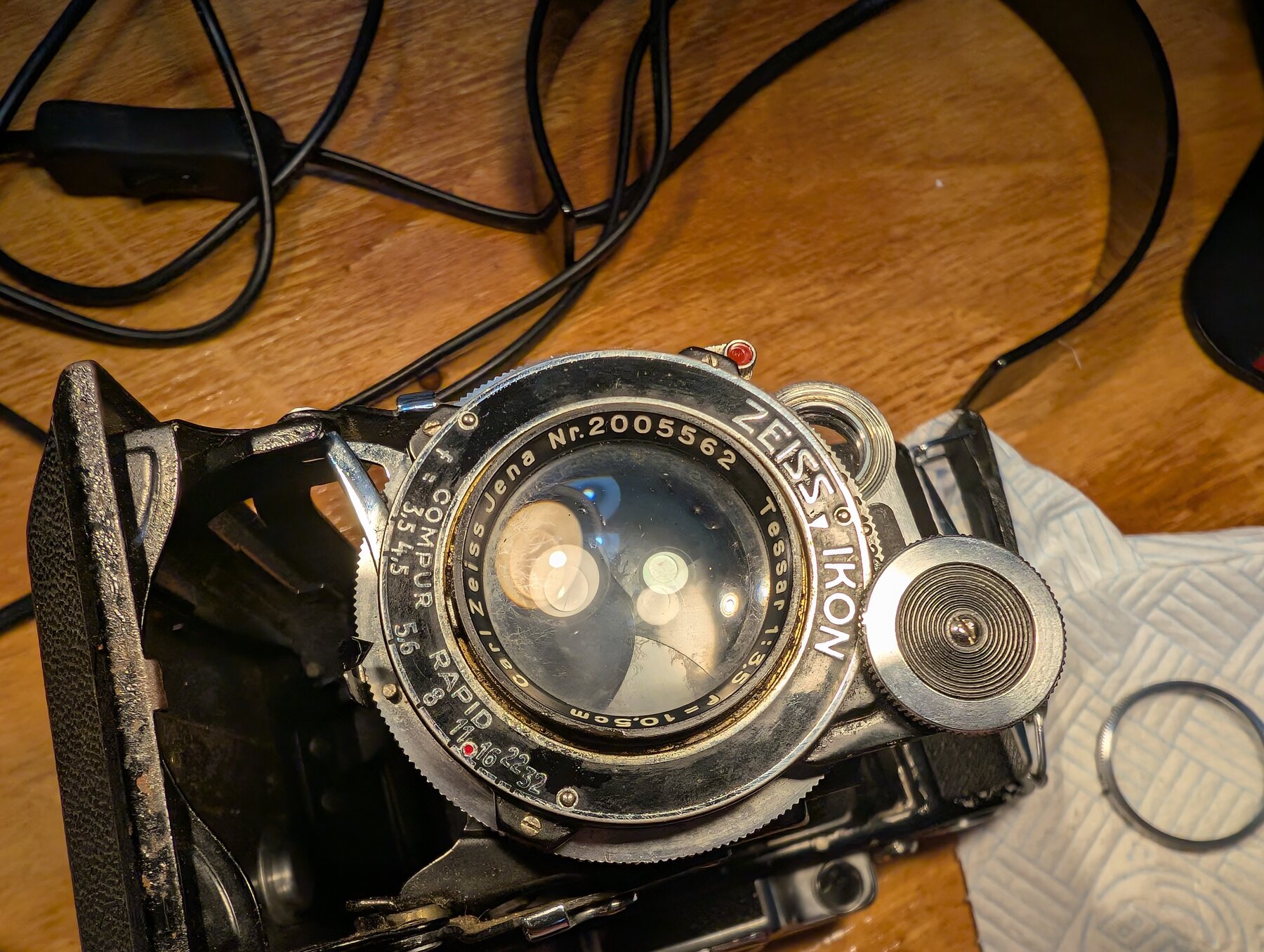
PXL_20260608_205611882.jpg


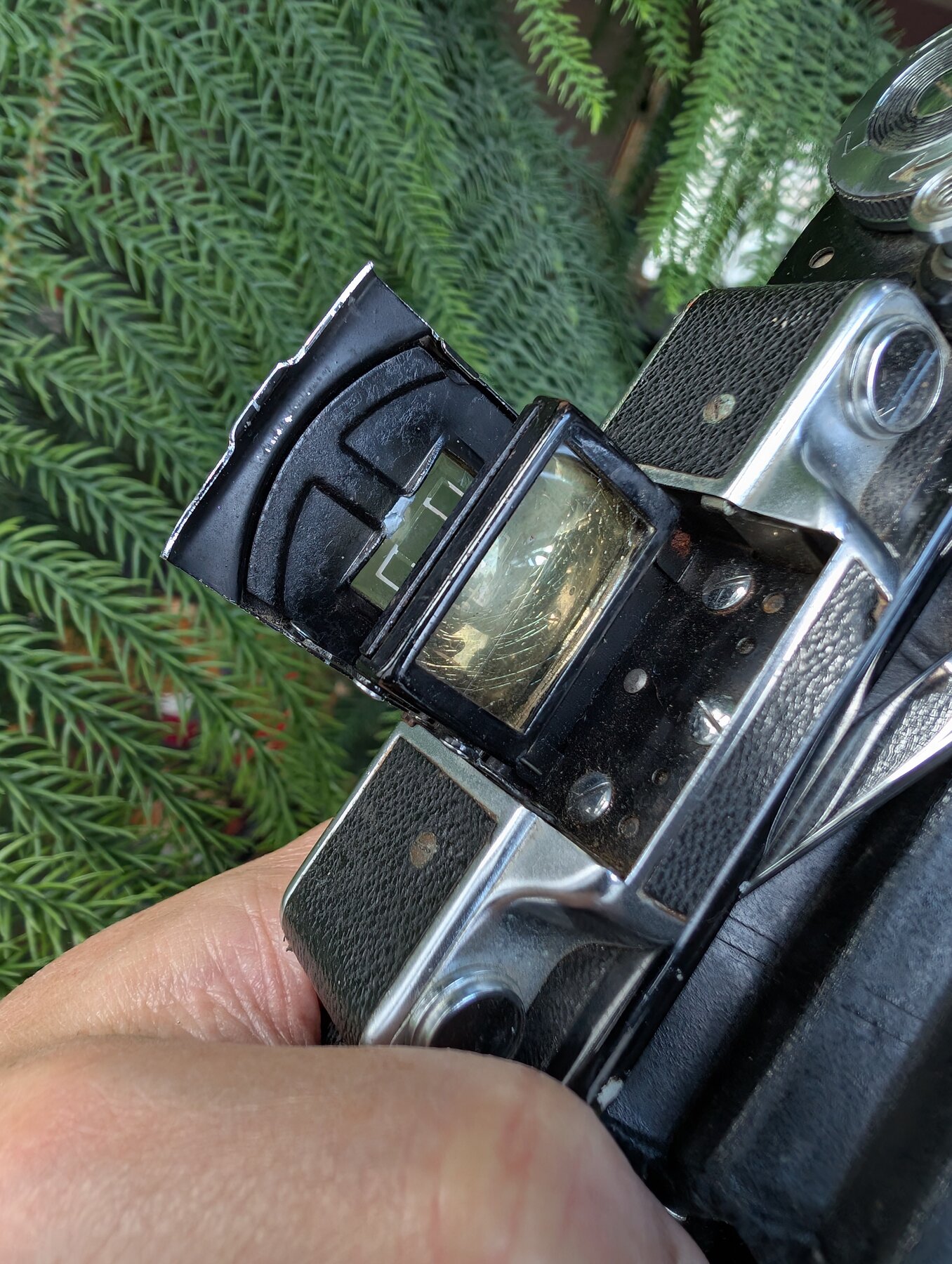
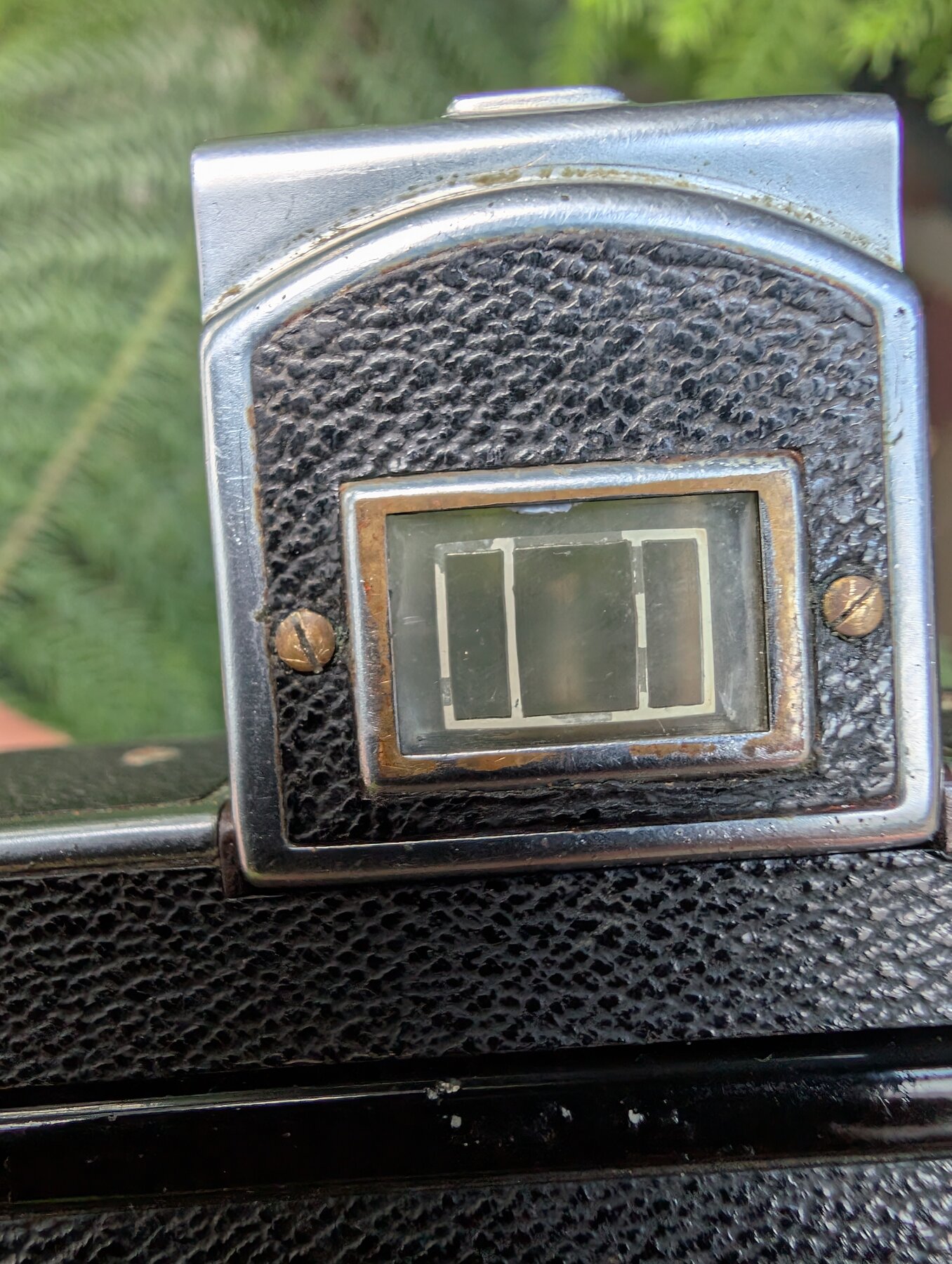
The main issue is with the viewfinder. The original is a bright line finder with half silvered mirror at the front and white lines at the back that are reflected in it - apparently appearing at infinity. Alas the half silvering was very distressed and cement in the front element had discoloured. The 90 year old plastic the white lines were printed on has aged to the point it is no longer transparent - more translucent! Basically it was a viewfinder in name only.
PXL_20260607_185718954.jpg
PXL_20260607_185734569.jpg


I've de-silvered the mirror with permanganate and removed the balsam between the elements along with the plastic frame. The viewfinder is now totally clear but I've added some black tape to approximate the frame.

Finally my question! Does anyone have experience of re-coating half silvered mirrors? I've never done the chemical silvering process but have watched videos and read accounts. I presume it could be done just by removing the element early to get a half silvering?

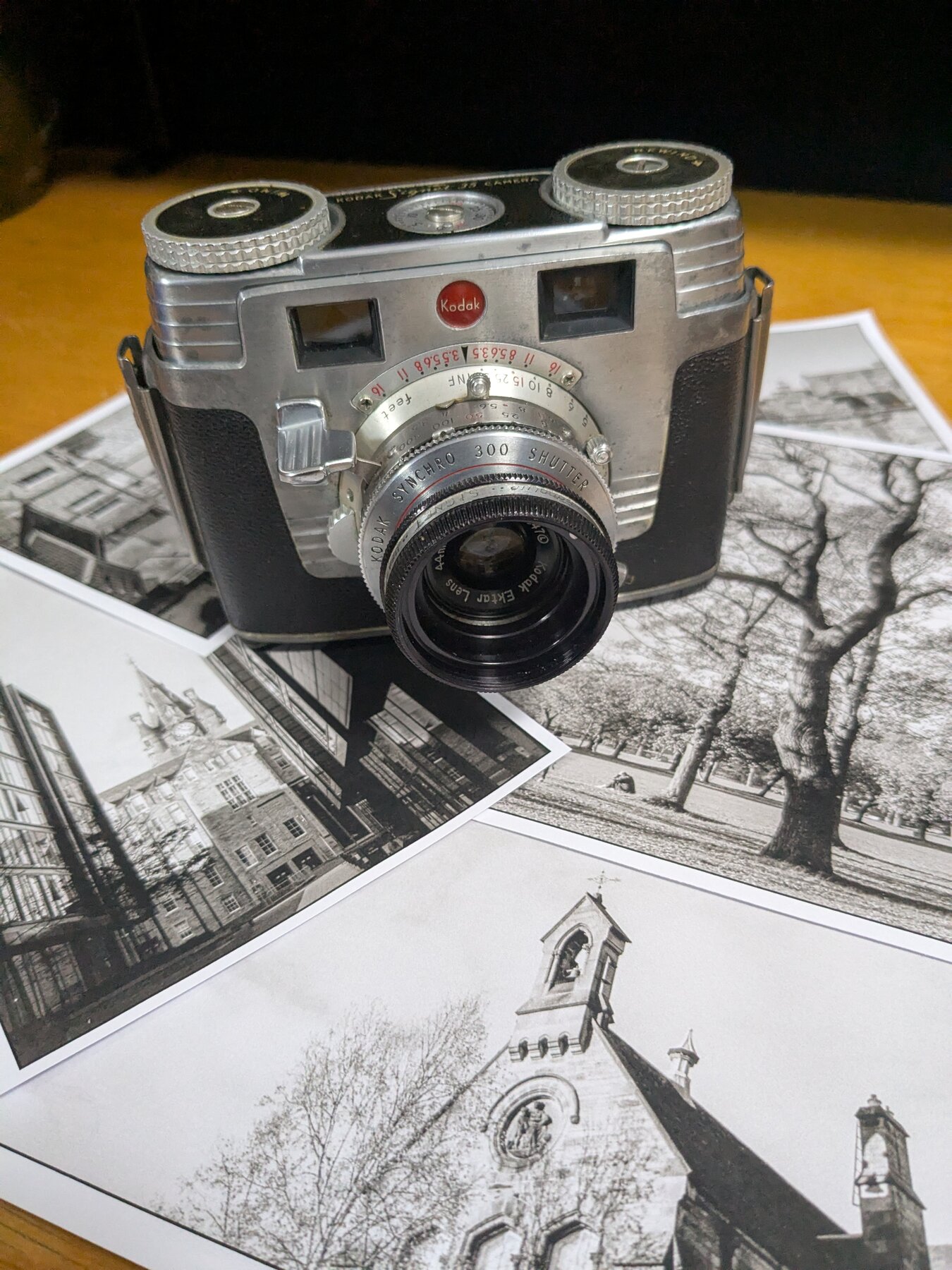
I also have a Kodak Signet 35 that is working perfectly except the half silvered mirror in the range finder had degraded.
PXL_20251023_105154294.jpg


Any thoughts / suggestions / experiences would be appreciated.
 
How did some vacuum tubes like projector lamps get silvered?

I remember Tollen's reagent from chemistry that would yield a silver mirror from aldehydes. Not permanent. Modern is some sort of metal vapor applied in a vacuum. IIRC

Oakley sunglasses?
 
I did do a tiny bit of reading around this a while back on, unless you are extremely committed, financially and with space for gear, it is extremely non practical. The main method seems to be vapour deposition, and apparently most modern mirrors are aluminium rather than silver (though /maybe/ it's easier with silver?). A lot of the chemistry involved seemed pretty unpleasant, and you need vacuums, and heat.
It seems like at one point it would have been easy to have found small'ish companies that could do this for you (in the UK), but I think that is long in the past now. (similar to how people talked of having lenses recoated, which I doubt is super easy to do now unless you have an inside contact in a related industry).
 
I simply bought a parts camera which happened to have a good viewfinder and just swapped it over. The plastic with frame lines wasn't so good though, so I looked around the house and found a piece of thin clear plastic and then drew lines on it, using a ruler as a straight edge, with a white oil based Sharpie pen with 0.5mm tip.

To explain the method I used to draw the lines so they were even and without runs or any blobs of paint, I drew the lines 4" long, intersecting to achieve the required spacing and shape of the original bright lines. When the paint was nearly dry, I carefully cut out the piece with the intersecting lines to the right size, and cleaned up the ends of the lines that were not needed, with a tooth pick soaked in turpentine. Done carefully, this method works well but may take a few practice attempts. I made one for my 531/2, and one for my 530/15 ... nice and clear now. The plastic sheet if I remember was food grade packing, without scuff marks or scratches, it's very transparent.
 
Mirrors like front-surface mirrors for telescopes, are coated by deposition in a vacuum. Typically aluminum is used rather than silver, it's more durable. It's not chemical, but you have to pull a pretty strong vacuum and heat aluminum wire up to sputter it onto the mirror. I think it's somewhat impractical for an amateur use, and I also think controlling the process to get a partially reflective coating would be difficult at the amateur level.

The Tollens' chemical process that mshchem mentioned might be in principle possible for a very dedicated person, but I think you might have to overcoat the silver to keep it from tarnishing, and that seems like a high bar to jump.
https://en.wikipedia.org/wiki/Silvering
https://en.wikipedia.org/wiki/Tollens'_reagent

It is possible that this viewfinder would work with reflections off an uncoated piece of glass rather than half-silvered, but you'd have much dimmer bright-lines, I assume (sort of a dim-line viewfinder).

For people who want to replace a partially reflective prism or plate of glass, it may be more effective to buy an already-made beamsplitter from an optical supply house, if you are lucky and can find the right size. For example, Surplus Shed has a few inexpensive cube beamsplitters. If you look at the Edmund Optics site, they sell plate beamsplitters in several sizes and reflection/transmission ratios for around US $55 : https://www.edmundoptics.com/f/plate-beamsplitters/12424/

This is probably higher quality and price than one needs for a viewfinder, but it's a lot cheaper than building a vacuum deposition chamber.
 
Photrio.com contains affiliate links to products. We may receive a commission for purchases made through these links.
To read our full affiliate disclosure statement please click Here.

PHOTRIO PARTNERS EQUALLY FUNDING OUR COMMUNITY:


Ilford ADOX Freestyle Photographic Stearman Press Weldon Color Lab Blue Moon Camera & Machine
Top Bottom
