• Welcome to Photrio!
    Registration is fast and free. Join today to unlock search, see fewer ads, and access all forum features.
    Click here to sign up

pushing tri-x @1600-3200

Do Not Come Here

A
Do Not Come Here

  • 9
  • 3
  • 84
Heavy

H
Heavy

  • 13
  • 5
  • 129

Recent Classifieds

Forum statistics

Threads
201,929
Messages
2,832,173
Members
101,019
Latest member
ferbert72
Recent bookmarks
0

Mewael

Member
Allowing Ads
Joined
Sep 25, 2013
Messages
30
Format
35mm RF
I exposed a roll of Tri-X a few hours ago, in low light, outdoors. I set my lens to f1.4 and my shutter speed to 1/8s. I didn't bother metering, but I know that the film requires a good 2-3 stops push.

Anyways, I need a developer!

I typically use Xtol 1+3, and I'm debating whether I should try DDX. I haven't had any issues with Xtol 1+3, but I just want to try something different.

How do these two compare for pushing Tri-X 2-3 stops? In terms of grain, contrast, and shadow detail.
Likewise, how do these developers compare for shooting Delta 3200?

From what I've read, Xtol offers less shadow detail, and less grain.
 

StoneNYC

Member
Allowing Ads
Joined
Aug 5, 2012
Messages
8,345
Location
Antarctica
Format
8x10 Format
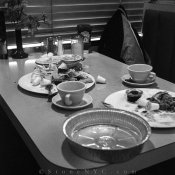
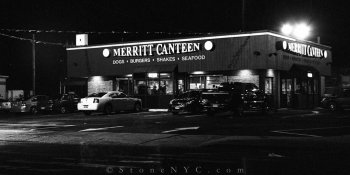
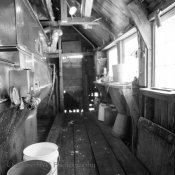
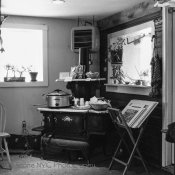
I've only had the lab push Tri-X to 3200 once, horrid results, I've pushed HP5+ in DD-X to 3200 with good results.

ImageUploadedByTapatalk1403510538.980782.jpg
ImageUploadedByTapatalk1403510544.258946.jpg
ImageUploadedByTapatalk1403510550.183675.jpg

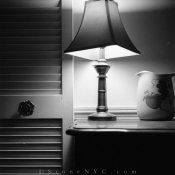
And I've pushed delta3200 to 3200 with good results (mind the minor light leak in the second image).

ImageUploadedByTapatalk1403510581.699487.jpg
ImageUploadedByTapatalk1403510599.015452.jpg
ImageUploadedByTapatalk1403510605.133063.jpg

DD-X is fantastic for pushing, but is of course designed to work best with ilford films, but I'm sure it could help your situation as well.

Good luck, whenever I need a good image from a grainy film I use DD-X, holds back the grain and gives a nice push.
 

splash_fr

Member
Allowing Ads
Joined
Sep 6, 2013
Messages
47
Location
Freiburg, Germany
Format
Multi Format
I think you need a good compensating developer.

This is 400TX at 1600 with HDC-2.
The only developer I use for film.
SpotmaticF, SuperTak 55/1.8 at 1.8 or 2.0, scanned w/ dslr, black+white points adjusted


IMGP9114.jpg von splash_fr auf Flickr
 

chriscrawfordphoto

Member
Allowing Ads
Joined
Mar 12, 2007
Messages
1,893
Location
Fort Wayne, Indiana, USA
Format
Medium Format
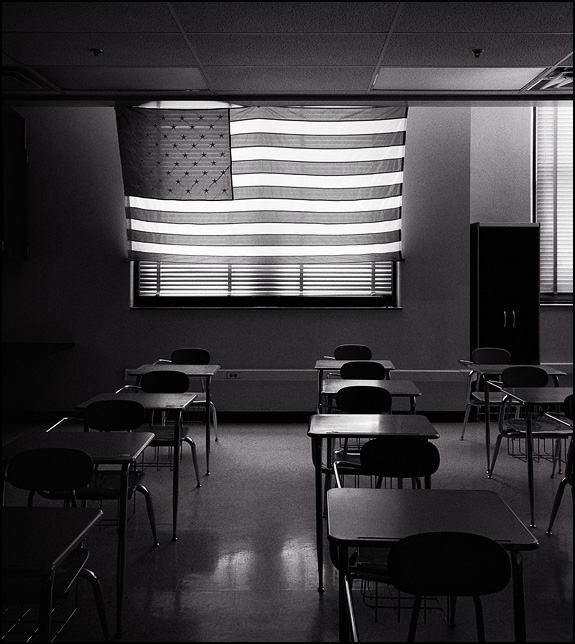
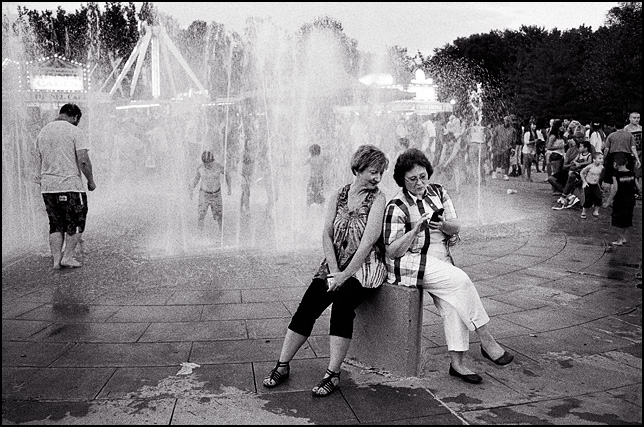
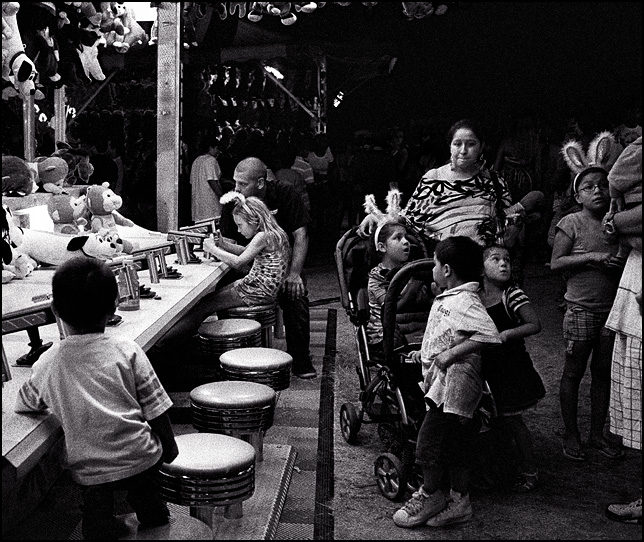
I haven't pushed Tri-X before, but Tmax Developer is the best pushing developer I have used for other films. Tmax 400 and Ilford Delta 3200 both push beautifully in Tmax Developer. I think DDX is a very similar formulation with similar characteristics, so I'd go with either Tmax Developer or DDX. As others have said, shadow detail is gonna suck anyway, but Tmax Dev. seems to keep grain low and sharpness good with as nice of tonality as you can get pushing a 400 film to 3200.

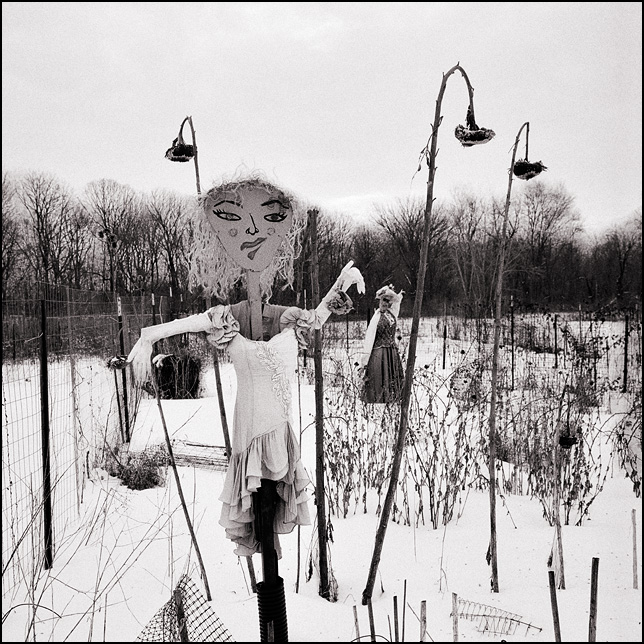
Delta 3200 is a gorgeous film developed in Tmax. I have shot it at 1600 and 3200 (developed for the appropriate time for the speed I chose) with great results.

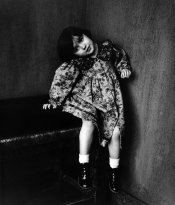
Here are some done with the 120 size Delta 3200 at EI-3200:

winter-scarecrows-1.jpg


history-class-flag-2.jpg


and here are some 35mm Delta 3200 at EI-3200

trf2012fountain.jpg


trf2012game2.jpg
 

darkosaric

Member
Joined
Apr 15, 2008
Messages
4,568
Location
Hamburg, DE
Format
Multi Format
pushed delta3200 to 3200 with good results

This is actually funny but true - reminds me that some guys here are calling Tmax 100 films 'Tmax 50' :smile:.

Here is delta 3200 'pushed' to 3200 - in Tmax developer 1+4 (negative scan, but I made later 30x40cm prints that looked great):

Dead Link Removed
 

splash_fr

Member
Allowing Ads
Joined
Sep 6, 2013
Messages
47
Location
Freiburg, Germany
Format
Multi Format
It's a liquid one shot two part compensating developer that can be used as single as well.
It is made by Spuersinn in Germany, they sell it via their online shop.
I don't know if you can get it on the óther side of the pond, sorry.

Rgds,
Gerd.


(I dont have any relations with them, I only like their products...)
 

StoneNYC

Member
Allowing Ads
Joined
Aug 5, 2012
Messages
8,345
Location
Antarctica
Format
8x10 Format
Has anyone pushed HP5+ to 3200 in 5x4" format? Strikes me that if such a thing worked nicely, I'd have a film (to replace Polaroid) to use in my Graph Check Sequence camera...

Marc!

The emulsion for sheet is the same as the roll film, just a different base, so see my images above for HP5+ at 3200 above.
 

StoneNYC

Member
Allowing Ads
Joined
Aug 5, 2012
Messages
8,345
Location
Antarctica
Format
8x10 Format
This is actually funny but true - reminds me that some guys here are calling Tmax 100 films 'Tmax 50' :smile:.

Here is delta 3200 'pushed' to 3200 - in Tmax developer 1+4 (negative scan, but I made later 30x40cm prints that looked great):

Dead Link Removed

Yea, delta3200 (and Kodak P3200 was as well) is a 1000 speed film, so most push it without knowing that's what they are doing.

:wink:
 
Last edited by a moderator:

miha

Member
Allowing Ads
Joined
Feb 15, 2007
Messages
3,044
Location
Slovenia
Format
Multi Format
... I tried DD-X, but not with push. It is not a magic bullet, it is good developer, but I don't see big difference in comparing with Tmax developer that I used as well.

Tmax pushes very well and gives finer grain than DD-X.
 
Last edited by a moderator:

AgX

Member
Allowing Ads
Joined
Apr 5, 2007
Messages
29,972
Location
Germany
Format
Multi Format
It's a liquid one shot two part compensating developer that can be used as single as well.
It is made by Spuersinn in Germany, they sell it via their online shop.
I don't know if you can get it on the óther side of the pond, sorry.

Rgds,
Gerd.


(I dont have any relations with them, I only like their products...)

see this thread too:

(there was a url link here which no longer exists)
 

ntenny

Subscriber
Allowing Ads
Joined
Mar 5, 2008
Messages
2,520
Location
Portland, OR, USA
Format
Multi Format
In the OP's position I'd use either Xtol or Donald Qualls's "Super Soup", a homebrew involving HC-110, Dektol, and vitamin C. (The full recipe should be searchable on APUG, I think.)

For what it's worth, my experiments with TX at 3200 are posted at https://www.flickr.com/photos/ntenny/sets/72157615069635788/, but unfortunately they're negative scans rather than wet prints. I got decent results with PC-TEA 1+50, which is functionally similar to Xtol 1+2, and really good ones on the whole with Super Soup. The latter may be developing to completion---certainly it seems to get all the shadow detail that could possibly be gotten.

(I did try semi-stand in HC-110, with technically disappointing though mildly interesting results. Ludicrously grainy and probably not usable in 35mm. I haven't tried DD-X to compare, or the technique I saw someone recommend of developing *twice* in Diafine.)

Obviously you have to keep your expectations realistic---there's only so much information there to be gotten out.

-NT
 

Mark Crabtree

Member
Allowing Ads
Joined
Apr 21, 2009
Messages
782
Format
Large Format
Funny, I was shooting the same exposures in extremely dark conditions this weekend. 1/8 @ 1.4 taking pictures of musicians playing in a motel parking lot at night. The meter in my Leica M5 didn't even move off the peg, but that was the most exposure that seemed practical. Lately I've settled on Acufine for these situations. As everybody has said, it isn't going to put shadow detail in that isn't there, but it does give maximum shadow detail like Tmax developer. It's benefit is that it really keeps the highlights under control, even with extended development to pull out as much shadow/low mid detail as possible. It is also fine grain with good sharpness.

I've wanted to experiment with Diafine, but haven't gotten any in yet. Acufine is nice for being readily available. I did have a similar thread here a couple months ago and experimented with the home brew Diafine substitute in that. I got very good results with that, but just don't have the confidence in it yet that I do with Acufine. I've also considered using a slightly shorter developing time with Acufine, followed by the 2nd bath from my Diafine substitute, but haven't had a chance to do the necessary tests for that.

I had 4 rolls of 35mm and 1 120 with a mix of TX, Fuji 400, and FP4+ to run last night and felt confident enough in the Acufine to run them all together without test runs, so that is a bonus for me.
 
Last edited by a moderator:

markbarendt

Member
Allowing Ads
Joined
May 18, 2008
Messages
9,422
Location
Beaverton, OR
Format
Multi Format
I exposed a roll of Tri-X a few hours ago, in low light, outdoors. I set my lens to f1.4 and my shutter speed to 1/8s. I didn't bother metering, but I know that the film requires a good 2-3 stops push.

Anyways, I need a developer!

I typically use Xtol 1+3, and I'm debating whether I should try DDX. I haven't had any issues with Xtol 1+3, but I just want to try something different.

How do these two compare for pushing Tri-X 2-3 stops? In terms of grain, contrast, and shadow detail.
Likewise, how do these developers compare for shooting Delta 3200?

From what I've read, Xtol offers less shadow detail, and less grain.

If you just want to try something different DD-X is a great choice in place of Xtol, I moved to DD-X for the same reason. It's easy to use, reliable, and like Xtol helps salvage a little extra shadow detail when a film is underexposed.

Some thoughts to consider though.

First, since you didn't meter, how do you know?

I'm not suggesting you have to meter, there are other clues to use. I'm just asking if this is a guess or based on something else.

Neither reducing nor adding extra exposure automatically means that a push or pull is needed or preferable. All it means is that you have placed your subject matter differently on the film, closer or farther from the toe. What pushing and pulling actually do is change the steepness of the film curve and it's relationship to the paper, these techniques don't change the film's measured speed much.

Developers like Xtol and DD-X will give slightly faster measured film speeds than say D-76 or ID-11 (roughly 1/3-stop, so 500 instead of 400) but Xtol and DD-X do not differ significantly from each other with regard to film speed (500 vs 500).

Pushing and pulling also do not change this basic speed point (500 in this case) much. A 2-stop push, using Xtol or DD-X or similar, might get you into the 800-1000 range, if your real lucky and depending on how you measure speed, thinking you are going to get more than that is pretty much just wishful thinking. The point here is that as-a-rule as you reduce exposure you truly do lose shadow detail, that's simply the physics of it.

Testing for yourself; your film, your developer, your subjects, your shooting style, your metering style (or lack thereof :wink: )... is how you figure out where your limits are. For me about 1-stop under box speed is typically quite workable but that uses up all of my safety factor, any more than that and it can start cutting into the shadow detail I wanted to print. Kodak starts recommending pushing Tri-X at 1600, at 800 process as you would for 400. Shooting at 800 and processing at 400 is an example of using up this safety factor.

Keeping my film processing "normal" (say as specified for 400) maintains the subject matter's "look" in the print and that is the crux of the issue for me. Even if I am forced to under or over expose to get a shot, I normally don't want the look of the subject matter to change. Pushing and pulling change the look of the subject.

 
Last edited by a moderator:

pgomena

Member
Allowing Ads
Joined
Jun 25, 2003
Messages
1,391
Location
Portland, Or
Mark hit it on the head. The lighting situation makes a big difference. If it's a flatly-lit scene, underexposing the film and extending development will lose less shadow detail because the shadows have more detail to begin. (The bulk of the image is farther up the straight-line section of the curve, or further from the toe of the film, as Mark said above.) In a contrasty scene, say goodbye to shadow detail. This is not always a bad thing, depending on your intent. Just don't expect miracles from developers and developing techniques. "Pushing" film two stops puts you into "salvage mode."
 
OP
OP

Mewael

Member
Allowing Ads
Joined
Sep 25, 2013
Messages
30
Format
35mm RF
If you just want to try something different DD-X is a great choice in place of Xtol, I moved to DD-X for the same reason. It's easy to use, reliable, and like Xtol helps salvage a little extra shadow detail when a film is underexposed.

Some thoughts to consider though.

First, since you didn't meter, how do you know?

I'm not suggesting you have to meter, there are other clues to use. I'm just asking if this is a guess or based on something else.

Neither reducing nor adding extra exposure automatically means that a push or pull is needed or preferable. All it means is that you have placed your subject matter differently on the film, closer or farther from the toe. What pushing and pulling actually do is change the steepness of the film curve and it's relationship to the paper, these techniques don't change the film's measured speed much.

Developers like Xtol and DD-X will give slightly faster measured film speeds than say D-76 or ID-11 (roughly 1/3-stop, so 500 instead of 400) but Xtol and DD-X do not differ significantly from each other with regard to film speed (500 vs 500).

Pushing and pulling also do not change this basic speed point (500 in this case) much. A 2-stop push, using Xtol or DD-X or similar, might get you into the 800-1000 range, if your real lucky and depending on how you measure speed, thinking you are going to get more than that is pretty much just wishful thinking. The point here is that as-a-rule as you reduce exposure you truly do lose shadow detail, that's simply the physics of it.

Testing for yourself; your film, your developer, your subjects, your shooting style, your metering style (or lack thereof :wink: )... is how you figure out where your limits are. For me about 1-stop under box speed is typically quite workable but that uses up all of my safety factor, any more than that and it can start cutting into the shadow detail I wanted to print. Kodak starts recommending pushing Tri-X at 1600, at 800 process as you would for 400. Shooting at 800 and processing at 400 is an example of using up this safety factor.

Keeping my film processing "normal" (say as specified for 400) maintains the subject matter's "look" in the print and that is the crux of the issue for me. Even if I am forced to under or over expose to get a shot, I normally don't want the look of the subject matter to change. Pushing and pulling change the look of the subject.

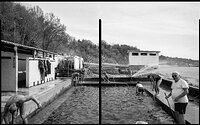
In regards to the metering/exposure.

I never meter for 35mm (medium format is a different story). I shoot all-mechanical bodies, without batteries, and guess/sunny 16. I generally know which shutter speed/aperture combinations work for different lighting scenarios. I don't claim to be a human light meter but guessing works well enough, most of the time. I scan too (gasp!), so that undoubtfully makes it easier.

I don't know how many stops I am under. With low light, I try to get as much exposure as possible. I'm guessing that the exposure was 2-3 stops under. I was at the right time, with the wrong film, and without a Noctilux. I understand that my shadows are lost, so I'm hoping for mid tones at best.

I generally avoid pushing unless I have to. The "look" is a hit or miss with me. Sometimes I like the look but sometimes I don't. With 35mm, I like it less often because of the grain.
 

markbarendt

Member
Allowing Ads
Joined
May 18, 2008
Messages
9,422
Location
Beaverton, OR
Format
Multi Format
I scan too (gasp!), so that undoubtfully makes it easier.

There's no shame in scanning. The only "issue" here is discussing "how to scan" and all that digital stuff at APUG.

With that said it is important to understand that the piece of the puzzle that most people seem to miss in the beginning (and many times even later whether they scan or use an enlarger) is that adjusting film development (push or pull, or as Ansel would say plus or minus) is only relevant when there is a defined specification from end to end.

The traditional specification is "A normal contrast scene to be printed on Garde 2 Paper".

Without having a specification like that, development adjustments (push/pull, +/-) are at best guesses and as-often-as-not make your life tougher, not easier.

In these modern times, the exceptional variable grade paper we have available eliminates most of the need for adjusting film development. A scanner is similar to VC paper in this sense but an order of magnitude (or two) more variable yet.

That truly begs the question; "do development changes help, matter, or hurt in your system?"

Go forth and experiment, have fun doing it.
 
Last edited by a moderator:
Photrio.com contains affiliate links to products. We may receive a commission for purchases made through these links.
To read our full affiliate disclosure statement please click Here.

PHOTRIO PARTNERS EQUALLY FUNDING OUR COMMUNITY:


Ilford ADOX Freestyle Photographic Stearman Press Weldon Color Lab Blue Moon Camera & Machine
Top Bottom