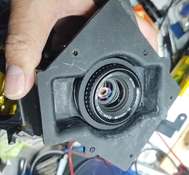
I use a 210mm EL-Nikkor lens for my 400W 385nm UV projector and it works just fine. I haven't quantified what it's actual UV transmission is (well, I did quickly using a UV meter and it seems better than 75% @ 385 nm) but it does work for me. I assume the 50mm would be similar. For me the first pair of fresnel lenses I got blocked significantly more UV than they were supposed to, and I had to order a second pair from a different place made with a grade of acrylic specifically designed for UV transmission.
Man, 400W! And you're using an LCD screen as negative? Won't it bleach/burn the screen?
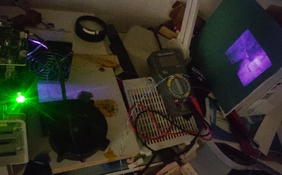
From this quick test I don't think I even need the 50mm Fresnel, but it does make the beam more focused and more diffuse. I decided to keep the same prism because it comes with the anti reflective front coating and as opposed to a thin plate which may have a ghosting second reflection, it may work perfectly fine. I need to reduce the power by at least half to get around 20W on the DMD chip or less. Damage threshold is stated low. I finally identified the chip as 1912-7037 which appears to be a TI product without direct TI support but with an equivalent TI part number. The visible part is allowed around 20 or 30 W/cm^2 but below 395 or 410 all their chips are specified in the milliwatt region. Like 2mW/cm^2.
I bought a second garbage projector "for parts". It comes with a brand spanking new heat damaged DMD that the seller couldn't possibly know anything about. So my plan is to extract it and test long UV exposures with it just in case. It has an almost unnoticeable circle of darker pixels. I also want to see if I can see the pixel grid on the microscope.
I did a quick unscientific LED florescence measurement at the focal spot and I measured just about the same voltage I would measure at the collimation lens. So this is great so I can maximize the beam intensity as it passes thru a good 1.5" of prism glass.
As for the adapter, I need to add a helicoid to my adapter plate and then an adapter helicoid for the Nikkor. I sort of tested the magnification and was slightly disappointed. I mean they are for enlargers right? I'll probably get a 20mm or 30mm Nikkor. In the meantime (I sound like I can actually make an image), I have a vintage vivitar 20mm which I also tested for UV. Interestingly it did actually output UV light. Slightly dimmer because it is a much enlarged image. I'm gonna try to get both lenses to work on the same plate helicoid.
This is exciting. Usually this is followed by some kind of disastrous realization. In the remotely off chance all this guess work doesn't pan out, I'm going back to the original configuration and just replace the lamp with a cheap auto HID with the filter removed. That would be so much easier but someone invented the LED and here I am mesmerized by the possibilities. I just found these: 8080-SMD on aliexpress for $15.33. That's 50W of 365, 385, 395, or 405nm in a tiny chip ~12mm square. This is perfect for collimating.
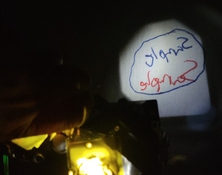
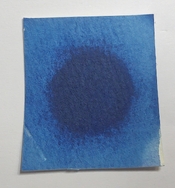
Wow, 400W. I was holding the 2" 50mm Fresnel in front of the 50W LED and I could feel my fingers being in the beam. It's a weird sort of feeling because it comes with the knowledge that this is cell killing light. No funny smells like when you get a laser burn. Just that "I'm getting cancer of the finger" feeling. A 400W cob could probably cook your skin when near the source. I'm getting different eye protection too. I'm using the welding helmet for now. The image was taken on a vintage 35mm super takumar at f16 with a uv shade filter and its still saturated so you know its not something to screw around with.


 www.lasersafetyglasses.com.au