• Welcome to Photrio!
    Registration is fast and free. Join today to unlock search, see fewer ads, and access all forum features.
    Click here to sign up

Problems with developing

High Street

A
High Street

  • 5
  • 1
  • 43

Recent Classifieds

Forum statistics

Threads
201,871
Messages
2,831,488
Members
100,994
Latest member
SheWoDun
Recent bookmarks
0

Auroraua

Member
Allowing Ads
Joined
Feb 10, 2014
Messages
82
Location
Iceland
Format
Medium Format
I first developed a set of rolls and it became clear to me I was getting something wrong, for some time.
I had white streaks on the side of the negatives.
Examples

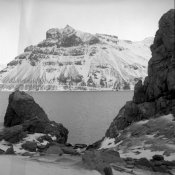
I realised I am probably pouring in the developer far too slowly, and filling the tank so it overflows and maybe not agitating properly (although I think my agitation is alright), obviously I am doing something wrong, after reading and researching this is what I came to the conclusion what is wrong.
Please correct me if you think it´s something else.
Examples of above is the photo of the mountain and one with the dog, taken on and a Leica.

So I developed new set of rolls, and on one the white streaks were almost eliminated, and on the other a new problem occurred.

for the one the new problem occurred this is my method.
Photos are the ones with the blackish streak in the middle:

Foma 100 in Rodinal 1+50Fomapan 100 in Rodinal 1+50
Agitation: 0-30 sec
then twice each 30 sec.
Agitation method: Invert rap on table, invert rap on table.
Inversions are quite fast and according to this:
www.youtube.com/watch?v=tOUUO3dDLqA
Stop - Ilfostop 1 minute.
Kodak Rapid Fixer - 5 minutes
HCA- 2 minutes
Wash - Ilford Method
Flo - 3 drops swirl for 30 sec, stand for one minute.
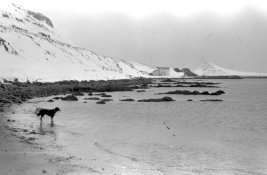
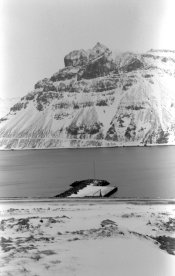
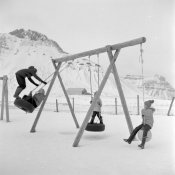
The second roll my method is (photo of the playground) - streak is slightly visible:
HP5 in HC-110 Rodinal Combo
Developed in HC-110 H dilution 1+63 with 2.5 ml Rodinal added.
10 minutes. Presoak
Agitation: 0-30 sec then 4 times at 1, 4, 6 and 9 minutes.
Agitation method: w 2 quarter turns right with tank on table - invert rap on table then 2 quarter turns left invert rap on table.
Mixed 400 ml in a stainless steel tank.
Stop - Ilfostop 1 minute.
Kodak Rapid Fixer - 5 minutes
HCA- 2 minutes
Wash - Ilford Method
Flo - 3 drops swirl for 30 sec, stand for one minute.
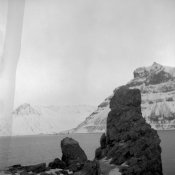
 

Attachments

  • 16775380639_4ae83a1fe9_o.jpg
    16775380639_4ae83a1fe9_o.jpg
    264.8 KB · Views: 196
  • 16773587070_45739f6d9c_o.jpg
    16773587070_45739f6d9c_o.jpg
    287.9 KB · Views: 183
  • 16972357845_8fb22bc5db_o.jpg
    16972357845_8fb22bc5db_o.jpg
    916.2 KB · Views: 181
  • 16971027672_d78bcdfd62_o.jpg
    16971027672_d78bcdfd62_o.jpg
    1,017.1 KB · Views: 181
  • streak2.jpg
    streak2.jpg
    811.7 KB · Views: 185

markbarendt

Member
Allowing Ads
Joined
May 18, 2008
Messages
9,422
Location
Beaverton, OR
Format
Multi Format
Ok,

So sometimes it's easier to judge what's happening if the negatives are well negative. :wink:

The light edges on the first two either came from extra exposure (maybe light leak) or extra development (maybe the developer not getting in the tank quick enough).

The streaks look like a little water or developer got to the film before the developer flooded the film.
 

Hilo

Subscriber
Allowing Ads
Joined
Apr 19, 2011
Messages
922
Format
35mm
How long did it take to fill the tank?

Did you move the tank upside down twice after filling, and let the air out after that? I repeat that in the middle of the sequence.

Adding Rodinal to HC 110 is something I have not heard of in more than thirty years of developing. But it is very possible I missed something. However, when you first develop I would never experiment like that and first get developing with one developer correct.

Developing is like printing: you become better from making mistakes. Stick to the same film and the same developer at first.
 

Ghostman

Member
Allowing Ads
Joined
Dec 5, 2011
Messages
504
Location
Switzerland
Format
Multi Format
It looks like you have a light leak of sorts, but that is another story.

- Don't bother pre-soaking, Ilford do not recommend this
- Don't bother using Ilfostop, just use water, with a 3-4 fresh water rinses (and inversions)
- Make sure that the chemistry at all stages is constant in temperature and according to specification
- Don't for a second think that you can improve on chemistry formulae by mixing developers
- Rodinal and HP5 will result in heavy grain, but maybe that's what you want

Picture 1 - top right circular mark could be a kink in the film, perhaps from loading on the reel? Top band looks like a light-leak
Picture 2 - band on right looks like same light-leak
Picture 3 - is that a rinse streak artifact that has shown up on a scan? Was your developer can full enough to exclude uneven processing?
Picture 4 - same as above

Just out of interest, where is this icy landscape? It looks very interesting.
 

Europan

Member
Allowing Ads
Joined
May 21, 2009
Messages
647
Location
Äsch, Switzerland
Format
Multi Format
I’d say you have the film not well in the spiral reel, some convolutions touch each other.

Don’t swing the tank over that harshly. The liquid must be given time to flow. Feel the flow.
 

Lamar

Member
Allowing Ads
Joined
Dec 22, 2008
Messages
375
Location
Georgia, USA
Format
35mm
The first two where you have lighter sides are from your developer handling. Getting it in and out of the tank and initiating your stop. I had the same issue when i started.... Took me a bit to figure out but since then I have had no further issues. Disclaimer: I am speaking from my experience with 135 film only, I have not developed MF:

1. Get your developer in and out of the tanks quickly.
2. Initial agitation is important, do it well. <--This doesn't mean hard, just good.
3. Stop quickly and thoroughly. I use a water bath stop. Before time is up for your developer make sure you have water running at a high flow (full open out of my faucet) and for long enough that temperature has stabilized where you want it to be (developer temp is what I use). Quickly pour out the developer and place the tank immediately under the faucet to fill. As soon as it fills completely with water begin pouring it out and agitating it vigorously while it pours (I actually cover the top with my hand and give it a good shake a few times before I start pouring it out). Repeat this at least 8 times. After the first few fill & drains you really don't need to agitate any longer. It probably isn't necessary but I do a running water rinse after the 8 fill and drain cycles for the remainder of the two minutes since I started or until I finish getting my fixer ready to go, whichever is longer.

Since I started doing this I've had no further issues as shown in your first two photos.

Unrelated to the original question but two other things which I have learned to do thanks to help from the forum. These may help you in the future:

1. Do a fixer clip test every time before you fix. Determine your clearing time and get your fixing time by doubling it for conventional film and tripling it for t-grain. I don't remember who posted that but it definitely improved my process.

2. Another tip from this forum that helped: Use PhotoFlo mixed 3ml to 1 liter distilled water. Don't touch the film after it comes out of the tank. Once I quit quit trying to get the excess water off my film by touching it with my fingers or anything else the dust spots and scratches went almost completely away. Still get the odd water drop mark here and there though. Working on that but it is the exception rather than the rule.
 
Last edited by a moderator:

gone

Member
Allowing Ads
Joined
Jun 14, 2009
Messages
5,504
Location
gone
Format
Medium Format
Well, I wouldn't agitate Rodinal like that. My scheme is SLOW and gentle agitation for 30 seconds, then one slow, gentle agitation every minute, and none the last minute. That's w/ my film, water, exposure, temp, etc. Works a treat, and if I nail the exposure, even at 1:25 the grain is not bad even w/ 35mm film. You only need to tap the tank on the counter now and then. It's good to have a block of soft wood like pine w/ a wash cloth over it to tap it on too. I've knocked the tank a little too hard a few times on hard counters, and when I emptied the developer to put in the stop bath, the over zealous tapping (more like pounding) had loosened the light trap. When I took off the press-on lid to dump the chemicals, the whole reel and light trap flopped out into the sink. Fortunately, the film was developed at that point, but it's not something you want to have happen.

And you should pour the chemicals in quickly or your times may be off, and you also may get uneven development.
 
Last edited by a moderator:

CropDusterMan

Member
Allowing Ads
Joined
Feb 7, 2014
Messages
711
Location
Southern Cal
Format
35mm RF
Why are you combining chemicals? Never heard of that. Where did you learn such a thing?

Get the chem in and out quickly and keep a close eye on temps. Follow directions for the
chem's agitation requirements.
 

pentaxuser

Member
Joined
May 9, 2005
Messages
20,343
Location
Daventry, No
Format
35mm
Assuming an 8-9 min dev time as his combo of Rodinal at 1+50 and Fomapan would suggest, I wonder how slow his pouring-in and pouring out has to be to affect his negs the way his scans show. At worst I'd have thought that the top of the film gets say 15 secs less development than the bottom.

Would this as a percentage of say 9 mins make that much difference? My Durst tank needs relatively slowing pouring in but I have never noticed any effect

pentaxuser
 
OP
OP
Auroraua

Auroraua

Member
Allowing Ads
Joined
Feb 10, 2014
Messages
82
Location
Iceland
Format
Medium Format
HILO
What you mean with letting the air out, do you mean open the liquid lid to let the air out.


GHOSTMAN
Some people say presoak other don´t, I have tried both.
Why not use stop? Does it make a difference? I prefer to use the stop in order to stop abruptly and for the sake of the fixer.


I don´t think there is a light leak with the camera - as I use it for color and it´s fine.
Maybe a light leak with the changing bag? Or the lid on the ss tanks? I use plastic lids, but I have different tanks, so it would be strange if all the tops have leaks, also I bought brand new lids even if I purchased the tank second hand.


As I filled the tank so much to the brim on the first two pictures, I used less on the second batch of development picture 3-5, but maybe I used too little? 400 ml


It´s Iceland.


LAMAR
I can´t use the water running as in iceland the hot water is geothermal, I boil water and mix it with cold water so it´s 20C. My temperature between wash and dev is maybe plus minus 1 degree C, which I don´t think make a change. I will measure my chemicals though.
I always agitate during stop bath.


I do a fixer clip test and use 3 drops flo per 120 roll and 2 drops per 135.
I usually put on the shower when I start, turn it off during fixing time, so the bathroom is clear of dust.
don´t touch the negs when I hang them (not anymore).


I read about it here
http://www.rangefinderforum.com/forums/showthread.php?t=83368


http://www.rangefinderforum.com/forums/showthread.php?t=100287
And I like the tonality of it.

markbarendt
I will up the negs as negs later. Going to try another roll.

But also this problem seems to be enhancing with scanning, going to the darkroom later to check it with a loupe on a light table, but I think it´s there. The white streaks.

Again - since I started pouring in more quickly, using less chemicals (not over filling the tank), more vigorous agitation - you know not so slow and gentle) it´s much less, but it´s still there.
Hmmmmm.

Again - It´s not the camera - these are two different cameras, and with color I don´t get this. It´s only when I develop b&w myself.
 
OP
OP
Auroraua

Auroraua

Member
Allowing Ads
Joined
Feb 10, 2014
Messages
82
Location
Iceland
Format
Medium Format
please see message below.
 
Last edited by a moderator:
OP
OP
Auroraua

Auroraua

Member
Allowing Ads
Joined
Feb 10, 2014
Messages
82
Location
Iceland
Format
Medium Format
Ok,

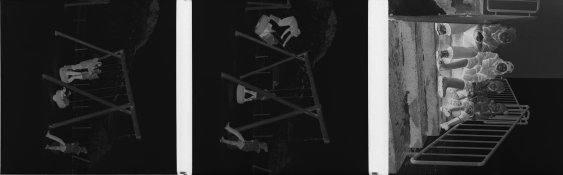
So sometimes it's easier to judge what's happening if the negatives are well negative. :wink:


Here is the strip of 3 frames.

Also I uploaded a video showing how I agitate, perhaps that helps.
https://www.youtube.com/watch?v=1diDvZcK6ik

Also it took me 10 sec to pour in the developer and similar to pour it out, I did it again today, when I think how I agitate, I can hesitate, when I do it "naturally" like in the video it flows, but is it random and consistent enough?
I manage to do 3 quicker ones in 5 sec and 2 slower ones.
2 feels more natural.I have not been able to scan the results yet, it´s hard to see on the neg itself.

It would be great if someone could check the negative strip, perhaps it´s also enhanced by scanning and then using colorperfect. I use that and vuescan, but I want to print these later. Maybe as the neg has problems being flat in v700 scanner. Maybe I need to purchase those betterscan thingies, but they are expensive and I prefer to print. Or perhaps the scanner needs calibrating or something is wrong. There definitely was an issue with the first set of negatives (the mountains in 135), but I am starting to think maybe it´s also scanner related. Will book a time in our communal darkroom soon and check. As I think the second time, my method is not far at all from what the expert describe. Presoak or not, stop or not is not the issue and I did agitate enough (maybe too much), but I think better than previously at least.

I want to do something with this series from the north (I went to one of the most northern tip) At least this series from the north. Let me know by PM if you want a better quality of the negatives as I have uploaded it via dropbox in case.
 

Attachments

  • tesnegstrip.jpg
    tesnegstrip.jpg
    172.3 KB · Views: 135
Last edited by a moderator:

markbarendt

Member
Allowing Ads
Joined
May 18, 2008
Messages
9,422
Location
Beaverton, OR
Format
Multi Format
I'm thinking that your idea of going to the commercial darkroom with your negs is probably the best way to find your problem.

The reason it's sometimes easier to judge a negative when negative is that you don't have to translate. Darker areas got more exposure or more development. Light areas less.

If there are issues on the last set the scanning enhancements seem to be hiding them now. Way to dark to see.
 

Huub

Member
Allowing Ads
Joined
Dec 4, 2007
Messages
256
Format
4x5 Format
That idea of a commercial darkroomsound slike a good one to me indeed.

What i also would like to suggest is to do a refix on your negatives. I don't know how many films you already had in the fix and how strong the dilution was, but the grey areas might be insufficiently fixed.

A second advice is to skip the HCA. Not necessary on film and a waste of money. Only fiber based paper benefits from it as it shortens the washing times.
 

pentaxuser

Member
Joined
May 9, 2005
Messages
20,343
Location
Daventry, No
Format
35mm
Based on your pouring-in and out times and agitation I'd rule out these as the problem. I do between 2-3 turns in 5 secs and take about 10 secs for pouring. I have yet to experience your problem.

pentaxuser
 
OP
OP
Auroraua

Auroraua

Member
Allowing Ads
Joined
Feb 10, 2014
Messages
82
Location
Iceland
Format
Medium Format
There seems to be a misunderstanding about the commercial darkroom.
There is a communal darkroom that we can use for printing, and developing.
There is no such thing as a commercial darkroom in Iceland.
None for b&w, they all closed.
So not much I can do. But I can see on the light board and print a couple of examples to see what it looks like on paper.
My problem seem to still exist, but much less, I developed a new roll yesterday, although it is taken indoors in an animal barn so hard to see if there are lighter areas.
Hopefully the next roll will be fine.

I definitely think my first two images (on the previous) page was due to pouring, I think I even hesitated once.
Maybe I should refix, it was a bottle that was previously mixed (bought last autumn) in a 750 ml wine bottle, full to the brim, with gaffer tape around the opener and it has done maybe 10 rolls.
For the very first batch it was a brand new fix, just mixed - done 6 rolls, so unlikely to be that.
I think - for the first two images it definitely is an agitation thing, now I have learnt by those mistakes and I am pouring quicker and for these two last rolls I also agitated quite firmly, maybe even too firmly.

Thanks everyone. Invaluable support and advice.
 
Photrio.com contains affiliate links to products. We may receive a commission for purchases made through these links.
To read our full affiliate disclosure statement please click Here.

PHOTRIO PARTNERS EQUALLY FUNDING OUR COMMUNITY:


Ilford ADOX Freestyle Photographic Stearman Press Weldon Color Lab Blue Moon Camera & Machine
Top Bottom