
• Welcome to Photrio!
    Registration is fast and free. Join today to unlock search, see fewer ads, and access all forum features.
    Click here to sign up

Potassium ferricyanide local bleaching

Recent Classifieds

Forum statistics

Threads
201,770
Messages
2,829,854
Members
100,936
Latest member
rdbirt
Recent bookmarks
1

skljocnulbumte

Member
Allowing Ads
Joined
Mar 8, 2017
Messages
61
Location
Croatia
Format
Medium Format
It is not working for me :sad:.

Here are examples where is possible (I hope) to see purple color on photos. In this case I tried with added a little fixer to Potassium Ferricyanide/water solution and I have recived in the end the same results. The purple color is more visible on grey/shadow's area.
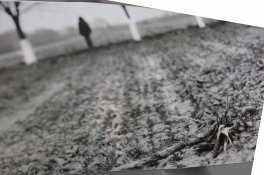
P5316328.JPG P5316330.JPG

I watched this video and he is doing this so gentle without any color shift.
 

RalphLambrecht

Subscriber
Allowing Ads
Joined
Sep 19, 2003
Messages
14,917
Location
K,Germany
Format
Medium Format
Hi all

Yesterday, I saw a video about a French printer who use bleaching with brush, Q-Tips between 2 baths fixing.

For me, it looks more accurate than to dodge some areas too dark.

Did you experiment this?

Any tips are welcomed.
I do it all the time and call t'liquid light'
 

Harry Stevens

Member
Allowing Ads
Joined
Dec 18, 2014
Messages
424
Location
East Midland
Format
Multi Format
First time I came across this was years ago in a photo documentary part of which featured Eugene Smith and he seemed to be a master of the bleaching technique,welder glasses and all that.....
 

skljocnulbumte

Member
Allowing Ads
Joined
Mar 8, 2017
Messages
61
Location
Croatia
Format
Medium Format
I still try to find an answer for my problem. I used several p.ferricyanide from different stores. The last one was totally clean (for laboratories testing). And I always had some red/purple/yellow stain on the area where I used it. Is it possible that some of my base materials do that? I used Fomabrom paper, stop bath (water+acetic acid), Efke standard fixer. Thanks
 

Molli

Member
Joined
Dec 28, 2009
Messages
1,023
Location
Victoria, Australia
Format
Multi Format
I still try to find an answer for my problem. I used several p.ferricyanide from different stores. The last one was totally clean (for laboratories testing). And I always had some red/purple/yellow stain on the area where I used it. Is it possible that some of my base materials do that? I used Fomabrom paper, stop bath (water+acetic acid), Efke standard fixer. Thanks

Hi skljocnulbumte, I came across this in my copy of Carson Graves' 'The Elements Of Black-And-White Printing':

Local Reduction of Prints

Occasionally, you will make a print that has one or more areas that you can't successfully dodge during exposure. Chemically bleaching these areas is a useful alternative. Local reduction has the advantage over dodging of allowing you to work under room light and without time pressure.
A small brush or a cotton swab is a good tool to use to apply the bleach to the surface of the print. If you use a brush that has a metal ferrule, you risk getting blue stains on the print unless you prevent the ferricyanide solution from touching the bare metal. Protect the ferrule by coating it with clear nail polish. Let a drop of polish soak in at the point where the bristles contact the metal (to seal off the inside), and then apply a thin coating to the outside of the ferrule.

Whenever iron compounds, either from an uncoated metal ferrule brush or from tap water, contaminate the bleaching solution, you will get blue stains on your print. Remove these stains by placing the affected print in a tray of print developer for I minute, followed by the usual fixing and washing.
  • From p. 97 'The Elements of Black-and-White Printing' by Carson Graves

With regard to your yellow staining, he doesn't say why it happens, but does give a way of remedying that occurrence:

…

3 Using either a small brush or a cotton swab, depending on the size of the area to be lightened, lightly brush the solution on area. The reducer will exhaust itself rapidly on, the surface of the print. Use a paper towel to blot up any excess.
4 Repeat step 3 until the area is as light as you want it.
5 Fix and wash the print as you normally would.
6 If there are any yellow stains around the bleached area after washing, agitate the print in a tray of 50 grams of sodium sulfite mixed with a liter of water for 5 minutes and then rewash.
  • From p. 98 'The Elements of Black-and-White Printing' by Carson Graves

I hope the above is of some help in solving your problem!
 

RalphLambrecht

Subscriber
Allowing Ads
Joined
Sep 19, 2003
Messages
14,917
Location
K,Germany
Format
Medium Format
Hi all

Yesterday, I saw a video about a French printer who use bleaching with brush, Q-Tips between 2 baths fixing.

For me, it looks more accurate than to dodge some areas too dark.

Did you experiment this?

Any tips are welcomed.
Itworks and is more accurate than bleaching just do't forget to remix after bleaching.
 

lantau

Member
Allowing Ads
Joined
Jan 15, 2016
Messages
826
Location
Germany
Format
Multi Format
I tried to selective bleaching with a solution of 0,5 gram of Potassium Ferricyanide + 100ml of water on fomabrom 111 paper. Results is purple/yellow color of spots/places on paper where I used solution. When I put a paper in the fixer, the purple color is disappeared, spots turn in whiter than was before fixed. The yellow color is still there. Where is a mistake? Thanks

You didn't mention Potassium Bromide, which is an essential ingredient. Without it it is difficult to say what the oxidation product will be and the fixer may not be able to remove it.
 

thio

Member
Allowing Ads
Joined
Jan 31, 2015
Messages
34
Location
Russia, Moscow
Format
Multi Format
I like this Eder's bleach (slock solution) for brush manipulations with prints:

potassium ferricyanide - 3
sodium chloride (common salt) - 3
water to make - 100 ml

Dilute up to 1:20. Rinse print with cold water after bleaching and fix by acid fixer.
 
Joined
Sep 10, 2002
Messages
3,673
Location
Eugene, Oregon
Format
4x5 Format
Potassium ferricyanide alone = very slow bleach. Any ferri carried over into the subsequent fix will mix with the fixer and increase activity till it exhausts. Some like to dab a bit of ferri on the print and then dunk it in the fix. Rinse and repeat if needed. Just using ferri alone takes more time and a stronger solution and often leads to staining. So, OP, if staining is a problem, use one of the bleaches below and see if that helps.

Farmer's Reducer type bleaches incorporate sodium thiosulfate and potassium ferricyanide in varying proportions and strengths. These bleaches are active for only 20 minutes or so after mixing. There are lots of recipes on the web and in the Darkroom Cookbook (available as pdf). Just search and experiment.

A potassium ferricyanide and potassium bromide bleach is a rehalogenating bleach that turns the image silver back into silver bromide, thus bleaching the image. The bleached image can be redeveloped. Some add sodium thiosulfate to this mix and call it "Farmers Reducer" too, but it really isn't. I prefer the simple ferricyanide/bromide bleach for many things, including local print bleaching. I use bamboo calligraphy brushes in various sizes (no metal ferule) and rinse thoroughly after bleaching before refixing so as not to get any unpleasant surprises.

There are iodine bleaches as well, that are purported not to have as much problem with staining. I've never tried them.

In all these cases, the print needs to be refixed and washed after bleaching.

Doremus
 

skljocnulbumte

Member
Allowing Ads
Joined
Mar 8, 2017
Messages
61
Location
Croatia
Format
Medium Format
I like this Eder's bleach (slock solution) for brush manipulations with prints:

potassium ferricyanide - 3
sodium chloride (common salt) - 3
water to make - 100 ml

Dilute up to 1:20. Rinse print with cold water after bleaching and fix by acid fixer.

I tied this suggestion and finally works for me :smile:. Thanks a lot @thio !
 

RalphLambrecht

Subscriber
Allowing Ads
Joined
Sep 19, 2003
Messages
14,917
Location
K,Germany
Format
Medium Format
Hi all

Yesterday, I saw a video about a French printer who use bleaching with brush, Q-Tips between 2 baths fixing.

For me, it looks more accurate than to dodge some areas too dark.

Did you experiment this?

Any tips are welcomed.

I do it often and call it 'liquid light' just don't forget to fully fix after bleaching.
 

Patrick Robert James

Member
Allowing Ads
Joined
Jul 31, 2012
Messages
3,417
Format
35mm RF
I've used iodine bleaches which work well, especially if you have a spot like a negative pinhole you need to get rid of. You can get iodine tincture at the drug store and just use it straight out of the bottle. Some people mix it with a gel, but I've never done that myself. I'm sure how to do it that way is on here somewhere if you search.

When I spot bleach with Ferri, I prefer to use it dilute with nothing else. I go in and out of the fix with the print. I've found that doing it that way tends to keep the area from over bleaching. When you are running water over the print and you think you have it, it will sometimes overbleach in the fix. Doing it straight in the fix resolves that issue.

Anyway, that is what I do. Not right or wrong but it works for me.
 
Photrio.com contains affiliate links to products. We may receive a commission for purchases made through these links.
To read our full affiliate disclosure statement please click Here.

PHOTRIO PARTNERS EQUALLY FUNDING OUR COMMUNITY:


Ilford ADOX Freestyle Photographic Stearman Press Weldon Color Lab Blue Moon Camera & Machine
Top Bottom
