
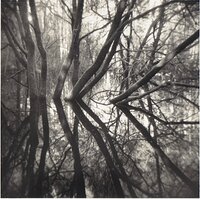

I have been experimenting with copying B&W negatives to B&W positives. The film is Pan F 50 for both the positive and negative. Developer is DDX.
The experiment has been somewhat successful but I am trying for more contrast in the end result. I've tried pushing two stops and increasing development time by 50% for the positive stage. This made a noticeable difference but still not as sharp and contrasty as I would like.
Just to be clear, I am not talking about developing negative film as a positive. I am trying to make a "print", just a "print" on film instead of paper. From what I've seen in old magazines, this was at one time a common process. During the heyday of Kodachrome, folks were apparently much more attuned to viewing projected slides than looking at prints. Places advertized the service of taking your negatives and making B&W slides from these.
Did this involve a now defunct film that had a very high contrast? In theory I could expose both the negative and the positive for increased contrast, but I am looking to recreate the historical process that apparently did not require a special negative.
The experiment has been somewhat successful but I am trying for more contrast in the end result. I've tried pushing two stops and increasing development time by 50% for the positive stage. This made a noticeable difference but still not as sharp and contrasty as I would like.
Just to be clear, I am not talking about developing negative film as a positive. I am trying to make a "print", just a "print" on film instead of paper. From what I've seen in old magazines, this was at one time a common process. During the heyday of Kodachrome, folks were apparently much more attuned to viewing projected slides than looking at prints. Places advertized the service of taking your negatives and making B&W slides from these.
Did this involve a now defunct film that had a very high contrast? In theory I could expose both the negative and the positive for increased contrast, but I am looking to recreate the historical process that apparently did not require a special negative.
