
• Welcome to Photrio!
    Registration is fast and free. Join today to unlock search, see fewer ads, and access all forum features.
    Click here to sign up

Positive Results

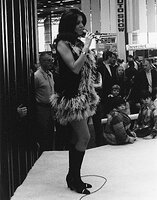
Emi on Fomapan 400

A
Emi on Fomapan 400

  • 0
  • 0
  • 8
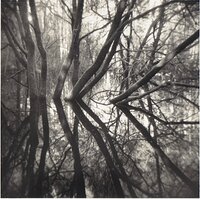
Venice

A
Venice

  • 0
  • 0
  • 55

Recent Classifieds

Forum statistics

Threads
201,794
Messages
2,830,250
Members
100,951
Latest member
ysfaydn
Recent bookmarks
0

thuggins

Member
Allowing Ads
Joined
Jan 12, 2008
Messages
1,144
Location
Dallas, TX
Format
Multi Format
I have been experimenting with copying B&W negatives to B&W positives. The film is Pan F 50 for both the positive and negative. Developer is DDX.

The experiment has been somewhat successful but I am trying for more contrast in the end result. I've tried pushing two stops and increasing development time by 50% for the positive stage. This made a noticeable difference but still not as sharp and contrasty as I would like.

Just to be clear, I am not talking about developing negative film as a positive. I am trying to make a "print", just a "print" on film instead of paper. From what I've seen in old magazines, this was at one time a common process. During the heyday of Kodachrome, folks were apparently much more attuned to viewing projected slides than looking at prints. Places advertized the service of taking your negatives and making B&W slides from these.

Did this involve a now defunct film that had a very high contrast? In theory I could expose both the negative and the positive for increased contrast, but I am looking to recreate the historical process that apparently did not require a special negative.

 

Petraio Prime

Member
Allowing Ads
Joined
May 17, 2009
Messages
177
Format
35mm
I have been experimenting with copying B&W negatives to B&W positives. The film is Pan F 50 for both the positive and negative. Developer is DDX.

The experiment has been somewhat successful but I am trying for more contrast in the end result. I've tried pushing two stops and increasing development time by 50% for the positive stage. This made a noticeable difference but still not as sharp and contrasty as I would like.

Just to be clear, I am not talking about developing negative film as a positive. I am trying to make a "print", just a "print" on film instead of paper. From what I've seen in old magazines, this was at one time a common process. During the heyday of Kodachrome, folks were apparently much more attuned to viewing projected slides than looking at prints. Places advertized the service of taking your negatives and making B&W slides from these.

Did this involve a now defunct film that had a very high contrast? In theory I could expose both the negative and the positive for increased contrast, but I am looking to recreate the historical process that apparently did not require a special negative.


You need to print onto Fine Grain Positive Release. It was used for B&W movie projection prints. There is a new version:

http://www.kodak.com/KodakGCG/uploa...ns_acrobat_en_motion_products_lab_h1so302.pdf

http://www.kodak.com/KodakGCG/uploa...ducts-Price-Catalog-US-Prices_Dec_2016_V8.pdf
 
Last edited:
OP
OP

thuggins

Member
Allowing Ads
Joined
Jan 12, 2008
Messages
1,144
Location
Dallas, TX
Format
Multi Format
You need to print onto Fine Grain Positive Release. It was used for B&W movie projection prints. There is a new version:

http://www.kodak.com/KodakGCG/uploa...ns_acrobat_en_motion_products_lab_h1so302.pdf

http://www.kodak.com/KodakGCG/uploa...ducts-Price-Catalog-US-Prices_Dec_2016_V8.pdf

That's great info! The B&W movie look is exactly what I was trying for. I checked on line and Photo Warehouse has some of this stuff in 35mm and it is quite a bargain. I ordered some and can't wait for it to arrive.
 
OP
OP

thuggins

Member
Allowing Ads
Joined
Jan 12, 2008
Messages
1,144
Location
Dallas, TX
Format
Multi Format
Yep, that's the one. Really looking forward to trying it.
 

Konical

Member
Allowing Ads
Joined
Jun 1, 2003
Messages
1,824
Good Morning, Tim,

I think you're using the right approach. Years ago, I experimented with making B & W slides by shooting Kodak High Contrast Copy film processed in either D-19 or Dektol 1:1. I used a macro lens to copy existing B & W negatives (and occasionally a few color negatives). To me, this is a superior method compared to reversal processing for producing slides, since it provides additional control of contrast and exposure. It also allows for a bit of cropping when desired, and can be used to make 35mm slides from negatives of any size.

Konical
 

nworth

Member
Allowing Ads
Joined
Aug 27, 2005
Messages
2,228
Location
Los Alamos,
Format
Multi Format
Try using a more contrasty developer, like D-19 or Dektol, for the positive step.
 
OP
OP

thuggins

Member
Allowing Ads
Joined
Jan 12, 2008
Messages
1,144
Location
Dallas, TX
Format
Multi Format
While waiting for the positive release film to arrive, I have done some more experimenting. "Overexposing" the positive by one stop plus increasing development time by 50% yields some pretty good results. Note that by 'overexposing" the positive becomes darker as this is negative film.

But the resulting positives still don't have anywhere near the "punch" of the original negative which was exposed and developed all by the book. The negatives have really dark highlights and bright, clear shadows while the positives (same film, remember) didn't come close to this tonal separation.

Since I'm using my OM-4T for this experiment, I put its spot metering capability to the test at various points on the negative. From the lightest to darkest areas the meter showed about two stops difference. This is about half what the actual scene would have metered, and it certainly explains why the negatives and positives look so different.

I'm really anxious for that positive release film to get here!
 

Konical

Member
Allowing Ads
Joined
Jun 1, 2003
Messages
1,824
Good Afternoon, Tim,

Try picking a good negative, one which prints easily without any dodging or burning in. Make a series of exposures over a range of two or three stops. Process the short strip of release film for what you think will be the right amount of time. Repeat as necessary until you have homed in on the combination of development time and exposure which gives the best results. With that as a base, it will be easy to make minor adjustments for other negatives.

Konical
 
OP
OP

thuggins

Member
Allowing Ads
Joined
Jan 12, 2008
Messages
1,144
Location
Dallas, TX
Format
Multi Format
The 5302 Release Positive film arrived and I ran the first test strip. Three exposures were made for each sample, +1, 0, -1. The copying camera is an OM4T, which goes down to 6 ISO. So for the 0 and -1, I set it to Auto and let Olympus' wonderful OTF metering do the work. This doesn't work for the +1 as the camera can't be "tricked" to go below its minimum ISO (I suspect this is fairly common for cameras with an Auto mode). Fortunately, f8 and 1 second gave me about +1, so I just switched to manual for that exposure and didn't agonize over whether the negative density impacted the exposure by a fraction of a stop one way or the other.

Some observations:
  • The film base is completely transparent, there is no coloration or dyes. So the bright areas are very clear and bright.
  • The base is maybe acetate? It is quite stiff and curls a lot during drying. It's weighted down in the archival sleeve now trying to flatten it.
  • There is no information on developing it in DDX, so I cut the roll into thirds and did 5, 10, and 20 mins with normal agitation.
  • The film has practically zero latitude. The -1 exposure was completely burned out (keep in mind this is a negative process). The 0 exposure had only a ghost of an image, even at 20 mins. I've never seen a film that couldn't tolerate one stop variance, or didn't yield a usable exposure at it's rated ISO. This film would not work well for a real scene with multiple stops of light variance.
  • The +1 exposures were not very contrasty at 5 minutes, but yielded some beautiful results both at 10 minutes and 20 minutes. Images shot in heavy shadow (under an underpass) were a little dark at 20 minutes, but they still have nice contrast and look good. They are not bad considering the original lighting. At 10 minutes these shots came out great. Subjects in bright sun were gorgeous at 20 mins. Obviously, the dark subjects (light negative) would have overexposed by more than one stop using my "standard" setting. I suspect that if the overexposure was set to exactly one stop for each negative, 20 minutes would have worked well across the board. Or going the other way, overexposing by 1-1/3 to 1-2/3 stops and 10 minutes developing would be a great combination.
With the correct exposure and developing, the resulting images are beautiful. There is something about viewing a tranny that a print just can't compare to. Once the process is locked down, I'll try mounting and projecting some of the better ones.

If the film flattens out, I'll replace the OM4T with a d!%!+@l thingy and post the results here.
 
Photrio.com contains affiliate links to products. We may receive a commission for purchases made through these links.
To read our full affiliate disclosure statement please click Here.

PHOTRIO PARTNERS EQUALLY FUNDING OUR COMMUNITY:


Ilford ADOX Freestyle Photographic Stearman Press Weldon Color Lab Blue Moon Camera & Machine
Top Bottom