
• Welcome to Photrio!
    Registration is fast and free. Join today to unlock search, see fewer ads, and access all forum features.
    Click here to sign up

Pink snow with Velvia 50

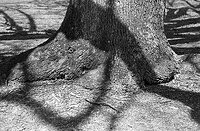
Tree with Big Shadows

Tree with Big Shadows

  • 2
  • 0
  • 32
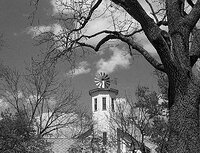
Everal Barn

A
Everal Barn

  • 0
  • 0
  • 32

Forum statistics

Threads
203,450
Messages
2,854,913
Members
101,850
Latest member
psimon
Recent bookmarks
0
UV and Skylight filters remove the UV from the spectrum thus eliminate haze. That is the reason that they are sold while the Skylight filter warms the film response.
Is that still the case? I'd read opinions that 'modern' films no longer had the sensitivity to UV so the filters had just become 'protective'. I've just been randomly reading up and found no agreement either way

What conditions would I need to consider using either type of filter? I'm not confident I'd recognise a 'hazy' scene if I saw it.
 
Is that still the case? I'd read opinions that 'modern' films no longer had the sensitivity to UV so the filters had just become 'protective'. I've just been randomly reading up and found no agreement either way

What conditions would I need to consider using either type of filter? I'm not confident I'd recognise a 'hazy' scene if I saw it.


I use them all the time except when I need to use another filter.

If you can see a long distance such as mountains far away, then you can see the haze on a photograph which [the haze] you cannot see by eye.
 
I use them all the time except when I need to use another filter
Do the other filters also have UV filtering in them, or is it something else that prevents using both? I’m thinking if I need a UV filter I’d need it regardless of whether I also needed for instance a grey grad. Sorry for the questions, just trying to sort the logic in my head.
 
Do the other filters also have UV filtering in them, or is it something else that prevents using both? I’m thinking if I need a UV filter I’d need it regardless of whether I also needed for instance a grey grad. Sorry for the questions, just trying to sort the logic in my head.

I rarely will use more than one filter at a time. If I am using a yellow, orange or polarizing filter to bring out the clouds on a black & white photograph then the increase sky contrast will out weigh the UV haze. With some wide angle lenses multiple filters add the risk of vignetting.
 
That makes sense, thanks for your patience!
 
Do the other filters also have UV filtering in them, or is it something else that prevents using both? I’m thinking if I need a UV filter I’d need it regardless of whether I also needed for instance a grey grad. Sorry for the questions, just trying to sort the logic in my head.

Either a Skylight 1B or UV(0) (designations vary among manufacturers) can be left in place to afford some protection of the front element of the lens. As you have seen, when using E6 films a presence of mind is beneficial to judge the effect that a Skylight 1B filter, particularly, will have on the image at a certain time of the day.

Stacking filters is not good practice for any lens, and will progressively degrade the image quality, in addition to greatly increasing the risk of intra-surface ghosting/flare and condensation.

Contrary to populist opinion, a filter here does not have any humanly-discernible effect on imaging, nor for that matter, a gelatin filter in a specific in-situ holder at the rear element. A few points to consider. In the case of a front element being ED glass, no filter should then be placed there. An aspherical front element is sometimes protected by its own front protection glass (as with many Canon L-series lenses). Many still have such a protruding rounded profile, so that attaching a filter can actually cause abrasion damage. The third point is that any filter must be matched to the quality of the lens in use; it is pointless to buy a $5,000 bells-and-whistles lens and slap on a $10 bottletop Chinese filter (some of my own filters cost more than the camera!). The risk of ghosting and flare remains, (and always will exponentially greater with square/rectangular slip-in filters) but today's glass filters are doing all that is possible to greatly reduce, if not eliminate, both things. The rest is up to where the photographer aims his camera if there is sun in the view!
 
Last edited:
That makes sense, thanks for your patience!

Feel free to ask questions at any time. None of us was born with this knowledge.
 
Photrio.com contains affiliate links to products. We may receive a commission for purchases made through these links.
To read our full affiliate disclosure statement please click Here.

PHOTRIO PARTNERS EQUALLY FUNDING OUR COMMUNITY:


Ilford ADOX Freestyle Photographic Stearman Press Weldon Color Lab Blue Moon Camera & Machine
Top Bottom