• Welcome to Photrio!
    Registration is fast and free. Join today to unlock search, see fewer ads, and access all forum features.
    Click here to sign up

Paul Strand ... does this idea work for you?

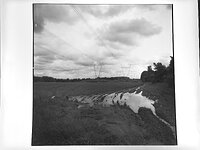
Puddle

Puddle

  • 2
  • 2
  • 65

Recent Classifieds

Forum statistics

Threads
202,728
Messages
2,844,710
Members
101,487
Latest member
Bmattei
Recent bookmarks
0
Agreed, but so is everything about one's living. The issue is finding those who really see. Most of us just look.

Some see too much and need to go live in a cardboard box on the edge of town.....until they are called on in times of crisis, cause their the only ones who can make sense of it all.
 
Last edited:
Sometimes "your living" means to repress your personality. A commercial photographer may not always take the photo he or she really sees, but the one that will please the client.

I would suggest that in this case the commercial photographer is actually "seeing" more than one photo, and making choices that reflect the needs of the situation.
It takes real photographic talent - real artistry - to anticipate the needs of a client, and to translate that into a high quality result.
There are examples of photographers who can be successful in the two worlds - commercial and art - but there aren't many.
 
In most of Paul's pictures of Rebecca she looks profoundly unhappy. Note she was an excellent painter. She divorced Paul and remarried, a rancher I believe.
 
I would suggest that in this case the commercial photographer is actually "seeing" more than one photo, and making choices that reflect the needs of the situation.
It takes real photographic talent - real artistry - to anticipate the needs of a client, and to translate that into a high quality result.
There are examples of photographers who can be successful in the two worlds - commercial and art - but there aren't many.
Not having to have to deal with the photographer's end of the client/photographer relationship, I would not only expect the photographer to deliver what I was requesting, but to add to that. I hired the photographer because of his or her vision and talent and if the photographer didn't add to the results I would be severely disappointed. On the other hand, I would not expect a photographer I had hired to ignore my wishes completely. If there is a difference in vision or execution, I would want know about it ahead of time. Of course, if the person in question was a "name" photographer, that is generally why they would be hired and let them have free reign.

I have rarely run into a photographer who has been truly successful at both art and commercial photography. It takes powerful compartmentalization.
 
Not having to have to deal with the photographer's end of the client/photographer relationship, I would not only expect the photographer to deliver what I was requesting, but to add to that. I hired the photographer because of his or her vision and talent and if the photographer didn't add to the results I would be severely disappointed. On the other hand, I would not expect a photographer I had hired to ignore my wishes completely. If there is a difference in vision or execution, I would want know about it ahead of time. Of course, if the person in question was a "name" photographer, that is generally why they would be hired and let them have free reign.

I have rarely run into a photographer who has been truly successful at both art and commercial photography. It takes powerful compartmentalization.

In my direct experience with dozens of professional photographers, virtually all had serious artistic skills (lots of formal photo education and aspirations). They actually enjoyed meeting the needs of their clients, and they worked hard to do that.

Professional photography does typically call for more than what the client specifies/asks-for, and it's been that way forever. It's easy for an amateur to claim he has "vision" but as we see everywhere, it's very hard for amateurs to become competent. The professional path is very steep...s/he can't just claim to be an "artist."

One critically important skill is to ferret out what the client actually needs....clients are often not sufficiently skilled to communicate those needs.
 
My photography is a record of my living but only I know how to look at it that way and I have never tried to show that or describe it to anyone else. I can and do however look at my work as a study of my state of mind.
 
Irving Penn comes to mind.

One of the few. Most fine art photographers who are also successful commercial photographers do editorial work. From what I have gathered, the fine art part of their careers is/was supported by the editorial work. And with the demise of magazines, there is less and less of that.
 
Can you name a few "fine art photographers" who are even close to being skilled enough to be "successful commercial photographers" ?

Also, why do we obsess on the suffering of "fine art photographers"? Same old "suffering artist" trope. Are they simultaneously failed novelists, motel rock bands, and perpetual motion machine inventors?

Does "artistry" require outdated film?
 
Can you name a few "fine art photographers" who are even close to being skilled enough to be "successful commercial photographers" ?

Does it matter?
Different, even if over-lapping, skill sets.
 
Does it matter?
Different, even if over-lapping, skill sets.
Personality is sometimes more of the defining factor. Robert Frank worked in New York City as a fashion photographer for a while. Diane Arbus started out as a fashion photographer--teamed with her husband who took the actual photos--and later many of her proposed editorial assignments for magazines like Esquire ended up among her fine-art work. Many of today's fine art photographers (Gregory Crewdson, Jeff Wall and Joel Meyerowitz come to mind) certainly have the skills to work as successful commercial photographers, but that is not what they have chosen.
 
Also, why do we obsess on the suffering of "fine art photographers"? Same old "suffering artist" trope. Are they simultaneously failed novelists, motel rock bands, and perpetual motion machine inventors?
I don't think we obsess about their suffering. Weston was never very successful until the end of his life, most of the time he lived hand-to-mouth.

The reason their are so many failed artists, writers, etc. is often because they really aren't that good to start with. The counterpart is most of the public doesn't spend money on art or literature, so even if one is a talented artist it is no guarantee of success. Luck and connections often play a disproportional part.
 
The reason their are so many failed artists, writers, etc. is often because they really aren't that good to start with. The counterpart is most of the public doesn't spend money on art or literature, so even if one is a talented artist it is no guarantee of success. Luck and connections often play a disproportional part.
There's also a need for an affinity for self-promotion, marketing, etc., that many artistic types seem to lack. History seems to be full of talents which were unknown/undiscovered until long after their death, and perhaps that wouldn't be the case had those talents made focused efforts on marketing themselves during their lifetimes. And there's the rub for so many.
 
There's also a need for an affinity for self-promotion, marketing, etc., that many artistic types seem to lack.
For sure. In some cases that affinity seems at odds with the photographer and/or their work.

There is a quote from Robert Adams about the photographer Ken Abbot in the Book Art Can Help that speaks to this. Speaking of Abbot, Adams said, "I urged him to bring these pictures together in a book, to encourage us, but he never quite wanted to, I think out of the same modesty that allowed him to respond to the places [that he photographed] without prejudice."
 
Personality is sometimes more of the defining factor. Robert Frank worked in New York City as a fashion photographer for a while. Diane Arbus started out as a fashion photographer--teamed with her husband who took the actual photos--and later many of her proposed editorial assignments for magazines like Esquire ended up among her fine-art work. Many of today's fine art photographers (Gregory Crewdson, Jeff Wall and Joel Meyerowitz come to mind) certainly have the skills to work as successful commercial photographers, but that is not what they have chosen.

There's no important distinction between the two. And of course, Crewdson, Wall, Meyerowitz et al are actually highly commercial....they're seriously into peddling their names, just as Ansel Adams was. Ansel of course did a project for Kodak and a very long, highly advertised project for Polaroid...his Polaroids weren't wonderful but he did promote that company in his books...his books are the way many of his check-writing enthusiasts learned about him. Edward Weston became "hand to mouth" of course but he began first as a successful portrait photographer (like Imogene Cunningham) before he became poor. Nonetheless, it helped that Weston's collectors were the most wealthy people in California (and he made their portraits...see Daybook 2)...and it didn't hurt that some of his Mexico Daybook subjects were notrious/famous. And his son might not have gotten his perhaps-fame if his father wasn't so artistically successful.

The distinction between "art" photography and "commercial" photography is mostly that the artiste types anxiously sought and clung to employment at mediocre colleges whereas the best commercial types were selected by advertising agency art directors, who themselves were often artists....they knew what they wanted and knew how to get it.

 
Last edited:
Thanks for sharing that quote, which succinctly makes the point.
 
The reason their are so many failed artists, writers, etc. is often because they really aren't that good to start with. The counterpart is most of the public doesn't spend money on art or literature, so even if one is a talented artist it is no guarantee of success. Luck and connections often play a disproportional part.

Sad but true. Another aspect is that there's a vast oversupply of "art" in the marketplace. But let's face it, art usually comes behind other human needs like food, shelter, clothing and medical care. I love looking at art, and besides galleries and museums I look on the internet. My latest favorite site is "Ocula," which shows tons of good paintings, ceramics and photographs. But one wonders if this stuff will ever find a home.
 
Can a great undiscovered artist still be considered personally successful? or is "success' only found in the marketplace?

Most fine art photographers would make lousy commercial photographers, because who in their right mind wants to be a commercial photographer? šŸ˜Ž
And if one doesn't want to do something, one generally will not be good at it.
 
There's no important distinction between the two. And of course, Crewdson, Wall, Meyerowitz et al are actually highly commercial....they're seriously into peddling their names, just as Ansel Adams was. Ansel of course did a project for Kodak and a very long, highly advertised project for Polaroid...his Polaroids weren't wonderful but he did promote that company in his books...his books are the way many of his check-writing enthusiasts learned about him. Edward Weston became "hand to mouth" of course but he began first as a successful portrait photographer (like Imogene Cunningham) before he became poor. Nonetheless, it helped that Weston's collectors were the most wealthy people in California (and he made their portraits...see Daybook 2)...and it didn't hurt that some of his Mexico Daybook subjects were notrious/famous. And his son might not have gotten his perhaps-fame if his father wasn't so artistically successful.

The distinction between "art" photography and "commercial" photography is mostly that the artiste types anxiously sought and clung to employment at mediocre colleges whereas the best commercial types were selected by advertising agency art directors, who themselves were often artists....they knew what they wanted and knew how to get it.

The distinction between "art" photography and "commercial" photography is that commercial work is done on assignment (of a specific subject, location or activity) by a paying client who choses the final use and cropping of the photograph, including the possible copyright. Staff photographers, wedding photographers and even photojournalists are all "commercial" photographers. There may be a fine line when a photographer goes on their own to document something and then packages and sells it for media publication.
 
who in their right mind wants to be a commercial photographer?
Most photography students who attend Art Center School in Southern California (where Ansel Adams taught the Zone System) want to be successful commercial photographers. And most probably the vast majority of photography students in community college programs.
 
Photrio.com contains affiliate links to products. We may receive a commission for purchases made through these links.
To read our full affiliate disclosure statement please click Here.

PHOTRIO PARTNERS EQUALLY FUNDING OUR COMMUNITY:


Ilford ADOX Freestyle Photographic Stearman Press Weldon Color Lab Blue Moon Camera & Machine
Top Bottom