


• Welcome to Photrio!
    Registration is fast and free. Join today to unlock search, see fewer ads, and access all forum features.
    Click here to sign up

Paterson Thermometer

Recent Classifieds

Forum statistics

Threads
202,848
Messages
2,846,427
Members
101,564
Latest member
swedafone
Recent bookmarks
0
I started using electronic thermometers around 40 years ago when using industrial film processing equipment. They were so much easier and quicker and supposedly more accurate; but the cost was prohibitive.

In 1991 I bought a new manufacturing process for my business, which required very accurate temperature monitoring. To that end I picked up a $1,000 USD (or thereabouts) electronic thermometer with supposedly fantastic accuracy. It was certainly good enough for the job and by changing to a different probe, I also started using it for my photography. I was hooked on electronic thermometers.

Today I have a very cheap, reliable splash proof electronic thermometer for my photography. It is simple and is now what I use exclusively for photography, cost was around $20 AUD when I purchased it around 5-6 years ago.

This is very similar, if not identical to what I have.
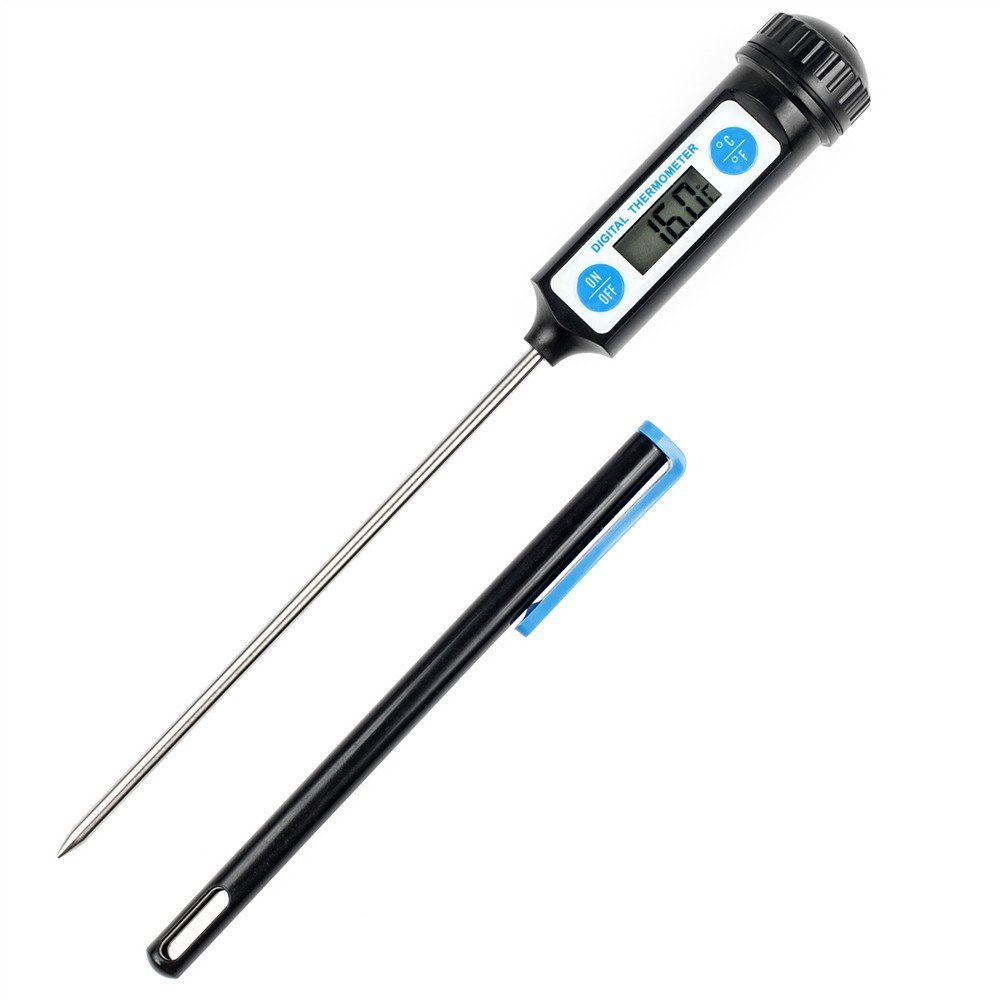
I have the same digital thermometers, one for the developer and one for all the rest (two because in the heat of the fight things can be mixed up and contaminated).
I checked them with the famous Kodak Precess Thermometer 3 and these are as accurate as the Kodak one.
 
In my high school biology II class a classmate broke a mercury thermometer (1973-74). We all played with the spilled mercury. To the best of my knowledge, none of us are the worse for it. One, the head Dr. of Children's Oncology at Helen DeVos Children's Hospital. Another a retired head Engineer at Lockheed Martin. A third, retired professor at Ferris State University.

I won't discard the hazards of mercury. But like many things, length of exposure is most important. Our lab was extremely well ventilated.
 
This is common with alcohol thermometers. Actually, it used to happen with mercury thermometers, too, but these were even easier to 'fix' by just forcefully whipping the thermometer a couple of times so that centrifugal forces push the liquid back towards the end. This works with alcohol thermometers as well, but a little less so than with the old mercury ones.

Sometimes, the liquid won't reunite whatever you try and at that point your thermometer is toast. It tends to happen if you overheat it so that the liquid expands all the way up the column, or when the thermometer is being subjected to shocks (e.g. by dropping it).

I don't think any impact of this on its accuracy is worth losing any sleep over. Especially for B&W it won't matter much at all, if the accuracy is affected in the first place, which I doubt.

This is the right thing to do. put the thermometer in hot water to force the liquid up into the bulb. When the bubble reaches the bulb, the column will come back together. Then allow it to kool -- be careful not to overheat.

BTW Paterson thermomenters are pretty accurate despite their reasonable price.
 
You may also cool in a salt ice bath to bring all the liquid down to the bulb. There’s less risk of shattering.
 
Photrio.com contains affiliate links to products. We may receive a commission for purchases made through these links.
To read our full affiliate disclosure statement please click Here.

PHOTRIO PARTNERS EQUALLY FUNDING OUR COMMUNITY:


Ilford ADOX Freestyle Photographic Stearman Press Weldon Color Lab Blue Moon Camera & Machine
Top Bottom
