

• Welcome to Photrio!
    Registration is fast and free. Join today to unlock search, see fewer ads, and access all forum features.
    Click here to sign up

Partial-Stand Rodinal 1+100 on 35mm - $%^%#!!! streaks

Recent Classifieds

Forum statistics

Threads
202,870
Messages
2,846,792
Members
101,579
Latest member
And ee
Recent bookmarks
0

bjorke

Member
Allowing Ads
Joined
Aug 17, 2003
Messages
2,278
Location
SF sometimes
Format
Multi Format


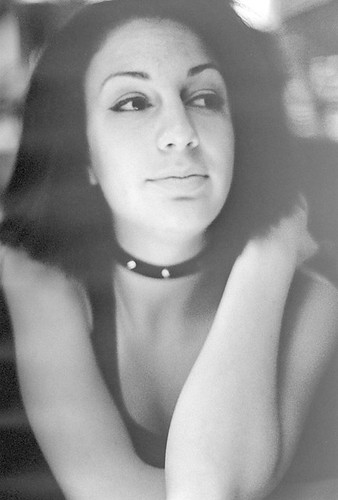
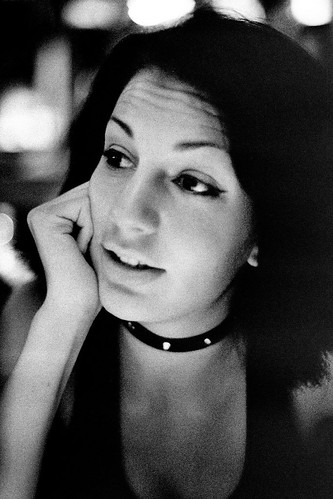
One hour, 1+100, agitation 5 secs every 12 minutes... my guess is thermal convection along the surface of the film, since the streaks align either with the sprocket holes (esp in this one) or on occasion there will be a dark stripe trailing-away from a highlight — indicating that the developer was exhasted there and wasn't fogging the base as much as it was in other areas.

Maybe just pulling back to less than an hour will do the trick and avoid this fogging....


Tri-X rated ISO 2400 btw.

Print with high-enough contrast, though....
 
couple of additional questions...what was the total volume of Rodinal used? Seems like I found that I had to mix up at least enough volume to have a minimum of 10ml of conc. or the developer would tend to exhaust. 2nd, what was the temp of the dilute developer during processing vs the room temp (was tank metal or plastic?)
 
I had this kind of streaking with APX 100 roll film standing in Rodinal 1+100. I had to get the standing periods between single agitation inversions down to 20 minutes max to avoid it, and decided to standardize on 15 minutes to be safe. That was with 5ml Rodinal per roll if you want a datapoint for photomc's suggestion. I didn't try it with larger volumes and more concentrate.

Lee
 
My time with APX 100 and rodinal 1+100 was 20-22 minutes with 5ml per roll. Depending on the scene, I either agitated 3 inversions every five minutes or 2 inversions every other minute. Never had a problem.
 
2400 eh ?

I'd like to link the defects to the standing intervals.

I think you might get away with this development scheme with ei 400.

For 2400 I'd guess agitation for 5 seconds every fifth minute would give you most of the benefits of standing development while eliminating the bad stuff.

.
 
After thinking about it a little bit, for EI 2400, you could probably succeed with 15 minute intervals with 1+50. There is - to me - no significant difference between 1+100 and 1+ 50 when agitation is minimized, but you ought to have enough developer to remain active in the low densities.

Or, you could stay with 1+100 and add 50 ml of stock Xtol to let the ascorbate go superadditive with the P-HCL... which borders on witchcraft but does work.

g'luck.

.
 
Yes, I'm buying the "bromide streak" theory and will shorten-up the agitation intervals in the first part of the development.

(Yes, they're both Tri-X, they're two or three frames apart on the same roll!)

thx
KB
 
Kevin -- see my post on Flickr. I've had exactly these bromide streaks before. More agitation in the first 10 mins should solve it.
 
I find some films more prone to streak than others. My best results have been Efke 25, Rodinal 1+150, agitate 1.5 min then stand for remainder of 30 min.
Mark
 
I was also suprised by the handling properties of efke, at least pl100 in 35mm. It is dry out here and trix curled up like leaves, attracts a lot of static and hard to handle. The efke dried straight.
 
I'd agree -- I've been using the same method (even less agitation) on Acros without any noticeable bad behavior.

And even from this same batch of three rolls, some strips seem streak-free:

 
I managed to do something similar the other day with rodinal.. I forgot to shake up the solution. I had streaks from the sprocket holes on a few of the frames.
 
Photrio.com contains affiliate links to products. We may receive a commission for purchases made through these links.
To read our full affiliate disclosure statement please click Here.

PHOTRIO PARTNERS EQUALLY FUNDING OUR COMMUNITY:


Ilford ADOX Freestyle Photographic Stearman Press Weldon Color Lab Blue Moon Camera & Machine
Top Bottom
