
-
Welcome to Photrio!Registration is fast and free. Join today to unlock search, see fewer ads, and access all forum features.Click here to sign up
You are using an out of date browser. It may not display this or other websites correctly.
You should upgrade or use an alternative browser.
You should upgrade or use an alternative browser.
parodinal as a print developer
-
A
- Thread starter marcsv
- Start date
Recent Classifieds
-
For Sale 4 vintage 35mm metal film canisters: Ilford, Kodak, Ansco, Adox
- Started by Jon Shiu
-
Sold SOLD! RW Vacuum Fidelity Elite 4x5 (5 units) & 8x10 (4 units) Film Holders
- Started by B.S.Kumar
-
Sold Cable Release Adapters for Leica, Nikon, Yashica, Rollei
- Started by Jon Shiu
-
Sold Stoesser Pin Registration Punch
- Started by Roger Thoms
Forum statistics

I haven't tried it yet, but I mean to. What you describe sounds quite similar to this recipe found in the chemistry recipe section on APUG: (there was a url link here which no longer exists)

I"ve thought about this. I did develop Azo a few times in Rodinal 1:20.
juan
juan
OP
OP

- Joined
- Jun 8, 2006
- Messages
- 61
- Format
- 35mm
I really liked the final prints i got from this brew...I'm seriously thinking of using this as my primary print developer rather than D76. The prints I made had a warm brownish tone, I cant wait to try this with split - grade printing.

ZorkiKat
Member
marcsv said:I really liked the final prints i got from this brew...I'm seriously thinking of using this as my primary print developer rather than D76. The prints I made had a warm brownish tone, I cant wait to try this with split - grade printing.
You use D76 for paper?
paRodinal should work with paper. I used old sheets of bromide paper to test paRodinal (if it indeed was able to develop) when I was first brewing it. The paper blackened- solid black- almost as soon as it hit the concentrated solution.
Since paRodinal is just like real rodinal, the comments from the ORWO FORMULAE book could apply- and here is a quote:
"R 09 can be used even for developing photographic paper. In doing so, suitable papers show a warm tone.
Ratio of diluting : Contrast
1+5 to 1+10 : Normal
1+20 : Soft
1+30 to 1+40: Extra Soft (especially for two-bath developing)
Attention! durability and utilization of highly diluted R 09 developer are less than those of special paper developers."
Ratio of diluting : Contrast
1+5 to 1+10 : Normal
1+20 : Soft
1+30 to 1+40: Extra Soft (especially for two-bath developing)
Attention! durability and utilization of highly diluted R 09 developer are less than those of special paper developers."
Some papers, notably those marked 'rapid' RC types have hydroquinone or some other developing agent incorporated in their emulsions. As such they often need only a strong alkaline bath to start developing. These paper often show a rather warm tone when subjected to such alkaline activator baths.
Jay

Since I'm thinking of picking up a bunch of Rodinal here shortly just in case (yeah, I know it's around, but I don't want it getting hard to find on me) I thought about experimenting with something like this after I had some experience with printing. I've heard of the really nice results, but I haven't really seen them. Anyone have some print scans that would give me an idea of how they look?
Yeah, I second that, let's see prints if someone has something they want to show.
EDIT: If that doesn't happen, I'll have to get around to do some myself and post. But that'll take a few days or a week...
EDIT: If that doesn't happen, I'll have to get around to do some myself and post. But that'll take a few days or a week...
OP
OP
- Joined
- Jun 8, 2006
- Messages
- 61
- Format
- 35mm
print sample using parodinal ans print developer
as requested
jay: sorry 'bout that, I meant to write dektol not D76
here's one of the first prints, i'll post more in a few days
Dead Link Removed
Yeah, I second that, let's see prints if someone has something they want to show.
EDIT: If that doesn't happen, I'll have to get around to do some myself and post. But that'll take a few days or a week...
as requested
jay: sorry 'bout that, I meant to write dektol not D76
here's one of the first prints, i'll post more in a few days
Dead Link Removed
Last edited by a moderator:

- Joined
- Sep 20, 2002
- Messages
- 3,699
Another consideration. p-aminophenol, the agent of either Rodinal or Parodinal, is synergistic with either hydroquinone or sodium ascorbate. 4 grams (1 teaspoon) of ascorbate in a liter of 1+50 Rodinal is about as active as 1+25 Rodinal. If you use hydroquinone, control the color of the print by adding more or less sulfite.
OP
OP
- Joined
- Jun 8, 2006
- Messages
- 61
- Format
- 35mm
Another consideration. p-aminophenol, the agent of either Rodinal or Parodinal, is synergistic with either hydroquinone or sodium ascorbate. 4 grams (1 teaspoon) of ascorbate in a liter of 1+50 Rodinal is about as active as 1+25 Rodinal. If you use hydroquinone, control the color of the print by adding more or less sulfite.
Actually the next stage would be adding hydroquinone. The soup i used didn't use potassium bromide, I'm thniking of using by newest batch whech has about a gram of potassium bromide for every 250 ml. how would this affect the print?

Has anyone else tried this?
I tried it yesterday. I used the parodinal version that doesn't use potassium bromide. It gave out nicely toned prints on generic paper. I used 1:20 dilution and my usual water bath.
I have used Rodinal at dilutions of 1 to 20 and even 1 to 30 for print developing for bromoil matrices.
Gene
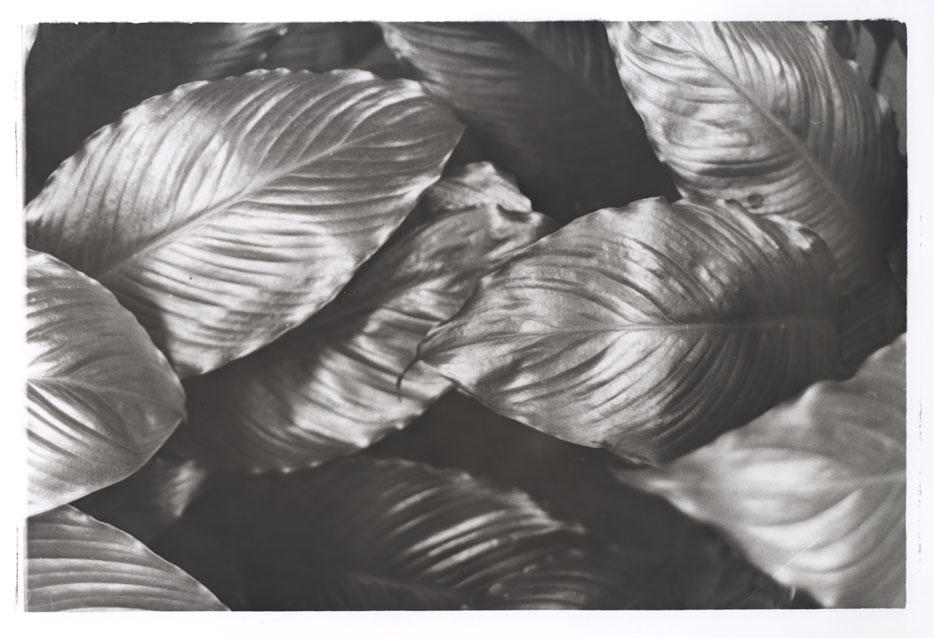
They're looking very low contrast to me.
Actually the next stage would be adding hydroquinone. The soup i used didn't use potassium bromide, I'm thniking of using by newest batch whech has about a gram of potassium bromide for every 250 ml. how would this affect the print?
The potassium bromide would work as a restrainer (correct me if I am wrong), while the sodium ascorbate/hydroquinone would make it work, as said earlier, with greater strength.
The prints look nice with a good tone, though it looks like they lack a bit in contrast (so hard to judge from a scan, onscreen!), it works well with the subject matter.
OP
OP
- Joined
- Jun 8, 2006
- Messages
- 61
- Format
- 35mm
The potassium bromide would work as a restrainer (correct me if I am wrong), while the sodium ascorbate/hydroquinone would make it work, as said earlier, with greater strength.
The prints look nice with a good tone, though it looks like they lack a bit in contrast (so hard to judge from a scan, onscreen!), it works well with the subject matter.
I found a recipe indicating that potassium bromide lowers film fog, I'm just not quite sure how this would translate to enlarging paper, thanks for the hydroquinine tip.
- Joined
- Sep 20, 2002
- Messages
- 3,699
Bromide works with paper as it does with film, but, but changes print color sometimes. It varies more or at least as much from developer to developer as from paper to paper to film etc. It's a matter of different strokes for different folks. Sometimes benzotriazole is called for. Most of us, I think, keep a saturated solution of KBr around so we can add a drop or two as the spirit moves.
OP
OP
- Joined
- Jun 8, 2006
- Messages
- 61
- Format
- 35mm
KBr and print tone
I read form The Compact Photo Lab Index (Morgan and Morgan, 1977) that adding more KBr to a developer, like Ansco/Agfa for example, gives the print a warmer tone. I wonder if it does the same for my version of PAP HCl. Also I mixed a new batch of PAP HCl, this time I included about 2.5 grams of Hydroquinone. Actually its starting to look like to Kodak's D-8 (which I understand, gives more contrast).
Only one way to find out...more film and darkroom tests.
Bromide works with paper as it does with film, but, but changes print color sometimes. It varies more or at least as much from developer to developer as from paper to paper to film etc. It's a matter of different strokes for different folks. Sometimes benzotriazole is called for. Most of us, I think, keep a saturated solution of KBr around so we can add a drop or two as the spirit moves.
I read form The Compact Photo Lab Index (Morgan and Morgan, 1977) that adding more KBr to a developer, like Ansco/Agfa for example, gives the print a warmer tone. I wonder if it does the same for my version of PAP HCl. Also I mixed a new batch of PAP HCl, this time I included about 2.5 grams of Hydroquinone. Actually its starting to look like to Kodak's D-8 (which I understand, gives more contrast).
Only one way to find out...more film and darkroom tests.
Has anyone else tried this?
I tried it yesterday. I used the parodinal version that doesn't use potassium bromide. It gave out nicely toned prints on generic paper. I used 1:20 dilution and my usual water bath.
The question is: Why?
Commercial paper developers are dirt cheap and have so far, at least for me, been easily available.
Sincerely,
Hany.
- Joined
- Sep 20, 2002
- Messages
- 3,699
Why? Because it's there, and because the commercial ones may not always be there. If I have to order and pay shipping from a place 500 miles away to get something that is made from ingredients I can buy at the country store, I'll learn how to make it myself. If the same concoction that works on film also works on prints, so much the better.
When I wrote the article "Non-chromogenic Antiscorbutic Developers for Black and White", which can still be viewed on www.unblinkingeye.com, there was one component, metol, that I could not get at small town grocery or hardware stores. P-aminophenol would have served, but I did not think of getting it from acetaminophen.
When I wrote the article "Non-chromogenic Antiscorbutic Developers for Black and White", which can still be viewed on www.unblinkingeye.com, there was one component, metol, that I could not get at small town grocery or hardware stores. P-aminophenol would have served, but I did not think of getting it from acetaminophen.
OP
OP
- Joined
- Jun 8, 2006
- Messages
- 61
- Format
- 35mm
The question is: Why?
Commercial paper developers are dirt cheap and have so far, at least for me, been easily available.
Sincerely,
Hany.
To me its having more creative control over the photographic process than economics. I've been exclusively using one set of developer for years (d76 for film and dektol for prints).I dont have problems locating merchants for them, but there comes a point where you have to expand your skillset.
YAY! I've been watching this with interest. If it works well, I may start making parodinal to use as a print developer.
Out of curiosity, what times are you using?
Out of curiosity, what times are you using?

I seem to remember reading that Calbe Photochemie used to reccomend dilutions of 1+5 to 1+20 for paper development - just remember that 1+20 dilution will require 5 minutes or so of development to gain enough contrast.
Hope this helps,
Lachlan
Hope this helps,
Lachlan
| Photrio.com contains affiliate links to products. We may receive a commission for purchases made through these links. To read our full affiliate disclosure statement please click Here. |
PHOTRIO PARTNERS EQUALLY FUNDING OUR COMMUNITY:  |