The point is that you dismissed development control for hybrid photography as "moot"
Yup, it is in many cases, especially those where people don't have a clear concept of what they're trying to optimize in an objective sense. That's the case here.
There are instances where people
do have a solid conception of what they're doing, and it's those instances that appear to answer to two characteristics:
1; they usually involve arguments that aren't really about technical optimization, but involve meta-level arguments involving non-rational (which to me is something different from irrational) concerns.
2; there's generally a subjective preference involved for solving the puzzle one way or another; e.g. "I know I could do it like X, but Y gets me where I want to be quicker within my personal preferences and limitations".
Again, no contest that people have preferences and that's OK. What I do want to inject in discussions like these, at least occasionally, is that the tendency of some to try and 'sell' one workflow or another based on quasi-objective grounds is virtually always problematic. It's just not a linear optimization problem. It's one of personal preference, involving a rather fuzzy set of criteria that in part depend on highly personal considerations, including know-how and competence. This leaves the possibility that somebody is trying to do something in a very roundabout and possibly inefficient or even ineffective manner, while a more suitable approach would be feasible. Whether that approach is considered attractive, is for anyone to decide.
Now, your 'objective' arguments in my view just do not convincingly make a case for chemical optimization, or against doing it digitally.
Take the s/n ratio argument, for instance. If you think that one through, which goes beyond the simple calculation you show, you realize that you have to find an optimum between several factors that degrade signal quality; in particular sensor (thermal) noise in the scanner vs. film grain. It turns out that the optimal is dependent on the scanner, probably on scanning settings, film used, scene brightness range and to a lesser extent the developer used. Then there's the question of what the penalty (qualitative and quantitative) is of deviating from the mathematical optimal. Is it a steep decline on either side, or a gentle slope? I'm willing to bet a good bottle of wine that you haven't done the testing, and taking a (sensible!) and pragmatic approach to it and take a ballpark guess at it. Fine, but if you're taking an objective approach, you'd have to test a number of combinations, quantify (and/or qualitatively operationalize) the results and systematically compare those in order to find a decent optimum. Which, of course, turns out to be a compromise if you're working with roll film - after all, SBR was part of the mix...
As to curve shape - I'm not sure how there could be a discussion at all. Curve shape is so ridiculously easy to adjust digitally, whereas it's challenging to control (with precision) in chemical space. That doesn't mean the latter can't be done, or that over- or underdevelopment (there are divided camps on this, it appears) cannot produce very pleasing results for someone. I just don't see how it would be a superior approach, in an objective sense, in comparison with an approach that is so flexible, that can be repeated with variations without altering the original, that can be applied with local variation, etc. It's literally like split-grade burn/dodge printing, just quicker. What's not to like about including that option? How is the alternative more attractive if there's no compelling need to go there (e.g. contact printing in a process that doesn't allow for contrast manipulation etc.)?
The adjacency effect claim is problematic for two reasons.
Firstly, as I said before, it's contestable (IMO plain wrong) that it's somehow better to optimize this in film development. This is only true if you have no other (feasible, attractive) means downstream in the imaging chain. Especially when scanning, you do, since all manner of manipulations of contrasty edges (USM and related techniques) are readily available. Moreover, they can indeed be applied in various modes, degrees and with local differentiation. As to this allegedly being an unsupported claim - please refer to the zillions of online guides, videos etc. on sharpening digital images, on how to work the USM, local contrast etc. adjustments and what the various parameters do, how to work with masked layers, etc. The toolbox is virtually unlimited. Since you're adamant that 'your' way is best, I trust you're aware of the alternative? Secondly, since we're in this context discussing roll film, there's the issue of having multiple scenes on the same roll for which it's arguably very often (usually) not the case that 'one size fits all' presentation choices would work. In conjunction with edge effects being something that cannot be removed from a negative (they're analogous to a 'destructive' edit), there's a very valid argument to postpone such decisions to a later stage in the process. Furthermore, I found the inclusion of edge effects in your initial response a bit opportunistic since the story started with simple lengthening of development. I trust you're aware that edge effects are typically controlled/achieved with the combination of reduced/limited agitation and a highly dilute developer that's working on the edge of depletion. Braxus is using straight XTOL...the opposite of what you'd use if you wanted to create pronounced edge effects. Simply developing longer in XTOL (etc.) 1+0 won't produce such effects. Drifted off of the original question, indeed!
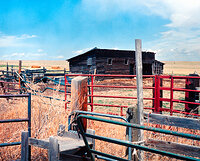
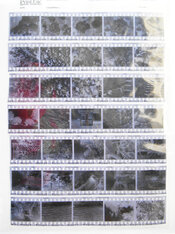
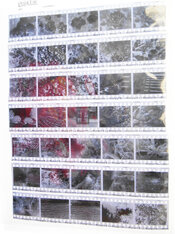
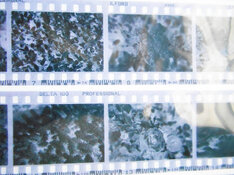
I don't doubt that you're getting somewhere you like with your images and your workflow. That's great, honestly. In this particular case, I see someone using Delta 100, they're presenting us with a number of images in which there's apparently (according to and paraphrasing OP) an issue with suboptimal quality of midtones, and they're using a hybrid workflow. In that context I think it's fair game to remark that overdevelopment just isn't going to fix the issue, and insofar it is, the same effect can be had by postponing such adjustment to a later stage, when it can be experimented with in order to optimize on an image-wise basis. To put it very bluntly, if someone shows the images in #11 and states there's a problem with mid-tones, and they allege that they're trying to solve it by overdeveloping the film, I think there's a very good set of reasons to point out they're looking in a direction that holds very few solutions for their specific problem.