Optimizing DIY Anamorphic Camera with Enlarger Lens Without Mechanical Shutter

Rural Ohio

Rural Ohio

  • 1
  • 0
  • 10
Railroad Cross and Tree

A
Railroad Cross and Tree

  • 3
  • 0
  • 13

Recent Classifieds

Forum statistics

Threads
201,051
Messages
2,818,257
Members
100,496
Latest member
Incredulousk
Recent bookmarks
1

Mustafa Umut Sarac

Member
Allowing Ads
Joined
Oct 29, 2006
Messages
4,863
Location
İstanbul
Format
35mm
I know stories about group f64.

My workshop teacher has single 80mm rodenstock enlarger lens. We will build 6X24 or larger 120 spooled mid format film anamorphic cylinder camera.

What is the biggest size format I can build for 120 film ?


We will have lens at the top of the cylinder and pinhole aperture after the lens.

And my purpose is not burn film in shock time with enlarger lens with apertures ring but without mechanical factory made shutter , and so we add pinhole to the lens but what size?

Not losing the quality of rodenstock!

We must remember expose times should be fastest hand or elastic band operatable because I dont want blurry images.

Can you please help me to optimize those ?
 
Last edited:

koraks

Moderator
Moderator
Joined
Nov 29, 2018
Messages
25,951
Location
Europe
Format
Multi Format
OP
OP
Mustafa Umut Sarac

Mustafa Umut Sarac

Member
Allowing Ads
Joined
Oct 29, 2006
Messages
4,863
Location
İstanbul
Format
35mm
I think project is doable. I have calculated , 80mm lens makes 6X33 format camera , if we cut 6 cms for rollers and bending the film on rollers , it would be an 6X27 Format camera. Lets make it 6x24 and 4 photos could be taken.

Next monday I will learn how much aperture can be closed may be up to f:22

I have calculated the depth of the cylinder is 6 cms and lens light cone can be focused to 80mm. Basic hipotenus calculation revealed the need of radius and circle around it.

It would be much interesting if we can form a rotating film sweeping slit. I defend it and I will make it this way.

This will make the camera , a widelux time sweeping camera and as jeff bridges defends its a half movie half photograph camera.

Project will be drawen on cad for extremelly high quality prusa s latest and biggest 3 d printer and files will be announced.

Time sweeping can be done with external stepper motor and ardunio. My friends are experts on that. Speeds will be 1/15, 1/125, 1/250.
 

loccdor

Member
Joined
Jan 12, 2024
Messages
2,336
Location
USA
Format
Multi Format
So, you don't actually mean pinhole aperture then. I think you mean fixed aperture.

I've inserted a fixed f/22 aperture in a postcard-size rollfilm camera lens before. I did that because the lens had been worked on and was missing its aperture blades. It did work. I made it out of black plastic card.
 
OP
OP
Mustafa Umut Sarac

Mustafa Umut Sarac

Member
Allowing Ads
Joined
Oct 29, 2006
Messages
4,863
Location
İstanbul
Format
35mm
So, you don't actually mean pinhole aperture then. I think you mean fixed aperture.

I've inserted a fixed f/22 aperture in a postcard-size rollfilm camera lens before. I did that because the lens had been worked on and was missing its aperture blades. It did work. I made it out of black plastic card.

Hello loccdor and everyone. Time sweeping idea came to my mind few minutes ago.
I dont think I have no interest with pinhole aperture after all.

Now the big question , how slit and speed of motor might be optimized to make film exposure times 1/15-1/125-1/250 ?
 

koraks

Moderator
Moderator
Joined
Nov 29, 2018
Messages
25,951
Location
Europe
Format
Multi Format
how slit and speed of motor might be optimized to make film exposure times 1/15-1/125-1/250 ?
The projected slit needs to expose each part of the film for the duration specified. You set the angular velocity to match the combination of the projected slit width and the desired exposure time.
My friends are experts on that.
There you go; they'll solve this for you.
 

loccdor

Member
Joined
Jan 12, 2024
Messages
2,336
Location
USA
Format
Multi Format
If you go with a 24 cm frame and you want, for simple example, a 1/24 sec exposure from a 1 cm slit.

Time of exposure: 1/24 sec
Distance traveled in that time: 1 cm (width of slit)
Movement speed of shutter: 24 cm per second
 

bernard_L

Member
Allowing Ads
Joined
Feb 17, 2008
Messages
2,107
Format
Multi Format
anamorphic cylinder camera.

We will have lens at the top of the cylinder and pinhole aperture after the lens.

a widelux time sweeping camera

I'm confused. You seem to be describing two different camera designs.
  • sweeping camera: the lens is on the axis of the [|film] cylinder, right in front of the film
  • anamorphic cylinder camera: the film is also along a cylinder, but the lens is (as you state) along the axis of the cylinder, above the film; completely different from first one


From the Widelux manual (buktus.org)
1761743375980.png

1761743410295.png


from: http://ericconstantineau.com/photo/review_anya_en.html
"anamorphic cylinder camera (...) have lens at the top of the cylinder" as per your statement


4599490795_9b4c4b4935_n.jpg
5152087597_e1a6cf98dd_n.jpg
5152084313_b3730ee2ca_n.jpg

The camera is a big empty tube, the sheet of film is inside, on the side of the tube, and the pinhole is at the center of the top plate.
 

loccdor

Member
Joined
Jan 12, 2024
Messages
2,336
Location
USA
Format
Multi Format
Movement of the slit, not the shutter. What you want to determine is the angular velocity.

Slit, yes. Isn't the slit a kind of shutter?
 
OP
OP
Mustafa Umut Sarac

Mustafa Umut Sarac

Member
Allowing Ads
Joined
Oct 29, 2006
Messages
4,863
Location
İstanbul
Format
35mm
I'm confused. You seem to be describing two different camera designs.
  • sweeping camera: the lens is on the axis of the [|film] cylinder, right in front of the film
  • anamorphic cylinder camera: the film is also along a cylinder, but the lens is (as you state) along the axis of the cylinder, above the film; completely different from first one


From the Widelux manual (buktus.org)
View attachment 410246
View attachment 410247


from: http://ericconstantineau.com/photo/review_anya_en.html
"anamorphic cylinder camera (...) have lens at the top of the cylinder" as per your statement


4599490795_9b4c4b4935_n.jpg
5152087597_e1a6cf98dd_n.jpg
5152084313_b3730ee2ca_n.jpg

The camera is a big empty tube, the sheet of film is inside, on the side of the tube, and the pinhole is at the center of the top plate.

I am sorry to confuse. You are right to ask. I am thinking a tube camera , there will be a central axis of the tube and there will be a rotating slit touches the film and sweeping it. There will be a external stepper motor and external ardunio at the bottom and central axis. This camera by the design , bend the image and time sweeping action will increase the effects.

but if you direct it to panorama scene , it takes no distortion image if you are careful.

We are lucky , we have rodenstock and colors are faraway superior to schneiders.
 
OP
OP
Mustafa Umut Sarac

Mustafa Umut Sarac

Member
Allowing Ads
Joined
Oct 29, 2006
Messages
4,863
Location
İstanbul
Format
35mm
When thinking , I found a problem . Time sweeping rotating slit and film distance would be 4-5-6mm or so. Because there is a skeleton inside which is 4-5-6 so so mm thick. That slit and film distance makes a focus problem or does it think to the top lens focused to the film makes slit distance not a problem ? Or should I design the internal frame where the slit kisses the film ?
 

OAPOli

Member
Allowing Ads
Joined
Sep 26, 2022
Messages
790
Location
Toronto
Format
Medium Format
I'm also confused. Maybe a sketch of sorts would help. Are you trying to build a cylindrical camera but with an optical lens? I don't think that would work due to narrow depth of focus. Why do you need a sweeping slit shutter vs. a guillotine shutter for example?
 
OP
OP
Mustafa Umut Sarac

Mustafa Umut Sarac

Member
Allowing Ads
Joined
Oct 29, 2006
Messages
4,863
Location
İstanbul
Format
35mm
I'm also confused. Maybe a sketch of sorts would help. Are you trying to build a cylindrical camera but with an optical lens? I don't think that would work due to narrow depth of focus. Why do you need a sweeping slit shutter vs. a guillotine shutter for example?

Search for anamorphic pinhole camera , tons of information out there my friend.
I will use a lens and internal electric motor driven slit which sweeps the 6X24 cm
film.

Think a cylinder and put film parallel to the walls. There is a lens at the top of the cylinder. Lens light cone easily distorts , bends the lines at the image. But this camera does record for example 1/15 seconds equal everywhere on to the film

I will add a rotating slit which records everything in longer time and image is not equal in time.
 

bernard_L

Member
Allowing Ads
Joined
Feb 17, 2008
Messages
2,107
Format
Multi Format
My confusion just thickens, like @OAPOli
Maybe I'm thick? I still don't know which of the two kinds of cameras pictured in my post above you are planning to design. Possibly some hybrid, but which one?

Can you please help me to optimize those ?
Members of this forum can't help if you do not communicate in a clear way your design. A sketch would help a lot, and not only other forum members. I have found myself, more than once, that putting ideas on paper helps to clarify and discover possible internal contradictions.

So, if you do not have the resources to produce such a conceptual drawing, you might just forget about that project, that will require a lot more, and much more detailed, design work.
 
OP
OP
Mustafa Umut Sarac

Mustafa Umut Sarac

Member
Allowing Ads
Joined
Oct 29, 2006
Messages
4,863
Location
İstanbul
Format
35mm
My confusion just thickens, like @OAPOli
Maybe I'm thick? I still don't know which of the two kinds of cameras pictured in my post above you are planning to design. Possibly some hybrid, but which one?


Members of this forum can't help if you do not communicate in a clear way your design. A sketch would help a lot, and not only other forum members. I have found myself, more than once, that putting ideas on paper helps to clarify and discover possible internal contradictions.

So, if you do not have the resources to produce such a conceptual drawing, you might just forget about that project, that will require a lot more, and much more detailed, design work.

Hello Bernard,

these are anamorphic pinhole cameras. I replace pinhole with enlarger lens.

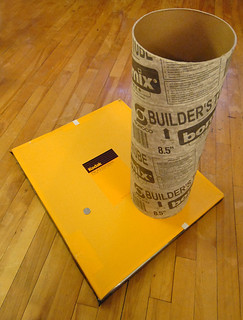
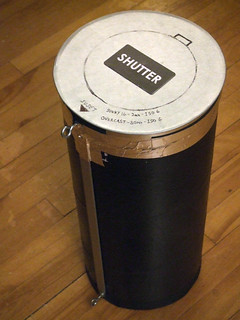
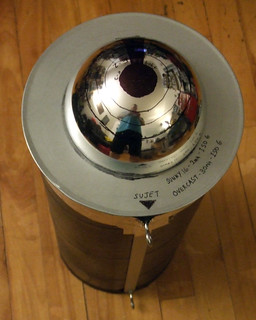
As you see film is rolled on rails or glass tubes - I prefer rails-

Let me tell you what am I doing.

Lets look at glass tube , there is film around it , I put a second black tube inside of glass tube. This second tube have long slit on it and it rotates with motor.

When slit starts and stops , it uses few seconds and this is time sweeping
 

Attachments

  • ANAMORPHIC PINHOLE CAMERA.jpg
    ANAMORPHIC PINHOLE CAMERA.jpg
    60.4 KB · Views: 23
  • FYGLARVHD8Z1BWR.jpg
    FYGLARVHD8Z1BWR.jpg
    170.7 KB · Views: 24
  • ANAMORPHIC CAMERA 2.jpg
    ANAMORPHIC CAMERA 2.jpg
    191.8 KB · Views: 22

OAPOli

Member
Allowing Ads
Joined
Sep 26, 2022
Messages
790
Location
Toronto
Format
Medium Format
I can understand how a cyclindrical camera works with a pinhole, but not with an optical lens. Can the OP explain? Maybe it's a form of extreme Scheimpflug?

For a slit shutter of width w, the exposure time t = w/s where s is the linear speed of the slit.
 
OP
OP
Mustafa Umut Sarac

Mustafa Umut Sarac

Member
Allowing Ads
Joined
Oct 29, 2006
Messages
4,863
Location
İstanbul
Format
35mm
Ok , you drill a small hole to make pinhole. Put a bigger hole to the same place and install there a optical lens.

Pinhole anamorphic cameras are generally 6X17cm format , you use a 60mm focal lenght pinhole.

My lens have 80mm focal lenght so the camera could be made 6X33 but we prefer 6X24.

You have to focus to the bottom end part of the film.
 

Dan Fromm

Member
Allowing Ads
Joined
Mar 23, 2005
Messages
6,901
Format
Multi Format
Hello Bernard,

these are anamorphic pinhole cameras. I replace pinhole with enlarger lens.

As you see film is rolled on rails or glass tubes - I prefer rails-

Let me tell you what am I doing.

Lets look at glass tube , there is film around it , I put a second black tube inside of glass tube. This second tube have long slit on it and it rotates with motor.

When slit starts and stops , it uses few seconds and this is time sweeping

Mustafa, the second two photos in your post #16 above were lifted without attribution from https://www.instructables.com/Build-an-Anamorphic-Pinhole-Camera/, which has complete directions for making the "glass tube" camera in photo three. Stop dithering and follow the directions.
 

koraks

Moderator
Moderator
Joined
Nov 29, 2018
Messages
25,951
Location
Europe
Format
Multi Format
Ok , you drill a small hole to make pinhole. Put a bigger hole to the same place and install there a optical lens.
What's the image angle of that optical lens and how does it relate to the physical design of your camera? Keep in mind that a pinhole in a reasonably flat angle can have a very wide angle (with considerable falloff, evidently). An optical lens is more limited. Did you include this in your concept?
 

bernard_L

Member
Allowing Ads
Joined
Feb 17, 2008
Messages
2,107
Format
Multi Format
My lens have 80mm focal lenght so the camera could be made 6X33 but we prefer 6X24.

You have to focus to the bottom end part of the film.

I suggest two small exercises. First decide on the cylinder diameter, height, and position of the lens; does not need to be final values, this exercise is generally called a strawman design. Assume for the exercise a landscape at "large" distance (you may later introduce the complications of "near" objects)
  1. The lens will image the scene in a plane (the image plane) located 80mm behind the rear principal plane.
    - where is that located relative to the width of your film?
    - for a nominal value of the lens operating f-number (f/8? f/11?) what is the diameter of the circle of confusion at points of the film that are outside the image plane? Is that be better or worse that what would be achieved with a, say, 0.3mm pinhole (and no lens)?
  2. What is the maximum angle of rays (relative to the lens's optical axis; If I understand your design, that will occur at the edge of the film closest to the lens. How does that compare with one half the field of view given by the specifications of your lens?
Another question, already asked I think by someone else. What is the purpose of the moving slit? For a camera like the Widelux, the purpose is clear: allow to image a wide horizontal field of view while at any given time not exceeding the capability of the lens.
 

OAPOli

Member
Allowing Ads
Joined
Sep 26, 2022
Messages
790
Location
Toronto
Format
Medium Format
Ok , you drill a small hole to make pinhole. Put a bigger hole to the same place and install there a optical lens.

Pinhole anamorphic cameras are generally 6X17cm format , you use a 60mm focal lenght pinhole.

My lens have 80mm focal lenght so the camera could be made 6X33 but we prefer 6X24.

You have to focus to the bottom end part of the film.
For a pinhole I can conceptualize the image formation by drawing straight lines from the subject to the film via the pinhole. But I'm not sure what the image would look like for a lens given that the film is parallel to the optical axis. Something similar surely when the aperture is stopped down, but still I think you would get a only narrow band where the subject is in focus. Or maybe it's okay if the subject is parallel to the axis as well. Could be cool.

The length of the frame would be decided by the diameter of the cylinder, and the diameter by the image circle of the lens, not the focal length I think. I think this a 6x6 enlarger lens, so ~80mm diameter circle, meaning a 250mm circumference.
 

Dan Fromm

Member
Allowing Ads
Joined
Mar 23, 2005
Messages
6,901
Format
Multi Format
Hmm. In post #19 above I posted a link to a site that gives complete directions for making an anamorphic pinhole camera, complete with pictures of the finished camera and an example shot. Since the OP plagiarized two images from it, I believe he knows how to find it.

The enlarger lens that the OP wants to use may or not may be a satisfactory replacement for that camera's pinhole. The easy way for the OP to find out is to build the camera, take a shot with the enlarger lens and see what happens. If he doesn't like the result he can always use his new confection with a pinhole as its designer intended.

I predict that the OP will not build an anamorphic camera, with or with out lens.
 
OP
OP
Mustafa Umut Sarac

Mustafa Umut Sarac

Member
Allowing Ads
Joined
Oct 29, 2006
Messages
4,863
Location
İstanbul
Format
35mm
What's the image angle of that optical lens and how does it relate to the physical design of your camera? Keep in mind that a pinhole in a reasonably flat angle can have a very wide angle (with considerable falloff, evidently). An optical lens is more limited. Did you include this in your concept?

Hello Koraks , I am not awared about the difference of cone width and reach of pinhole and enlarger lens , I cant say anything on that subject.

May be top part of the film will be dark or there will be no problem. I dont know anything about that. Thank you for reminding that.
 
OP
OP
Mustafa Umut Sarac

Mustafa Umut Sarac

Member
Allowing Ads
Joined
Oct 29, 2006
Messages
4,863
Location
İstanbul
Format
35mm
I suggest two small exercises. First decide on the cylinder diameter, height, and position of the lens; does not need to be final values, this exercise is generally called a strawman design. Assume for the exercise a landscape at "large" distance (you may later introduce the complications of "near" objects)
  1. The lens will image the scene in a plane (the image plane) located 80mm behind the rear principal plane.
    - where is that located relative to the width of your film?
    - for a nominal value of the lens operating f-number (f/8? f/11?) what is the diameter of the circle of confusion at points of the film that are outside the image plane? Is that be better or worse that what would be achieved with a, say, 0.3mm pinhole (and no lens)?
  2. What is the maximum angle of rays (relative to the lens's optical axis; If I understand your design, that will occur at the edge of the film closest to the lens. How does that compare with one half the field of view given by the specifications of your lens?
Another question, already asked I think by someone else. What is the purpose of the moving slit? For a camera like the Widelux, the purpose is clear: allow to image a wide horizontal field of view while at any given time not exceeding the capability of the lens.

Hello there , film circulardiameter will be 106 mm. Camera height will be more than 60mm , why , because there will be internal structure and outer jacket.

I think biggest problem , where the normal exposure will be on film , top ? middle ? or bottom ?

will lens be able to expose top of the film ?

time sweeping is made to record motion in time.
 
Photrio.com contains affiliate links to products. We may receive a commission for purchases made through these links.
To read our full affiliate disclosure statement please click Here.

PHOTRIO PARTNERS EQUALLY FUNDING OUR COMMUNITY:


Ilford ADOX Freestyle Photographic Stearman Press Weldon Color Lab Blue Moon Camera & Machine
Top Bottom