• Welcome to Photrio!
    Registration is fast and free. Join today to unlock search, see fewer ads, and access all forum features.
    Click here to sign up

Opinions on Darkroom Flooring?

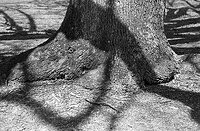
Tree with Big Shadows

Tree with Big Shadows

  • 2
  • 0
  • 15
Everal Barn

A
Everal Barn

  • 0
  • 0
  • 17

Forum statistics

Threads
203,449
Messages
2,854,886
Members
101,848
Latest member
DLelandC
Recent bookmarks
2
No difference. Gotta be real HEPA unless you want fine dust everywhere. Just prepping it for painting or flooring is a different subject. Using a vac
inside the room once film work begins requires the real deal. Otherwise, put a hole in the wall with the hose coming through.
 
Etching? Beware of muriatic acid or even sulfamic or you can mess up your lungs big time, permanently. If you just have some minor whitish powder
(effluorescense) coming through the slab, ordinary white vinegar or acetic acid stop bath will be strong enough to remove that. Serious water intrusion from below grade requires some sort of siloxane treatment following a real etch, and all hell can go loose if you don't understand the
right products. That's more a waterproofing specialty topic. Now epoxies... There are various epoxy-modified, otherwise basic acrylic, floor paints.
They're cheap and easy, but don't stand up well to water puddling. True two-part epoxies come in two varieties, the relatively safe acrylic ones, and
the really nasty real-deal, which is probably overkill for a home darkroom (or literal kill for the applicator). The problem with two-part epoxies is
that you really have to move fast applying them, cause they set up fast.
 
Sheet vinyl can be secured with glue only on the perimeter. This would also facilitate removal of a damaged piece; I imagine that the pros do it this way.

Perimeter is the way to go IMO.


If I wanted a rubberized floor, I sure wouldn't use anything vinyl or linoleum, but something rated for chem resistance.

Vinyl sheet is certainly plenty chemically resistant for a darkroom. Plus it is easy and quick to install as well as cheap. Linoleum is equally chemically resistant, but less cheap.
 
you can just lay vinal sheet flooring, congolium, without gluing it down. we have it in our kitchen. i replace it every few years when i paint.

genuine linolium may be hard to find these days.... and i wonder how it may react to acids n chemicals.
 
Depends on the type of "linoleum". It doesn't mean what it originally did. But if it did, mild acids wouldn't be a serious problem. If something like
acetone is used in the darkroom as cleaning solvent, and gets accidentally spilled, there would be a blemish. True lab grade floor coverings are
available at higher cost, just like true lab grade countertop materials. Just depends how fancy you want to get. I'm more concerned about surfaces being easy to clean and not electrostatic, attracting dust. If I was running a day-in/day-out commercial lab, I'd want to put a lot of up front money
into it. As it is, I have a pretty nice personal lab, but with various material compromises. For instance, I've gotten a lot of countertops for free, made
my sink out of heat-welded polypropylene (highly chemical resistant and an excellent thermal insulator, but buckles a tad with hot water in it),
less than true industrial paints, but realistic to touch up without fume issues, and modified enough to prevent the static inherent to plain latex or
acrylic paints), etc etc. There are also fire hazard provisions: fiberglass panel behind the big color enlargers, and analogous FRP fiberglass panels
on the ceiling above.

 
In the basement of the living building here, there was a vinyl flooring material of unknown age and quality. It appeared to have stretched and torn over time (possibly a decade or more) along the most walked areas - pathways between the individual apartment 'cellar' divisions. When the owners-association replaced the vinyl, it was found to have been fixed only at the edges.

Obviously, that was a different usage to a darkroom, but I'm wondering if fixing a vinyl-sheet floor at the edges only (rather than cementing it down) would really be a long-lived solution, near doorways and other high traffic areas?
 
Photrio.com contains affiliate links to products. We may receive a commission for purchases made through these links.
To read our full affiliate disclosure statement please click Here.

PHOTRIO PARTNERS EQUALLY FUNDING OUR COMMUNITY:


Ilford ADOX Freestyle Photographic Stearman Press Weldon Color Lab Blue Moon Camera & Machine
Top Bottom