
• Welcome to Photrio!
    Registration is fast and free. Join today to unlock search, see fewer ads, and access all forum features.
    Click here to sign up

Nikon G lenses - good, bad or meh?

Recent Classifieds

Forum statistics

Threads
202,843
Messages
2,846,380
Members
101,561
Latest member
SBurns28804
Recent bookmarks
0
I will add: beware the E lenses. None of the film cameras can manipulate E diaphragms so they will only shoot wide open.

 
Very nice, love the last pic!

I also use the N75/50 G combo and it's about the highest quality/lightest weight combo you can find.

Same with observation on my side. Great combination together with F65/F75/80 with which I achieved very good slide images (Provia, Ektachrome). Color and sharpness together with weight and price make this lens a keeper. The Sigma Art 50mm is even better, but comes with a much higher weight and isn’t that reliable at autofocusing...
 
Good points here throughout. The much-maligned Nikkor 18-55 'prosumer' G zoom can be a wonderful performer. I have one on a venerable D90 (used by my partner for happy-snapping when we go travelling) that has produced images as good as anything my bigger and better and certainly more expensive Nikon lenses do. I have sold images made with that D90 and the 18-55 and publishers have made superb images from those, even when fine architectural detail was required.

I had a 50/1.4 G on a Nikon Df and a Z6 I used last year. The results were very good but my almost 30 year old 50/1.4 Nikon is just as sharp and seems to give better mid tones. Compared with a strong loupe and not a microscope test. Many images made with the older lens and published look as good as my medium format work did in the 1980s when I had Rolleis and a Linhof.

I believe every new generation of lenses we get are a bit better than the previous. Nikon and other big brand manufacturers invest time and money into refining their lenses and cameras and what we buy today is mostly improved over the past equipment. But my D700s and D800 are (to me) about the best it has got and maybe will ever get. This may be as I do not plan to invest any more dosh in new cameras and the trio I own now will likely see me out of the game.
 
I have passed up opportunities to purchase G lenses. I want the aperture ring so I stick to D lenses.
 
Very much depends on the lens you are looking at.

Also be wary of the difference between G and E lenses. G lenses will work on many AF film bodies (and the F601m/N6000), E lenses have no aperture control and are effectively digital only. Both look the same externally but an E lens has no mechanical aperture lever.

As a general rule, the G lenses are better than older AF lenses optically at the mid & high end. The cheap consumer lenses from the late film era (28-80G, 70-300G, etc) are cheap and adequate.

I'm quite fond of the f1.8 G primes, they're a great set of lenses to pair with an F80 or F100.
 
Bellamy pf Japan Camera Hunter seems to like G lenses, at least on the Nikon F6 he demonstrates in one of his videos. That's the 24-72 lens.

I personally like the AF-D lenses as I like the rings, they are very well built and seem to last forever. But I only shoot film.
 
If you have an F100 or F6 (or similar), the G lenses won't let you down. They mostly have smoother bokeh than the D lenses, but are not sharper than earlier versions. However that changes when you get to the pro glass, those are Leica levels of quality. Personally I still use the D lenses because they are smaller and I like the older bokeh look.
 
If you have an F100 or F6 (or similar), the G lenses won't let you down. They mostly have smoother bokeh than the D lenses, but are not sharper than earlier versions. However that changes when you get to the pro glass, those are Leica levels of quality. Personally I still use the D lenses because they are smaller and I like the older bokeh look.

Except for the lack of aperture control, which to me is the whole point.
 
What's wrong with controlling the aperture from the camera instead of the lens?

I do not like being forced to do something differently than I have for over sixty years so that the camera company can save money.
 
I do not like being forced to do something differently than I have for over sixty years so that the camera company can save money.

I get that, it's why I use D lenses on my F4. G only works in P and S as no aperture ring.
 
Some of them are not so good but I believe the latest and greatest are G lenses. Sure I do prefer lenses with aperture ring.
 
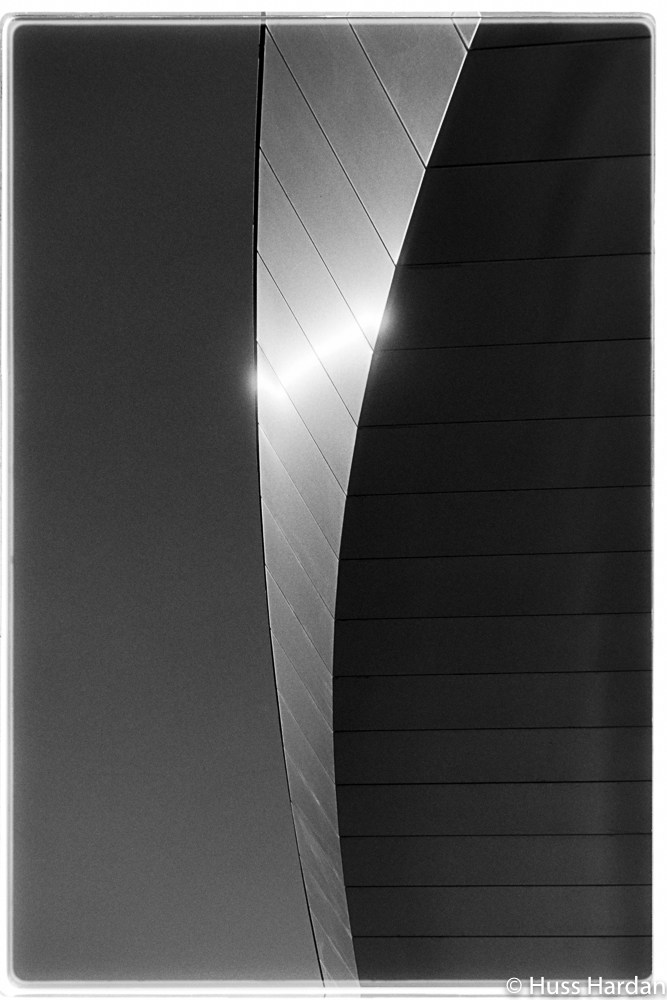
I took this with a 28-80G lens on Tri-X, which was the kit lens on the F75. It is worth about a nickel. Optically it is absolutely superb. Mechanically, it is a ritz cracker in feel, but unless u abuse it, it will be fine. And if you do somehow break it, buy another - it's dirt cheap.

 
Except for the lack of aperture control, which to me is the whole point.

The whole point of what? Surely you must be aware that your AFD lenses won't work on a Nikon SP...or Pentax 67! It's so obvious that if you have a compatibility issue then you necessarily must take that into consideration that it's not worth mentioning. OP asked if G lenses were good. I don't answer, "well they don't work on my Chamonix 810V so no."

I do not like being forced to do something differently than I have for over sixty years so that the camera company can save money.

Please show a picture of the gun Nikon has to your head forcing you to buy G lenses. It's my understanding that not only can you still buy many of the D lenses new, you can get new AIS lenses! This post is so old-man-curmudgeon that it's frankly baffling. I'm terribly sorry that you have to deal with the existence of new products in your life. That must be horrible. Maybe someone can create a VR headset that allows you to interact with the world the way it was 60 years ago so you can have a safe space from G lenses, which have been around for 2 decades now.
 
F5, 105mm micro AF-S G hand-held, Foma R100

105m_r100.jpg
 
The first "G" lenses were designed and built to a price point for the pre-digital consumer market. They were cheaply built with small variable apertures, and Ken Rockwell correctly panned them as such. As time went by, Nikon stopped introducing lenses with aperture rings and lenses without built-in autofocus motors. As of this year, the only lenses left in Nikon's lineup with aperture rings are the 24mm, 45mm, and 85mm PC-E lenses. So, at least optically, any "which is better" argument is going to be model specific.

But for those of us who use film cameras, "G" lenses are pretty much useless on any manual focus camera and of limited use on AF cameras before the F5/F100 generation. "G" Lenses with electronic apertures can only be used wide open on any film camera, and AF-P lenses can't be used at all. That's why, for example, I just spent $550 getting my 17-35mm f/2.8 repaired.
 
Hi Horatio
I have a G ( I think? sorry I don't really pay much attention the the nomenclature I buy what I can afford and I have never followed KR not for any reason other than im not sure who he is or why I should follow his opinions ) .. I have never had problems with it whether I used it for business I've made portraits &c with it, or pleasure --- it didn't disappoint me.

I have a couple. Most are meh but the 18-55 f 3.5-5.6 kit lens is a real surprise. Tack sharp and versatile. Took this hand held with my D3100.

nice!

blue winged olive?
 
I have the Nikkor 20mm f1.8G ED, which I find to be a splendid lens, my most-used FX lens. The lack of an aperture ring is disconcerting, but Nikon has provided adequately for aperture control electronically. The major drawback is its uselessness with manual-focus cameras - a substantial drawback.
 
The lack of aperture rings isn't a big deal IMHO as I wouldn't be using them on a manual focus camera anyway. There are some real gems, the 18-35mm f/3.5-4.5G ED and the 24-120 f4 VR are both really good IMHO. The 70-200 f2.8 VRII is another standout. All of the f1.4G primes are good, and while it's controversial, the 58mm f1.4G is an amazing lens! I do prefer the 85mm f1.4D over the G for portraits.
Very well said. I have similar experience with the lenses you mention.
 
The first "G" lenses were designed and built to a price point for the pre-digital consumer market. They were cheaply built with small variable apertures, and Ken Rockwell correctly panned them as such...

Umm, no.
https://www.kenrockwell.com/nikon/28-80mm-g.htm
This is the lens that I used in the example above. It is superb and dirt cheap. This is what KR says about it, which matches up to my experience:

The Nikon 28-80mm G is a dinky 7-ounce (190g) plastic zoom with incredibly good performance. It works ridiculously well, especially on my Nikon D3.

Incredible means unbelievable. The performance of this lens is so good that no one will believe it possibly can come from a lens this cheap.
 
He also had this to say:

G is not a feature, G is a handicap. G stands for gelded.

G lenses are lenses which have been crippled by removing their aperture rings to save cost. This is a classic example of taking away features while making customers think they are getting something new. G eliminates many features with older cameras.
 
He also had this to say:

G is not a feature, G is a handicap. G stands for gelded.

G lenses are lenses which have been crippled by removing their aperture rings to save cost. This is a classic example of taking away features while making customers think they are getting something new. G eliminates many features with older cameras.

That states it accurately.
 
Photrio.com contains affiliate links to products. We may receive a commission for purchases made through these links.
To read our full affiliate disclosure statement please click Here.

PHOTRIO PARTNERS EQUALLY FUNDING OUR COMMUNITY:



Ilford ADOX Freestyle Photographic Stearman Press Weldon Color Lab Blue Moon Camera & Machine
Top Bottom