

• Welcome to Photrio!
    Registration is fast and free. Join today to unlock search, see fewer ads, and access all forum features.
    Click here to sign up

New Test: Ilford XP2 Super 400 in Adonal (Rodinal)

Recent Classifieds

Forum statistics

Threads
202,914
Messages
2,847,484
Members
101,533
Latest member
jasonfrags81
Recent bookmarks
1

DcAnalogue

Member
Allowing Ads
Joined
Sep 25, 2014
Messages
203
Location
Rome - Italy
Format
Multi Format
Hi film lovers!

Going on in my film experiences, I recently tested Ilford XP2 Super 400 souped in Adonal 1:25
I know it's a C-41 film, but some shot I saw on the web lead me to try this way.
Results (IMHO) were very good (at last @ scanning).... Sharp, great tones and easy to scan.:smile: I'm sure they will come out great in prints too....

See more in my Film Blog
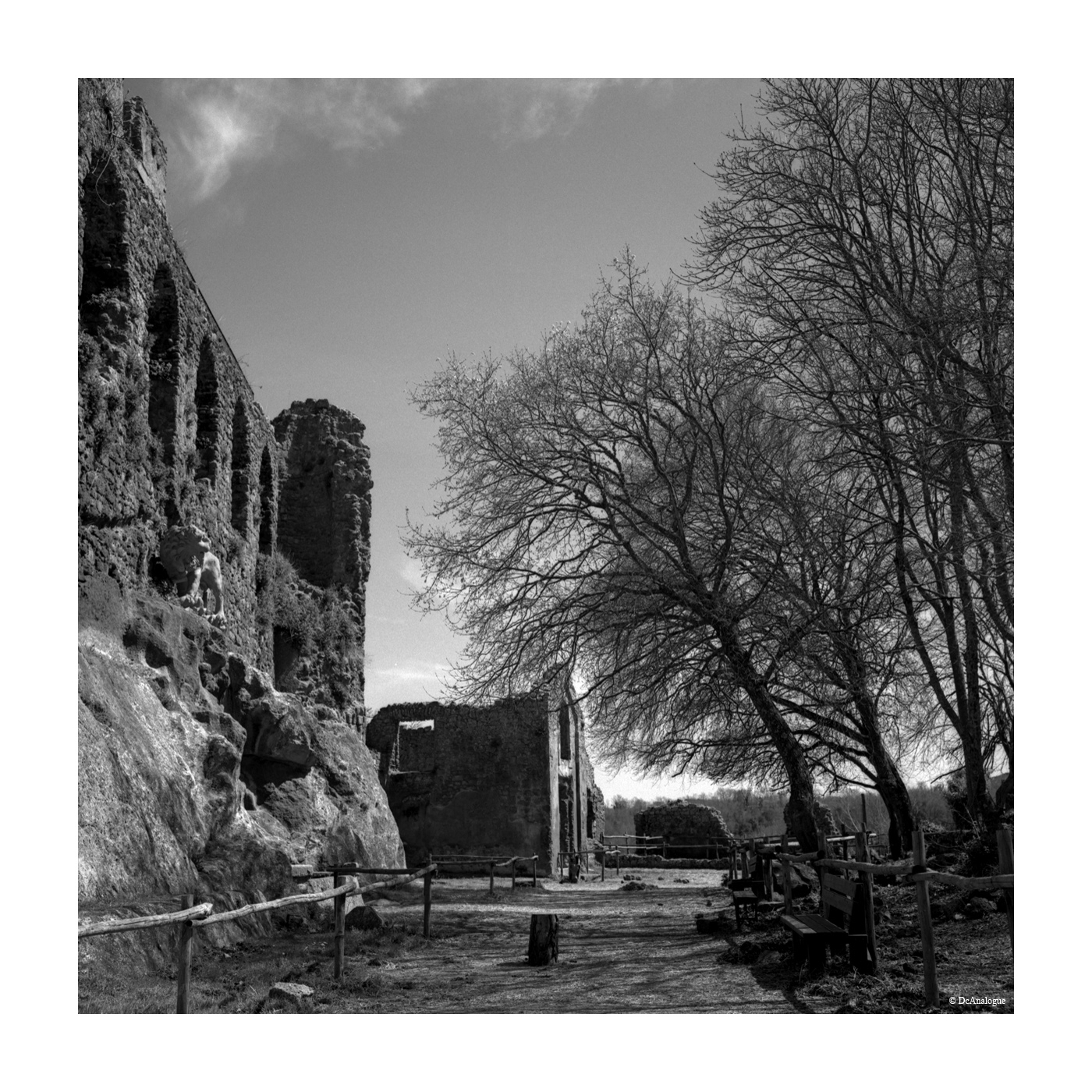
001-rollei_xp2-super_001.jpg
 
I have some B&W Portra 400 thats c41, I wonder how it would work in rodinal
 
Remember that the Ilford film is about the only C41 film that does not have a built-in orange mask (except for an old series of Agfa aerial photography emulsions). With the orange mask, like the Portra mentioned above, it will be difficult to print on normal black-and-white paper.
 
My guess would be that it is easier, easier to get, cheaper and more flexible than C41 kits.

Then shoot convention B&W, film designed to be developed in standard b&W developers.

Monochrome C-41 is amazing for many reasons, I've shot plenty. The advantages, I would think, are lost in Rodinal or similar.
 
Then shoot convention B&W, film designed to be developed in standard b&W developers.

Monochrome C-41 is amazing for many reasons, I've shot plenty. The advantages, I would think, are lost in Rodinal or similar.

Did you look at the examples on his website?

Were it not for experimenting we'd still be drawing on cave walls.
 
My guess would be that it is easier, easier to get, cheaper and more flexible than C41 kits.

But the idea behind these chromogenic b&w films a technical one, other than just make a film that fits into a mini- or industrial-colourlab

Processing it in b&w baths makes only somewhat sense, if the film is easier to obtain (e.g. local drugstore) than classic b&w films and one can cope with the shortcomings of such cross-processing.
 
I wonder how this looks as compared to XP-2 developed in C-41?

I haven't been using much roll film but I may have to give this a try. XP-2 definitely has a unique look.
 
One caution to keep in mind.

One of the reasons that some people like to use C41 black and white films is because the dye clouds they produce when developed in C41 chemicals are well suited for scanning, including permitting the use of IR based dust removal functions ("ICE" and similar).

If you develop XP2 Super in black and white chemicals, the silver won't be removed, and ICE or similar won't be usable.
 
Did you look at the examples on his website?

Were it not for experimenting we'd still be drawing on cave walls.

Sorry, no, I haven't. I'm an incorrigible experimenter all of my life. Doesn't mean most efforts came out as I would have liked.

There is zero reason to think that an emulsion intended to be developed in C-41 could be superior in a a conventional developer is absurd.


As I said, have fun. Don't expect better.
 
I do get the convenience factor over C41 processing. But it kind of goes to shambles if it starts to behave like other B/W films. Never shot a roll of it but I am told that part of the appeal with XP2 Super is it's tolerance for overexposure (like many C41 films) which would be useful in high contrast situations. It is supposed to be kind of flexible in terms of underexposure as well, at least with extended development.

My point is that it would be nice to see a side by side comparison with one roll in Rodinal and one in C41. Not trying to discourage you from testing and going off the main road, your results look nice to me.
 
Never shot a roll of it but I am told that part of the appeal with XP2 Super is it's tolerance for overexposure (like many C41 films) which would be useful in high contrast situations. It is supposed to be kind of flexible in terms of underexposure as well, at least with extended development.

Btw... I rated it @ 200 Iso.... :smile:
 
Sorry, no, I haven't. I'm an incorrigible experimenter all of my life. Doesn't mean most efforts came out as I would have liked.

There is zero reason to think that an emulsion intended to be developed in C-41 could be superior in a a conventional developer is absurd.


As I said, have fun. Don't expect better.

It should behave just like a conventional silver halide film.
C41 is a simple process and you might still have a mini lab option.
The chromogenic film gives more eg shoot half a roll at 100 the other half at 1000 drop off at mini lab.
You only pay a small premium $ for this.
If there were step wedge and resolution test results v Delta 400 I might look otherwise yawn.
 
There are not only drawback in leaving the silver in the emulsion instead of bleaching it. Skipping the bleach gives you deeper shadows and blacks and stronger lines (better edge sharpness). But there is a huge drawback longevity nobody knows how leaving the silver in the emulsion will affect it.

Thanks for the link
 
There are not only drawback in leaving the silver in the emulsion instead of bleaching it. Skipping the bleach gives you deeper shadows and blacks and stronger lines (better edge sharpness). But there is a huge drawback longevity nobody knows how leaving the silver in the emulsion will affect it.

Thanks for the link

I'm not sure all mono developers will 'couple' the dye if you bleach and get clear film you will know that your developer did not.
Some people develop colour film with the c41 developer or ECN-2 developer and then don't do any or a reduced bleach... for a SiFi artificial style colour.
If you don't use the proper CDn Ron says (and he is Moses) it compromises longevity.
But silver in geletine in absence of a bad environment lasts centuries?


https://en.m.wikipedia.org/wiki/Bleach_bypass
 
ENR uses both ECN2 and B/w developer and the bleach step is not completely left out. Skip bleach bypass by other labs don't always use B/W developer and simply skip the bleaching or use a very much reduced time in the Bleach. I agree with you I wouldn't advise to use bleach if you only used a B/W developer and no c-41 developer. The silver image is usually sharper than the dye image though.
 
ENR uses both ECN2 and B/w developer and the bleach step is not completely left out. Skip bleach bypass by other labs don't always use B/W developer and simply skip the bleaching or use a very much reduced time in the Bleach. I agree with you I wouldn't advise to use bleach if you only used a B/W developer and no c-41 developer. The silver image is usually sharper than the dye image though.

But you would only make that mistake once.
There would be grain in Xp2 processed as retained silver, but if you expose at 1000 and c41 process you get artifices in shadows like digital noise. And difficult printing.
And that is the really useful experiment drop off in mini lab and print at home 500, 1000, 2000, ISO at candle lit gig... Don't expect quality merely available darkness.
 
Photrio.com contains affiliate links to products. We may receive a commission for purchases made through these links.
To read our full affiliate disclosure statement please click Here.

PHOTRIO PARTNERS EQUALLY FUNDING OUR COMMUNITY:


Ilford ADOX Freestyle Photographic Stearman Press Weldon Color Lab Blue Moon Camera & Machine
Top Bottom
