• Welcome to Photrio!
    Registration is fast and free. Join today to unlock search, see fewer ads, and access all forum features.
    Click here to sign up

New Direct Positive paper from Ilford Harman

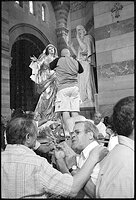
Procession

A
Procession

  • 0
  • 0
  • 10
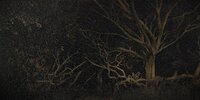
Millers Lane

A
Millers Lane

  • 1
  • 2
  • 39

Recent Classifieds

Forum statistics

Threads
202,892
Messages
2,847,148
Members
101,531
Latest member
F2_User
Recent bookmarks
0
I used Kodak Direct Reversal film to make enlarged copy negs for Alt processes about 20 years ago it was great film. But ideally a copy negative on conventional film needs to be reversal processed or its two copying stages.

Ian

Yes, that was the question. How does a direct-positive process compare to a double-copying process as far as quality (image gradation, sharpness, grain) goes?
 
It would be nice to have a positive film to copy negs for alternative processes. Right now I use an inkjet film which is pretty good.

In the good old days, Kodak had a positive film like that, for making enlarged negatives without an interpositive.
 
It would be nice to have a positive film to copy negs for alternative processes. Right now I use an inkjet film which is pretty good.

There is such film, made by Agfa; available in sheets and wide long rolls.
 
Yes, that was the question. How does a direct-positive process compare to a double-copying process as far as quality (image gradation, sharpness, grain) goes?

The specialist copy films worked best whether the Colour Duping film, Inter-neg or B&W direct positive. Some Alt process users use reversal processing to eliminate two copy steps. Ed Buffalo has an article on Unblinkingeye.

Most now are making Digital negatives, plenty of threads on HybridPhoto,

Ian
 
I've been using APHS. It's a bear. I would bet the Ultrafine is APHS or the replacement.
 
An ISO 3 media, in a pinhole camera?
Come on! The exposure would be ... well, do the math!
 
There's no practical reason to make fast direct-positive film. Every sort I've ever heard about has been slower than 10 ISO - it's intended application is for copying/duplication, so you don't need speed. I would not suggest shooting it in a pinhole camera...but maybe you could push process the hell out of it?
 
Has anyone used the one of the Pyro family of developers with the Positive paper(or any paper for that matter)?

Thanks

Jules
 
Paper negatives, commonly used in pinhole cameras, are often rated at an exposure index of around 3 or so.

As for APHS and its possible direct reversal cousin, I recall that some people have had good luck with Soemarko's low-contrast developer for getting continuous tone images on APHS. See EarlJ on F295, and Jim Galli on the Large Format Forum, for people that claim good continuous-tone results on APHS.

~Joe
 
The exposure would be ...

...30 seconds to a few-to-several minutes usually, depending on the light and the pinhole. ISOs in that area are very common for pinhole work, with both litho film and photo paper being some of the most common materials used for pinholing.
 
I recently started using the Harman positive fibre paper and I like it. I am using it in my pinhole camera with a 350micron aperture and an f/236. My exposures in bright Florida sun are about 2 minutes. Just tonight I posted some pics on my Dead Link Removed
My developer is ilford warm tone and I also used the ilford selenium toner.

For me 2 minutes is a good time. I used to use negative paper and ND filters to get esposure times of about 7 minutes. I like longer exposures. Captures the motion.
 
Lynch the photos are quite nice could you please tell us about developing the paper
thanx, Peter
 
Sorry for the delay Peter. As mentioned I am using the Ilford Warm Tone Developer. I am using Ilford Chemistry for the entire process. I mix the developer 1:9. I started developing in trays so I could pull the paper when I was ready. After doing this for 12 sheets I was realizing no big advantage to analyzing each image under a weak red safelight. So now I am using 4x5 tanks like these. LINK. So far the development time seems good at 2 minutes. I dip the film in and agitate by moving the film holder up and down for the first 15 seconds. This is done in the dark (safelight on) without the cover on the developing tank. I then agitate every 15 seconds for 5 seconds. The film holder is pulled up to drain at 1:55. This is a bit messy. The film is then transferred to a stop tank and a fix tank. I wash in a tray made for washing prints. Temperature is room temp. About 76ºF

I am considering increasing my exposure time in bright sun to 2.5 minutes and bringing my development time down to one minute or maybe slightly less. If you shoot film these may not sound like good numbers but from previous experiments I think it may be worth a try with this paper to reduce the contrast slightly. I gladly welcome thoughts / feedback. The best way to learn is from each other.
 
New images using the Harman DP paper. These were made under overcast conditions. I found using my footcandle meter (Ya they are useful) and a sliding scale I made several years ago for use with T-Max 100 to work out very well. Exposures ranged from 6 minutes to over a half an hour. The scale I made converted footcandle readings to EVs which gave me an exposure with another time next to it that accounted for reciprocity. I found this worked well on the full range of exposures I used. The last five images on the page are from today.
Images are Dead Link Removed.
 
Then get going, the ladies are waiting!

For everybody else:
Pat's fantastic prints will be exhibited at Photokina 2010!
Why? Because they're great and because the APUG network works!

I saw them here, loved them, and made the connection with the right people for Pat.

Don't forget to do the same for others within YOUR circle of influence.
There are some great images on APUG!
 
Photrio.com contains affiliate links to products. We may receive a commission for purchases made through these links.
To read our full affiliate disclosure statement please click Here.

PHOTRIO PARTNERS EQUALLY FUNDING OUR COMMUNITY:



Ilford ADOX Freestyle Photographic Stearman Press Weldon Color Lab Blue Moon Camera & Machine
Top Bottom